


9 months 1 week ago
'Tis a grievous thing to be subject to an inferior.
8 months 2 weeks ago
There is no problem in all mathematics that cannot be solved by direct counting. But with the present implements of mathematics many operations can be performed in a few minutes which without mathematical methods would take a lifetime.
▼
Source
source
p. 197; On mathematics and counting.

5 months 2 weeks ago
To accept it without arrogance, to let it go with indifference.
▼
Source
source
(Hays translation) VIII, 33

9 months 3 weeks ago
The louder he talked of his honor, the faster we counted our spoons.
▼
Source
source
Worship
5 months 3 weeks ago
Do you believe in dreams, Uncle Simeon? I do; I believe in nothing else. One night I dreamed that invisible enemies had me tied to a dead cypress. Long red arrows were sticking into me from my head to my feet, and the blood was flowing. On my head they had placed a crown of thorns, and intertwined with the thorns were fiery letters which said: "Saint Blasphemer." I am Saint Blasphemer, Rabbi Simeon. So you'd better not ask me anything else, or I'll start my blasphemies.
▼
Source
source
Ch. 10
7 months 4 days ago
The history of almost every civilization furnishes examples of geographical expansion coinciding with deterioration in quality.
▼
Source
source
Abridgement of Vols. 1-6 by D. C. Somervell

10 months 2 weeks ago
A punishment that penalizes without forestalling is indeed called revenge.

5 months 2 weeks ago
The Constitution of 1795, like its predecessors, was made for man. But there is no such thing as man in the world. In my lifetime I have seen Frenchmen, Italians, Russians, etc.; thanks to Montesquieu, I even know that one can be Persian. But as for man, I declare that I have never in my life met him; if he exists, he is unknown to me.


8 months 4 days ago
One cannot ignore half of life for the purposes of science, and then claim that the results of science give a full and adequate picture of the meaning of life. All discussions of 'life' which begin with a description of man's place on a speck of matter in space, in an endless evolutionary scale, are bound to be half-measures, because they leave out most of the experiences which are important to use as human beings.
▼
Source
source
p. 309

7 months 2 weeks ago
Cartoons drove the photo back to myth and dream screen.

9 months 3 weeks ago
The language of excitement is at best but picturesque merely. You must be calm before you can utter oracles.
▼
Source
source
Pearls of Thought (1881) p. 80

9 months 3 weeks ago
Human reason is by nature architectonic.
▼
Source
source
B 502

9 months 3 weeks ago
The first premise of all human history is, of course, the existence of living human individuals. Thus the first fact to be established is the physical organisation of these individuals and their consequent relation to the rest of nature.
▼
Source
source
Volume I; Part 1; "Feuerbach. Opposition of the Materialist and Idealist Outlook"; Section A, "Idealism and Materialism".

8 months 1 week ago
Life cannot wait until the sciences may have explained the universe scientifically. We cannot put off living until we are ready. The most salient characteristic of life is its coerciveness: it is always urgent, "here and now" without any possible postponement. Life is fired at us point-blank. And culture, which is but its interpretation, cannot wait any more than can life itself.
▼
Source
source
Mission of the University [Misión de la Universidad (PDF)] (1930; translation © 1944, first published 1946), p. 73 [p. 15 in Spanish PDF], translated by Howard Lee Nostrand. ISBN 978-1-56000-560-5
9 months 3 weeks ago
None believeth in the soul of man, but only in some man or person old and departed.
▼
Source
source
p. 25
6 months ago
But let us now dismiss these poetical fictions; because with what is divine they have mingled much of human alloy; and let us now consider what the deity has declared concerning himself and the other gods. The region surrounding the Earth has its existence in virtue of birth. From whom then does it receive its eternity and imperishability, if not from him who holds all things together within defined limits, for it is impossible that the nature of bodies (material) should be without a limit, inasmuch as they cannot dispense with a Final Cause, nor exist through themselves.
9 months 3 weeks ago
What point of morals, of manners, of economy, of philosophy, of religion, of taste, of the conduct of life, has he not settled? What mystery has he not signified his knowledge of? What office, or function, or district of man's work, has he not remembered? What king has he not taught state, as Talma taught Napoleon? What maiden has not found him finer than her delicacy? What lover has he not outloved? What sage has he not outseen? What gentleman has he not instructed in the rudeness of his behavior?
▼
Source
source
Shakespeare; or, The Poet

8 months ago
Reason now gazes above the realm of the dark but warm feelings as the Alpine peaks do above the clouds. They behold the sun more clearly and distinctly, but they are cold and unfruitful.
▼
Source
source
L 50

10 months 4 days ago
There are hardly any truths upon which we always remain agreed, and still fewer objects of pleasure which we do not change every hour, I do not know whether there is a means of giving fixed rules for adapting discourse to the inconstancy of our caprices.


8 months 3 days ago
I have had a larger responsibility of human lives than ever man or woman had before. And I attribute my success to this - I never gave or took an excuse. Yes, I do see the difference now between me and other men. When a disaster happens, I act and they make excuses.
▼
Source
source
Letter to Miss H. Bonham Carter, 1861. As quoted in The Gigantic Book of Teachers' Wisdom (2007) by Frank McCourt and Erin Gruwell, p. 410


9 months 1 week ago
With a malicious man carry on no conflict, and do not molest him in any way whatever.
10 months 4 days ago
If it is pleasing to observe in nature her desire to paint God in all his works, in which we see some traces of him because they are his images, how much more just is it to consider in the productions of minds the efforts which they make to imitate the essential truth, even in shunning it, and to remark wherein they attain it and wherein they wander from it, as I have endeavored to do in this study.
8 months 2 weeks ago
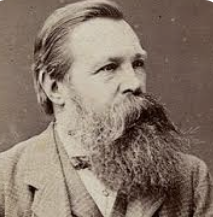
For the first time in the revolutionary movement of 1848, for the first time since 1793, a nation surrounded by superior counter-revolutionary forces dares to counter the cowardly counter-revolutionary fury by revolutionary passion, the terreur blanche by the terreur rouge. For the first time after a long period we meet with a truly revolutionary figure, a man who in the name of his people dares to accept the challenge of a desperate struggle, who for his nation is Danton and Carnot in one person - Lajos Kossuth.
▼
Source
source
The Magyar Struggle in Neue Rheinische Zeitung (13 January 1849).
8 months 3 days ago
Why have women passion, intellect, moral activity - these three - and a place in society where no one of the three can be exercised? Men say that God punishes for complaining. No, but men are angry with misery. They are irritated with women for not being happy. They take it as a personal offence. To God alone may women complain without insulting Him!

9 months 3 weeks ago
When we reflect on the long and dense night in which France and all Europe have remained plunged by their governments and their priests, we must feel less surprise than grief at the bewilderment caused by the first burst of light that dispels the darkness.
▼
Source
source
Author's Inscription: French Edition

7 months ago
I'll admit, I was a naive globalist. I still believe in the ideal, but, I realize that those that hated the idea so much are the authors of the problem they see in it.
Now, I understand clearly, those that author the problem that makes globalization near impossible are also the ones who insist it will never work, nevertheless, human necessity remains a monolith and universal.

6 months 1 week ago
Not a May-game is this man's life; but a battle and a march, a warfare with principalities and powers. No idle promenade through fragrant orange-groves and green flowery spaces, waited on by the choral Muses and the rosy Hours: it is a stern pilgrimage through burning sandy solitudes, through regions of thick-ribbed ice. He walks among men; loves men, with inexpressible soft pity,-as they cannot love him: but his soul dwells in solitude, in the uttermost parts of Creation. In green oases by the palm-tree wells, he rests a space; but anon he has to journey forward, escorted by the Terrors and the Splendours, the Archdemons and Archangels. All Heaven, all Pandemonium are his escort. The stars keen-glancing, from the Immensities, send tidings to him; the graves, silent with their dead, from the Eternities. Deep calls for him unto Deep.
8 months ago
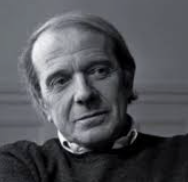
Second, we make no distinction between man and nature: the human essence of nature and the natural essence of man become one within nature in the form of production or industry, just as they do within the life of man as a species. Industry is then no longer considered from the extrinsic point of view of utility, but rather from the point of view of its fundamental identity with nature as production of man and by man.
▼
Source
source
The Desiring Machine

9 months 4 weeks ago
There is no wish more natural than the wish to know.
▼
Source
source
Ch. 13

7 months 2 weeks ago
Sight-seeing is the art of disappointment.
▼
Source
source
Pt. I, ch. II.

8 months 2 weeks ago
The more I see of the world, the more I am convinced that civilisation is a blessing not sufficiently estimated by those who have not traced its progress; for it not only refines our enjoyments, but produces a variety which enables us to retain the primitive delicacy of our sensations. Without the aid of the imagination all the pleasures of the senses must sink into grossness, unless continual novelty serve as a substitute for the imagination, which, being impossible, it was to this weariness, I suppose, that Solomon alluded when he declared that there was nothing new under the sun!
▼
Source
source
Letter 2

9 months 2 weeks ago
It is simply no good trying to keep any thrill: that is the very worst thing you can do. Let the thrill go-let it die away-go on through that period of death into the quieter interest and happiness that follow-and you will find you are living in a world of new thrills all the time. But if you decide to make thrills your regular diet and try to prolong them artificially, they will all get weaker and weaker, and fewer and fewer, and you will be a bored, disillusioned old man for the rest of your life. It is because so few people understand this that you find many middle-aged men and women maundering about their lost youth, at the very age when new horizons ought to be appearing and new doors opening all round them. It is much better fun to learn to swim than to go on endlessly (and hopelessly) trying to get back the feeling you had when you first went paddling as a small boy.
▼
Source
source
Book III, Chapter 6, "Christian Marriage"

8 months 1 week ago
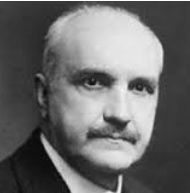
No system would have ever been framed if people had been simply interested in knowing what is true, whatever it may be. What produces systems is the interest in maintaining against all comers that some favourite or inherited idea of ours is sufficient and right.

8 months 3 weeks ago
All life, Omnipotent Father, is thy life! and the eye of religion alone penetrates to the realms of truth and beauty. I am related to thee, and what I behold around me is related to me; all is full of animation, and looks towards me with bright spiritual eyes, and speaks with spirit voices to my heart.
▼
Source
source
Jane Sinnett, trans 1846 p.125

5 months 4 weeks ago
The words of malicious slander should not be allowed to enter the ear. A defensive voice should not be allowed to come out of the mouth. The want to gravely injure people should not be allowed to exist in the heart. If this is accomplished, though there be people who cynically expose others, they would be without people who would align with them.
▼
Source
source
Book 1; Self-culfivation

9 months 3 weeks ago
I hate the world and almost all the people in it. I hate the Labour Congress and the journalists who send men to be slaughtered, and the fathers who feel a smug pride when their sons are killed, and even the pacifists who keep saying human nature is essentially good, in spite of all the daily proofs to the contrary. I hate the planet and the human race - I am ashamed to belong to such a species.
▼
Source
source
Letter to Colette, December 28, 1916



6 months 2 weeks ago
Woman is degraded and made to believe that nature destined her exclusively to menial domestic labors, which in the combined order will be so abridged as to be performed without oppression to either sex.
▼
Source
source
The Theory of Social Organization

8 months 2 weeks ago
Tolerance - the function of an extinguished ardor - tolerance cannot seduce the young.
10 months 2 weeks ago
It's better to bet on this life than on the next.
9 months 2 weeks ago
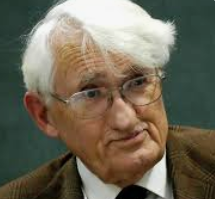
Reaching and understanding is the process of bringing about an agreement on the presupposed basis of validity claims that are mutually recognized.
▼
Source
source
p. 23
CivilSimian.com created by AxiomaticPanic, CivilSimian, Kalokagathia