


4 months 1 week ago
Technological progress has merely provided us with more efficient means for going backwards.
▼
Source
source
Ch. 1, p. 9 [2012 reprint]. Also in "Tomorrow and Tomorrow and Tomorrow" in Adonis and the Alphabet (1956); later in Collected Essays (1959), p. 293
2 months 1 week ago
While Poe and the Symbolists were exploring the irrational in literature, Freud had begun to explore the resonant figure/ground double-plot of the conscious and unconscious.
▼
Source
source
p. 52

4 months 2 weeks ago
It is sad that often, to be a good patriot, one must be the enemy of the rest of mankind.
▼
Source
source
"Country"
4 months 1 day ago
You must learn all things, both the unshaken heart of persuasive truth, and the opinions of mortals in which there is no true warranty.
▼
Source
source
Frag B 1.28-30, quoted by Sextus Empiricus, Against the Mathematicians, vii. 3

4 months 3 weeks ago
It cannot be that axioms established by argumentation should avail for the discovery of new works, since the subtlety of nature is greater many times over than the subtlety of argument. But axioms duly and orderly formed from particulars easily discover the way to new particulars, and thus render sciences active.
▼
Source
source
Aphorism 24
2 months 6 days ago
There is no need to make an inventory of the times. It is demoralizing to describe ourselves to ourselves yet again. It is especially hard on us since we believe (as we have been educated to believe) that history has formed us and that we are all mini-summaries of the present age.
▼
Source
source
Mozart: An Overture (1992), pp. 13-14
2 months 1 week ago
One is ashamed to say how little is needed for all men to be delivered from those calamities which now oppress them; it is only needful not to lie.
▼
Source
source
Ch. 17
5 months 1 week ago
It is my own experience ... that commentators are far more ingenious at finding meaning than authors are at inserting it.
3 months 4 days ago
By becoming the pure subject who knows the world objectively, man ultimately realizes that absolute consciousness with respect to which the body and individual existence are no longer anything but objects; death is deprived of meaning. Reduced to the status of object of consciousness, the body could not be conceived as an intermediary between "things" and the consciousness which knows them.
▼
Source
source
p. 204
5 months 2 weeks ago
That body is heavier than another which, in an equal bulk, moves downward quicker.

1 month 4 days ago
It is the property of every Hero, in every time, in every place and situation, that he come back to reality; that he stand upon things, and not shows of things. According as he loves, and venerates, articulately or with deep speechless thought, the awful realities of things, so will the hollow shows of things, however regular, decorous, accredited by Koreishes or Conclaves, be intolerable and detestable to him.

2 months 4 weeks ago
From the power to transform him into a thing by killing him there proceeds another power, and much more prodigious, that which makes a thing of him while he still lives.
▼
Source
source
in The Simone Weil Reader, p. 155
4 months 4 weeks ago
If a person gave your body to any stranger he met on his way, you would certainly be angry. And do you feel no shame in handing over your own mind to be confused and mystified by anyone who happens to verbally attack you?
▼
Source
source
(28) [tr. Elizabeth Carter]

3 months 6 days ago
Yea; have ye never read, Out of the mouth of babes and sucklings thou hast perfected praise?
▼
Source
source
21:16 (KJV)
4 months 2 weeks ago
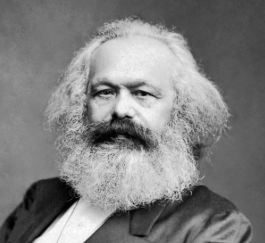
All that is solid melts into air, all that is holy is profaned, and man is at last compelled to face with sober senses, his real conditions of life, and his relations with his kind.
▼
Source
source
Section 1, paragraph 18, lines 12-14.
2 months 3 weeks ago
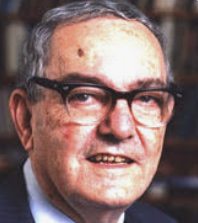
The function of knowledge in the decision-making process is to determine which consequences follow upon which of the alternative strategies. It is the task of knowledge to select from the whole class of possible consequences a more limited subclass, or even (ideally) a single set of consequences correlated with each strategy.
▼
Source
source
p. 78.
4 months 2 weeks ago
Life is a business that does not cover the costs.
▼
Source
source
Vol II "On the Vanity and Suffering of Life"
3 days ago
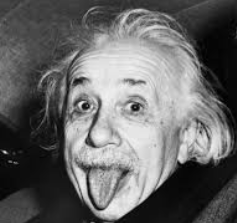
The state of mind which enables a man to do work of this kind is akin to that of the religious worshiper or the lover; the daily effort comes from no deliberate intention or program, but straight from the heart.
3 months 1 week ago
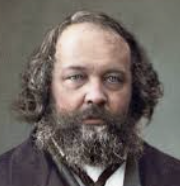
The modern state, in its essence and objectives, is necessarily a military state, and a military state necessarily becomes an aggressive state. If it does not conquer others it will itself be conquered, for the simple reason that wherever force exists, it absolutely must be displayed or put into action. From this again it follows that the modern state must without fail be huge and powerful; that is the indispensable condition for its preservation.
3 months 2 weeks ago
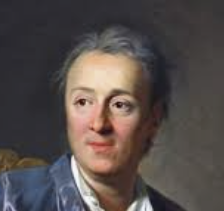
The more man ascends through the past, and the more he launches into the future, the greater he will be, and all these philosophers and ministers and truth-telling men who have fallen victims to the stupidity of nations, the atrocities of priests, the fury of tyrants, what consolation was left for them in death? This: That prejudice would pass, and that posterity would pour out the vial of ignominy upon their enemies. O Posterity! Holy and sacred stay of the unhappy and the oppressed; thou who art just, thou who art incorruptible, thou who findest the good man, who unmaskest the hypocrite, who breakest down the tyrant, may thy sure faith, thy consoling faith never, never abandon me!
▼
Source
source
As quoted in "Diderot" in The Great Infidels (1881) by Robert Green Ingersoll; The Works of Robert G. Ingersoll Vol. III (1900), p. 367
3 months 6 days ago
The eyes see only what the mind is prepared to comprehend.
▼
Source
source
Robertson Davies as quoted in The White Bedouin (2007) by George Potter, p. 241
1 week 3 days ago
Each of us lives only now, this brief instant.
▼
Source
source
(Hays translation) III, 10
2 weeks ago
My entire soul is a cry, and all my work the commentary on that cry.
▼
Source
source
Author's Introduction, p. 15
2 months 2 weeks ago
Nonviolence is perhaps best described as a practice of resistance that becomes possible, if not mandatory, precisely at the moment when doing violence seems most justified and obvious. In this way, it can be understood as a practice that not only stops a violent act, or a violent process, but requires a form of sustained action, sometimes aggressively pursued. So, one suggestion I will make is that we can think of nonviolence not simply as the absence of violence, or as the act of refraining from committing violence, but as a sustained commitment, even a way of rerouting aggression for the purposes of affirming ideals of equality and freedom.
▼
Source
source
p. 27

1 week 6 days ago
The line that connects the bombing of civilian populations to the mountain removed by strip mining ... to the tortured prisoner seems to run pretty straight. We're living, it seems, in the culmination of a long warfare - warfare against human beings, other creatures and the Earth itself.
▼
Source
source
Commencement address at Lindsey Wilson College

4 months 3 days ago
It is better to correct your own faults than those of another.
1 month 3 weeks ago
On this showing, the nature of the breakdowns of civilizations can be summed up in three points: a failure of creative power in the minority, an answering withdrawal of mimesis on the part of the majority, and a consequent loss of social unity in the society as a whole.
▼
Source
source
Vol. 4 (1955 ), part B, p. 6

3 months 2 weeks ago
What terrible tragedies realism inflicts on people.'
2 months 3 weeks ago
First we have to believe, and then we believe.
▼
Source
source
K 55

1 week 4 days ago
The most beautiful monuments of Athens belong to the century of Pericles. In Rome, what writers were produced under the Republic? Only Plautus and Terence. Lucretius, Sallust, and Cicero saw the Republic die. Then came the century of Augustus when the nation was all that it could be by way of talents. The arts, in general, need a king; they only flourish under the influence of sceptres. Even in Greece, the only country where they flourished in the milieu of a republic, Lysippos and Apelles worked for Alexander. Aristotle owed to Alexander's generosity the means to compose his history of animals; and, after the death of this monarch, the poets, scholars, and artists went to look for protection and rewards in the courts of his successors.
▼
Source
source
p. 179
1 month 3 weeks ago
Humans already massively intervene in Nature, whether through habitat destruction, captive breeding programs for big cats, "rewilding", etc. So the question is not whether humans should "interfere", but rather what ethical principles should govern our interventions.
▼
Source
source
The Antispeciesist Revolution, Institute for Ethics and Emerging Technologies, 26 Jul. 2013
1 month 1 week ago
Scientists believe there is a hierarchy of facts and that among them may be made a judicious choice. They are right, since otherwise there would be no science...
4 months 3 weeks ago
The unassisted hand and the understanding left to itself possess but little power. Effects are produced by the means of instruments and helps, which the understanding requires no less than the hand; and as instruments either promote or regulate the motion of the hand, so those that are applied to the mind prompt or protect the understanding.
▼
Source
source
Aphorism 2
4 months 3 weeks ago
In judging policies we should consider the results that have been achieved through them rather than the means by which they have been executed.
▼
Source
source
From an undated letter to Piero Soderini (translated here by Dr. Arthur Livingston), in The Living Thoughts of Machiavelli, by Count Carlo Sforza, published by Cassell, London (1942), p. 85
1 month 4 weeks ago
The man-like Apes... have certain characters of structure and of distribution in common.
▼
Source
source
Ch.1, p. 34

5 months 1 week ago
The welfare of the people in particular has always been the alibi of tyrants, and it provides the further advantage of giving the servants of tyranny a good conscience. It would be easy, however, to destroy that good conscience by shouting to them: if you want the happiness of the people, let them speak out and tell what kind of happiness they want and what kind they don't want! But, in truth, the very ones who make use of such alibis know they are lies; they leave to their intellectuals on duty the chore of believing in them and of proving that religion, patriotism, and justice need for their survival the sacrifice of freedom.
1 week 3 days ago
Death hangs over thee: whilst yet thou livest, whilst thou mayest, be good.
▼
Source
source
IV, 14 (trans. Meric Casaubon) Variant: Death hangs over thee. While thou livest, while it is in thy power, be good.
3 months 2 weeks ago
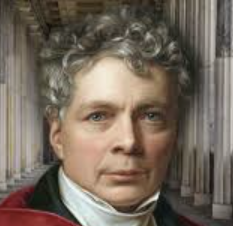
What is Europe really but a sterile trunk which owes everything to oriental grafts?
▼
Source
source
Letter of 18 December 1806 to Windischmann, quoted by Rene Gerard, L'Orient et la pensée romantique allemande, Paris 1963,, p. 213. quoted in Poliakov, L. (1974).

3 months 1 week ago
What does the future, that half of time, matter to the man who is infatuated with eternity?

1 week 6 days ago
I agree ... that a professorship of Theology should have no place in our institution. But we cannot always do what is absolutely best. Those with whom we act, entertaining different views, have the power and the right of carrying them into practice. Truth advances, and error recedes step by step only; and to do to our fellow men the most good in our power, we must lead where we can, follow where we cannot, and still go with them, watching always the favorable moment for helping them to another step.
▼
Source
source
Comment on establishing the University of Virginia, in a letter to Thomas Cooper (7 October 1814); published in The Writings of Thomas Jefferson (1905) edited by Andrew Adgate Lipscomb and Albert Ellery Bergh, Vol VII, p. 200
5 months 1 week ago
Consider the most famous pure dystopian tale of modern times, 1984, by George Orwell (1903-1950), published in 1948 (the same year in which Walden Two was published). I consider it an abominably poor book. It made a big hit (in my opinion) only because it rode the tidal wave of cold war sentiment in the United States.
4 months 2 weeks ago
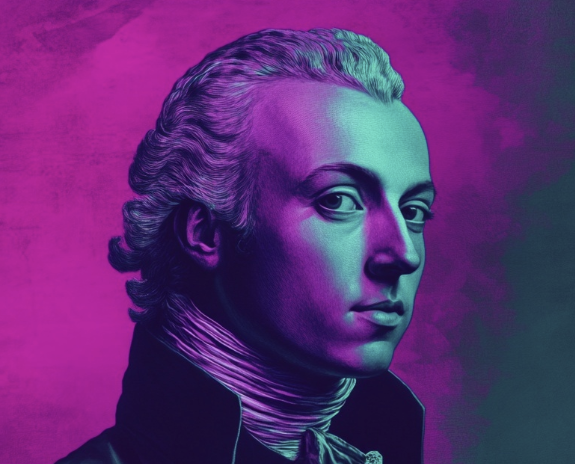
A public can only arrive at enlightenment slowly. Through revolution, the abandonment of personal despotism may be engendered and the end of profit-seeking and domineering oppression may occur, but never a true reform of the state of mind. Instead, new prejudices, just like the old ones, will serve as the guiding reins of the great, unthinking mass. All that is required for this enlightenment is freedom; and particularly the least harmful of all that may be called freedom, namely, the freedom for man to make public use of his reason in all matters. But I hear people clamor on all sides: Don't argue! The officer says: Don't argue, drill! The tax collector: Don't argue, pay! The pastor: Don't argue, believe!

2 months 3 weeks ago
The characteristic of the really great writer is the ability of his mind to to suddenly leap beyond his ordinary human values, into sudden perception of universal values.
▼
Source
source
p. 33
5 months 3 days ago
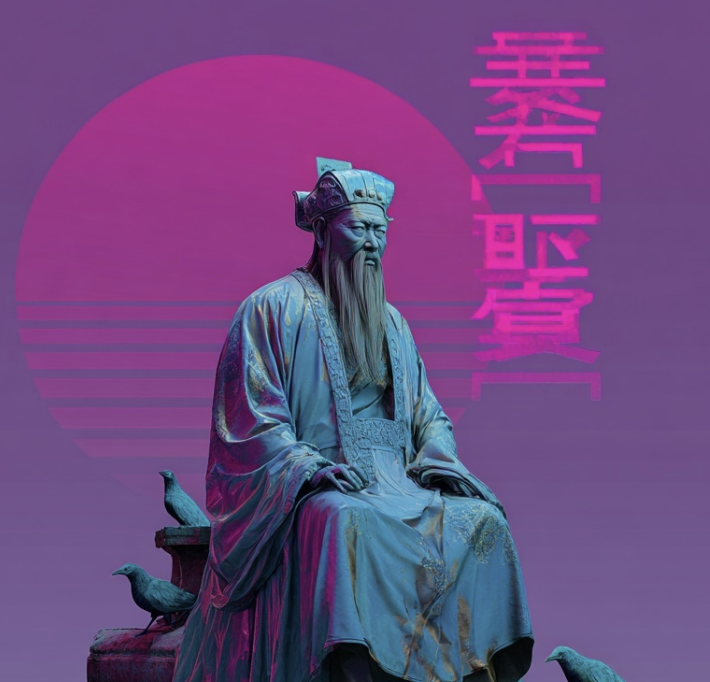
To throw oneself into strange teachings is quite dangerous.
1 month 4 days ago
Is not every true Reformer, by the nature of him, a Priest first of all? He appeals to Heaven's invisible justice against Earth's visible force; knows that it, the invisible, is strong and alone strong. He is a believer in the divine truth of things; a seer, seeing through the shows of things; a worshipper, in one way or the other, of the divine truth of things; a Priest, that is. If he be not first a Priest, he will never be good for much as a Reformer.


4 weeks ago
Life is to be fortified by many friendships. To love, and to be loved, is the greatest happiness of existence. If I lived under the burning sun of the equator, it would be a pleasure to me to think that there were many human beings on the other side of the world who regarded and respected me; I could and would not live if I were alone upon the earth, and cut off from the remembrance of my fellow-creatures. It is not that a man has occasion often to fall back upon the kindness of his friends; perhaps he may never experience the necessity of doing so; but we are governed by our imaginations, and they stand there as a solid and impregnable bulwark against all the evils of life.
▼
Source
source
Vol. I, ch. 6, "Of Friendship", p. 178

3 months 1 week ago
To conceive a thought - just one, but one that would tear the universe to pieces.
5 months 3 days ago
Although the Law of Reason is common, the majority of people live as though they had an understanding of their own.
CivilSimian.com created by AxiomaticPanic, CivilSimian, Kalokagathia