


1 week 3 days ago
Art thy not content that thou hast done something conformable to thy nature, and dost thou seek to be paid for it? Just as if the eye demanded recompense for seeing, or the feet for walking. For as these members are formed for a particular purpose... so also is man formed by nature to acts of benevolence.
▼
Source
source
IX, 42

4 months 2 weeks ago
The Hindoos are most serenely and thoughtfully religious than the Hebrews. They have perhaps a purer, more independent and impersonal knowledge of God. Their religious books describe the first inquisitive and contemplative access to God; the Hebrew bible a conscientious return, a grosser and more personal repentance. Repentance is not a free and fair highway to God. A wise man will dispense with repentance. It is shocking and passionate. God prefers that you approach him thoughtful, not penitent, though you are chief of sinners. It is only by forgetting yourself that you draw near to him. The calmness and gentleness with which the Hindoo philosophers approach and discourse on forbidden themes is admirable. In 1853.
▼
Source
source
A Tribute to Hinduism, 2008
2 months 4 weeks ago
The uniting of Orthodoxy with state absolutism came about on the soil of a non-belief in the Divineness of the earth, in the earthly future of mankind; Orthodoxy gave away the earth into the hands of the state because of its own non-belief in man and mankind, because of its nihilistic attitude towards the world. Orthodoxy does not believe in the religious ordering of human life upon the earth, and it compensates for its own hopeless pessimism by a call for the forceful ordering of it by state authority.
▼
Source
source
Nihilism On A Religious Soil

4 months 2 weeks ago
Man can, indeed, act contrarily to the decrees of God, as far as they have been written like laws in the minds of ourselves or the prophets, but against that eternal decree of God, which is written in universal nature, and has regard to the course of nature as a whole, he can do nothing.
▼
Source
source
Ch. 2, Of Natural Right

5 months 1 week ago
History is a story without an end.

4 weeks ago
He who does not wish to die cannot have wished to live.

1 week 6 days ago
The politicians have kept the environmental movement quiet by designating wilderness areas. And in the meantime, they've let corporations run completely out of control, and extraordinarily destructively, in the economic landscapes, without any acknowledgement at all that the natural world is out there just the same as it is in the parks.
4 months 3 weeks ago
What does it mean to have a god? or, what is God? Answer: A god means that from which we are to expect all good and to which we are to take refuge in all distress, so that to have a God is nothing else than to trust and believe Him from the [whole] heart; as I have often said that the confidence and faith of the heart alone make both God and an idol. If your faith and trust be right, then is your god also true; and, on the other hand, if your trust be false and wrong, then you have not the true God; for these two belong together faith and God. That now, I say, upon which you set your heart and put your trust is properly your god.
▼
Source
source
Large Catechism 1.1-3, F. Bente and W.H.T. Dau, tr. Triglot Concordia: The Symbolical Books of the Ev. Lutheran Church(St. Louis: Concordia Publishing House, 1921), 565.

2 months 3 weeks ago
The people are asleep; they remain indifferent. They forge their own chains and do the bidding of their masters to crucify their Christs.
▼
Source
source
(p. 304)
2 months 3 weeks ago
Many modern philosophers claim that probability is relation between an hypothesis and the evidence for it.
▼
Source
source
Chapter 4, Evidence, p. 31.

3 months 2 weeks ago
We find that everything that makes up difference and number is pure accident, pure show, pure constitution. Every production, of whatever kind, is an alteration, but the substance remains always the same, because it is only one, one divine immortal being.

4 months 2 weeks ago
Men use thought only to justify their wrongdoings, and speech only to conceal their thoughts.
▼
Source
source
Dialogue 14, Le Chapon et la Poularde (1766); reported in Bartlett's Familiar Quotations, 10th ed., 1919
4 months 4 days ago
Speciesism-the word is not an attractive one, but I can think of no better term-is a prejudice or attitude of bias in favor of the interests of members of one's own species and against those of members of other species.
▼
Source
source
Ch. 1: All Animals Are Equal

4 months 1 week ago
Similarly, individual acts of aristocratic generosity do not eliminate pauperism; they perpetuate it.
▼
Source
source
p. 219

3 months 2 weeks ago
Times before you, when even the living men were Antiquities; when the living might exceed the dead, and to depart this world, could not be properly said, to go unto the greater number. Dedication

4 months 2 weeks ago
Epicurus, the great teacher of happiness, has correctly and finely divided human needs into three classes. First there are the natural and necessary needs which, if they are not satisfied, cause pain. Consequently, they are only victus et amictus [food and clothing] and are easy to satisfy. Then we have those that are natural yet not necessary, that is, the needs for sexual satisfaction. ... These needs are more difficult to satisfy. Finally, there are those that are neither natural nor necessary, the needs for luxury, extravagance, pomp, and splendour, which are without end and very difficult to satisfy.
▼
Source
source
E. Payne, trans. (1974) Vol. 1, p. 346
3 months 2 weeks ago
Happy are they that go to bed with grave music like Pythagoras.
1 week 6 days ago
What we do need to worry about is the possibility that we will be reduced, in the face of the enormities of our time, to silence or to mere protest.
▼
Source
source
A Poem of Difficult Hope
1 week 3 days ago
The mechanical mind has a passion for control - of everything except itself. Beyond the control it has won over the forces of nature it would now win control over the forces of society of stating the problem and producing the solution, with social machinery to correspond.
▼
Source
source
Revolt Against Mechanism (1933).

5 months 2 weeks ago
After all, in the poets love has its priests, and sometimes one hears a voice which knows how to defend it; but of faith one hears never a word. Who speaks in honor of this passion? Philosophy goes further. Theology sits rouged at the window and courts its favor, offering to sell her charms to philosophy. it is supposed to be difficult to understand Hegel, but to understand Abraham is a trifle. To go beyond Hegel's is a miracle, but to get beyond Abraham is the easiest thing of all.

4 months 1 week ago
Never read any book that is not a year old.
▼
Source
source
Books
4 months 4 weeks ago
Look now, this is the starting point of philosophy: the recognition that different people have conflicting opinions, the rejection of mere opinion so that it comes to be viewed with mistrust, an investigation of opinion to determine whether it is rightly held, and the discovery of a standard of judgement, comparable to the balance that we have devised for the determining of weights, or the carpenter's rule for determining whether things are straight or crooked.
▼
Source
source
Book II, ch. 11, 13.

3 months 2 weeks ago
All writers, not ours alone but foreigners also, who have sought to represent Absolute Beauty, were unequal to the task, for it is an infinitely difficult one. The beautiful is the ideal ; but ideals, with us as in civilized Europe, have long been wavering. There is in the world only one figure of absolute beauty: Christ. That infinitely lovely figure is, as a matter of course, an infinite marvel.
▼
Source
source
Letter to his Niece Sofia Alexandrovna, Geneva, January 1, 1868. Ethel Golburn Mayne, Letters of Fyodor Michailovitch Dostoyevsky to His Family and Friends (1879), Dostoevsky's Letters XXXIX, p. 136
4 months 4 weeks ago
To the rational being only the irrational is unendurable, but the rational is endurable.
▼
Source
source
Variant translation: To a reasonable creature, that alone is insupportable which is unreasonable; but everything reasonable may be supported. Book I, ch. 2,1.

3 months 2 weeks ago
...what I look to with seriousness is the Phalanx of Party which exists in the body of the dissenters, who are, at the very least, nine tenths of them entirely devoted, some with greater some with less zeal, to the principles of the French Revolution.
▼
Source
source
Letter to the Home Secretary, Henry Dundas (30 September 1791), quoted in Alfred Cobban and Robert A. Smith (eds.), The Correspondence of Edmund Burke, Volume VI: July 1789-December 1791 (1967), p. 419
2 months 4 weeks ago
The greatest invention of the nineteenth century was the invention of the method of invention.
▼
Source
source
Ch. 6: "The Nineteenth Century", p. 136
2 weeks ago
How can anyone see the only way the world can be saved and not be forced to weep?
4 weeks ago
Our plans miscarry because they have no aim. When a man does not know what harbour he is making for, no wind is the right wind.
▼
Source
source
Line 2 Alternate translation: If one does not know to which port one is sailing, no wind is favorable. (translator unknown).

4 months 3 days ago
Let's put a limit to the scramble for money. ... Having got what you wanted, you ought to begin to bring that struggle to an end.
▼
Source
source
Book I, satire i, lines 92-94, as translated by N. Rudd
4 months 2 weeks ago
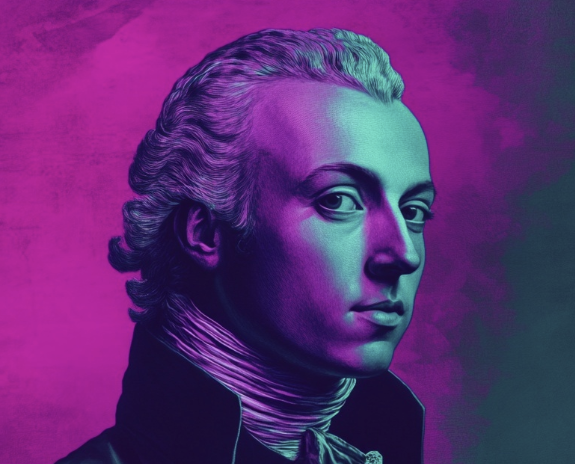
The guidelines for achieving wisdom consist of three leading maxims: 1) Think for yourself; 2) (in communication with other people) Put yourself in the place of the other person; 3) Always think by remaining faithful to your own self.
▼
Source
source
Kant, Immanuel (1996), page 95
4 months 3 weeks ago
Let us keep to Christ, and cling to Him, and hang on Him, so that no power can remove us.
▼
Source
source
p. 433
4 months 1 week ago
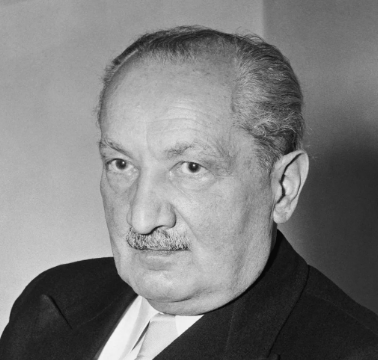
It is said that "being" is the most universal and the emptiest concept. As such it resists every attempt at definition. Nor does this most universal and thus indefinable concept need any definition. Everybody uses it constantly and also already understands what is meant by it.
▼
Source
source
Introduction: The Exposition of the Question of the Meaning of Being (Stambaugh translation)
4 months 3 weeks ago
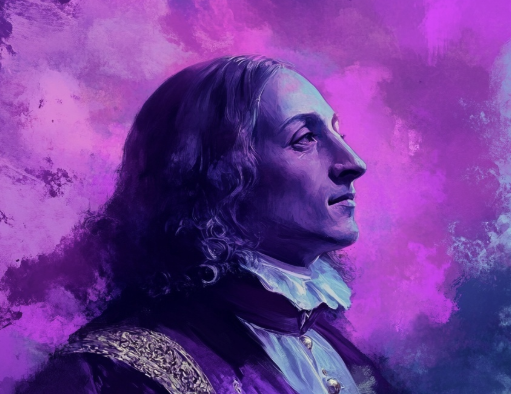
Rules for Definitions. I. Not to undertake to define any of the things so well known of themselves that the clearer terms cannot be had to explain them. II. Not to leave any terms that are at all obscure or ambiguous without definition. III. Not to employ in the definition of terms any words but such as are perfectly known or already explained.
3 weeks ago
In a superior civilization, as, for example, that of the Indo-Aryans, the being who is without a characteristic form or caste (in the original meaning of the word), not even that of servant or shudra, would emerge as a pariah. In this respect America is a society of pariahs. There is a role for pariahs. It is to be subjected to beings whose form and internal laws are precisely defined. Instead the modern pariahs seek to become dominant themselves and to exercise their dominion over the entire world.
▼
Source
source
American "Civilization"
5 months 1 week ago
Q. You do not consider your statement a disloyal one? A. No, sir. Scientific truth is beyond loyalty and disloyalty. Q. You are sure that your statement represents scientific truth? A. I am.
4 months 4 days ago
I think of the course of human history as a long, swelling, increasingly polyphonic poem - a poem that leads up to nothing save itself. When the species is extinct, "human nature's total message" will not be a set of propositions, but a set of vocabularies - the more, and the more various, the better.
▼
Source
source
Response to Hartshorne in 'Rorty and Pragmatism, The Philosopher Responds to his Critics', p. 33
4 months 3 days ago
Conquered Greece took captive her savage conqueror and brought her arts into rustic Latium.
▼
Source
source
Book II, epistle i, lines 156-157

5 months 2 weeks ago
One must have a good memory to be able to keep the promises one makes.
1 week 3 days ago
He that dies in extreme old age will be reduced to the same state with him that is cut down untimely.
▼
Source
source
IX, 33
3 months 1 week ago
I know every numbskull will babble on about "black man," "maneater," "chance," and "retrospective interpretation," in order to banish something terribly inconvenient that might sully the familiar picture of childhood innocence. Ah, these good, efficient, healthy-minded people, they always remind me of those optimistic tadpoles who bask in a puddle in the sun, in the shallowest of waters, crowding together and amiably wriggling their tails, totally unaware that the next morning the puddle will have dried up and left them stranded. On a phallic dream he had as a young child.
▼
Source
source
p. 14

5 months 1 week ago
Since those who rule in the city do so because they own a lot, I suppose they're unwilling to enact laws to prevent young people who've had no discipline from spending and wasting their wealth, so that by making loans to them, secured by the young people's property, and then calling those loans in, they themselves become even richer and more honored.

3 months 1 week ago
Lord, give me the capacity of never praying, spare me the insanity of all worship, let this temptation of love pass from me which would deliver me forever unto You. Let the void spread between my heart and heaven! I have no desire to people my deserts by Your presence, to tyrannize my nights by Your light, to dissolve my Siberias beneath Your sun.
2 months 3 weeks ago
A good means to discovery is to take away certain parts of a system to find out how the rest behaves.
▼
Source
source
As quoted in A Dictionary of Scientific Quotations (1991) edited by Alan Lindsay Mackay, p. 154
3 months 1 week ago
I shall in no time forget that moment. We felt as if we had had in our souls a clear passing glimpse into this wondrous World.

2 months 1 week ago
Understand then all of you, especially the young, that to want to impose an imaginary state of government on others by violence is not only a vulgar superstition, but even a criminal work. Understand that this work, far from assuring the well-being of humanity is only a lie, a more or less unconscious hypocrisy, camouflaging the lowest passions we possess.
▼
Source
source
Passage written for for The Law of Love and the Law of Violence (1908), released in 1917

4 months 3 weeks ago
Origen, of course, is also a great advocate of the allegorical approach. Yet I think you will have to admit that our modem theologians either despise this method of interpretation or are completely ignorant of it. As a matter of fact they surpass the pagans of antiquity in the subtlety of their distinctions.
▼
Source
source
p. 63
1 week 2 days ago
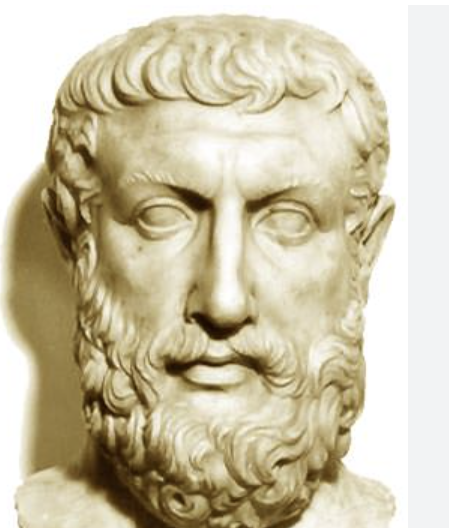
What was was ever, and ever shall be. For, if it had come into being, it needs must have been nothing before it came into being. Now, if it were nothing, in no wise could anything have arisen out of nothing.
1 week 5 days ago
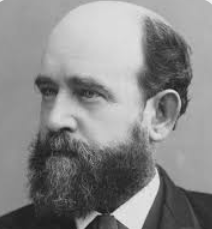
The equal right of all men to the use of land is as clear as their equal right to breathe the air - it is a right proclaimed by the fact of their existence. For we cannot suppose that some men have a right to be in this world, and others no right.
▼
Source
source
Book VII, Ch. 1
4 months 3 weeks ago
One of the principal reasons that diverts those who are entering upon this knowledge so much from the true path which they should follow, is the fancy that they take at the outset that good things are inaccessible, giving them the name great, lofty, elevated, sublime. This destroys everything. I would call them low, common, familiar: these names suit it better; I hate such inflated expressions.
3 weeks 1 day ago
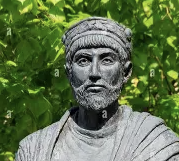
The trial that begins Awards to him who wins The fairest prize to-day. And lo, the hour is here And summons you. Appear! Ye may no more delay. Come hear the herald's call Ye princes one and all. Many tribes of men Submissive to you then! How keen in war your swords! But now 'tis wisdom's turn; Now let your rivals learn How keen can be your words.
CivilSimian.com created by AxiomaticPanic, CivilSimian, Kalokagathia