
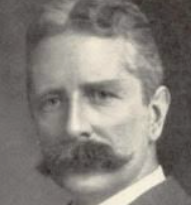
L.P. Jacks — Education Through Recreation and the Life of the Whole Person (1860–1955)
Lawrence Pearsall Jacks was a British philosopher, educator, Unitarian minister, and editor whose long and quietly influential life was devoted to the question of how human beings might live with wholeness, purpose, and joy.
Principal of Manchester College, Oxford for over two decades and longtime editor of the Hibbert Journal, he reached a wide readership through accessible, humane writing that refused to separate the intellectual from the practical, the philosophical from the personal.
His central concern: that the division of life into work and leisure, labor and play, duty and enjoyment is a false and damaging split — and that the fullest human life is one in which these apparent opposites are unified in a single wholehearted activity.
Education Through Recreation
Jacks is best remembered today for a single passage — one of the most quoted descriptions of integrated living in the English language — in which he described the master in the art of living as someone who makes no sharp distinction between work and play, labor and leisure, mind and body.
The passage captures his central philosophical conviction: that the fragmentation of human activity into compartments — this is work, this is rest, this is serious, this is merely recreational — is both a symptom of and a contributor to the diminishment of human life under industrial conditions.
Education, for Jacks, was not the transmission of information or the preparation for economic usefulness — it was the cultivation of a person capable of living wholly, of bringing full attention and genuine pleasure to whatever they were doing. Recreation was not the opposite of education but its proper medium — the condition in which genuine learning and genuine growth naturally occur.
Work done with joy is play. Play pursued with seriousness is work. The distinction, he insisted, is one of attitude, not activity.
"A master in the art of living draws no sharp distinction between his work and his play, his labor and his leisure, his mind and his body, his education and his recreation. He hardly knows which is which. He simply pursues his vision of excellence through whatever he is doing and leaves others to determine whether he is working or playing."
Religious Humanism and the Hibbert Journal
Jacks was a liberal religious thinker whose Unitarianism was philosophical rather than dogmatic — a commitment to the spiritual dimension of human experience without the insistence on creed, authority, or exclusion.
As editor of the Hibbert Journal from 1902 to 1947, he maintained a platform for open inquiry into religion, philosophy, and the life of the spirit — publishing figures as varied as Bertrand Russell, William James, and Albert Einstein alongside theologians, mystics, and social reformers.
His religious humanism held that the deepest human experiences — of beauty, of moral obligation, of love and loss — point toward something that deserves to be called spiritual, without requiring the apparatus of institutional religion to validate or contain it.
He was suspicious of both dogmatic religion and dogmatic materialism — seeing both as premature closures of questions that honest inquiry must leave open.
"The universe is not hostile, nor yet is it friendly. It is simply indifferent."
The Revolt Against Mechanism
Jacks wrote and lectured extensively against what he saw as the deadening influence of mechanistic thinking — the tendency of industrial civilization to treat human beings as components in a system rather than as persons with inner lives, purposes, and depths.
He was not anti-scientific — he welcomed the expansion of knowledge — but he insisted that the scientific description of the world was radically incomplete as an account of what mattered about it. The reduction of a person to their economic function, of education to job preparation, of health to the absence of measurable pathology, were all expressions of the same category error: mistaking the map for the territory, the measurable for the real.
His critique anticipated much of what later thinkers would say about the colonization of the lifeworld — the invasion of bureaucratic and economic rationality into domains that had previously been governed by other, richer forms of human attention.
The wholeness he called for was not a return to the pre-industrial but a refusal to let industrialism define the limits of what a human life could be.
"The man who is forever watching the clock has already lost the thing that made the hours worth counting."
Adventure and the Examined Life
Jacks wrote warmly about the spirit of adventure — not in the sense of physical risk but in the sense of openness to experience, willingness to be surprised, and resistance to the premature settling of life into fixed grooves of habit and expectation.
He saw the capacity for wonder as a moral quality — a form of respect for the world's inexhaustibility and for the inexhaustibility of other persons. The person who has stopped being surprised has, in an important sense, stopped paying attention.
This connected to his educational philosophy: the goal of education was not to fill students with answers but to keep alive in them the questions — the sense that the world is larger than any account of it, and that a life fully lived keeps discovering this with fresh astonishment.
He lived to ninety-four, and by all accounts kept this quality intact.
"The pessimist is one who has stopped asking questions. The optimist is one who has never stopped."
Legacy — A Quiet Voice That Carries
Jacks is not a canonical figure in academic philosophy — his work was too accessible, too practical, and too concerned with lived experience to fit comfortably in the increasingly technical landscape of twentieth century philosophy.
But the passage on the master in the art of living has circulated continuously since he wrote it — appearing in books on education, on work, on mindfulness, on the philosophy of play — often without attribution, absorbed into the common stock of wisdom in a way that few formally credited thinkers achieve.
His vision of integrated living — work that feels like play, learning that feels like adventure, a life in which the distinction between serious and joyful has been dissolved by full engagement — speaks directly to conditions of fragmentation and alienation that have only deepened since his time.
In the company of Lin Yutang and Wendell Berry on CivSim, he stands as a third voice for the proposition that the quality of attention brought to daily life matters more than any grand philosophical system — and that wholeness is not an achievement but a practice.
"To be wholly alive is to be at work and at play simultaneously — to find in one's occupation not a burden to be borne but a gift to be given."
CivilSimian.com created by AxiomaticPanic, CivilSimian, Kalokagathia