


4 months ago
We ought to regard the interests of the state as of far greater moment than all else, in order that they may be administered well; and we ought not to engage in eager rivalry in despite of equity, nor arrogate to ourselves any power contrary to the common welfare. For a state well administered is our greatest safeguard. In this all is summed up: When the state is in a healthy condition all things prosper; when it is corrupt, all things go to ruin.
3 months 6 days ago
I know of nothing more terrible than the poor creatures who have learned too much. Instead of the sound powerful judgement which would probably have grown up if they had learned nothing, their thoughts creep timidly and hypnotically after words, principles and formulae, constantly by the same paths. What they have acquired is a spider's web of thoughts too weak to furnish sure supports, but complicated enough to provide confusion.
▼
Source
source
On the Relative Educational Value of the Classics and the Mathematico-Physical Sciences in Colleges and High Schools, an address in (16 April 1886)
2 weeks 6 days ago
As a general rule, all that has been hitherto advanced respecting the nature of this deity, must be understood to refer to his properties: for the nature of the god is not one thing, and his influence another: and truly, besides these two, his energy a third thing: seeing that all things which he wills, these he is, he can, and he works. For neither doth he will that which he is not; nor is he without strength to do that which he wills; nor doth he will that which he cannot effect. Now this is very different in the case of men, for theirs is a double nature mixed up in one, that of soul and body; the former divine, the latter full of darkness and obscurity: hence naturally arise warfare and discord between the two.

1 month 3 weeks ago
One cannot collect all the beautiful shells on the beach. One can collect only a few, and they are more beautiful if they are few.
▼
Source
source
p. 114
1 week 3 days ago
In 'voluntary' motions, Sensations produce Actions, and the connexion is made by means of Ideas: in 'reflected' motions, the connexion neither seems to be nor is made by means of Ideas: in 'instinctive' motions, the connexion is such as requires Ideas, but we cannot believe the Ideas to exist.

4 months 1 week ago
Man cannot will unless he has first understood that he must count on no one but himself; that he is alone, abandoned on earth in the midst of his infinite responsibilities, without help, with no other aim than the one he sets himself, with no other destiny than the one he forges for himself on this earth.
4 months 1 day ago
Philosophy makes progress not by becoming more rigorous but by becoming more imaginative.
▼
Source
source
Introduction to Truth and Progress: Philosophical Papers, Volume 3 (1998).


3 months 1 week ago
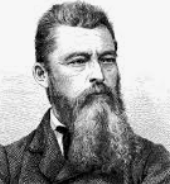
Hegel determines and presents only the most striking differences of various religions, philosophies, time and peoples, and in a progressive series of stages, but he ignores all that is common and identical in all of them. ... His system knows only subordination and succession; coordination and coexistence are unknown to it.
▼
Source
source
Z. Hanfi, trans., in The Fiery Brook (1972), p. 54

4 months 2 weeks ago
Truth springs from argument amongst friends.
1 month 4 days ago
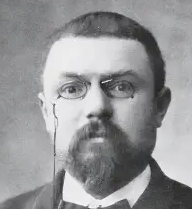
It is often said that experiments should be made without preconceived ideas. That is impossible. Not only would it make every experiment fruitless, but even if we wished to do so, it could not be done. Every man has his own conception of the world, and this he cannot so easily lay aside. We must, for example, use language, and our language is necessarily steeped in preconceived ideas.
▼
Source
source
Ch. IX: Hypotheses in Physics, Tr. George Bruce Halsted
1 week 1 day ago
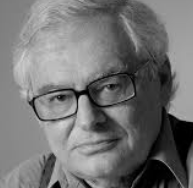
FACULTY PSYCHOLOGY is getting to be respectable again after centuries of hanging around with phrenologists and other dubious types. By faculty psychology I mean, roughly , the view that many fundamentally different kinds of psychological mechanisms must be postulated in order to explain the facts of mental life . Faculty psychology takes seriously the apparent heterogeneity of the mental and is impressed by such prima facie differences as between, say, sensation and perception, volition and cognition, learning and remembering, or language and thought.
▼
Source
source
p. 1

3 months 3 weeks ago
Hear gladly!

5 months ago
The way of the superior man may be found, in its simple elements, in the intercourse of common men and women; but in its utmost reaches, it shines brightly through Heaven and Earth.
3 months 1 week ago
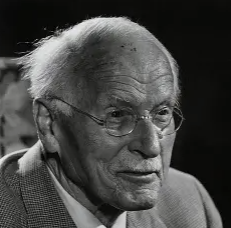
Our studies of sexual life, originating in Vienna and in England, are matched or surpassed by Hindu teachings on this subject... Psychoanalysis itself and the lines of thought to which it gives rise-surely a distinctly Western development-are only a beginner's attempt compared to what is an immemorial art in the East.
▼
Source
source
quoted in Georg Feuerstein, Subhash Kak, and David Frawley. - In search of the cradle of civilization _ new light on ancient India-Quest Books
3 months 1 week ago
Modern man may assert that he can dispense with them, and he may bolster his opinion by insisting that there is no scientific evidence of their truth. But since we are dealing with invisible and unknowable things (for God is beyond human understanding, and there is no mean of proving immortality), why should we bother with evidence?
▼
Source
source
p. 75-76

4 months 2 weeks ago
It is not death, it is dying that alarms me.
▼
Source
source
Book II, Ch. 13
1 week 3 days ago
Our assent to the hypothesis implies that it is held to be true of all particular instances. That these cases belong to past or to future times, that they have or have not already occurred, makes no difference in the applicability of the rule to them. Because the rule prevails, it includes all cases.
▼
Source
source
Part II Of Knowledge, Book XI Of the Construction of Science, Chap. 5 Of Certain Characteristics of Scientific Induction

4 months 1 week ago
The product of labour is labour which has been congealed in an object, which has become material: it is the objectification of labour. Labour's realization is its objectification.
▼
Source
source
p. 71, The Marx-Engels Reader
3 months 1 week ago
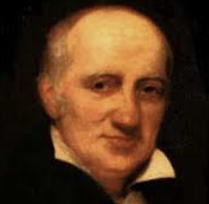
The case of mere titles is so absurd that it would deserve to be treated only with ridicule were t not for the serious mischief they impose on mankind. The feudal system was a ferocious monster, devouring, where it came, all that the friend of humanity regards with attachment and love. The system of titles appears under a different form. The monster is at length destroyed, and they who followed in his train, and fattened upon the carcasses of those he slew, have stuffed his skin, and, b exhibiting it, hope still to terrify mankind into patient and pusillanimity.
▼
Source
source
Book V, Chapter 13

2 months 3 weeks ago
It is precisely those artists and writers who are most inclined to think of their art as the manifestation of their personality who are in fact the most in bondage to public taste.
▼
Source
source
p. 57
4 months 2 weeks ago
All the opinions of the world agree in this, that pleasure is our end.
▼
Source
source
Ch. 20. Of the Force of Imagination, tr. Cotton, rev. W. Carew Hazlitt, 1877
1 month 2 weeks ago
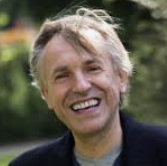
A lot of people recoil from the word "drugs" - which is understandable given today's noxious street drugs and their uninspiring medical counterparts. Yet even academics and intellectuals in our society typically take the prototypical dumb drug, ethyl alcohol. If it's socially acceptable to take a drug that makes you temporarily happy and stupid, then why not rationally design drugs to make people perpetually happier and smarter? Presumably, in order to limit abuse-potential, one would want any ideal pleasure drug to be akin - in one limited but important sense - to nicotine, where the smoker's brain finely calibrates its optimal level: there is no uncontrolled dose-escalation.
▼
Source
source
"The Abolitionist Project", Talks given at the FHI (Oxford University) and the Charity International Happiness Conference, 2007
4 months 2 weeks ago
Here then we may learn the fallacy of the remark... that any particular state is weak, though fertile, populous, and well cultivated, merely because it wants money. It appears that the want of money can never injure any state within itself: For men and commodities are the real strength of any community. It is the simple manner of living which here hurts the public, by confining the gold and silver to few hands, and preventing its universal diffusion and circulation. On the contrary, industry and refinements of all kinds incorporate it with the whole state, however small its quantity may be: They digest it into every vein, so to speak; and make it enter into every transaction and contract.
▼
Source
source
Of Money (1752) as quoted in David Hume: Writings on Economics (1955, 1970) ed., Eugene Rotwein, p. 45.

3 months 2 weeks ago
I have come across men of letters who have written history without taking part in public affairs, and politicians who have concerned themselves with producing events without thinking about them. I have observed that the first are always inclined to find general causes whereas the second, living in the midst of disconnected daily facts, are prone to imagine that everything is attributable to particular incidents, and that the wires they pull are the same as those that move the world. It is to be presumed that both are equally deceived.
▼
Source
source
Recollections of Alexis de Tocqueville, p. 80

3 months 6 days ago
The feeling of being ten thousand years behind, or ahead, of the others, of belonging to the beginnings or to the end of humanity...
3 months 6 days ago
To have accomplished nothing and to die overworked.

2 months 1 week ago
As soon as men live entirely in accord with the law of love natural to their hearts and now revealed to them, which excludes all resistance by violence, and therefore hold aloof from all participation in violence - as soon as this happens, not only will hundreds be unable to enslave millions, but not even millions will be able to enslave a single individual.
▼
Source
source
V

3 months 2 weeks ago
Your god is too small.
▼
Source
source
Attributed to Bruno in episode 1 of Cosmos: A Spacetime Odyssey (2014). Earliest use of this phrase appears to be in Your God is Too Small (1961) by English priest John Bertram Phillips.

4 months 2 weeks ago
I doubt if a single individual could be found from the whole of mankind free from some form of insanity. The only difference is one of degree. A man who sees a gourd and takes it for his wife is called insane because this happens to very few people.
▼
Source
source
As quoted in Words from the Wise : Over 6,000 of the Smartest Things Ever Said (2007) by Rosemarie Jarski, p. 312. From The Praise of Folly.
1 week 1 day ago
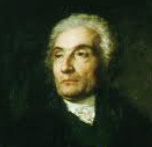
There is the same difference between political theory and constitutional laws as there is between poetics and poetry. The illustrious Montesquieu is to Lycurgus, in the intellectual hierarchy, what Batteux is to Homer or Racine. Moreover, these two talents positively exclude each other, as can be seen by the example of Locke, who fumbled badly when he presumed to give laws to the Americans.
▼
Source
source
Chapter VI, p. 52

5 months 1 week ago
There is no belief, however foolish, that will not gather its faithful adherents who will defend it to the death.

1 month 5 days ago
Fundamentally we are highly social creatures. We feel a big sense of anomie and discomfort when we are isolated from our fellow human beings. …We seek community in different ways. There's a right wing... and... a left wing version of this.
▼
Source
source
15:58

2 months 3 weeks ago
The rather more dubious side of Nietzsche's 'evolutionism' is his glorification of the warrior -- particularly when, as an exemplification of the warrior-hero, he chooses an archetypal 'spoilt brat' like Cesare Borgia. Nietzsche's own physical weakness and consequent inability to escape the atmosphere of the study leads him to take a rather unrealistic view of the man of action.
▼
Source
source
p. 87

1 week ago
The mind, like the body, has its contagious diseases and its scurvy. …We catch everything from those with whom we come in contact; their gestures, their accent, etc.
2 months 3 weeks ago
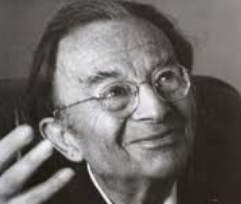
In erotic love, two people who were separate become one. In motherly love, two people who were one become separate. The mother must not only tolerate, she must wish and support the child's separation.
▼
Source
source
Ch. 2


4 months 1 week ago
Make yourself necessary to somebody. Do not make life hard to any.
▼
Source
source
Considerations by the Way
3 months 1 week ago
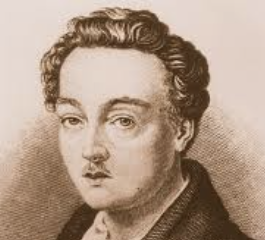
One must love humanity in order to reach out into the unique essence of each individual: no one can be too low or too ugly.
▼
Source
source
Lenz (1835).

4 months 5 days ago
The perfect disciplinary apparatus would make it possible for a single haze to see everything constantly. A central point would be both the source of light illuminating everything, and a locus of convergence for everything that must be known: a perfect eye that nothing would escape and a centre towards which all gazes would be turned.
▼
Source
source
Part Three, The Means of Correct Training
2 weeks 5 days ago
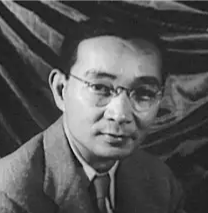
I strongly suspect that the average reader does not suspect India has as rich a culture, as creative an imagination and wit and humor as any China has to offer, and that India was China's teacher in religion and imaginative literature, and the world's teacher in trigonometry, quadratic equations, grammar, phonetics, Arabian Nights, animal fables, chess, as well as in philosophy, and that she inspired Boccaccio, Goethe, Herder, Schopenhauer, Emerson, and probably also old Aesop.
▼
Source
source
The Wisdom Of China And India by ) Lin Yutang
2 weeks 5 days ago
The secret of contentment is knowing how to enjoy what you have, and to be able to lose all desire for things beyond your reach.
▼
Source
source
As quoted in Remarks of Famous People (1965) by Jacob Morton Braude, p. 23
3 months 2 days ago
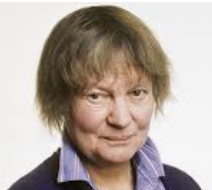
I think being a woman is like being Irish... Everyone says you're important and nice, but you take second place all the same.
▼
Source
source
The Red and the Green (1965), ch. 2, p. 30.
Just now
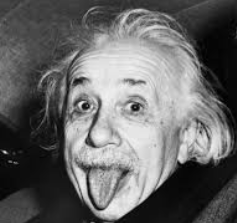
The whole of science is nothing more than a refinement of every day thinking.
3 months 6 days ago
When we have no further desire to show ourselves, we take refuge in music, the Providence of the abulic.
2 months 1 week ago
You worldly-minded people are most unfortunate! You are surrounded with sorrows and troubles overhead and underfoot and to the right and to the left, and you are enigmas even to yourselves.
▼
Source
source
p. 37

4 months 4 weeks ago
I [prefer] a short life with width to a narrow one with length.

3 weeks 4 days ago
Nothing becomes so offensive so quickly as grief. When fresh it finds someone to console it, but when it becomes chronic, it is ridiculed and rightly.
▼
Source
source
Line 13.
2 months 1 week ago
Nothing is wholly obvious without becoming enigmatic. Reality itself is too obvious to be true.
4 months 1 week ago
Means at our disposal should be regarded as a bulwark against the many evils and misfortunes that can occur. We should not regard such wealth as a permission or even an obligation to procure for ourselves the pleasures of the world.
▼
Source
source
E. Payne, trans. (1974) Vol. 1, p. 348
CivilSimian.com created by AxiomaticPanic, CivilSimian, Kalokagathia