
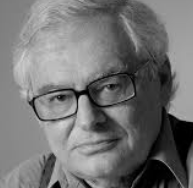
Jerry Fodor — The Modularity of Mind and the Limits of Cognitive Science (1935–2017)
Jerry Fodor was an American philosopher and cognitive scientist whose combative, brilliant, and often hilarious body of work made him the most influential philosopher of mind of the second half of the twentieth century.
A fierce defender of the reality of mental states, a sharp critic of behaviorism, connectionism, and eliminativism, and the architect of the computational theory of mind, he shaped the terms of debate in cognitive science for four decades — often by demolishing positions that everyone else had assumed were settled.
His central concern: that the mind is a real thing with real structure — that beliefs, desires, and meanings are not convenient fictions or neural patterns to be dissolved by neuroscience but the irreducible furniture of a universe that contains thinking beings.
The Language of Thought
Fodor's 1975 work "The Language of Thought" proposed one of the most audacious hypotheses in the history of cognitive science: that thinking is literally a computational process operating over mental representations with a syntax analogous to the sentences of a natural language.
He called this inner representational system Mentalese — a language of thought that underlies all human cognition, in which the content of beliefs and desires is encoded in symbolic structures that the mind manipulates according to formal rules.
The hypothesis explained how thought could be both systematic — if you can think that John loves Mary, you can think that Mary loves John — and productive, generating indefinitely many thoughts from a finite stock of concepts. These properties, Fodor argued, demand a combinatorial, language-like medium — and that medium must be innate, since no language could be learned without a prior language in which to represent its meanings.
The argument was controversial on arrival and remains so — but it set the agenda for debates about mental representation that are still unresolved today.
"If there is a language of thought, it is not English or Swahili or Urdu — it is something that underlies all of them."
The Modularity of Mind
Fodor's 1983 book "The Modularity of Mind" proposed that the mind is not a single general-purpose processor but a collection of specialized, informationally encapsulated systems — modules — each dedicated to processing a specific type of input.
Perceptual systems — language, vision, face recognition — are modular: fast, automatic, inaccessible to conscious control, and sealed off from the influence of background beliefs and expectations. You cannot choose not to hear speech as speech or see an optical illusion as flat once you know it is flat — the module processes its input regardless of what you know.
Central cognition — reasoning, belief fixation, decision making — is not modular, and this asymmetry had important implications. Modular systems are scientifically tractable precisely because they are encapsulated and specialized. Central cognition, being sensitive to the entire contents of the mind, is vastly harder to model — possibly intractable in principle.
This was Fodor being characteristically honest about the limits of his own field: cognitive science had made genuine progress on the periphery and remained largely baffled at the center.
"The existence of massively modular cognitive architecture would be very good news for cognitive science. Alas, I think it's probably not true."
Intentionality and the Problem of Content
Running through all of Fodor's work was a commitment to intentionality — the aboutness of mental states — as the central mystery of the mind.
Beliefs are about things. Desires are for things. Thoughts represent states of the world. This directedness toward an object or content is what distinguishes mental states from everything else in nature — rocks and rivers are not about anything.
Fodor devoted much of his career to the project of naturalizing intentionality — explaining how physical states in a brain could come to have content, to be about something beyond themselves. His asymmetric dependence theory attempted to specify the causal conditions under which a mental symbol means one thing rather than another.
He never claimed to have fully solved the problem — but he argued with great force that any philosophy of mind that dismissed it as a pseudo-problem had simply changed the subject.
"Intentionality is the mark of the mental. If you can explain intentionality, you can explain the mind. Nobody has explained intentionality."
The Critic — Against Darwinism, Connectionism, and Pragmatism
Fodor was as famous for what he attacked as for what he defended. His 2010 book "What Darwin Got Wrong," co-authored with Massimo Piattelli-Palmarini, argued that natural selection as standardly formulated was conceptually incoherent — that the notion of selection "for" a trait could not be given a coherent intensional reading. The book was widely criticized by biologists but raised logical points that remain philosophically live.
He attacked connectionist models of cognition — neural networks — as insufficiently sensitive to the syntactic structure of thought, arguing that a system that learns statistical patterns cannot account for the systematicity and productivity that characterize human reasoning.
He took repeated aim at pragmatism, eliminativism, and any view that tried to dissolve the distinction between the mind and its neural substrate — insisting that the intentional level of description was real, irreducible, and indispensable.
He was, by his own description, a realist and a Cartesian — unfashionable positions he held with cheerful combativeness.
"Darwinism says that all organisms are the products of selection. But what is selection a process of? You can't answer that question without circularity."
Legacy — The Last Great Defender of the Mental
Fodor wrote with a wit and clarity rare in technical philosophy — his prose crackled with sarcasm, analogy, and exasperation, making arguments that less talented writers would have buried in qualification land with the force of blows.
His influence on cognitive science and philosophy of mind is difficult to overstate — the computational theory of mind, the language of thought hypothesis, the modularity thesis, and the centrality of intentionality are all positions that serious researchers must engage with whether they accept them or not.
He was also, by all accounts, a generous teacher and a loyal friend — the combativeness of his prose concealing a person of genuine warmth who took students and ideas seriously in equal measure.
In an intellectual climate increasingly drawn toward eliminating the mental in favor of the neural, toward dissolving beliefs and meanings into activation patterns, Fodor stood firm — insisting that what makes us minds, not merely brains, is the most important thing about us and the thing we understand least.
"There is no such thing as the view from nowhere — but there is such a thing as the view from here. And that view includes believing things, wanting things, and meaning things. Those facts are not going away."
CivilSimian.com created by AxiomaticPanic, CivilSimian, Kalokagathia