

4 months 1 week ago
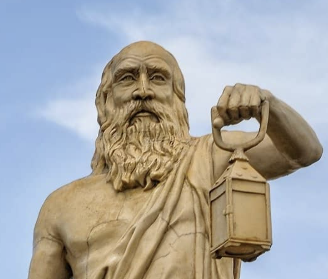
He used to reason as follows: 'Everything belongs to the gods; the wise are friends of the gods; friends hold all things in common; ergo, everything belongs to the wise.'
▼
Source
source
Diogenes Laërtius, vi. 37, as reported in Diogenes the Cynic: Sayings and Anecdotes as translated by Robin Hard (Oxford: 2012), p. 13

4 months 3 weeks ago
"They have an engine called the Press whereby the people are deceived."
▼
Source
source
Ch. 13 : They Have Pulled Down Deep Heaven on Their Heads
1 month 1 day ago
So long as you are a slave to the opinions of the many you have not yet approached freedom or tasted its nectar...But I do not mean by this that we ought to be shameless before all men and to do what we ought not; but all that we refrain from and all that we do, let us not do or refrain from merely because it seems to the multitude somehow honorable or base, but because it is forbidden by reason and the god within us.
▼
Source
source
Oration to the Uneducated Cynics


5 months 1 week ago
Earnest in practicing the ordinary virtues, and careful in speaking about them, if, in his practice, he has anything defective, the superior man dares not but exert himself; and if, in his words, he has any excess, he dares not allow himself such license. Thus his words have respect to his actions, and his actions have respect to his words; is it not just an entire sincerity which marks the superior man?

3 months 2 days ago
Courage, garrulousness and the mob are on our side. What more do we want?
▼
Source
source
E 32
2 weeks 5 days ago
Consider all that you've gone through, all that you've survived. And that the story of your life is done, your assignment complete. How many good things have you seen? How much pain and pleasure have you resisted? How many honors have you declined? How many unkind people have you been kind to?
▼
Source
source
(Hays translation) V, 31
3 months 3 weeks ago
In any country where talent and virtue produce no advancement, money will be the national god. Its inhabitants will either have to possess money or make others believe that they do. Wealth will be the highest virtue, poverty the greatest vice. Those who have money will display it in every imaginable way. If their ostentation does not exceed their fortune, all will be well. But if their ostentation does exceed their fortune they will ruin themselves. In such a country, the greatest fortunes will vanish in the twinkling of an eye. Those who don't have money will ruin themselves with vain efforts to conceal their poverty. That is one kind of affluence: the outward sign of wealth for a small number, the mask of poverty for the majority, and a source of corruption for all.

4 months 3 weeks ago
Superstition sets the whole world in flames; philosophy quenches them.
▼
Source
source
Dictionnaire philosophique (1822), "Superstition"

5 months ago
Nothing prints more lively in our minds than something we wish to forget.
▼
Source
source
Book II, Ch. 12

4 months 3 weeks ago
As there were black swans, though civilized people had existed for three thousand years on the earth without meeting with them...The uniform experience, therefore, of the inhabitants of the known world, agreeing in a common result, without one known instance of deviation from that result, is not always sufficient to establish a general conclusion.

5 months 3 weeks ago
Editor Preface In this book, originating in the year 1848, the requirement for being a Christian is forced up by the pseudonymous author to the supreme ideality. Yet the requirement should indeed be stated, presented, and heard. From the Christian point of view, there ought to be no scaling down of the requirement, nor suppression of it-instead of a personal admission and confession. The requirement should be heard-and I understand what is said as spoken to me alone-so that I might learn not only to resort to grace but to resort to it in relation to the use of grace.
5 months 3 weeks ago
If self-knowledge does not lead to knowing oneself before God - well, then there is something to what purely human self-observation says, namely, this self-knowledge leads to a certain emptiness that produces dizziness. Only by being before God can one totally come to oneself in the transparency of soberness.

4 months 3 weeks ago
In every country it always is and must be the interest of the great body of the people to buy whatever they want of those who sell it cheapest. The proposition is so very manifest that it seems ridiculous to take any pains to prove it; nor could it ever have been called in question had not the interested sophistry of merchants and manufacturers confounded the common sense of mankind. Their interest is, in this respect, directly opposite to that of the great body of the people.
▼
Source
source
Chapter III, Part II, p. 531.

3 weeks 1 day ago
Tried myself in the school of affliction, by the loss of every form of connection which can rive the human heart, I know well, and feel what you have lost, what you have suffered, are suffering, and have yet to endure. The same trials have taught me that for ills so immeasurable, time and silence are the only medicines. I will not, therefore, by useless condolences, open afresh the sluices of your grief, nor, although mingling sincerely my tears with yours, will I say a word more where words are vain.
▼
Source
source
Letter to John Adams (13 November 1818) regarding the death of Abigail Adams
4 months 3 weeks ago
It appears... that a work similar in its object and general conception to that of Adam Smith, but adapted to the more extended knowledge and improved ideas of the present age, is the kind of contribution which Political Economy at present requires. The Wealth of Nations is in many parts obsolete, and in all, imperfect. Political Economy... has grown up almost from infancy since the time of Adam Smith; and the philosophy of society... has advanced many steps beyond the point at which he left it.
▼
Source
source
Preface, 1848

4 months 3 weeks ago
What do you think of the aspect of the money market? ... This time, by the by, the thing has assumed European dimensions such as have never been seen before, and I don't suppose we'll be able to spend much longer here merely as spectators. The very fact that I've at last got round to setting up house again and sending for my books seems to me to prove that the 'mobilisation' of our persons is AT HAND.
▼
Source
source
Letter to Friedrich Engels (26 September 1856), quoted in The Collected Works of Karl Marx and Friedrich Engels: Volume 40. Letters 1856-59 (2010), pp. 71-72
2 months 3 weeks ago
You need to know at least one foreign language well enough so that you can read the best literature that that language has produced in the original, and so you carry on a reasonable conversation and have dreams in that language. There are several reasons why this is crucial, but the most important is perhaps this: you can never understand one language until you understand at least two.

4 months 3 weeks ago
Characters and talents are complemental and suppletory. The world stands by balanced antagonisms. The more the peculiarities are pressed the better the result. The air would rot without lightning; and without the violence of direction that men have, without bigots, without men of the fixed idea, no excitement, no efficiency. The novelist should not make any character act absurdly, but only absurdly as seen by others. For it is so in life. Nonsense will not keep its unreason if you come into the humorist's point of view, but unhappily we find it is fast becoming sense, and we must flee again into the distance if we would laugh.
▼
Source
source
"The Natural History of Intellect", p. 45
1 month 2 weeks ago
The present crisis of Western democracy is a crisis in journalism.
▼
Source
source
Journalism and the Higher Law, p. 5
2 months 3 weeks ago
For it is with the same imperialism that present-day simulators try to make the real, all of the real, coincide with their simulation models.
▼
Source
source
"The Precession of Simulacra," pp. 1-2

2 weeks 4 days ago
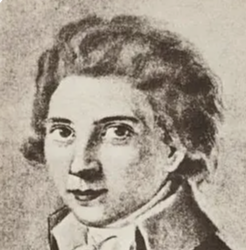
What is our task in the question of peace? It does not consist merely in vigorously demonstrating at all times the love of peace of the Social Democrats; but first and foremost our task is to make clear to the masses of people the nature of militarism and sharply and clearly to bring out the differences in principle between the standpoint of the Social Democrats and that of the bourgeois peace enthusiasts.
3 months 3 weeks ago
Poetry can be criticized only through poetry. A critique which itself is not a work of art, either in content as representation of the necessary impression in the process of creation, or through its beautiful form and in its liberal tone in the spirit of the old Roman satire, has no right of citizenship in the realm of art.
▼
Source
source
"Selected Aphorisms from the Lyceum (1797)", Dialogue on Poetry and Literary Aphorisms, Ernst Behler and Roman Struc, trans. (Pennsylvania University Press:1968) #117

2 months 2 weeks ago
A moral point of view too often serves as a substitute for understanding in technological matters.
▼
Source
source
(p. 245)

3 months 2 weeks ago
When we cannot be delivered from ourselves, we delight in devouring ourselves.

5 months ago
...God commanded in the law [Deut. 22:22-24] that adulterers be stoned . . . The temporal sword and government should therefore still put adulterers to death . . . Where the government is negligent and lax, however, and fails to inflict the death penalty, the adulterer may betake himself to a far country and there remarry if he is unable to remain continent. But it would be better to put him to death, lest a bad example be set . . .

4 months 3 weeks ago
If good music has charms to soothe the savage breast, bad music has no less powerful spells for filling the mildest breast with rage, the happiest with horror and disgust. Oh, those mammy songs, those love longings, those loud hilarities! How was it possible that human emotions intrinsically decent could be so ignobly parodied.
▼
Source
source
"Silence is Golden," p. 59
3 months 2 weeks ago
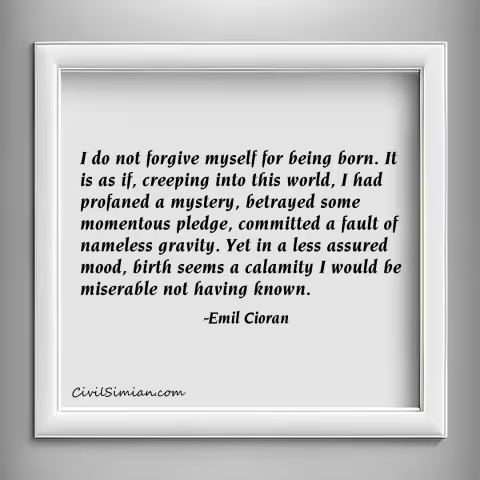
Facing a landscape annihilated by the light, to remain serene supposes a temper I do not have. The sun is my purveyor of black thoughts; and summer the season when I have always reconsidered my relations with this world and with myself, to the greatest prejudice of both.

1 month 1 week ago
A good judge condemns wrongful acts, but does not hate them.
▼
Source
source
De Ira (On Anger): Book 1, cap. 16, line 6.


4 months 3 weeks ago
Genet is a man-failure: he wills the impossible in order to derive from the tragic grandeur of this defeat the assurance that there is something other than the possible.
▼
Source
source
p. 213

3 months 5 days ago
My theory was that we are all fundamentally 'multiple personalities', beginning with the baby and the child, and slowly developing into more complex selves. If, for some reason, we abruptly cease to develop -- through some trauma that undermines self-confidence -- all those potential personalities are stunted and repressed. And some accident or violent shock may give one of them the opportunity to 'take over'. This suggests, of course, that in some mysterious sense, our 'future' personalities are already there, in embryo, so to speak, and that they also develop as we mature. We move from personality to personality, as we might climb a ladder. The Beethovens and Leonardos got further up the ladder than most of us; yet even they failed to reach the top, as we can see if we study their lives.
▼
Source
source
pp. 228- 229
1 month 2 weeks ago
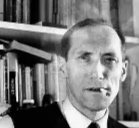
From the point of view of the development of Marx's theories, his early journalistic writings are important for two main reasons. In his sharp attacks on the censorship law he spoke out unequivocally for the freedom of the Press, against the levelling effect of government restriction ('You don't expect a rose to smell like a violet; why then should the human spirit, the richest thing we have, exist only in a single form?'), and also expressed views concerning the whole nature of the state and the essence of freedom. Pointing out that the vagueness and ambiguity of the Press law placed arbitrary power in the hands of officials, Marx went on to argue that censorship was contrary not only to the purposes of the Press, but to the nature of the state as such.
▼
Source
source
(pp. 120-1)
2 months 1 day ago
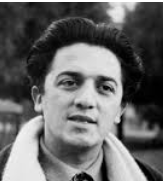
I don't believe in total freedom for the artist. Left on his own, free to do anything he likes, the artist ends up doing nothing at all. If there's one thing that's dangerous for an artist, it's precisely this question of total freedom, waiting for inspiration and the rest of it.
▼
Source
source
Artistic Freedom
3 months 2 weeks ago
Progress is the injustice each generation commits with regard to its predecessor.
5 months 1 week ago
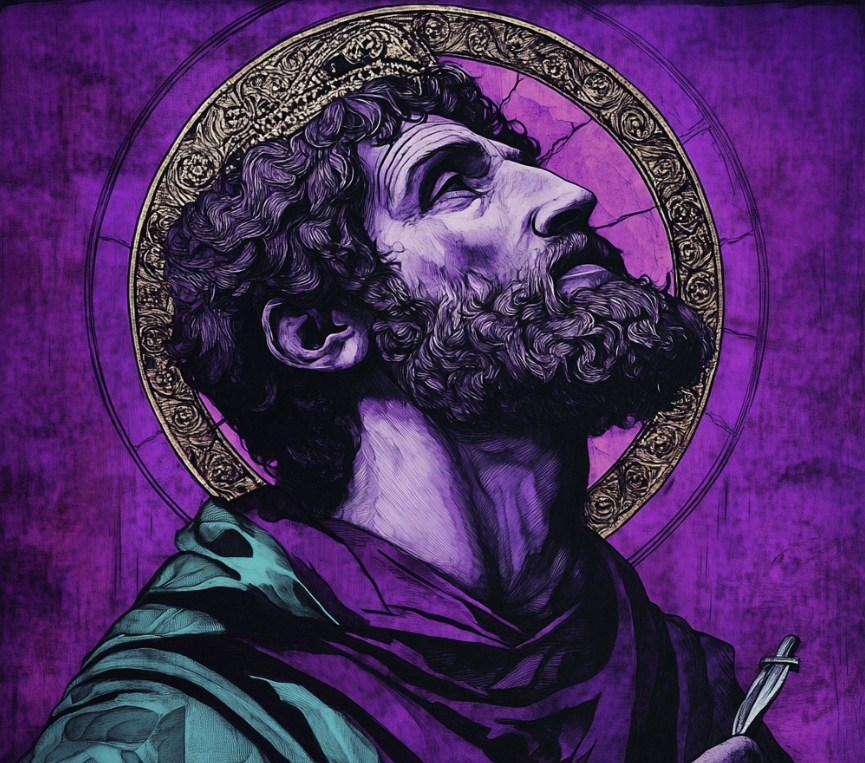
And these were the dishes wherein to me, hunger-starven for thee, they served up the sun and the moon.
▼
Source
source
III, 6

3 months 5 days ago
When we can't dream any longer we die.
▼
Source
source
Quoted by Margaret C. Anderson in "Emma Goldman in Chicago", Mother Earth magazine
3 months 5 days ago
It has been said of old, all roads lead to Rome. In paraphrased application to the tendencies of our day, it may truly be said that all roads lead to the great social reconstruction. The economic awakening of the workingman, and his realization of the necessity for concerted industrial action; the tendencies of modern education, especially in their application to the free development of the child; the spirit of growing unrest expressed through, and cultivated by, art and literature, all pave the way to the Open Road.
3 months 1 week ago
You do not attain to knowledge by remaining on the shore and watching the foaming waves, you must make the venture and cast yourself in, you must swim, alert and with all your force, even if a moment comes when you think you are losing consciousness; in this way, and in no other, do you reach anthropological insight.
▼
Source
source
p. 148
5 months 3 weeks ago
Knowledge can in part be set aside, and one can then go further in order to collect new; the natural scientist can set aside insects and flowers and then go further, but if the existing person sets aside the decision in existence, it is eo ipso lost, and he is changed.
3 weeks ago
The various philosophies of life presented themselves as a conquest of materialism, or in any case, they readily claimed it. That does not change anything: their valuations, revaluations, and explanations of disvalue have been emptied into the over-all secularization stream, where they have only hastened the tendency to unlearn, which is a neutralizing process, after all.
3 months 1 week ago
Egos appear by setting themselves apart from other egos.
3 months 1 week ago
Ethics occupies a central place in philosophy because it is concerned with sin, with the origin of good and evil and with moral valuations. And since these problems have a universal significance, the sphere of ethics is wider than is generally supposed. It deals with meaning and value and its province is the world in which the distinction between good and evil is drawn, evaluations are made and meaning is sought.
▼
Source
source
The Destiny of Man (1931), p. 15

4 months 3 weeks ago
... happiness is not an ideal of reason, but of imagination, resting on merely empirical grounds…
▼
Source
source
4:418-19, p.29
2 weeks 5 days ago
The mechanical mind has a passion for control - of everything except itself. Beyond the control it has won over the forces of nature it would now win control over the forces of society of stating the problem and producing the solution, with social machinery to correspond.
▼
Source
source
Revolt Against Mechanism (1933).
1 month 1 week ago
All right, men are as they should be, can be. What should they be? Surely not more than they can be! And what can they be? Not more, again, than they - can, than they have the competence, the force, to be. But this they really are, because what they are not, they are incapable of being; for to be capable means - really to be. One is not capable for anything that one really is not; one is not capable of anything that one does not really do. Could a man blinded by cataract see? Oh, yes, if he had his cataract successfully removed. But now he cannot see because he does not see. Possibility and reality always coincide. One can do nothing that one does not, as one does nothing that one cannot.
▼
Source
source
Cambridge 1995, p. 291
3 months 2 weeks ago
Thanks to depression - that alpinism of the indolent - we scale every summit and daydream over every precipice from our bed.
2 months 2 weeks ago
The "interface" of the Renaissance was the meeting of medieval pluralism and modern homogeneity and mechanism - a formula for blitz and metamorphosis.
▼
Source
source
(p. 161)
CivilSimian.com created by AxiomaticPanic, CivilSimian, Kalokagathia