

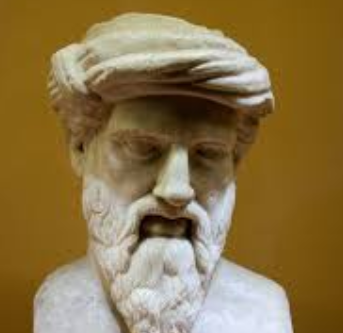
7 months 1 week ago
Despise all those things which when liberated from the body you will not want; invoke the Gods to become your helpers.
▼
Source
source
Pythagorean Ethical Sentences From Stobæus

7 months 4 weeks ago
Criticism alone can sever the root of materialism, fatalism, atheism, free-thinking, fanaticism, and superstition, which can be injurious universally; as well as of idealism and skepticism, which are dangerous chiefly to the Schools, and hardly allow of being handed on to the public.
▼
Source
source
B xxxiv
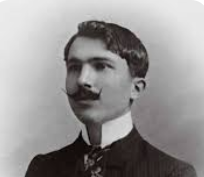
3 months 3 weeks ago
The major and almost only theme of all my work is the struggle of man with "God": the unyielding, inextinguishable struggle of the naked worm called "man" against the terrifying power and darkness of the forces within him and around him.
▼
Source
source
As quoted in Nikos Kazantzakis (1968) by Helen Kazantzakis, p. 507
6 months 2 weeks ago
In the form of the oeuvre, the actual circumstances are placed in another dimension where the given reality shows itself as that which it is. Thus it tells the truth about itself; its language ceases to be that of deception, ignorance, and submission. Fiction calls the facts by their name and their reign collapses; fiction subverts everyday experience and shows it to be mutilated and false.
▼
Source
source
p. 62

5 months 3 weeks ago
What I can't understand is why you can't see the extraordinary beauty of the idea that life started from nothing - that is such a staggering, elegant, beautiful thing, why would you want to clutter it up with something so messy as a God?
▼
Source
source
" During his conversation with the Archbishop of Canterbury, Dr. Rowan Williams, as quoted in The Telegraph, in 2012-02-24. In "Richard Dawkins: I can't be sure God does not exist"
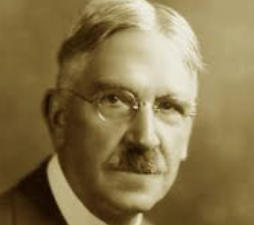
6 months 2 weeks ago
The true antithesis of nature is not art but arbitrary conceit, fantasy, and stereotyped convention.
▼
Source
source
p. 158

4 months 4 days ago
I feel, like all modern Americans, no consciousness of sin and simply do not believe in it. All I know is that if God loves me only half as much as my mother does, he will not send me to Hell. That is a final fact of my inner consciousness, and for no religion could I deny its truth.
▼
Source
source
p. 407

3 months 3 weeks ago
It is permitted to modern philosophy, all swollen up with Bacon's venom, to repeat to us to satiety, to disgust, to nausea, that we make God similar to man; we will reply as many times that is not quite the same thing to say that a man resembles his portrait or that his portrait resembles him.
▼
Source
source
p. 293

8 months 3 weeks ago
The greatest saving one can make in the order of thought is to accept the unintelligibility of the world and to pay attention to man.

8 months 1 week ago
Do not imagine that it is less an accident by which you find yourself master of the wealth which you possess, than that by which this man found himself king.

7 months 3 weeks ago
If everything must have a cause, then God must have a cause. If there can be anything without a cause, it may just as well be the world as God, so that there cannot be any validity in that argument. It is exactly of the same nature as the Hindu's view, that the world rested upon an elephant and the elephant rested upon a tortoise; and when they said, "How about the tortoise?" the Indian said, "Suppose we change the subject." The argument is really no better than that.
▼
Source
source
"The First-cause Argument"
6 months 3 weeks ago
In order to touch the heart and gain the confidence, the assent, the adhesion, and the co-operation of the illiterate legions of the proletariat - and the vast majority of proletarians unfortunately still belong in this category - it is necessary to begin to speak to those workers not of the general sufferings of the international proletariat as a whole but of their particular, daily, altogether private misfortunes. It is necessary to speak to them of their own trade and the conditions of their work in the specific locality where they live; of the harsh conditions and long hours of their daily work, of the small pay, the meanness of their employer, the high cost of living, and how impossible it is for them properly to support and bring up a family.
▼
Source
source
Founding of the Workers' International

6 months 1 week ago
Logos is powerless without the force of eros.

6 months 3 weeks ago
As one of our Swiss friends put it: "Now every German tailor living in Japan, China, or Moscow feels that he has the German navy and all of Germany's power behind him. This proud consciousness sends him into an insane rapture: the German has finally lived to see the day when he can say with pride, relying on his own state, like an Englishman or an American, 'I am a German.' True, when the Englishman or American says 'I am an Englishman,' or 'I am an American,' he is saying 'I am a free man.' The German, however, is saying 'I am a slave, but my emperor is stronger than all other princes, and the German soldier who is strangling me will strangle all of you.'"
5 months 3 weeks ago
Nothing like a little judicious levity.
▼
Source
source
The Wrong Box, ch. 7 (1889).

7 months 3 weeks ago
The Indian...stands free and unconstrained in Nature, is her inhabitant and not her guest, and wears her easily and gracefully. But the civilized man has the habits of the house. His house is a prison.
▼
Source
source
April 26, 1841

3 months 3 weeks ago
To preserve the freedom of the human mind then and freedom of the press, every spirit should be ready to devote itself to martyrdom; for as long as we may think as we will, and speak as we think, the condition of man will proceed in improvement. The generation which is going off the stage has deserved well of mankind for the struggles it has made, and for having arrested the course of despotism which had overwhelmed the world for thousands and thousands of years. If there seems to be danger that the ground they have gained will be lost again, that danger comes from the generation your contemporary. But that the enthusiasm which characterizes youth should lift its parricide hands against freedom and science would be such a monstrous phenomenon as I cannot place among possible things in this age and country.
▼
Source
source
Letter to William Green Mumford
6 months 1 week ago
Life is complex in its expression, involving more than percipience, namely desire, emotion, will, and feeling. ... identification of rhythm as the causal counterpart of life; wherever there is some life, only perceptible to us when the analogies are sufficiently close ... The rhythm is then the life, in the sense in which it can be said to be included within nature.
▼
Source
source
p. 197

3 months 3 weeks ago
The intelligence of the universe is social.
▼
Source
source
V, 30
6 months 3 weeks ago
Our psychology is ... a science of mere phenomena without any metaphysical implications. [It] Treats all metaphysical claims and assertions as mental phenomena, and regards them as statements about the mind and its structure.
▼
Source
source
Psychology and Religion: West and East (1958), p. 476, as cited in Psychotherapy East and West (1961), p. 14

8 months 1 week ago
Woman, compared to other creatures, is the image of God, for she bears dominion over them. But compared unto man, she may not be called the image of God, for she bears not rule and lordship over man, but ought to obey him. The woman shall be subject to man as unto Christ. For woman, has not her example from the body and from the flesh, that so she shall be subject to man, as the flesh is unto the Spirit, because that the flesh in the weakness and mortality of this life lusts and strives against the Spirit, and therefore would not the Holy Ghost give example of subjection to the woman of any such thing.
▼
Source
source
As quoted by John Knox The First Blast to Awaken Women Degenerate (1558)
6 months 1 week ago
Buddhism is the most colossal example in the history of applied metaphysics.
▼
Source
source
in Verhoeven, Martin J. 2001. "Buddhism and Science: Probing the Boundaries Of Faith and Reason." Religion East and West (1): 77-97.

8 months 3 weeks ago
It is by the Imperial Capital that contemporaries (and posterity, too) judge an Empire, and its magnificence impresses them mightily and leads them to judge the Emperor a great man and hero, even though it may all be based on robbery, and though the provinces of the Empire may be sunk in misery.

3 months 3 weeks ago
Historically, the errors committed by a truly revolutionary movement are infinitely more fruitful than the infallibility of the cleverest Central Committee.

6 months 1 week ago
I have been taught that the land should belong to those who till the soil. With all of his deep-seated sympathies with the Arabs, our comrade cannot possibly deny that the Jews in Palestine have tilled the soil. Tens of thousands of them, young and deeply devout idealists, have flocked to Palestine, there to till the soil under the most trying pioneer conditions. They have reclaimed wastelands and have turned them into fertile fields and blooming gardens. Now I do not say that therefore Jews are entitled to more rights than the Arabs, but for an ardent socialist to say that the Jews have no business in Palestine seems to me rather a strange kind of socialism.
3 months 3 weeks ago
Believing with you that religion is a matter which lies solely between man and his God, that he owes account to none other for his faith or his worship, that the legislative powers of government reach actions only, and not opinions, I contemplate with sovereign reverence that act of the whole American people which declared that their legislature should "make no law respecting an establishment of religion, or prohibiting the free exercise thereof," thus building a wall of separation between church and State.
▼
Source
source
Letter to Danbury Baptist Association, CT. (1 January 1802) This statement is the origin of the often used phrase "separation of Church and State".

7 months 3 weeks ago
The perfect disciplinary apparatus would make it possible for a single haze to see everything constantly. A central point would be both the source of light illuminating everything, and a locus of convergence for everything that must be known: a perfect eye that nothing would escape and a centre towards which all gazes would be turned.
▼
Source
source
Part Three, The Means of Correct Training
5 months 3 weeks ago
"They must understand that we can only lose by taking the offensive. Patience and time are my warriors, my champions," thought Kutúzov. He knew that an apple should not be plucked while it is green. It will fall of itself when ripe, but if picked unripe the apple is spoiled, the tree is harmed, and your teeth are set on edge.
▼
Source
source
Bk XIII, Ch. 17
8 months 3 weeks ago
There has never been any custom, however useless it may become with changing conditions, that isn't clung to desperately simply because it is something old and familiar.
3 months 3 weeks ago
Love the little trade which thou hast learned, and be content therewith.
▼
Source
source
IV, 31

6 months 3 weeks ago
The sky was horribly dark, but one could distinctly see tattered clouds, and between them fathomless black patches. Suddenly I noticed in one of these patches a star, and began watching it intently. That was because that star had given me an idea: I decided to kill myself that night.
5 months 3 weeks ago
We desire nothing so much as what we ought not to have.
▼
Source
source
Maxim 559 [Mimi et aliorum sententiae 677]
8 months 3 weeks ago
For some identify happiness with virtue, some with practical wisdom, others with a kind of philosophic wisdom, others with these, or one of these, accompanied by pleasure or not without pleasure; while others include also external prosperity. Now ... it is not probable that these should be entirely mistaken, but rather that they should be right in at least some one respect or even in most respects.
8 months 3 weeks ago
The world is rejuvenated, but as Heine so wittily remarked, it was rejuvenated by romanticism to such a degree that it became a baby again.
6 months 3 weeks ago
The woman is increasingly aware that love alone can give her full stature, just as the man begins to discern that spirit alone can endow his life with its highest meaning. Fundamentally, therefore, both seek a psychic relation to the other, because love needs the spirit, and the spirit love, for their fulfillment.
▼
Source
source
p. 185

6 months 2 weeks ago
Thou shalt love the Lord thy God with all thy heart, and with all thy soul, and with all thy mind. This is the first and great commandment. And the second is like unto it, Thou shalt love thy neighbour as thyself. On these two commandments hang all the law and the prophets.
▼
Source
source
22:37-40 (KJV)

6 months 1 week ago
Passion, intellect, moral activity - these three have never been satisfied in a woman. In this cold and oppressive conventional atmosphere, they cannot be satisfied. To say more on this subject would be to enter into the whole history of society, of the present state of civilisation.

7 months 3 weeks ago
Maybe this world is another planet's Hell.
▼
Source
source
As quoted in Peter's Quotations: Ideas for Our Time (1979) by Laurence J. Peter, p. 239 Point Counter Point (New York: The Modern Library, 1928), Chapter XVII, p. 263

5 months 1 week ago
I want to write - I want to write - I want to write and never never never will. I know it and I am so unhappy and it seems as though nothing else mattered. Whatever I'm doing, it's always there, an ultimate longing there saying, "Write this - write that - write -" and I can't. Lack ability, time, strength, and duration of vision. I wish someone would tell me brutally, "You can never write anything. Take up home gardening!"

6 months 3 weeks ago
Creation is in fact a fault, man's famous sin thereby appearing as a minor version of a much graver one. What are we guilty of, except of having followed, more or less slavishly, the Creator's example? Easy to recognize in ourselves the fatality which was His: not for nothing have we issued from the hands of a wicked and woebegone god, a god accursed.

4 months 3 weeks ago
There is a left wing version of this longing for community... because in a liberal society we never move as quickly as we should towards full equality, and therefore there are many marginalized groups who feel that the liberal society is... hypocritical, that it's promising an equality of recognition, and of rights, but it is not delivering... and therefore the very concept of liberal universalism is challenged in favor of a definition of rights that is tied to the specific groups.
▼
Source
source
18:44

8 months 4 days ago
I prefer the company of peasants because they have not been educated sufficiently to reason incorrectly.
6 months 3 weeks ago
Primitive superstition lies just below the surface of even the most tough-minded individuals, and it is precisely those who most fight against it who are the first to succumb to its suggestive effects.
▼
Source
source
p. 25
3 months 3 weeks ago
Unhappily, history proves that war is, in a certain sense, the habitual state of mankind, which is to say that human blood must flow without interruption somewhere or other on the globe, and that for every nation, peace is only a respite.
▼
Source
source
Chapter III, p. 23
6 months 1 week ago
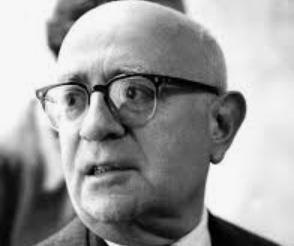
The aim of jazz is the mechanical reproduction of a regressive moment, a castration symbolism. 'Give up your masculinity, let yourself be castrated,' the eunuchlike sound of the jazz band both mocks and proclaims, 'and you will be rewarded, accepted into a fraternity which shares the mystery of impotence with you, a mystery revealed at the moment of the initiation rite.
▼
Source
source
Perennial Fashion - Jazz (1978), Prisms, p. 129, as translated by Samuel Weber and Shierry Weber
CivilSimian.com created by AxiomaticPanic, CivilSimian, Kalokagathia