

6 months 3 weeks ago
Wherever big industries displaced manufacture, the bourgeoisie developed in wealth and power to the utmost and made itself the first class of the country. The result was that wherever this happened, the bourgeoisie took political power into its own hands and displaced the hitherto ruling classes, the aristocracy, the guildmasters, and their representative, the absolute monarchy. The bourgeoisie annihilated the power of the aristocracy, the nobility, by abolishing the entailment of estates - in other words, by making landed property subject to purchase and sale, and by doing away with the special privileges of the nobility. It destroyed the power of the guildmasters by abolishing guilds and handicraft privileges. In their place, it put competition - that is, a state of society in which everyone has the right to enter into any branch of industry, the only obstacle being a lack of the necessary capital.
6 months 3 weeks ago
Philosophy can bake no bread; but she can procure for us God, Freedom, Immortality. Which, then, is more practical, Philosophy or Economy?
▼
Source
source
The first sentence of this was used by William Torrey Harris for the motto of the Journal of Speculative Philosophy
4 months 3 weeks ago
Hitherto men have speculated vaguely on the unity of universes; it is now about to be demonstrated by reasoning from the passional world to material, guided by the analogy which exists between the two.
▼
Source
source
L'attraction passioneé, Harmonian Man: Selected Writings of Charles Fourier, p. 54

5 months 1 week ago
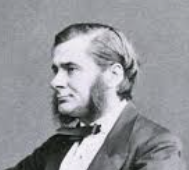
What is this wide-spread component of the surface of the earth? and whence did it come? You may think this no very hopeful inquiry. You may not unnaturally suppose that the attempt to solve such problems as these can lead to no result, save that of entangling the inquirer in vague speculations, incapable of refutation and of verification. If such were really the case, I should have selected some other subject than a "piece of chalk" for my discourse. But, in truth, after much deliberation, I have been unable to think of any topic which would so well enable me to lead you to see how solid is the foundation upon which some of the most startling conclusions of physical science rest.
5 months 3 weeks ago
A wise man rules his passions, a fool obeys them.
▼
Source
source
Maxim 49

6 months 3 weeks ago
They sang the praises of nature, of the sea, of the woods. They liked making songs about one another, and praised each other like children; they were the simplest songs, but they sprang from their hearts and went to one's heart. And not only in their songs but in all their lives they seemed to do nothing but admire one another. It was like being in love with each other, but an all-embracing, universal feeling.

6 months 2 weeks ago
You have heard that it was said, "Eye for eye, and tooth for tooth." But I tell you, do not resist an evil person. If someone strikes you on the right cheek, turn to him the other also. And if someone wants to sue you and take your tunic, let him have your cloak as well. If someone forces you to go one mile, go with him two miles.
▼
Source
source
5:38-41 (NIV)

7 months 3 weeks ago
Half of the human race lives in manifest obedience to the lunar rhythm; and there is evidence to show that the psychological and therefore the spiritual life, not only of women, but of men too, mysteriously ebbs and flows with the changes of the moon. There are unreasoned joys, inexplicable miseries, laughters and remorses without a cause. Their sudden and fantastic alternations constitute the ordinary weather of our minds. These moods, of which the more gravely numinous may be hypostasized as gods, the lighter, if we will, as hobgoblins and fairies, are the children of the blood and humours. But the blood and humours obey, among many other masters, the changing moon. Touching the soul directly through the eyes and, indirectly, along the dark channels of the blood, the moon is doubly a divinity.
▼
Source
source
"Meditation on the Moon"


5 months 3 weeks ago
By phonemic transformation into visual terms, the alphabet became a universal, abstract, static container of meaningless sounds.

6 months 1 week ago
Like Fichte, Brentano had one simple and powerful insight. He declared: there is a basic difference between a mental and physical act. if I slip on the snow and fall flat on my back, that is an unintentional physical act. But there is no such thing as an unintentional mental act. When I think, I have to think about something; I have to focus my mind on it. You could compare all mental acts (thinking, willing, loving, trying to remember something) to a searchlight beam stabbing into the darkness. There is an element of will, of 'intentionality,' in all mental activity. So it is quite inaccurate to compare mental activity to chemistry, or to a kind of drifting, like leaves on a stream. It flows purposefully or not at all.
▼
Source
source
p. 35
7 months 4 weeks ago
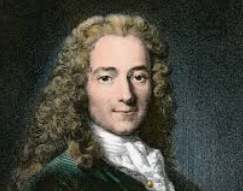
I always made one prayer to God, a very short one. Here it is: "O Lord, make our enemies quite ridiculous!" God granted it.
▼
Source
source
16 May 1767, Letter to Étienne Noël Damilaville

4 months 2 weeks ago
Democracy, which means despair of finding any Heroes to govern you, and contented putting up with the want of them,-alas, thou too, mein Lieber, seest well how close it is of kin to Atheism, and other sad Isms: he who discovers no God whatever, how shall he discover Heroes, the visible Temples of God?

7 months 3 weeks ago
The hopes which inspire communism are, in the main, as admirable as those instilled by the Sermon on the Mount, but they are held as fanatically and are as likely to do as much harm.
▼
Source
source
Part I, The Present Condition of Russia, Ch. 1: What Is Hoped From Bolshevism

6 months 3 weeks ago
Why don't I kill myself? If I knew exactly what keeps me from doing so, I should have no more questions to ask myself since I should have answered them all.

6 months 1 week ago
The great reformers of the world turn into the great misanthropists, if circumstances or organisation do not permit them to act. Christ, if He had been a woman, might have been nothing but a great complainer. Peace be with the misanthropists! They have made a step in progress; the next will make them great philanthropists; they are divided but by a line. The next Christ will perhaps be a female Christ. But do we see one woman who looks like a female Christ? or even like "the messenger before" her "face", to go before her and prepare the hearts and minds for her? To this will be answered that half the inmates of Bedlam begin in this way, by fancying that they are "the Christ." People talk about imitating Christ, and imitate Him in the little trifling formal things, such as washing the feet, saying His prayer, and so on; but if anyone attempts the real imitation of Him, there are no bounds to the outcry with which the presumption of that person is condemned.
6 months 3 weeks ago
I seem to myself, among civilised men, an intruder, a troglodyte enamored of decrepitude, plunged into subversive prayers.
3 months 3 weeks ago
Only the actual participants can correctly recognize, understand, and judge the concrete situation and settle the extreme case of conflict.


7 months 3 weeks ago
In a constantly revolving circle every point is simultaneously a point of departure and a point of return. If we interrupt the rotation, not every point of departure is a point of return.
▼
Source
source
Vol. II, Ch. IV, p. 104.
8 months 5 days ago
There are also Idols formed by the intercourse and association of men with each other, which I call Idols of the Market Place, on account of the commerce and consort of men there. For it is by discourse that men associate, and words are imposed according to the apprehension of the vulgar. And therefore the ill and unfit choice of words wonderfully obstructs the understanding. Nor do the definitions or explanations wherewith in some things learned men are wont to guard and defend themselves, by any means set the matter right. But words plainly force and overrule the understanding, and throw all into confusion, and lead men away into numberless empty controversies and idle fancies.
▼
Source
source
Aphorism 43
3 months 2 weeks ago
Science is international but its success is based on institutions, which are owned by nations. If therefore, we wish to promote culture we have to combine and to organize institutions with our own power and means.
▼
Source
source
When asked the question, "Why a 'Jewish' University?" when Einstein was assisting Chaim Weizmann in fundraising for The Hebrew University of Jerusalem. | As quoted in [Albert Einstein, Letter "Einstein in Singapore." Manchester Guardian, October 12, 1929]
6 months 2 weeks ago
Torn in this way from its normal connection with contemplation, with being within one's self, pure action permits and produces only a chain of stupidities which we might better call "stupidity unchained." So we see today that an absurd attitude justifies the appearance of an opposing attitude no more reasonable; at least, reasonable enough, and so on indefinitely. Such is the extreme to which political affairs in the West have come!
▼
Source
source
p. 34

8 months 4 days ago
The believing man hath the Holy Ghost; and where the Holy Ghost dwelleth, He will not suffer a man to be idle, butstirreth him up to all exercises of piety and godliness, and of true religion, to the love of God, to the patient suffering of afflictions, to prayer, to thanksgiving, and the exercise of charity towards all men.
▼
Source
source
p. 320
6 months 2 weeks ago
Fanaticism consists in redoubling your efforts when you have forgotten your aim.

5 months 2 weeks ago
All human accomplishment has the same origin, identically. Imagination is a force of nature. Is this not enough to make a person full of ecstasy? Imagination, imagination, imagination. It converts to actual. It sustains, it alters, it redeems!
▼
Source
source
Henderson the Rain King (1959) [Viking/Penguin, 1984, ISBN 0-140-07269-1], ch. XVIII, p. 271
4 months 1 week ago
If it is the drive of our time, after freedom of thought is won, to pursue it to that perfection through which it changes to freedom of the will in order to realize the latter as the principle of a new era, then the final goal of education can no longer be knowledge, but the will born out of knowledge, and the spoken expression of that for which it has to strive is: the personal or free man. Truth consists in nothing other than man's revelation of himself, and thereto belongs the discovery of himself, the liberation from all that is alien, the uttermost abstraction or release from all authority, the re-won naturalness. Such thoroughly true men are not supplied by school; if they are there, they are there in spite of school.
▼
Source
source
p. 21

3 months 3 weeks ago
Not to live as if you had endless years ahead of you. Death overshadows you. While you're alive and able-be good.
▼
Source
source
(Hays translation) IV, 17
5 months 4 weeks ago
Nonviolence does not necessarily emerge from a pacific or calm part of the soul. Very often it is an expression of rage, indignation, and aggression.
▼
Source
source
p. 21

6 months 6 days ago
One is rarely an impulsive innovator after the age of sixty, but one can still be a very fine orderly and inventive thinker. One rarely procreates children at that age, but one is all the more skilled at educating those who have already been procreated, and education is procreation of another kind.
▼
Source
source
K 51
3 months 3 weeks ago
No state sorrier than that of the man who keeps up a continual round, and pries into "the secrets of the nether world," as saith the poet, and is curious in conjecture of what is in his neighbour's heart.
▼
Source
source
II, 13

7 months 3 weeks ago
Be quiet! Anyone can spit in my face, and call me a criminal and a prostitute. But no one has the right to judge my remorse.
▼
Source
source
Act 1

6 months 2 weeks ago
The liberating force of technology-the instrumentalization of things-turns into ... the instrumentalization of man.
▼
Source
source
p. 159
6 months 3 weeks ago
I dream of wanting - and all I want seems to me worthless.
4 months 1 week ago
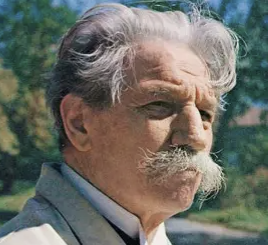
As a rule there are in everyone all sorts of good ideas, ready like tinder. But much of this tinder catches fire, or catches it successfully, only when it meets some flame or spark from outside, i.e. from some other person. Often, too, our own light goes out, and is rekindled by some experience we go through with a fellow-man. Thus we have each of us cause to think with deep gratitude of those who have lighted the flames within us.

4 months 1 week ago
We give voice to our trivial cares, but suffer enormities in silence.
▼
Source
source
line 607; (Phaedra)

3 months 3 weeks ago
Instead of funding issues of paper on the hypothecation of specific redeeming taxes (the only method of anticipating, in a time of war, the resources of times of peace, tested by the experience of nations), we are trusting to tricks of jugglers on the cards, to the illusions of banking schemes for the resources of the war, and for the cure of colic to inflations of more wind.
▼
Source
source
Letter to José Correia da Serra (1814) ME 14:224

5 months 4 weeks ago
Quite apart from assiduous efforts to restrict the use of violence as means rather than an end, the actualization of violence as a means can inadvertently become its own end, producing new violence, producing violence anew, reiterating the license, and licensing further violence. Violence does not exhaust itself in the realization of a just end; rather, it renews itself in directions that exceed both deliberate intention and instrumental schemes. In other words, by acting as if the use of violence can be a means to achieve a nonviolent end, one imagines that the practice of violence does not in the act posit violence as its own end. The technē is undermined by the praxis, and the use of violence only makes the world into a more violent place, by bringing more violence into the world.
▼
Source
source
p. 20

6 months 1 week ago
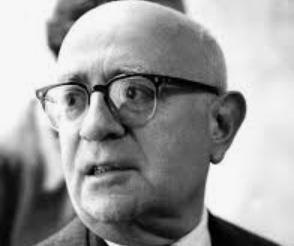
The concept of positivity in itself, in abstracto, has become part and parcel of the ideology today. ... Critique has started to become suspect, regardless of its content.
▼
Source
source
p. 23

3 months 3 weeks ago
In the army, capitalist development leads to the extension of obligatory military service to the reduction of the time of service and consequently to a material approach to a popular militia. But all of this takes place under the form of modern militarism in which the domination of the people by the militarist State and the class character of the State manifest themselves most clearly.
▼
Source
source
Ch.8
8 months 3 weeks ago
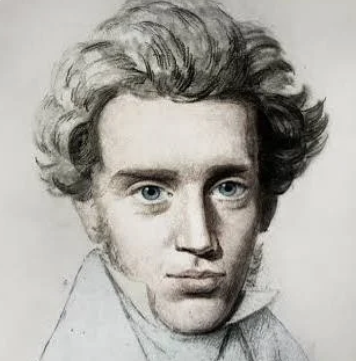
Oh, can I really believe the poet's tales, that when one first sees the object of one's love, one imagines one has seen her long ago, that all love like all knowledge is remembrance, that love too has its prophecies in the individual. ... it seems to me that I should have to possess the beauty of all girls in order to draw out a beauty equal to yours; that I should have to circumnavigate the world in order to find the place I lack and which the deepest mystery of my whole being points towards, and at the next moment you are so near to me, filling my spirit so powerfully that I am transfigured for myself, and feel that it's good to be here.
8 months ago
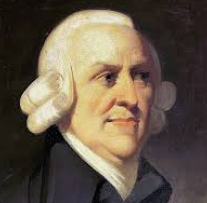
But bounty and hospitality very seldom lead to extravagance; though vanity almost always does.
▼
Source
source
Chapter III, Part V, p. 987.
7 months 3 weeks ago
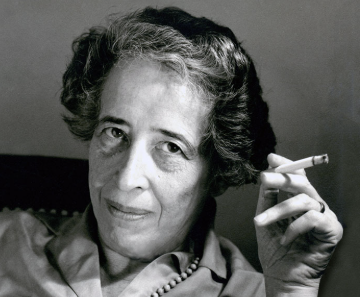
It is not murder which is forgiven but the killer, his person as it appears in circumstances and intentions. The trouble with the Nazi criminals was precisely that they renounced voluntarily all personal qualities, as if nobody were left to be either punished or forgiven. They protested time and again that they had never done anything out of their own initiative, that they had no intentions whatsoever, good or bad, and that they only obeyed orders.

7 months 3 weeks ago
This is the moment when it becomes clear that the images of madness are nothing but dream and error, and that if the unfortunate sufferer who is blinded by them invokes them, it is the better to disappear with them into the annihilation for which they are destined.
▼
Source
source
Part Two: 2. The Transcendence of Delirium
4 months 1 week ago
The great secret of success is to go through life as a man who never gets used up. That is possible for him who never argues and strives with men and facts, but in all experience retires upon himself, and looks for the ultimate cause of things in himself.
CivilSimian.com created by AxiomaticPanic, CivilSimian, Kalokagathia