

4 months 2 weeks ago
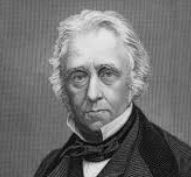
The Puritan hated bear-baiting, not because it gave pain to the bear, but because it gave pleasure to the spectators.
▼
Source
source
Vol. I, ch. 3

5 months 1 week ago
The might which kills outright is an elementary and coarse form of might. How much more varied in its devices; how much more astonishing in its effects is that other which does not kill; or which delays killing.
▼
Source
source
in The Simone Weil Reader, p. 155
7 months ago
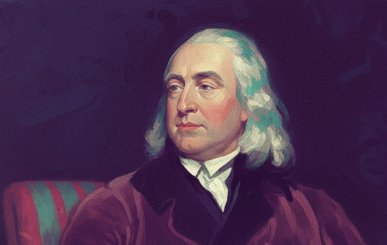
Rights are, then, the fruits of the law, and of the law alone. There are no rights without law-no rights contrary to the law-no rights anterior to the law. Before the existence of laws there may be reasons for wishing that there were laws-and doubtless such reasons cannot be wanting, and those of the strongest kind;-but a reason for wishing that we possessed a right, does not constitute a right. To confound the existence of a reason for wishing that we possessed a right, with the existence of the right itself, is to confound the existence of a want with the means of relieving it. It is the same as if one should say, everybody is subject to hunger, therefore everybody has something to eat.
▼
Source
source
Pannomial Fragments (c. 1831), quoted in The Works of Jeremy Bentham, Vol. III (1838), p. 221

7 months 5 days ago
The hair is the finest ornament women have. . . . I like women to let their hair fall down their back, it is a most agreeable sight.
▼
Source
source
-- Table Talk, quoted in Luther On "Woman"

4 months 3 weeks ago
While imprisoned in the shed Pierre had learned not with his intellect but with his whole being, by life itself, that man is created for happiness, that happiness is within him, in the satisfaction of simple human needs, and that all unhappiness arises not from privation but from superfluity. And now during these last three weeks of the march he had learned still another new, consolatory truth- that nothing in this world is terrible. He had learned that as there is no condition in which man can be happy and entirely free, so there is no condition in which he need be unhappy and lack freedom. He learned that suffering and freedom have their limits and that those limits are very near together....
▼
Source
source
Bk. XIV, ch. 12
5 months 3 weeks ago
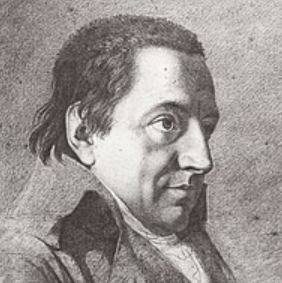
My immediate consciousness, my absolute perception, cannot go beyond myself, - I have immediate knowledge only of myself, whatever I know further I know only by reasoning, in the same manner in which I have come to those conclusions concerning the original powers of Nature, which certainly do not lie within the circle of my perceptions. I, however, - that which I call myself, - am not the man-forming power of Nature, but only one of its manifestations ; and only of this manifestation am I conscious, not of that power, whose existence I have only discovered from the necessity of explaining my own.
▼
Source
source
Jane Sinnett, trans 1846 p. 13

6 months 3 weeks ago
For those who want 'to change life", 'to reinvent love,' God is nothing but a hindrance.
▼
Source
source
p. 500
5 months 1 week ago
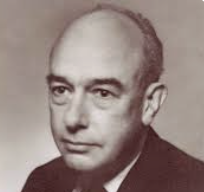
It is within science itself, and not in some prior philosophy, that reality is to be identified and described.
▼
Source
source
Theories and Things, Cambridge, MA: Harvard University Press. 1981
4 months 3 weeks ago
The vocation of every man and woman is to serve other people.
▼
Source
source
What Is To Be Done? (1886) Chap. XL
3 months 1 week ago
When people were committed to the idea that in the field of religion only one plan must be adopted, bloody wars resulted. With the acknowledgment of the principle of religious freedom these wars ceased. The market economy safeguards peaceful economic co-operation because it does not use force upon the economic plans of the citizens. If one master plan is to be substituted for the plans of each citizen, endless fighting must emerge. Those who disagree with the dictator's plan have no other means to carry on than to defeat the despot by force of arms.

6 months 4 weeks ago
It is a bad thing to perform menial duties even for the sake of freedom; to fight with pinpricks, instead of with clubs. I have become tired of hypocrisy, stupidity, gross arbitrariness, and of our bowing and scraping, dodging, and hair-splitting over words. Consequently, the government has given me back my freedom.
▼
Source
source
Letter from Marx to Arnold Ruge (25 January 1843)

5 months ago
There is probably no more abused a term in the history of philosophy than "representation," and my use of this term differs both from its use in traditional philosophy and from its use in contemporary cognitive psychology and artificial intelligence.... The sense of "representation" in question is meant to be entirely exhausted by the analogy with speech acts: the sense of "represent" in which a belief represents its conditions of satisfaction is the same sense in which a statement represents its conditions of satisfaction. To say that a belief is a representation is simply to say that it has a propositional content and a psychological mode.
▼
Source
source
P. 12.

5 months 4 weeks ago
The Whigs of this day have before them, in this Appeal, their constitutional ancestors: They have the doctors of the modern school. They will choose for themselves. The author of the Reflections has chosen for himself. If a new order is coming on, and all the political opinions must pass away as dreams, which our ancestors have worshipped as revelations, I say for him, that he would rather be the last (as certainly he is the least) of that race of men, than the first and greatest of those who have coined to themselves Whig principles from a French die, unknown to the impress of our fathers in the constitution.
▼
Source
source
p. 476

6 months 3 weeks ago
We are observing ourselves being observed by the painter, and made visible to his eyes by the same light that enables us to see him. And just as we are about to apprehend ourselves, transcribed by his hand as though in a mirror, we find that we can in fact apprehend nothing of that mirror but its lusterless back. The other side of a psyche.
▼
Source
source
Las Menias

6 months 4 weeks ago
I wanted certainty in the kind of way in which people want religious faith. I thought that certainty is more likely to be found in mathematics than elsewhere. But I discovered that many mathematical demonstrations, which my teachers expected me to accept, were full of fallacies, and that, if certainty were indeed discoverable in mathematics, it would be in a new field of mathematics, with more solid foundations than those that had hitherto been thought secure. But as the work proceeded, I was continually reminded of the fable about the elephant and the tortoise. having constructed an elephant upon which the mathematical world could rest, I found the elephant tottering, and proceeded to construct a tortoise to keep the elephant from falling. But the tortoise was no more secure than the elephant, and after some twenty years of very arduous toil, I came to the conclusion that there was nothing more that I could do in the way of making mathematical knowledge indubitable.
▼
Source
source
p. 53

6 months 3 weeks ago
All the thoughts of a turtle are turtle.
▼
Source
source
1855
3 months 1 week ago
Credit expansion can bring about a temporary boom. But such a fictitious prosperity must end in a general depression of trade, a slump.
4 months 2 weeks ago
It seems that the creative faculty, and the critical faculty, cannot exist together in their highest perfection.
▼
Source
source
p. 186

6 months 2 weeks ago
Satisfaction linked with dishonor or with harm to others is a prison for the seeker.
▼
Source
source
Vahishto-Ishti Gatha; Yasna 53, 6.

6 months 2 weeks ago
The animals themselves are incapable of demanding their own liberation, or of protesting against their condition with votes, demonstrations, or boycotts. Human beings have the power to continue to oppress other species forever, or until we make this planet unsuitable for living beings. Will our tyranny continue, proving that morality counts for nothing when it clashes with selfinterest, as the most cynical of poets and philosophers have always said? Or will we rise to the challenge and prove our capacity for genuine altruism by ending our ruthless exploitation of the species in our power, not because we are forced to do so by rebels or terrorists, but because we recognize that our position is morally indefensible? The way in which we answer this question depends on the way in which each one of us, individually, answers it.
▼
Source
source
Ch. 6: Speciesism Today

7 months 5 days ago
Whatever can be done another day can be done today.
▼
Source
source
Ch. 20. Of the Force of Imagination (tr. Donald M. Frame)

3 months 2 weeks ago
Alas! the fearful Unbelief is unbelief in yourself.
▼
Source
source
Bk. II, ch. 7.
3 months 1 week ago
The rapid development of science... has, as it were, burst its old shell, now become too narrow.
▼
Source
source
Introduction
7 months 4 weeks ago
When one merely states that one has many subscribers and keeps on saying it, then one gets many; just as when one sheep goes to water, the next one also goes, and when it is continually said of a large flock of sheep that they go hither and yon to water, then the rest must also go, so people believe that it must be the demand of the times, that for the sake of use and custom, they must also subscribe.

6 months 2 days ago
The First thing that strikes a traveler in the United States is the innumerable multitude of those who seek to emerge from their original condition; and the second is the rarity of lofty ambition to be observed in the midst of the universally ambitious stir of society. No Americans are devoid of a yearning desire to rise, but hardly any appear to entertain hopes of great magnitude or to pursue very lofty aims. All are constantly seeking to acquire property, power, and reputation.
▼
Source
source
Book Three, Chapter XIX.

2 months 3 weeks ago
The line that connects the bombing of civilian populations to the mountain removed by strip mining ... to the tortured prisoner seems to run pretty straight. We're living, it seems, in the culmination of a long warfare - warfare against human beings, other creatures and the Earth itself.
▼
Source
source
Commencement address at Lindsey Wilson College
3 months 2 weeks ago
Alas! such is the miseducation of these days, it is only among those that are called the uneducated classes - those educated by experience - that you can look for a Man. Even among these, such a sight is growing daily rarer. My father, in several respects, has not, that I can think of, left his fellow. Perhaps among Scottish peasants what Samuel Johnson was among English authors. I have a sacred pride in my peasant father, and would not exchange him, even now, for any king known to me. Gold and the guinea stamp - the Man and the clothes of the man. Let me thank God for that greatest of blessings, and strive to live worthily of it.

6 months 1 week ago
A good Soul hath neither too great joy, nor too great sorrow: for it rejoiceth in goodness; and it sorroweth in wickedness. By the means whereof, when it beholdeth all things, and seeth the good and bad so mingled together, it can neither rejoice greatly; nor be grieved with over much sorrow.
5 months 2 weeks ago
The would-be climber must be able to make himself liked ... please his superiors - avoid showing independence except in those matters wherein independence is expected of him by his chiefs... the winners in the race have qualities which disincline them to allow others to be their true selves. Hence the winners snub all those who aim at adequate self-expression, speaking of them as pretentious, eccentric, biased, unpractical, and measuring their achievements by insincere standards.
5 months 3 weeks ago
An act of the mind of which we are conscious, as such, is called freedom. An act without consciousness of action is called spontaneity. I by no means assume as necessary any immediate consciousness of the act, but merely, that on subsequent reflection thou shouldst perceive it to be an act. The higher question of what it is that prevents any such state of indecision, or any consciousness of the act, we may perhaps subsequently be able to solve. This act of the mind is called thought and it is said that thought is a spontaneous act, to distinguish it from sensation, in which the mind is merely receptive and passive.
▼
Source
source
Jane Sinnett, trans 1846 p. 44
5 months 3 weeks ago
Where children are, there is a golden age.
▼
Source
source
Fragment No. 97

4 months 6 days ago
...it won't just be the quality and quantity of consciousness in the world that will be transformed in the post-Darwinian Transition. As (post-)humanity emerges from the neurochemical Dark Ages, enriched dopaminergic function in particular may sharpen the sheer intensity and meaningfulness of every moment of conscious existence. For a generation whose lifetimes span both modes of awareness, it will be as if they had just woken up. They will feel they had hitherto been sleep-walking through life in a twilit stupor. Thereafter their former mundane and minimal existence may be recalled only as some kind of zombified trance-state whose nature they were physiologically incapable of recognising...
▼
Source
source
The Hedonistic Imperative: Heaven on Earth?, "Eden", BLTC Research
6 months 3 weeks ago
No congress, nor mob, nor guillotine, nor fire, nor all together, can avail, to cut out, burn, or destroy the offense of superiority in persons. The superiority in him is inferiority in me.
▼
Source
source
p. 65

5 months 3 weeks ago
Time is heavy sometimes; imagine how heavy eternity must be.
5 months 1 week ago
Bourgeois norms are experienced as the evident laws of a natural order-the further the bourgeois class propagates its representations, the more naturalized they become.
▼
Source
source
p. 140

6 months 4 weeks ago
You shall find, that there cannot be a greater spur to the attaining what you would have the eldest learn, and know himself, than to set him upon teaching it his younger brothers and sisters.
▼
Source
source
Sec. 119
6 months 3 weeks ago
Go where he will, the wise man is at home, His hearth the earth, his hall the azure dome.
▼
Source
source
Wood-notes, st. 3
5 months 3 weeks ago
Man has many wishes that he does not really wish to fulfil, and it would be a misunderstanding to suppose the contrary. He wants them to remain wishes, they have value only in his imagination; their fulfilment would be a bitter disappointment to him. Such a desire is the desire for eternal life. If it were fulfilled, man would become thoroughly sick of living eternally, and yearn for death. In reality man wishes merely to avoid a premature, violent or gruesome death. Everything has its measure, says a pagan philosopher; in the end we weary of everything, even of life; a time comes when man desires death. Consequently there is nothing frightening about a normal, natural death, the death of a man who has fulfilled himself and lived out his life.
▼
Source
source
Lecture XXX, Atheism alone a Positive View
7 months 1 day ago
In this consists the difference between the character of a miser and that of a person of exact economy and assiduity. The one is anxious about small matters for their own sake; the other attends to them only in consequence of the scheme of life which he has laid down to himself.
▼
Source
source
Chap. VI.

5 months 1 week ago
I believe that man is in the last resort so free a being that his right to be what he believes himself to be cannot be contested.
▼
Source
source
L 98
5 months 2 weeks ago
When scientists take part in activity they transform themselves from scientists into acting beings, that is, they become elements, data, facts; as soon as they reflect on their activity, however, they are re-transformed into scientists. The trained specialist qua scientist looks upon himself as a chain of judgments and inferences; qua member of society, he regard himself as a mere object. The same holds for everyone. The individual is divided into innumerable functions, the interconnection of which are unknown. In society a man is pater familias under one aspect, business man under another, thinker under a third; to be more precise, he is not a human being at all, but all these aspects and many more in an inevitable succession.
▼
Source
source
p. 155.

2 months 3 weeks ago
The two principles on which our conduct towards the Indians should be founded, are justice and fear. After the injuries we have done them, they cannot love us....
▼
Source
source
Letter to Benjamin Hawkins (13 August 1786) Lipscomb & Bergh ed. 5:390

6 months 3 weeks ago
Let sanguine healthy-mindedness do its best with its strange power of living in the moment and ignoring and forgetting, still the evil background is really there to be thought of, and the skull will grin in at the banquet.
▼
Source
source
Lectures IV and V, "The Religion of Healthy-Mindedness"
6 months 1 week ago
When it comes to consideration of how to do well in running the city, which must proceed entirely through justice and soundness of mind.
▼
Source
source
As quoted in Protagoras by Plato
7 months 4 weeks ago
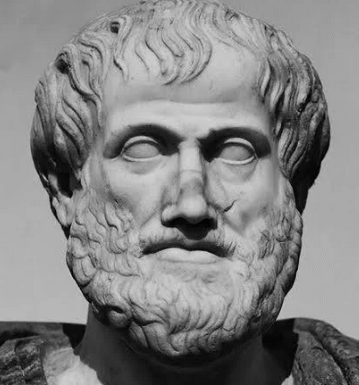
A tragedy, then, is the imitation of an action that is serious and also, as having magnitude, complete in itself; in language ... not in a narrative form; with incidents arousing pity and fear, wherewith to accomplish its catharsis of such emotions.
CivilSimian.com created by AxiomaticPanic, CivilSimian, Kalokagathia