

9 months 2 days ago
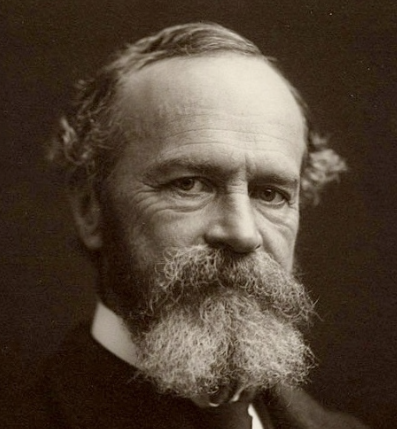
I wished, by treating Psychology like a natural science, to help her to become one.
▼
Source
source
A Plea for Psychology as a Natural Science, 1892

7 months 4 weeks ago
What can be said, lacks reality. Only what fails to make its way into words exists and counts.

9 months 3 days ago
I do not wish to force my thoughts upon you, but I feel forced myself. Little as I know of Captain Brown, I would fain do my part to correct the tone and the statements of the newspapers, and of my countrymen generally, respecting his character and actions. It costs us nothing to be just. We can at least express our sympathy with, and admiration of, him and his companions, and that is what I now propose to do.

9 months 2 days ago
It's a bit embarrassing to have been concerned with the human problem all one's life and find at the end that one has no more to offer by way of advice than 'Try to be a little kinder.'
▼
Source
source
As quoted in Huston Smith, "Aldous Huxley--A Tribute," The Psychedelic Review, (1964) Vol I, No.3, (Aldous Huxley Memorial Issue), p. 264-5

7 months 2 weeks ago
And this in turn makes it plain that the Right Man problem is a problem of highly dominant people. Dominance is a subject of enormous importance to biologists and zoologists because the percentage of dominant animals - or human beings - seems to be amazingly constant. Bernard Shaw once asked the explorer H. M. Stanley how many other men could take over leadership of the expedition if Stanley himself fell ill; Stanley replied promptly: "One in twenty." "Is that exact or approximate?" asked Shaw. "Exact." And biological studies have confirmed this as a fact. For some odd reason, precisely five per cent - one in twenty - of any animal group are dominant - have leadership qualities. During the Korean War, the Chinese made the interesting discovery that if they separated out the dominant five per cent of American prisoners of war, and kept them in separate compound, the remaining ninety-five per cent made no attempt to escape.
▼
Source
source
p. 216

5 months 2 weeks ago
A great step towards independence is a good-humored stomach, one that is willing to endure rough treatment.
▼
Source
source
Line 3.
9 months 4 weeks ago
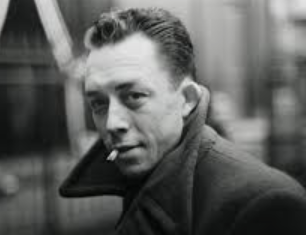
This was her finest role and the hardest one to play. Choosing between heaven and a ridiculous fidelity, preferring oneself to eternity or losing oneself in God is the age-old tragedy in which each must play his part.
7 months 3 weeks ago
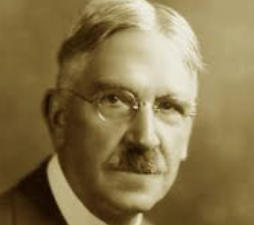
The difference between the artificial and the artful in the artistic lies on the surface in the former there is a split between what is overly done and what is intended. The appearance is one of cordiality; the intent is that of gaining favor. Whenever this split between what is done and its purpose exists, there is insincerity, a trick, a simulation of an act that intrinsically has another effect. When the natural and the cultivated blend into one, acts of social intercourse are works of art. The animating impulsion of genial friendship and the deed performed completely coincide without intrusion of ulterior motive. Awkwardness may prevent adequacy of expression.

7 months ago
In an age of multiple and massive innovations, obsolescence becomes the major obsession.
▼
Source
source
"Innovation is obsolete", Evergreen review, Volume 15, Issues 86-94, Grove Press, 1971, p. 64

9 months 1 day ago
I mistrust illuminations: what we take for a discovery is very often only a familiar thought that we have not recognized.
▼
Source
source
p. 439
5 months 1 day ago
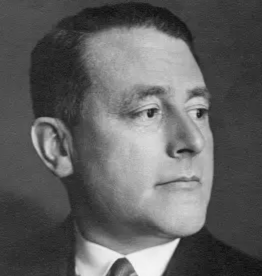
Sovereign is he who decides on the exception.
▼
Source
source
p.5
5 months 2 weeks ago
Press on, therefore, as you have begun; perhaps you will be led to perfection, or to a point which you alone understand is still short of perfection.
5 months 3 weeks ago
It seems to us that the past is our property. Well, on the contrary - we are its property, because we are not able to make changes in it, while it fills the whole of our existence.
▼
Source
source
Original: "Otóż przeciwnie - to my jesteśmy jej własnością, ponieważ nie jesteśmy w stanie dokonać w niej zmian, ona natomiast wypełnia całość naszego istnienia." Klucz niebieski albo opowieści biblijne zebrane ku pouczeniu i przestrodze

5 months 3 weeks ago
A Parliament speaking through reporters to Buncombe and the twenty-seven millions, mostly fools.
▼
Source
source
Latter Day Pamphlets, No. 6.

9 months 5 days ago
Hatred, as well as love, renders its votaries credulous.
▼
Source
source
V
4 months 4 weeks ago
Conflicting intellectual positions may actually come to supplement one another. It is imperative in the present transitional period to make use of the intellectual twilight which dominates our epoch and in which all values and points of view appear in their genuine relativity. We must realize once and for all that the meanings which make up our world are simply an historically determined and continuously developing structure in which man develops, and are in no sense absolute.
8 months 3 weeks ago
Oh. Marx's love for Shakespeare! It is well known. Chris Hani shared the same passion. I have just learned this and I like the idea. Even though Marx more often quotes Timon of Athens, the Manifesto seems to evoke or convoke, right from the start, the first coming of the silent ghost, the apparition of the spirit that does not answer, on those ramparts of Elsinore which is then the old Europe.
▼
Source
source
Injunctions of Marx

7 months 4 weeks ago
Though we may prefer ourselves to the universe, we nonetheless loathe ourselves much more than we suspect. If the wise man is so rare a phenomenon, it is because he seems unshaken by the aversion which, like all beings, he must feel for himself.

9 months 3 days ago
Thus mathematics may be defined as the subject in which we never know what we are talking about, nor whether what we are saying is true.
▼
Source
source
Ch. 5: Mathematics and the Metaphysicians
5 months 3 weeks ago
These three classes of problems-determination of significant fact, matching of facts with theory, and articulation of theory-exhaust, I think, the literature of normal science, both empirical and theoretical. They do not, of course, quite exhaust the entire literature of science. There are also extraordinary problems, and it may well be their resolution that makes the scientific enterprise as a whole so particularly worthwhile. But extraordinary problems are not to be had for the asking. They emerge only on special occasions prepared by the advance of normal research.
▼
Source
source
p. 34
9 months 2 days ago
To the gross senses the chair seems solid and substantial. But the gross senses and be refined by means of instruments. Closer observations are made, as the result of which we are forced to conclude that the chair is "really" a swarm of electric charges whizzing about in empty space. ... While the substantial chair is an abstraction easily made from the memories of innumerable sensations of sight and touch, the electric charge chair is a difficult and far-fetched abstraction from certain visual sensations so excessively rare (they can only come to us in the course of elaborate experiments) that not one man in a million has ever been in the position to make it for himself. The overwhelming majority of us accept the electric-charge chair on authority, as good Catholics accept transubstantiation.
▼
Source
source
"One and Many," pp. 8-9
7 months 3 weeks ago
Just because emotion is essential to that act of expression which produces a work of art, it is easy for inaccurate analysis to misconceive its mode of operation and conclude that the work of art has emotion for its significant content. One may cry out with joy or even weep upon seeing a friend from whom one has been long separated. The outcome is not an expressive object -- save to the onlooker. But if the emotion leads one to gather material that is affiliated to the mood which is aroused, a poem may result. In the direct outburst, an objective situation is the stimulus, the cause, of the emotion. In the poem, objective material becomes the content and matter of the emotion, not just its evocative occasion.
▼
Source
source
pp. 71-72

7 months ago
Do not take part in the council, unless you are called.
▼
Source
source
Maxim 310
5 months 1 day ago
The equal right of all men to the use of land is as clear as their equal right to breathe the air - it is a right proclaimed by the fact of their existence. For we cannot suppose that some men have a right to be in this world, and others no right.
▼
Source
source
Book VII, Ch. 1

9 months 6 days ago
The proposal of any new law or regulation of commerce which comes from this order, ought always to be listened to with great precaution, and ought never to be adopted till after having been long and carefully examined, not only with the most scrupulous, but with the most suspicious attention. It comes from an order of men, whose interest is never exactly the same with that of the public, who have generally an interest to deceive and even to oppress the public, and who accordingly have, upon many occasions, both deceived and oppressed it.
▼
Source
source
Chapter XI, Part III, Conclusion of the Chapter, p. 292.
9 months 3 days ago
The violence of love is as much to be dreaded as that of hate. When it is durable, it is serene and equable. Even its famous pains begin only with the ebb of love, for few are indeed lovers, though all would fain be.
▼
Source
source
Pearls of Thought (1881) p. 158

8 months 3 weeks ago
A sensible man takes pleasure in what he has instead of pining for what he has not.
10 months 5 days ago
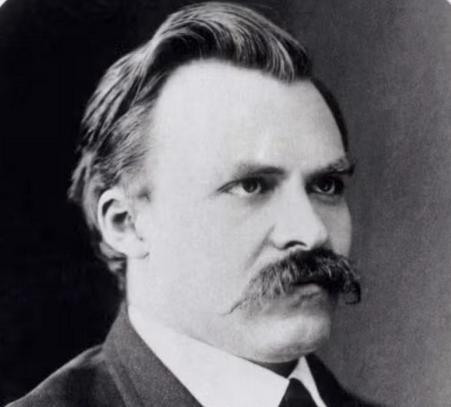
In Germany there is much complaining about my "eccentricities." But since it is not known where my center is, it won't be easy to find out where or when I have thus far been "eccentric." That I was a philologist, for example, meant that I was outside my center (which fortunately does not mean that I was a poor philologist). Likewise, I now regard my having been a Wagnerian as eccentric. It was a highly dangerous experiment; now that I know it did not ruin me, I also know what significance it had for me — it was the most severe test of my character.
5 months 2 weeks ago
The proof of a theory is in its reasoning, not in its sponsorship.
10 months 5 days ago
Arrogance on the part of the meritorious is even more offensive to us than the arrogance of those without merit: for merit itself is offensive.
9 months 3 days ago
Choose your parents wisely.
▼
Source
source
On the recipe for longevity; Collected Papers of Bertrand Russell, Vol. 29, 2012
10 months 5 days ago
For those who need consolation no means of consolation is so effective as the assertion that in their case no consolation is possible: it implies so great a degree of distinction that they at once hold up their heads again.

9 months 4 days ago
On the other hand, the cheapest form of pride is national pride; for the man affected therewith betrays a want of individual qualities of which he might be proud, since he would not otherwise resort to that which he shares with so many millions. The man who possesses outstanding personal qualities will rather see most clearly the faults of his own nation, for he has them constantly before his eyes. But every miserable fool, who has nothing in the world whereof he could be proud, resorts finally to being proud of the very nation to which he belongs. In this he finds compensation and is now ready and thankful to defend, ... all the faults and follies peculiar to it.
▼
Source
source
From 'Parerga and Paralipomena', Vol. 1, Aphorisms on the Wisdom of Life, 'What A Man Represents', pp. 360


9 months 2 weeks ago
Anything done against faith or conscience is sinful.
▼
Source
source
Commentary on Romans, cap 14, I 3
6 months 3 weeks ago
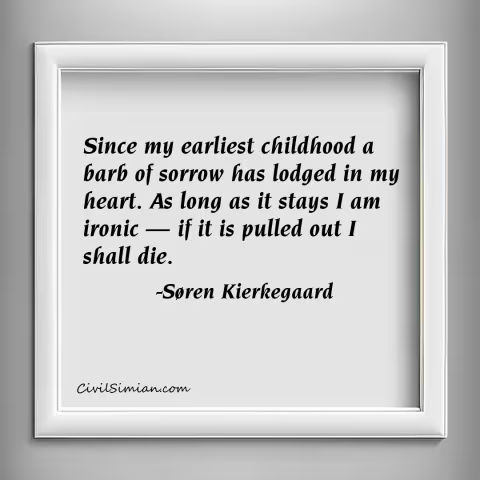
The highest proof of virtue is to possess boundless power without abusing it.
▼
Source
source
The Life and Writings of Addison', The Edinburgh Review (July 1843), quoted in T. B. Macaulay, Critical and Historical Essays Contributed to The Edinburgh Review: A New Edition (1852), p. 706
8 months ago
It is impossible for any man, when the most favourable circumstances concur, to acquire sufficient knowledge and strength of mind to discharge the duties of a king, entrusted with uncontrolled power; how then must they be violated when his very elevation is an insuperable bar to the attainment of either wisdom or virtue; when all the feelings of a man are stifled by flattery, and reflection shut out by pleasure! Surely it is madness to make the fate of thousands depend on the caprice of a weak fellow creature, whose very station sinks him NECESSARILY below the meanest of his subjects! But one power should not be thrown down to exalt another--for all power intoxicates weak man; and its abuse proves, that the more equality there is established among men, the more virtue and happiness will reign in society.
▼
Source
source
Ch. 1
8 months 3 weeks ago
Virtue is the same for a man and for a woman.
▼
Source
source
§ 5

8 months 3 days ago
They sang the praises of nature, of the sea, of the woods. They liked making songs about one another, and praised each other like children; they were the simplest songs, but they sprang from their hearts and went to one's heart. And not only in their songs but in all their lives they seemed to do nothing but admire one another. It was like being in love with each other, but an all-embracing, universal feeling.

7 months 2 weeks ago
Not to be loved is a misfortune, but it is an insult to be loved no longer.
▼
Source
source
No. 3. (Zachi writing to Usbek)
7 months 2 weeks ago
Oh, how empty is praise when it reflects back to its origin!
▼
Source
source
No. 50. (Rica writing to * * *)

9 months 1 day ago
Science may be described as the art of systematic over-simplification - the art of discerning what we may with advantage omit.
▼
Source
source
The Open Universe : An Argument for Indeterminism (1992), p. 44

8 months 3 days ago
This day I heard from Laurence who has sent me papers confirming the portentous State of France-where the Elements which compose Human Society seem all to be dissolved, and a world of Monsters to be producd in the place of it-where Mirabeau presides as the Grand Anarch; and the late Grand Monarch makes a figure as ridiculous as pitiable.
▼
Source
source
Letter to Richard Burke (c. 10 October 1789), quoted in Alfred Cobban and Robert A. Smith (eds.), The Correspondence of Edmund Burke, Volume VI: July 1789-December 1791 (1967), p. 30

8 months 1 week ago
In America, conscription is unknown; men are enlisted for payment. Compulsory recruitment is so alien to the ideas and so foreign to the customs of the people of the United States that I doubt whether they would ever dare to introduce it into their law.
▼
Source
source
Chapter XIII.
CivilSimian.com created by AxiomaticPanic, CivilSimian, Kalokagathia