I think it's better to think of "God's decrees" here as just subjectively compiled directives, and nature as just deterministic evolutionary processes....



Paper, they say, does not blush, but I assure you it's not true and that it's blushing just as I am now, all over.
The superior man, when resting in safety, does not forget that danger may come. When in a state of security he does not forget the possibility of ruin. When all is orderly, he does not forget that disorder may come. Thus his person is not endangered, and his States and all their clans are preserved.
After experience had taught me that all the usual surroundings of social life are vain and futile; seeing that none of the objects of my fears contained in themselves anything either good or bad, except in so far as the mind is affected by them, I finally resolved to inquire whether there might be some real good having power to communicate itself, which would affect the mind singly, to the exclusion of all else: whether, in fact, there might be anything of which the discovery and attainment would enable me to enjoy continuous, supreme, and unending happiness.
What an incalculable debt do we owe to that little speck of land, Greece.-The principles of taste, the finest models of composition, the doctrines and the glorious examples to which we owe political freedom, the arts, the sciences, architecture, sculpture, every thing that is great and splendid in literature and politics, must be considered as ultimately derived from that little peninsula.

Correct and accurate conclusions may be arrived at if we carefully observe the relation of the spheres of concepts, and only conclude that one sphere is contained in a third sphere, when we have clearly seen that this first sphere is contained in a second, which in its turn is contained in the third. On the other hand, the art of sophistry lies in casting only a superficial glance at the relations of the spheres of the concepts, and then manipulating these relations to suit our purposes, generally in the following way: - When the sphere of an observed concept lies partly within that of another concept, and partly within a third altogether different sphere, we treat it as if it lay entirely within the one or the other, as may suit our purpose.
Of all those expensive and uncertain projects, however, which bring bankruptcy upon the greater part of the people who engage in in them, there is none perhaps more perfectly ruinous than the search after new silver and gold mines. It is perhaps the most disadvantageous lottery in the world, or the one in which the gain of those who draw the prizes bears the least proportion to the loss of those who draw the blanks: for though the prizes are few and the blanks are many, the common price of a ticket is the whole fortune of a very rich man.

If you would convince a man that he does wrong, do right. But do not care to convince him. Men will believe what they see.
The definition of definition is at bottom just what the maxim of pragmatism expresses.
The working classes may be injuriously degraded and oppressed in three ways: 1st - When they are neglected in infancy 2nd - When they are overworked by their employer, and are thus rendered incompetent from ignorance to make a good use of high wages when they can procure them. 3rd - When they are paid low wages for their labour.

The Christian priesthood, finding the doctrines of Christ levelled to every understanding, and too plain to need explanation, saw in the mysticism of Plato, materials with which they might build up an artificial system, which might, from its indistinctness, admit everlasting controversy, give employment for their order, and introduce it to profit, power and pre-eminence. The doctrines which flowed from the lips of Jesus himself are within the comprehension of a child ; but thousands of volumes have not yet explained the Platonisms engrafted on them; and for this obvious reason, that nonsense can never be explained.
If you know even as little history as I do, it is hard not to doubt the efficacy of modern war as a solution to any problem except that of retribution - the "justice" of exchanging one damage for another.
I have always taken as the standard of the mode of teaching and writing, not the abstract, particular, professional philosopher, but universal man, that I have regarded man as the criterion of truth, and not this or that founder of a system, and have from the first placed the highest excellence of the philosopher in this, that he abstains, both as a man and as an author, from the ostentation of philosophy, i.e., that he is a philosopher only in reality, not formally, that he is a quiet philosopher, not a loud and still less a brawling one.

He that gives quickly gives twice.

Men must be governed by those laws which they love. Where thirty millions are to be governed by a few thousand men, the government must be established by consent, and must be congenial to the feelings and to the habits of the people. That which creates tyranny is the imposition of a form of government contrary to the will of the governed: and even a free and equal plan of government, would be considered as despotic by those who desired to have their old laws and their ancient system.
Do not take part in the council, unless you are called.
In vain, therefore, should we pretend to determine any single event, or infer any cause or effect, without the assistance of observation and experience.

Peace be with you. Receive my peace unto yourselves. Beware that no one lead you astray saying Lo here or lo there! For the Son of Man is within you. Follow after Him! Those who seek Him will find Him. Go then and preach the gospel of the Kingdom. Do not lay down any rules beyond what I appointed you, and do not give a law like the lawgiver lest you be constrained by it.

You do not know where death awaits you; so be ready for it everywhere.
The fact that the general incidence of leukemia has doubled in the last two decades may be due, partly, to the increasing use of x-rays for numerous purposes. The incidence of leukemia in doctors, who are likely to be so exposed, is twice that of the general public. In radiologists the incidence is ten times greater.
In the end, I am moved by causes and ideas that I can actually choose to support because they conform to values and principles that I believe in.
Revolution is like the daughters of Pelias: it cuts humanity to pieces in order to rejuvenate it.
All became so jealous of the rights of their own personality that they did their very utmost to curtail and destroy them in others, and made that the chief thing in their lives. Slavery followed, even voluntary slavery; the weak eagerly submitted to the strong, on condition that the latter aided them to subdue the still weaker. Then there were saints who came to these people, weeping, and talked to them of their pride, of their loss of harmony and due proportion, of their loss of shame. They were laughed at or pelted with stones.

Language is a form of organized stutter.
Most of what happens actually is forgotten.
As medium for reaching understanding, speech acts serve: a) to establish and renew interpersonal relations, whereby the speaker takes up a relation to something in the world of legitimate social orders; b) to represent states and events, whereby the speaker takes up a relation to something in the world of existing states of affairs; c) to manifest experiences that is, to represent oneself- whereby the speaker takes up a relation to something in the subjective world to which he has privileged access.

The hearing ear is always found close to the speaking tongue.

The reproduction of mankind is a great marvel and mystery. Had God consulted me in the matter, I should have advised him to continue the generation of the species by fashioning them of clay, in the way Adam was fashioned.
The dead? But the dead have no rights. They are nothing; and nothing cannot own something. Where there is no substance, there can be no accident. This corporeal globe, and everything upon it, belong to its present corporeal inhabitants, during their generation. They alone have a right to direct what is the concern of themselves alone, and to declare the law of that direction; and this declaration can only be made by their majority. That majority, then, has a right to depute representatives to a convention, and to make the constitution what they think will be the best for themselves.
Reason as an organ for perceiving the true nature of reality and determining the guiding principles of our lives has come to be regarded as obsolete.
It is sad that often, to be a good patriot, one must be the enemy of the rest of mankind.
The sun provides the moon with its brightness.

Never did Christ utter a single word attesting to a personal resurrection and a life beyond the grave.
And yet life, Lucilius, is really a battle.
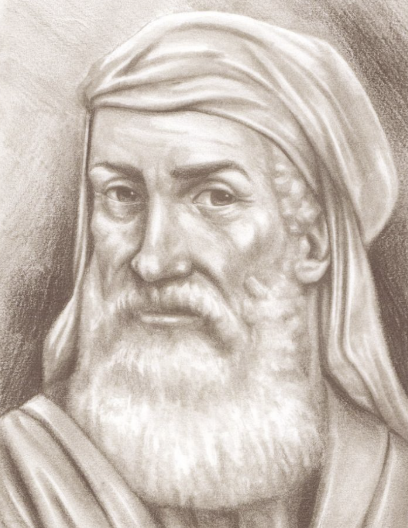
And I will tell you something else: there is no birth of all mortal things, nor any end in wretched death, but only a mixing and dissolution of mixtures; 'birth' is so called on the part of mankind.

Every man, wherever he goes, is encompassed by a cloud of comforting convictions, which move with him like flies on a summer day.

On the left you had a different aspect of individual autonomy that was pushed to an extreme, which really had to do with the autonomy that individuals have to create their own lifestyles. ...The basic concept of liberal autonomy has to do with your ability to make moral choices, but as time went on the emphasis came to be not on making the right moral choices within an existing moral framework, but rather to be able to make up that framework on your own, that that was the ultimate expression of individual human freedom, and it has obvious problems for a society because all societies have to be based on shared norms that allow people to coordinate their actions, to communicate, and the like... If you believe that the rules can be... set by anybody and that transgressing existing rules is automatically a good thing, you're not going to have... a stable society.

Of all the ways whereby children are to be instructed, and their manners formed, the plainest, easiest, and most efficacious, is, to set before their eyes the examples of those things you would have them do, or avoid; which, when they are pointed out to them, in the practice of persons within their knowledge, with some reflections on their beauty and unbecomingness, are of more force to draw or deter their imitation, than any discourses which can be made to them.
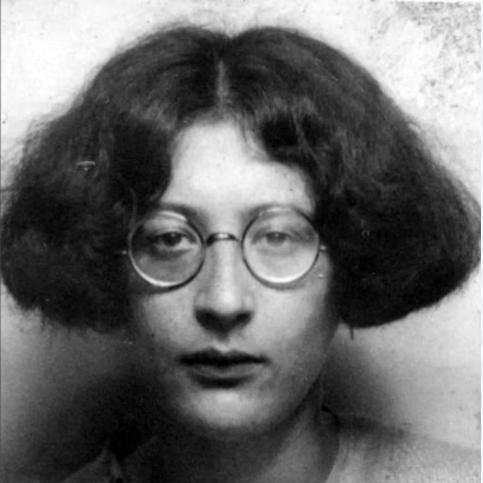
God's love for us is not the reason for which we should love him. God's love for us is the reason for us to love ourselves.

I feel effective, competent, likely to do something positive only when I lie down and abandon myself to an interrogation without object or end.
For man to be able to live he must either not see the infinite, or have such an explanation of the meaning of life as will connect the finite with the infinite.
Primitivism has become the vulgar cliche of much modern art and speculation.
CivilSimian.com created by AxiomaticPanic, CivilSimian, Kalokagathia