


2 months 2 weeks ago
I thought: "I am perishing of cold and hunger, and here is a man thinking only of how to clothe himself and his wife, and how to get bread for themselves. He cannot help me. When the man saw me he frowned and became still more terrible, and passed me by on the other side. I despaired, but suddenly I heard him coming back. I looked up, and did not recognize the same man: before, I had seen death in his face; but now he was alive, and I recognized in him the presence of God.
1 week 3 days ago
I believe in intuitions and inspirations. I sometimes feel that I am right. I do not know that I am. When two expeditions of scientists, financed by the Royal Academy, went forth to test my theory of relativity, I was convinced that their conclusions would tally with my hypothesis. I was not surprised when the eclipse of May 29, 1919, confirmed my intuitions. I would have been surprised if I had been wrong.

1 month 1 week ago
Undue cultivation of the inward or Dynamical province leads to idle, visionary, impracticable courses, and, especially in rude eras, to Superstition and Fanaticism, with their long train of baleful and well-known evils. Undue cultivation of the outward, again, though less immediately prejudicial, and even for the time productive of many palpable benefits, must, in the long-run, by destroying Moral Force, which is the parent of all other Force, prove not less certainly, and perhaps still more hopelessly, pernicious. This, we take it, is the grand characteristic of our age. By our skill in Mechanism, it has come to pass, that in the management of external things we excel all other ages; while in whatever respects the pure moral nature, in true dignity of soul and character, we are perhaps inferior to most civilised ages.

3 months 2 weeks ago
The skeptic is the least mysterious man in the world, and yet, starting from a certain moment, he no longer belongs to this world.

4 months 2 weeks ago
Some day you will be old enough to start reading fairy tales again.
▼
Source
source
The Lion, the Witch and the Wardrobe (1950), Dedication: "To Lucy Barfield"
5 months 2 weeks ago
And the true order of going, or being led by another, to the things of love, is to begin from the beauties of earth and mount upwards for the sake of that other beauty, using these steps only, and from one going on to two, and from two to all fair forms to fair practices, and from fair practices to fair notions, until from fair notions he arrives at the notion of absolute beauty, and at last knows what the essence of beauty is.
4 months 3 weeks ago
In principle and in practice, in a right track and in a wrong one, the rarest of all human qualities is consistency.
▼
Source
source
Ch. 1: Of the Principle of Utility
3 months 1 week ago
If I compare arithmetic with a tree that unfolds upward into a multitude of techniques and theorems while its root drives into the depths, then it seems to me that the impetus of the root.
▼
Source
source
Gottlob Frege, Montgomery Furth (1964). The Basic Laws of Arithmetic: Exposition of the System. p. 10

5 months 3 weeks ago
Deception, flattering, lying, deluding, talking behind the back, putting up a false front, living in borrowed splendor, wearing a mask, hiding behind convention, playing a role for others and for oneself, in short, a continuous fluttering around the solitary flame of vanity is so much the rule and the law among men that there is almost nothing which is less comprehensible than how an honest and pure drive for truth could have arisen among them. They are deeply immersed in illusions and in dream images; their eyes merely glide over the surface of things and see "forms." Variant translation: The constant fluttering around the single flame of vanity is so much the rule and the law that almost nothing is more incomprehensible than how an honest and pure urge for truth could make its appearance among men.

3 months 2 weeks ago
The only possible way of accounting for the laws of nature and for uniformity in general is to suppose them results of evolution. This supposes them not to be absolute, not to be obeyed precisely. It makes an element of indeterminacy, spontaneity, or absolute chance in nature. Just as, when we attempt to verify any physical law, we find our observations cannot be precisely satisfied by it, and rightly attribute the discrepancy to errors of observation, so we must suppose far more minute discrepancies to exist owing to the imperfect cogency of the law itself, to a certain swerving of the facts from any definite formula.

4 months 2 weeks ago
Man is condemned to be free; because once thrown into the world, he is responsible for everything he does.
2 months 2 days ago
I have learned by some experience, by many examples, and by the writings of countless others before me, also occupied in the search, that certain environments, certain modes of life, certain rules of conduct are more conducive to inner and outer harmony than others. There are, in fact, certain roads that one may follow. Simplification of life is one of them.

4 months 3 days ago
But after these, Pythagoras changed that philosophy, which is conversant about geometry itself, into the form of a liberal doctrine, considering its principles in a more exalted manner; and investigating its theorems immaterially and intellectually; who likewise invented a treatise of such things as cannot be explained in geometry, and discovered the constitution of the mundane figures.
▼
Source
source
Chap. IV.

4 months 2 weeks ago
I wiped away the weeds and foam, And fetched my sea-born treasures home; But the poor, unsightly, noisome things Had left their beauty on the shore With the sun, and the sand, and the wild uproar.
▼
Source
source
Each and All, st. 3
4 months 1 week ago
At times the world sees straight, but many times the world goes astray.
▼
Source
source
Book II, epistle i, line 63
3 months 2 weeks ago
When you know quite absolutely that everything is unreal, you then cannot see why you should take the trouble to prove it.
4 months 2 weeks ago
Not only must people know, they must see with their own eyes. Because they must be made to be afraid; but also because they must be the witnesses, the guarantors, of the punishment, and because they must to a certain extent take part in it.
▼
Source
source
Chapter One, pp.58

3 months 1 week ago
Take heed lest any man deceive you: For many shall come in my name, saying, I am Christ; and shall deceive many. And when ye shall hear of wars and rumours of wars, be ye not troubled: for such things must needs be; but the end shall not be yet. For nation shall rise against nation, and kingdom against kingdom: and there shall be earthquakes in divers places, and there shall be famines and troubles: these are the beginnings of sorrows. But take heed to yourselves: for they shall deliver you up to councils; and in the synagogues ye shall be beaten: and ye shall be brought before rulers and kings for my sake, for a testimony against them. And the gospel must first be published among all nations. But when they shall lead you, and deliver you up, take no thought beforehand what ye shall speak, neither do ye premeditate: but whatsoever shall be given you in that hour, that speak ye: for it is not ye that speak, but the Holy Ghost.
▼
Source
source
13:5b-11 (KJV)

4 months 2 weeks ago
If you want to go down deep you do not need to travel far; indeed, you don't have to leave your most immediate and familiar surroundings.
▼
Source
source
p. 50e
3 months 5 days ago
Any madness in us gains from being expressed, because in this way one gives a human form to what separates us from humanity.
▼
Source
source
p. 76
3 months 2 days ago
I believe that none can "save" his fellow man by making a choice for him. To help him, he can indicate the possible alternatives, with sincerity and love, without being sentimental and without illusion. The knowledge and awareness of the freeing alternatives can reawaken in an individual all his hidden energies and put him on the path to choosing respect for "life" instead of for "death."

4 months 2 weeks ago
When the husk gets separated from the kernel, almost all men run after the husk and pay their respects to that. It is only the husk of Christianity that is so bruited and wide spread in this world; the kernel is still the very least and rarest of all things. There is not a single church founded on it.

3 months 2 weeks ago
You talk of Paine with more respect than he deserves: He is utterly incapable of comprehending his subject. He has not even a moderate portion of learning of any kind. He has learnd the instrumental part of literature, a style, and a method of disposing his ideas, without having ever made a previous preparation of Study or thinking-for the use of it. ... [Paine] possesses nothing more than what a man whose audacity makes him careless of logical consequences, and his total want of honour and morality makes indifferent as to political consequences, may very easily write. They indeed who seriously write upon a principle of levelling ought to be answerd by the Magistrate-and not by the Speculatist.
▼
Source
source
Letter to William Cusac Smith (22 July 1791), quoted in Alfred Cobban and Robert A. Smith (eds.), The Correspondence of Edmund Burke, Volume VI: July 1789-December 1791 (1967), pp. 303-304

3 months 2 weeks ago
...a monarchy is a thing perfectly susceptible of reform; perfectly susceptible of a balance of power; and that, when reformed and balanced, for a great country, it is the best of all governments. The example of our country might have led France, as it has led him, to perceive that monarchy is not only reconcilable to liberty, but that it may be rendered a great and stable security to its perpetual enjoyment.
▼
Source
source
p. 400
4 months 2 weeks ago
Ah! Do not judge the gods, young man, they have painful secrets.
▼
Source
source
Jupiter, Act 1
5 months 4 days ago
Reason is not measured by size or height, but by principle.
▼
Source
source
Book I, ch. 12, 26.

3 months 6 days ago
When I contemplate the green serenity of the fields or look into the depths of clear eyes through which shines a fellow-soul, my consciousness dilates, I feel the diastole of the soul and am bathed in the flood of the life that flows about me, and I believe in my future; but instantly the voice of mystery whispers to me, "Thou shalt cease to be!" the angel of Death touches me with his wing, and the systole of the soul floods the depth of my spirit with the blood of divinity.

1 month 5 days ago
Kindly remember that he whom you call your slave sprang from the same stock, is smiled upon by the same skies, and on equal terms with yourself breathes, lives and dies. It is just as possible for you to see in him a free-born man as for him to see in you a slave.
▼
Source
source
Line 10.

4 months 3 weeks ago
Religion, which should most distinguish us from the beasts, and ought most particularly elevate us, as rational creatures, above brutes, is that wherein men often appear most irrational, and more senseless than beasts.
▼
Source
source
Book IV, Ch. 18
2 months 2 weeks ago
A real mother, who knows the will of God by experience, will prepare her children also to fulfil it. Such a mother will suffer if she sees her child overfed, effeminate, and dressed-up, for she knows that these things will make it difficult for it to fulfil the will of God which she recognizes.
2 months 5 days ago
Within the last fifty years, the extraordinary growth of every department of physical science has spread among us mental food of so nutritious and stimulating a character that a new ecdysis seems imminent.
▼
Source
source
Ch.2, p. 73
3 months 2 weeks ago
Only those moments count when the desire to remain by yourself is so powerful that you'd prefer to blow your brains out than to exchange a word with someone.

4 months 3 weeks ago
In action, in desire, we must submit perpetually to the tyranny of outside forces; but in thought, in aspiration, we are free, free from our fellowmen, free from the petty planet on which our bodies impotently crawl, free even, while we live, from the tyranny of death.
1 month ago
Only the search back to the origins of one's ideas in order to see the real arguments for them, before people became so certain of them that they ceased thinking about them at all, can liberate us. Our study of history has taught us to laugh at the follies of the whole past, the monarchies, oligarchies, theocracies, and aristocracies with the fanaticism for empire or salvation, once taken so seriously. But we have very few tools for seeing ourselves in the same way, as others will see us. Each age always conspires to make its own way of thinking appear to be the only possible or just way, and our age has the least resistance to the triumph of its own way. There is less real presence of respectable alternatives and less knowledge of the titanic intellectual figures who founded our way.
▼
Source
source
Western Civ, p. 20.
1 month 1 week ago
Youth is learning to read (which is all that one learns in school), and is learning where and how to find what he may later need to know (which is the best of the arts that he acquires in college). Nothing learned from a book is worth anything until it is used and verified in life; only then does it begin to affect behavior and desire. It is Life that educates, and perhaps love more than anything else in life.
5 months 2 weeks ago
Some say that the body is the "tomb" of the soul, their notion being that the soul is buried in the present life; and again, because by its means the soul gives any signs which it gives, it is for this reason also properly called "sign". But I think it most likely that the Orphic poets gave this name, with the idea that the soul is undergoing punishment for something; they think it has the body as an enclosure to keep it safe, like a prison, and this is, as the name itself denotes, the "safe" for the soul, until the penalty is paid, and not even a letter needs to be changed.

4 months 3 weeks ago
The rulers of Great Britain have, for more than a century past, amused the people with the imagination that they possessed a great empire on the west side of the Atlantic. This empire, however, has hitherto existed in imagination only.
▼
Source
source
Chapter III, Part V, p. 1032 (Last Page).

2 weeks 3 days ago
He who has the most imagination should be regarded as having the most intelligence or genius, for all these words are synonymous...
2 months 2 weeks ago
People continued - regardless of all that leads man forward - to try to unite the incompatibles : the virtue of love, and what is opposed to love, namely, the restraining of evil by violence. And such a teaching, despite its inner contradiction, was so firmly established that the very people who recognize love as a virtue accept as lawful at the same time an order of life based on violence and allowing men not merely to torture but even to kill one another.
▼
Source
source
III
4 months 1 week ago
He who feared that he would not succeed sat still.
▼
Source
source
Book I, epistle xvii, line 37
3 months 1 week ago
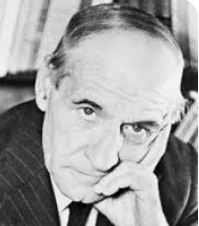
The State is always, whatever be its form - primitive, ancient, medieval, modern - an invitation issued by one group of men to other human groups to carry out some enterprise in common. That enterprise, be its intermediate processes what they may, consists in the long run in the organisation of a certain type of common life. ... [As Renan says,] "To have common glories in the past, a common will in the present; to have done great things together; to wish to do greater; these are the essential conditions which make up a people.... In the past, an inheritance of glories and regrets; in the future, one and the same programme to carry out.... The existence of a nation is a daily plebiscite."
▼
Source
source
Chapter XIV: Who Rules The World?
2 months 3 weeks ago
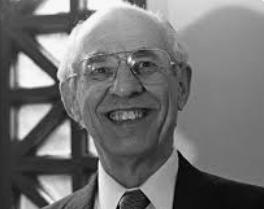
If reason is both transcendent and immanent, then philosophy, as culture-bound reflection and argument about eternal questions, is both in time and eternity. We don't have an Archimedean point; we always speak the language of a time and place; but the rightness and wrongness of what we say is not just for a time and a place.
▼
Source
source
Why reason can't be naturalized
4 months 2 weeks ago
Our chief want in life, is somebody who shall make us do what we can.
▼
Source
source
Considerations by the Way
3 months 1 week ago
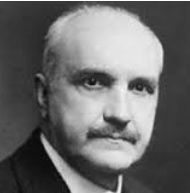
Happiness is the only sanction of life; where happiness fails, existence remains a mad and lamentable experiment.

3 months 3 days ago
In refusing to face evil, Sinclair has gained nothing and lost a great deal; the Buddhist scripture expenses it: those who refuse to discriminate might as well be dead.
▼
Source
source
Chapter Three, The Romantic Outsider
2 weeks 6 days ago
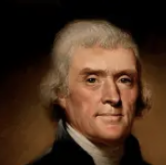
Yet the hour of emancipation is advancing, in the march of time. It will come.

4 months 2 weeks ago
I had obtained some distinction, and felt myself of some importance, before the desire of distinction and of importance had grown into a passion: and little as it was which I had attained, yet having been attained too early, like all pleasures enjoyed too soon, it had made me blasé and indifferent to the pursuit. Thus neither selfish nor unselfish pleasures were pleasures to me. And there seemed no power in nature sufficient to begin the formation of my character anew, and create in a mind now irretrievably analytic, fresh associations of pleasure with any of the objects of human desire.
▼
Source
source
(p. 139)
CivilSimian.com created by AxiomaticPanic, CivilSimian, Kalokagathia