


4 months 3 weeks ago
All sentiment is right; because sentiment has a reference to nothing beyond itself, and is always real, wherever a man is conscious of it. But all determinations of the understanding are not right; because they have a reference to something beyond themselves, to wit, real matter of fact; and are not always conformable to that standard.
▼
Source
source
Part I, Essay 23: Of The Standard of Taste

3 months 2 weeks ago
Public life is a situation of power and energy; he trespasses against his duty who sleeps upon his watch, as well as he that goes over to the enemy.

4 months 2 weeks ago
There is something which unites magic and applied science while separating both from the wisdom of earlier ages. For the wise men of old the cardinal problem had been how to conform the soul to reality, and the solution had been knowledge, self-discipline, and virtue. For magic and applied science alike the problem is how to subdue reality to the wishes of men.
3 months 1 week ago
That science is incapable of solving in its own way those fundamental questions is no sufficient reason for slighting them.
▼
Source
source
p. 14
2 months 2 weeks ago
Books are good enough in their own way, but they are a mighty bloodless substitute for life.
▼
Source
source
An Apology for Idlers.

2 months 2 weeks ago
The user of the electric light -- or a hammer, or a language, or a book -- is the content. As such, there is a total metamorphosis of the user by the interface. It is the metamorphosis that I consider the message.
▼
Source
source
Letter to Edward T. Hall, 1971, Letters of Marshall McLuhan, p. 397

1 month 2 weeks ago
So today... red and blue voters rely on a completely different set of facts. ...Polls ...suggest that a substantial... majority of Republican voters believe that the Democrats... stole the election, and that Joe Biden is not the legitimate president... When you don't have a common factual basis, you... reinforce the kinds of filter bubbles that people have started to move into.

4 months 2 weeks ago
The indispensible is not necessarily the desirable.
▼
Source
source
Chapter 6 (p. 48)

5 months 2 weeks ago
Again, it is possible to fail in many ways (for evil belongs to the class of the unlimited ... and good to that of the limited), while to succeed is possible only in one way (for which reason also one is easy and the other difficult—to miss the mark easy, to hit it difficult); for these reasons also, then, excess and defect are characteristic of vice, and the mean of virtue; For men are good in but one way, but bad in many.
2 months 3 weeks ago
The ascription of an unconscious intentional phenomenon to a system implies that the phenomenon is in principle accessible to consciousness. A statement of the author's "connection principle."
▼
Source
source
"Consciousness, Explanatory Inversion, and Cognitive Science," The Behavioral and Brain Sciences 13, 4 (December 1990): 585-696.
4 months 3 weeks ago
Another thing wherein they shew their love of dominion, is, their desire to have things to be theirs: They would have propriety and possession, pleasing themselves with the power which that seems to give, and the right that they thereby have, to dispose of them as they please. He that has not observ's these two humours working very betimes in children, has taken little notice of their actions: And he who thinks that these two roots of almost all the injustice and contention that so disturb human life, are not early to be weeded out, and contrary habits introduc'd, neglects the proper season to lay the foundations of a good and worthy man.
▼
Source
source
Sec. 105
2 weeks 5 days ago
I am for freedom of religion, & against all maneuvres to bring about a legal ascendancy of one sect over another, for freedom of the press, and against all violations of the Constitution to silence by force and not by reason the complaints or criticisms, just or unjust, of our citizens against the conduct of their agents.
▼
Source
source
Letter to Elbridge Gerry (26 January 1799); published in The Writings of Thomas Jefferson, Memorial Edition 20 Vols., Washington, D.C., 1903-04, Volume 10, p. 78

4 months 2 weeks ago
Anytime two human beings find genuine pleasure, joy, and love, the stars smile and the universe is enriched. Yet as long as that pleasure, joy, and love is still predicated on myths of black sexuality, the more fundamental challenge of humane interaction remains unmet.
▼
Source
source
(p85)

1 month 2 weeks ago
We have to construct the figure of a new David, the multitude as champion of asymmetrical combat, immaterial workers who became a new kind of combatants, cosmopolitan bricoleurs of resistance and cooperation.
▼
Source
source
50

3 months 2 weeks ago
Dead of night. No one, nothing but the society of the moments. Each pretends to keep us company, then escapes - desertion after desertion.

5 months 3 weeks ago
Although the most acute judges of the witches and even the witches themselves, were convinced of the guilt of witchery, the guilt nevertheless was non-existent. It is thus with all guilt.
2 weeks 5 days ago
Self-interest, or rather self-love, or egoism, has been more plausibly substituted as the basis of morality. But I consider our relations with others as constituting the boundaries of morality. With ourselves, we stand on the ground of identity, not of relation, which last, requiring two subjects, excludes self-love confined to a single one. To ourselves, in strict language, we can owe no duties, obligation requiring also two parties. Self-love, therefore, is no part of morality. Indeed, it is exactly its counterpart.
▼
Source
source
Letter to Thomas Law
4 months 2 weeks ago
In regard to propaganda the early advocates of universal literacy and a free press envisaged only two possibilities: the propaganda might be true, or it might be false. They did not foresee what in fact has happened, above all in our Western capitalist democracies-the development of a vast mass communications industry, concerned in the main neither with the true nor the false, but with the unreal, the more or less totally irrelevant. In a word, they failed to take into account man's almost infinite appetite for distraction.
▼
Source
source
Chapter 4 (pp. 35-36)

3 months 2 days ago
Like a plague, the mad spirit is sweeping the country, infesting the clearest heads and staunchest hearts with the deathly germ of militarism.

4 months 2 weeks ago
He needs no library, for he has not done thinking; no church, for he is himself a prophet; no statute book, for he hath the Lawgiver; no money, for he is value itself; no road, for he is at home where he is.
▼
Source
source
December 26, 1839
2 weeks 5 days ago
Freedom of person, securing every one from imprisonment, or other bodily restraint, but by the laws of the land. This is effected by the well-known law of habeas corpus.
3 months 1 day ago
The "dreams of youth" have become a proverb. That organisations, early rich, fall far short of their promise has been repeated to satiety. But is it extraordinary that it should be so? For do we ever utilise this heroism? Look how it lives upon itself and perishes for lack of food. We do not know what to do with it. We had rather that it should not be there. Often we laugh at it. Always we find it troublesome. Look at the poverty of our life! Can we expect anything else but poor creatures to come out of it?
4 months 3 weeks ago
In the natural state no concept of God can arise, and the false one which one makes for himself is harmful. Hence the theory of natural religion can be true only where there is no science; therefore it cannot bind all men together.
▼
Source
source
Part III : Selection on Education from Kant's other Writings, Ch. I Pedagogical Fragments, # 60
2 months 2 weeks ago
In the spiritual realm nothing is indifferent: what is not useful is harmful.
▼
Source
source
VII
1 week 2 days ago
I believe with Schopenhauer: We can do what we wish, but we can only wish what we must. Practically, I am, nevertheless, compelled to act as if freedom of the will existed. If I wish to live in a civilized community, I must act as if man is a responsible being. I know that philosophically a murderer is not responsible for his crime; nevertheless, I must protect myself from unpleasant contacts. I may consider him guiltless, but I prefer not to take tea with him.

1 month 4 days ago
I may become a poor man; I shall then be one among many. I may be exiled; I shall then regard myself as born in the place to which I shall be sent. They may put me in chains. What then? Am I free from bonds now? Behold this clogging burden of a body, to which nature has fettered me! "I shall die," you say; you mean to say "I shall cease to run the risk of sickness; I shall cease to run the risk of imprisonment; I shall cease to run the risk of death."
5 months 2 weeks ago
Nothing can discourage the appetite for divinity in the heart of man.
2 months 1 week ago
There is no need to make an inventory of the times. It is demoralizing to describe ourselves to ourselves yet again. It is especially hard on us since we believe (as we have been educated to believe) that history has formed us and that we are all mini-summaries of the present age.
▼
Source
source
Mozart: An Overture (1992), pp. 13-14
2 weeks 3 days ago
Suppose that the organism is given the problem of determining the analysis of a stimulus at a certain level of representation- e.g., the problem of determining which sequence of words a given utterance encodes. Since, in the general case, transducer outputs underdetermine perceptual analyses, we can think of the solution of such problems as involving processes of non-demonstrative inference. In particular, we can think of each input system as a computational mechanism which projects and confirms a certain class of hypotheses on the basis of a certain body of data.
▼
Source
source
p. 126, partly cited in: Meredith Williams (2002) Wittgenstein, Mind, and Meaning: Toward a Social Conception of Mind. p. 104. Quote about the direction of information flow in perceptual and observer analysis.
3 months 2 weeks ago
Where children are, there is a golden age.
▼
Source
source
Fragment No. 97

4 months 2 weeks ago
We may define "faith" as a firm belief in something for which there is no evidence. Where there is evidence, no one speaks of "faith". We do not speak of faith that two and two are four or that the earth is round. We only speak of faith when we wish to substitute emotion for evidence. The substitution of emotion for evidence is apt to lead to strife, since different groups substitute different emotions.
▼
Source
source
p. 215
3 months 1 day ago
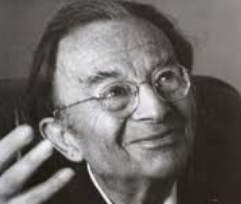
What is it that distinguishes man from animals? It is not his upright posture. That was present in the apes long before the brain began to develop. Nor is it the use of tools. It is something altogether new, a previously unknown quality: self-awareness. Animals, too, have awareness. They are aware of objects; they know this is one thing and that another. But when the human being as such was born he had a new and different consciousness, a consciousness of himself; he knew that he existed and that he was something different, something apart from nature, apart from other people, too. He experienced himself. He was aware that he thought and felt. As far as we know, there is nothing analogous to this anywhere in the animal kingdom. That is the specific quality that makes human beings human.
▼
Source
source
Affluence and Ennui in Our Society in For the Love of Life (1986) translated by Robert and Rita Kimber
3 months 3 weeks ago
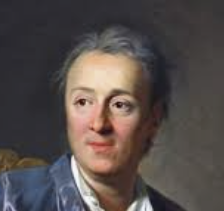
Superstition is more injurious to God than atheism.
3 months 1 week ago
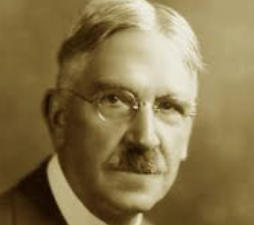
Just because emotion is essential to that act of expression which produces a work of art, it is easy for inaccurate analysis to misconceive its mode of operation and conclude that the work of art has emotion for its significant content. One may cry out with joy or even weep upon seeing a friend from whom one has been long separated. The outcome is not an expressive object -- save to the onlooker. But if the emotion leads one to gather material that is affiliated to the mood which is aroused, a poem may result. In the direct outburst, an objective situation is the stimulus, the cause, of the emotion. In the poem, objective material becomes the content and matter of the emotion, not just its evocative occasion.
▼
Source
source
pp. 71-72
4 months 3 weeks ago
The first characteristic of the human species is man's ability, as a rational being, to establish character for himself, as well as for the society into which nature has placed him. This ability, however, presupposes an already favorable natural predisposition and an inclination to the good in man, because the evil is really without character (since it is at odds with itself, and since it does not tolerate any lasting principle within itself)
▼
Source
source
Kant, Immanuel (1996), page 246
1 month 4 days ago
Great also are the souls of the defenders-men who know that, as long as the path to death lies open, the blockade is not complete, men who breathe their last in the arms of liberty.
4 months 2 weeks ago
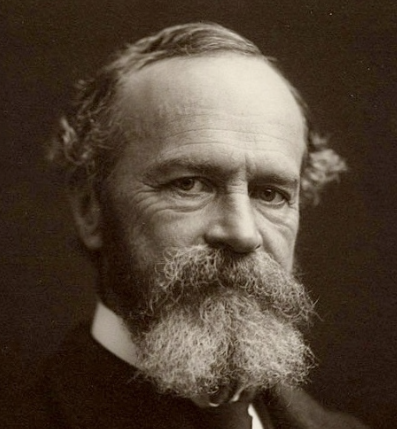
Mr. Galton ...in his English Men of Science, has given ...cases showing individual variations in the type of memory... Some have it verbal. Others... for facts and figures, others for form. Most say... [it] must first be rationally conceived and assimilated.
▼
Source
source
Ch. 16
2 weeks 2 days ago
"Spirit" is matter seen in a stronger light. What else did Malebranche mean when he spoke of "seeing all things in God"? Existence is a mystery because the light of it is inexhaustible.
▼
Source
source
Near the Brink: Observations of a Nonagenarian (1952). p. 17.
4 months 2 weeks ago
It is in the social sphere, in the realm of politics and economics, that the Will to Order becomes really dangerous.
▼
Source
source
Chapter 3 (p. 22)
3 months 2 weeks ago
What, then, is the animal? First of all, a system of plant-souls. The unity of those plant-souls, which unity nature itself produces, is the soul of the animal. Its world is therefore partly that of the plants - its nourishment, for instance, it receives partly through synthesis from vegetable, and through analysis from animal nature - and partly that of the animals, whereof we shall speak directly. Each product of nature is an organically in-itself completed totality in space, like the plant. Hence, the unknown x which we are looking for must also be such a whole or totality, and in so far it must also have a principle of organization, a sphere and central point of this organization ; in short, the same which we have called the soul of the plant, which thus remains common to both. ... The animal is a system of plant-souls, and the plant is a separated, isolated part of an animal. Both reciprocally affect each other.
▼
Source
source
P. 502, 503, 504

1 month 3 weeks ago
The evidence of science and history is that humans are only ever partly and intermittently rational, but for modern humanists the solution is simple: human beings must in future be more reasonable. These enthusiasts for reason have not noticed that the idea that humans may one day be more rational requires a greater leap of faith than anything in religion. Since it requires a miraculous breach in the order of things, the idea that Jesus returned from the dead is not as contrary to reason as the notion that human beings will in future be different from how they have always been.
▼
Source
source
An Old Chaos: Humanism and Flying Saucers (p. 75)
5 months 5 days ago
He who created us without our help will not save us without our consent.
▼
Source
source
St. Augustine, Sermo 169, 11, 13: PL 38, 923 as quoted in Fr. Mitch Pacwa, S. J.. Saved: A Bible Study Guide for Catholics (p. 15). Our Sunday Visitor. Kindle Edition.
2 months 2 weeks ago
Primitivism has become the vulgar cliche of much modern art and speculation.
▼
Source
source
(p. 77)
2 weeks 2 days ago
Retire into thyself. The rational principle which rules has this nature, that it is content with itself when it does what is just, and so secures tranquility.
▼
Source
source
VII, 28
3 months 2 weeks ago
It was these Romans who reunited in one State the Culture which had now been produced by the intermixture of different races, and thereby completed the period of Ancient Time, and closed the simple course of Ancient Civilization. With respect to its influence on Universal History, this nation, more than any other, was the blind and unconscious instrument for the furtherance of a higher World-Plan; after having formed itself, by its internal des tiny indicated above, into a most fit and proper instrument for that purpose.
▼
Source
source
p. 192
3 months 2 weeks ago
The free being with absolute freedom proposes to itself certain ends. It wills because it wills, and the willing of an object is itself the last ground of such willing. Thus we have previously determined a free being, and any other determination would destroy the conception of an Ego, or of a free being. Now, if it could be so arranged that the willing of an unlawful end would necessarily - in virtue of an always effective law - result in the very reverse of that end, then the unlawful will would always ANNIHILATE ITSELF. A person could not will that end for the very reason because he did will it; his unlawful will would become the ground of its own annihilation, as the will is indeed always its own last ground.
▼
Source
source
p. 193

1 month 1 week ago
To such a one, already filled with intellectual substance, and possessing what we may call the practical gold-bullion of human culture, it was an obvious improvement that he should be taught to speak it out of him on occasion; that he should carry a spiritual banknote producible on demand for what of "gold-bullion" he had, not so negotiable otherwise, stored in the cellars of his mind. A man, with wisdom, insight and heroic worth already acquired for him, naturally demanded of the schoolmaster this one new faculty, the faculty of uttering in fit words what he had. A valuable superaddition of faculty:-and yet we are to remember it was scarcely a new faculty; it was but the tangible sign of what other faculties the man had in the silent state.
2 months 2 weeks ago
It will be said, "Patriotism has welded mankind into states, and maintains the unity of states." But men are now united in states; that work is done; why now maintain exclusive devotion to one's own state, when this produces terrible evils for all states and nations? For this same patriotism which welded mankind into states is now destroying those same states. If there were but one patriotism say of the English only then it were possible to regard that as conciliatory, or beneficent. But when, as now, there is American patriotism, English, German, French, Russian, all opposed to one another, in this event, patriotism no longer unites, but disunites.
▼
Source
source
Patriotism and Government
CivilSimian.com created by AxiomaticPanic, CivilSimian, Kalokagathia