


1 month 1 week ago
Some economists also use the terms Fordism and pos-Fordism to mark the shift from an economy characterized by the stable-long-term employment typical of factory workers to one marked by flexible, mobile, and precarious labor relations: flexible because workers have to adapt to different tasks, mobile because workers have to move frequently between jobs, and precarious because no contracts guarantee stable, long-term employment. Whereas economic modernization, which developed Fordist labor relations, centered on the conomies of scale and larga systems of production and exchange, economic postmodernization, with its post-Fordist labor relations, develops smaller-scale, flexible systems.
▼
Source
source
112
3 months 2 weeks ago
Unconscious assumptions or opinions are the worst enemy of woman; they can even grow into a positively demonic passion that exasperates and disgusts men, and does the woman herself the greatest injury by gradually smothering the charm and meaning of her femininity and driving it into the background. Such a development naturally ends in profound psychological disunion, in short, in a neurosis.
▼
Source
source
P.245
3 months 2 weeks ago
True science is distinctively the study of useless things. For the useful things will get studied without the aid of scientific men.
1 month 1 week ago
What was observed by us in the third place is the nature or matter of the Milky Way itself, which, with the aid of the spyglass, may be observed so well that all the disputes that for so many generations have vexed philosophers are destroyed by visible certainty, and we are liberated from wordy arguments.
▼
Source
source
Original text as reproduced in Edward Tufte, Beautiful Evidence (Cheshire, Connecticut: Graphics Press LLC, 2006), 101

4 months 3 weeks ago
A wise man never loses anything, if he has himself.
▼
Source
source
Ch. 38. Of Solitude, tr. Cotton, rev. W. Hazlitt, 1842
3 months 4 days ago
A man, in so far as he is an individual, may be very sharply detached from others, a sort of spiritual crustacean, and yet be very poor in differentiating content. And further, it is true on the other hand that the more personality a man has and the greater his interior riches and the more he is a society within himself, the less brusquely he is divided from his fellows.
5 months 2 weeks ago
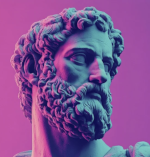
If there is some end of the things we do, which we desire for its own sake, clearly this must be the good. Will not knowledge of it, then, have a great influence on life? Shall we not, like archers who have a mark to aim at, be more likely to hit upon what we should? If so, we must try, in outline at least, to determine what it is.
3 months 1 week ago
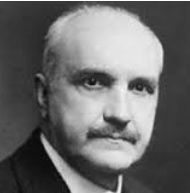
I like to walk about amidst the beautiful things that adorn the world; but private wealth I should decline, or any sort of personal possessions, because they would take away my liberty.
▼
Source
source
"The Irony of Liberalism"
2 months ago
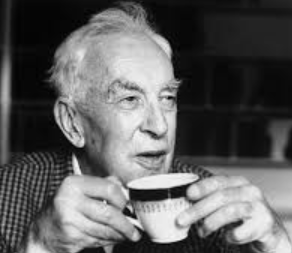
On this showing, the nature of the breakdowns of civilizations can be summed up in three points: a failure of creative power in the minority, an answering withdrawal of mimesis on the part of the majority, and a consequent loss of social unity in the society as a whole.
▼
Source
source
Vol. 4 (1955 ), part B, p. 6
1 month 1 week ago
We share bodies with two eyes, ten fingers, ten toes; we share life on this earth; we share capitalist regimes of production and exploitation; we share common dreams of a better future.
▼
Source
source
128

3 months 2 weeks ago
Not one moment when I have not been conscious of being outside Paradise.

4 months 2 weeks ago
Nicias, do you think you can erase with good deeds the wrongs you committed against your mother? What good deed will ever reach her? Her soul is a scorching noon time, without a single breath of a breeze, nothing moves, nothing changes, nothing lives there; a great emaciated sun, an immobile sun eternally consumes her.
▼
Source
source
King Aegistheus, Act 2
3 months 2 weeks ago
Reason alone does not suffice.
▼
Source
source
p 98
1 month 2 weeks ago
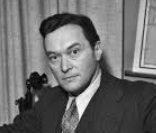
News and truth are not the same thing and must be clearly distinguished. The function of news is to signalize an event, the function of truth is to bring to light the hidden facts, to set them into relation with each other, and make a picture of reality on which men can act. Only at those points, where social conditions take recognizable and measurable shape, do the body of truth and the body of news coincide.
▼
Source
source
Ch. XXIV: "News, Truth, and a Conclusion", p. 358 The clause in bold is sometimes quoted on its own in the form, "The news and the truth are not the same thing."
2 months 1 week ago
We mustn't forget how quickly the visions of genius become the canned goods of intellectuals.
▼
Source
source
Herzog (1964) [Penguin Classics, 2003, ISBN 0-142-43729-8], p. 82
3 months 1 week ago
Those who have ever valued liberty for its own sake believed that to be free to choose, and not to be chosen for, is an inalienable ingredient in what makes human beings human.
4 months 2 weeks ago
It is therefore correct to say that the senses do not err - not because they always judge rightly, but because they do not judge at all.
▼
Source
source
A 293, B 350

4 months 2 weeks ago
The hardness of God is kinder than the softness of men, and His compulsion is our liberation.
3 months 3 days ago
I remember well a junior seminar I gave with Paul Tillich shortly before the outbreak of the Third Reich. A participant spoke out against the idea of the meaning of existence. She said life did not seem very meaningful to her and she didn't know whether it had a meaning. The very voluble Nazi contingent became very excited by this and scraped the floor noisily with their feet. Now, I do not wish to maintain that this Nazi foot-shuffling proves or refutes anything in particular, but I do find it highly significant. I would say it is a touchstone for the relation of thinking to freedom. It raises the question whether thought can bear the idea that a given reality is meaningless and that mind is unable to orientate itself; or whether the intellect has become so enfeebled that it finds itself paralysed by the idea that all is not well with the world.
▼
Source
source
pp. 19-20

4 months 2 weeks ago
If I had had more time, this letter would have been shorter.
▼
Source
source
Written by Voltaire in an over-long letter to a friend, quoted to A. P. Martinich in Philosophical Writing: An Introduction, Note to the Second Edition, 1996
1 month 1 week ago
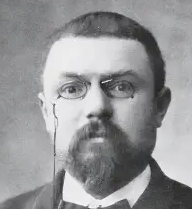
Does the harmony the human intelligence thinks it discovers in nature exist outside of this intelligence? No, beyond doubt, a reality completely independent of the mind which conceives it, sees or feels it, is an impossibility. A world as exterior as that, even if it existed, would for us be forever inaccessible.

4 months 3 weeks ago
Were a stranger to drop on a sudden into this world, I would show him, as a specimen of its ills, a hospital full of diseases, a prison crowded with malefactors and debtors, a field of battle strewed with carcasses, a fleet foundering in the ocean, a nation languishing under tyranny, famine, or pestilence. To turn the gay side of life to him, and give him a notion of its pleasures; whither should I conduct him? to a ball, to an opera, to court? He might justly think, that I was only showing him a diversity of distress and sorrow.
▼
Source
source
Demea to Philo, Part X
3 months 2 weeks ago
If to describe a misery were as easy to live through it!

3 months ago
Like a plague, the mad spirit is sweeping the country, infesting the clearest heads and staunchest hearts with the deathly germ of militarism.

1 month 1 week ago
Never has any one been less a priest than Jesus, never a greater enemy of forms, which stifle religion under the pretext of protecting it. By this we are all his disciples and his successors; by this he has laid the eternal foundation-stone of true religion; and if religion is essential to humanity, he has by this deserved the Divine rank the world has accorded him.
▼
Source
source
Ch. 5.
2 weeks 2 days ago
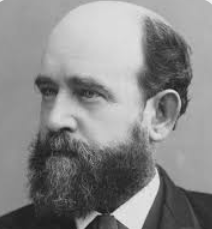
How can a man be said to have a country where he has no right to a square inch of soil...
▼
Source
source
Ch. 2 : Political Dangers

5 months 2 weeks ago
The orators and the despots have the least power in their cities since they do nothing that they wish to do, practically speaking, though they do whatever they think to be best.

4 months 2 weeks ago
A truer image of the world, I think, is obtained by picturing things as entering into the stream of time from an eternal world outside, than from a view which regards time as the devouring tyrant of all that is.
▼
Source
source
Ch. 1: Mysticism and Logic

3 months 3 days ago
The needs of the soul can for the most part be listed in pairs of opposites which balance and complete one another. The human soul has need of equality and of hierarchy. Equality is the public recognition, effectively expressed in institutions and manners, of the principle that an equal degree of attention is due to the needs of all human beings. Hierarchy is the scale of responsibilities. Since attention is inclined to direct itself upwards and remain fixed, special provisions are necessary to ensure the effective compatibility of equality and hierarchy.
1 month 1 week ago
In the development of any science, the first received paradigm is usually felt to account quite successfully for most of the observations and experiments easily accessible to that science's practitioners. Further development, therefore, ordinarily calls for the construction of elaborate equipment, the development of an esoteric vocabulary and skills, and a refinement of concepts that increasingly lessens their resemblance to their usual common-sense prototypes. That professionalization leads, on the one hand, to an immense restriction of the scientist's vision and to a considerable resistance to paradigm change. The science has become increasingly rigid. On the other hand, within those areas to which the paradigm directs the attention of the group, normal science leads to a detail of information and to a precision of the observation-theory match that could be achieved in no other way.
▼
Source
source
p. 64

4 months 2 weeks ago
The entire process seems simple and natural, i.e., possesses the naturalness of a shallow rationalism.
▼
Source
source
Vol. II, Ch. III, p. 95.
3 months 2 weeks ago
For it all depends on how we look at things, and not on how they are in themselves. The least of things with a meaning is worth more in life than the greatest of things without it.
▼
Source
source
p. 67
4 months 2 weeks ago
We should be considerate to the living; to the dead we owe only the truth.
▼
Source
source
Letter to M. de Grenonville, 1719

5 months 2 weeks ago
In that daily effort in which intelligence and passion mingle and delight each other, the absurd man discovers a discipline that will make up the greatest of his strengths. The required diligence and doggedness and lucidity thus resemble the conqueror's attitude. To create is likewise to give a shape to one's fate. For all these characters, their work defines them at least as much as it is defined by them. The actor taught us this: There is no frontier between being and appearing.

3 months 2 weeks ago
Better to be despised for too anxious apprehensions, than ruined by too confident a security.

4 months 1 week ago
All who delight in the pleasures of the belly, exceeding all measure in eating and drinking and love, find that the pleasures are brief and last but a short while-only so long as they are eating and drinking-but the pains that come after are many and endure. The longing for the same things keeps ever returning, and whenever the objects of one's desire are realized forthwith the pleasure vanishes, and one has no further use for them. The pleasure is brief, and once more the need for the same things returns.
4 months 1 week ago
May we be those who shall heal this world.
▼
Source
source
Yasna 30,9
2 months 3 weeks ago
Even if we consider not words by themselves but rules deciding what words may appropriately be produced in certain contexts - even if we consider, in computer jargon, programs for using words - unless those programs themselves refer to something extra-linguistic there is still no determinate reference that those words possess. This will be a crucial step in the process of reaching the conclusion that the Brain-in-a-Vat Worlders cannot refer to anything external at all (and hence cannot say that they are Brain-in-a-Vat Worlders).
▼
Source
source
Chap. 1 : Brains in a vat

2 months 2 weeks ago
One might think that it must be quite clear to people not deprived of reason, that violence breeds violence; that the only means of deliverance from violence lies in not taking part in it. This method, one would think, is quite obvious. It is evident that a great majority of men can be enslaved by a small minority only if the enslaved themselves take part in their own enslavement. If people are enslaved, it is only because they either fight violence with violence or participate in violence for their own personal profit. Those who neither struggle against violence nor take part in it can no more be enslaved than water can be cut. They can be robbed, prevented from moving about, wounded or killed, but they cannot be enslaved: that is, made to act against their own reasonable will.
▼
Source
source
The Meaning of the Russian Revolution

1 month 1 week ago
Sarcasm I now see to be, in general, the language of the Devil; for which reason I have, long since, as good as renounced it.
▼
Source
source
Bk. II, ch. 4.

3 months 1 day ago
And at once I saw with great clarity that human beings possess two bodies. One is the physical body, the other -- just as real, just as self-contained -- is the emotional body. Like the physical body, the emotional body reaches a certain level of growth, and then stops. But it stops rather sooner than the physical body. So most of us possess the emotional body of a retarded adolescent.
▼
Source
source
p. 23
3 months 2 weeks ago
Since it is difficult to approve the reasons people invoke, each time we leave one of our 'fellow men', the question which comes to mind is invariably the same: how does he keep from killing himself?

4 months 2 weeks ago
If a man makes the press utter atrocious things he becomes as answerable for them as if he had uttered them by word of mouth. Mr. Jefferson has said in his inaugural speech, that "error of opinion might be tolerated, when reason was left free to combat it." This is sound philosophy in cases of error. But there is a difference between error and licentiousness.
▼
Source
source
Liberty of the Press, 1806

1 month 2 days ago
Man is a reasoning animal.

5 months 2 weeks ago
An unpleasant nest of nasty, materialistic and aggressive people, careless of the rights of others, imperfectly democratic at home though quick to see the minor slaveries of others, and greedy without end.
3 months 4 days ago
There are, in fact, people who appear to think only with the brain, or with whatever may be the specific thinking organ; while others think with all the body and all the soul, with the blood, with the marrow of the bones, with the heart, with the lungs, with the belly, with the life. And the people who think only with the brain develop into definition-mongers; they become the professionals of thought.
2 months 3 weeks ago
The first task of administrative theory is to develop a set of concepts that will permit the description, in terms relevant to the theory, of administrative situations. These concepts, to be scientifically useful, must be operational; that is, their meanings must correspond to empirically observable facts or situations.
▼
Source
source
p. 43.
3 months 2 weeks ago
Philosophy, as I understand the word, is a positive theoretical science, and a science in an early stage of development. As such it has no more to do with belief than any other science. Indeed, I am bound to confess that it is at present in so unsettled a condition, that if the ordinary theorems of molecular physics and of archaeology are but the ghosts of beliefs, then to my mind, the doctrines of the philosophers are little better than the ghosts of ghosts. I know this is an extremely heretical opinion.
▼
Source
source
Lecture II : The Universal Categories, §3. Laws: Nominalism, CP 5.61
CivilSimian.com created by AxiomaticPanic, CivilSimian, Kalokagathia