


3 months 2 weeks ago
Ramsgate is full of Jews and fleas.
▼
Source
source
MEKOR IV, 490, 25 August 1879

3 months 2 weeks ago
It is a political axiom that power follows property.
▼
Source
source
Chapter 12 (p. 113)

3 months 1 week ago
A proposition is completely logically analyzed if its grammar is made completely clear: no matter what idiom it may be written or expressed in...
▼
Source
source
Philosophical Remarks (1930), Part I (1)
1 month 1 week ago
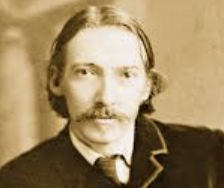
The world is a great place and stocked with wealth and beauty, and there is no limit to the rewards that may be offered. Such an one who would refuse a million of money may sell his honour for an empire or the love of a woman.
▼
Source
source
The Rajah's Diamond, The Adventure of Prince Florizel and a Detective.
1 week 4 days ago
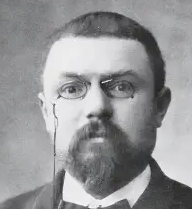
The Scientist must set in order. Science is built up with facts, as a house is with stones. But a collection of facts is no more a science than a heap of stones is a house.
▼
Source
source
Ch. IX: Hypotheses in Physics, Tr. George Bruce Halsted

3 months 2 weeks ago
A life devoted to science is therefore a happy life, and its happiness is derived from the very best sources that are open to dwellers on this troubled and passionate planet.
▼
Source
source
Ch. 2: The Place of Science in a Liberal Education

2 months 1 week ago
Why callest thou me good? there is none good but one, that is, God: but if thou wilt enter into life, keep the commandments.
▼
Source
source
19:17 (KJV)

2 months 1 week ago
The flesh spreads, further and further, like a gangrene upon the surface of the globe. It cannot impose limits upon itself, it continues to be rife despite its rebuffs, it takes its defeats for conquests, it has never learned anything. It belongs above all to the realm of the Creator, and it is indeed in the flesh that He has projected His maleficent instincts.
3 months 1 week ago
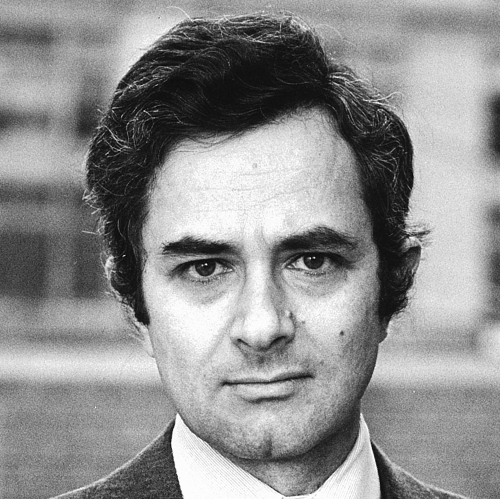
Every subjective phenomenon is essentially connected with a single point of view, and it seems inevitable that an objective physical theory will abandon that point of view.
▼
Source
source
p. 167.
2 months 1 week ago
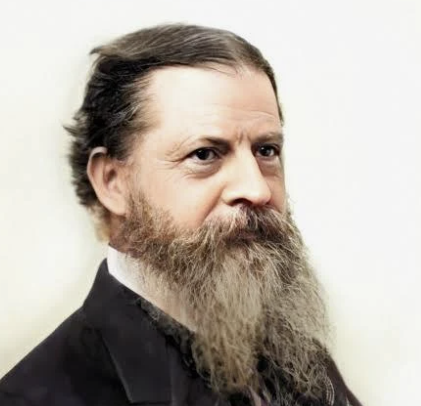
But the extraordinary insight which some persons are able to gain of others from indications so slight that it is difficult to ascertain what they are, is certainly rendered more comprehensible by the view here taken.

3 months 1 week ago
For a man petticoat government is the limit of insolence.

1 week 1 day ago
The crop of spiritual talent that is born to you, of human nobleness and intellect and heroic faculty, this is infinitely more important than your crops of cotton or corn, or wine or herrings or whale-oil, which the Newspapers record with such anxiety every season.

2 months 4 days ago
I must avert here once again to my view of the opposition that exists between individuality and personality, notwithstanding the fact that the one demands the other. Individuality is, if I may so express it, the container or thing which contains, personality the content or thing contained, or I might say that my personality is in a certain sense my comprehension, that which I comprehend or embrace within myself - which is in a certain way the whole Universe - and that my individuality is my extension; the one my infinite, the other my finite.
2 months 1 week ago
His disciples said to Him, "When will the Kingdom come?" Jesus said, "It will not come by waiting for it. It will not be a matter of saying 'Here it is' or 'There it is.' Rather, the Kingdom of the Father is spread out upon the earth, and men do not see it."
2 months 1 week ago
In relation to any act of life, the mind acts as a killjoy.
1 week 1 day ago
Consider, for example, the state of Science generally, in Europe, at this period. It is admitted, on all sides, that the Metaphysical and Moral Sciences are falling into decay, while the Physical are engrossing, every day, more respect and attention. In most of the European nations there is now no such thing as a Science of Mind; only more or less advancement in the general science, or the special sciences, of matter.

2 months 4 weeks ago
Practice justice in word and deed, and do not get in the habit of acting thoughtlessly about anything.
▼
Source
source
As quoted in Divine Harmony: The Life and Teachings of Pythagoras by John Strohmeier and Peter Westbrook.
2 months 1 week ago
And hereby it comes to passe, that Intemperance, is naturally punished with Diseases; Rashness, with Mischance; Injustice; with Violence of Enemies; Pride, with Ruine; Cowardice, with Oppression; Negligent government of Princes, with Rebellion; and Rebellion with Slaughter.
▼
Source
source
The Second Part, Chapter 31, p. 194
4 months 1 week ago
The many are mean; only the few are noble.

3 months 3 weeks ago
That of beaver skins, of beaver wool, and of gum Senega, has been subjected to higher duties; Great Britain, by the conquest of Canada and Senegal, having got almost the monopoly of those commodities.
▼
Source
source
Chapter II, Part II, Article IV, p. 954-955.
4 months 2 weeks ago
If one thing goes without saying, almost anything can.
2 months 2 days ago
The science of pure mathematics, in its modern developments, may claim to be the most original creation of the human spirit.
▼
Source
source
Ch. 2: "Mathematics as an Element in the History of Thought", p. 28
1 week 4 days ago
It is often said that experiments should be made without preconceived ideas. That is impossible. Not only would it make every experiment fruitless, but even if we wished to do so, it could not be done. Every man has his own conception of the world, and this he cannot so easily lay aside. We must, for example, use language, and our language is necessarily steeped in preconceived ideas.
▼
Source
source
Ch. IX: Hypotheses in Physics, Tr. George Bruce Halsted

2 months 3 weeks ago
General ideas are no proof of the strength, but rather of the insufficiency of the human intellect.
▼
Source
source
Book One, Chapter III.

2 months ago
Sovereignty, the freedom unto death, is threatening to a society that is organized around work and production.
2 months 2 weeks ago
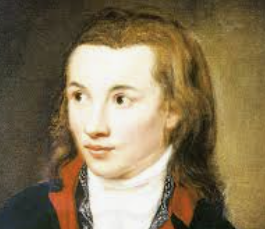
Surely this voice meant our Teacher; for it is he that can collect the indications which lie scattered on all sides. A singular light kindles in his looks, when at length the high Rune lies before us, and he watches in our eyes whether the star has yet risen upon us, which is to make the Figure visible and intelligible.
3 months 1 week ago
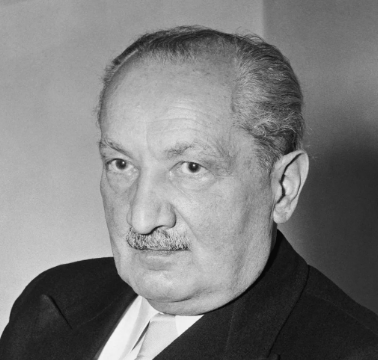
Our elucidations of the preliminary concept of phenomenology show that its essential character does not consist in its actuality as a philosophical "movement." Higher than actuality stands possibility. We can understand phenomenology solely by seizing upon it as a possibility.
▼
Source
source
Introduction: The Exposition of the Question of the Meaning of Being (Stambaugh translation)
2 months 2 weeks ago
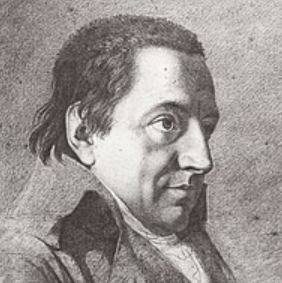
The divine life that underlies all appearance reveals itself never as a fixed and known entity, but as something that is to be; and after it has become what it was to be, it will reveal itself again to all eternity as something that is to be.
▼
Source
source
General Nature of New Eduction p. 45
4 months 2 weeks ago
Probably, the most-often-repeated lesson in history is that foreigners who are called in to help one side in a civil war take over for themselves. It is a lesson that seems never to be learned despite endless repetition.
3 months 2 weeks ago
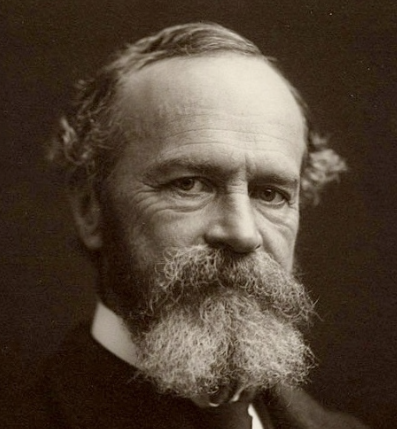
The militarily-patriotic and the romantic-minded everywhere, and especially the professional military class, refuse to admit for a moment that war may be a transitory phenomenon in social evolution. The notion of a sheep's paradise like that revolts, they say, our higher imagination. Where then would be the steeps of life? If war had ever stopped, we should have to re-invent it, on this view, to redeem life from flat degeneration. Reflective apologists for war at the present day all take it religiously. It is a sort of sacrament. It's profits are to the vanquished as well as to the victor; and quite apart from any question of profit, it is an absolute good, we are told, for it is human nature at its highest dynamic.

2 months ago
Most men have nothing in their heads but their physical needs; put them on a desert island with nothing to occupy their minds and they would go insane. They lack real motive. The curse of civilization is boredom.
▼
Source
source
Chapter Eight, The Outsider as a Visionary
3 months 2 weeks ago
Every commodity is compelled to chose some other commodity for its equivalent.
▼
Source
source
Vol. I, Ch. 1, Section 3, pg. 65.
2 months ago
A farewell does not dilute the presence of the past; it may make an even deeper presence.

1 week 1 day ago
The inventive genius of great England will not forever sit patient with mere wheels and pinions, bobbins, straps and billy-rollers whirring in the head of it. The inventive genius of England is not a Beaver's, or a Spinner's or Spider's genius: it is a Man's genius, I hope, with a God over him!
4 months 2 weeks ago
It is the mark of an educated mind to be able to entertain a thought without accepting it.

3 months 3 weeks ago
How can you worship leeks and onions? we shall suppose a SORBONNIST to say to a priest of SAIS. If we worship them, replies the latter; at least, we do not, at the same time, eat them. But what strange object of adoration are cats and monkeys? says the learned doctor. They are at least as good as the relics or rotten bones of martyrs, answers his no less learned antagonist. Are you not mad, insists the Catholic, to cut one another's throat about the preference of a cabbage or a cucumber? Yes, says the pagan; I allow it, if you will confess, that those are still madder, who fight about the preference among volumes of sophistry, ten thousand of which are not equal in value to one cabbage or cucumber.
▼
Source
source
Part XII - With regard to doubt or conviction
2 months 1 week ago
The young man who has not wept is a savage, and the old man who will not laugh is a fool.
▼
Source
source
Ch. 3, P. 57
2 months 1 week ago
Sleep on now, and take your rest: behold, the hour is at hand, and the Son of man is betrayed into the hands of sinners. Rise, let us be going: behold, he is at hand that doth betray me.
▼
Source
source
26:45-46 (KJV)
2 months 1 week ago
England is the paradise of individuality, eccentricity, heresy, anomalies, hobbies, and humors.
▼
Source
source
"The British Character"
2 months ago
What so impressed me on that first reading was the self-containedness of Tolkien's world. I suppose there are a few novelists who have created worlds that are uniquely their own -- Faulkner, for example, or Dickens. But since their world is fairly close to the actual world, it cannot really be called a unique creation. The only parallel that occurs to me is the Wagner Ring cycle, that one can only enter as if taking a holiday on a strange planet.
▼
Source
source
pp. 8-9
2 months 2 weeks ago
The deep critical thinker has become the misfit of the world. This is not a coincidence. To maintain order and control you must isolate the intellectual, the sage, the philosopher, the savant before their ideas awaken people.

3 weeks 3 days ago
Evangelical atheists preach the need for a scientific view of things, but a settled view does not go with scientific method. If we know anything it is that most of the theories that prevail at any one time are false. Scientific theories are not components of a world-view but tools we use to tinker with the world.
▼
Source
source
Sweet Morality (p. 224)
2 months 4 days ago
This mortal Don Quixote died and descended into hell, which he entered lance on rest, and freed all the condemned, as he freed the galley slaves, and he shut the gates of hell, and tore down the scroll that Dante saw there and replaced it by one on which was written "Long live hope!" and escorted by those whom he had freed, and they laughing at him, he went to heaven. And God laughed paternally at him, and this divine laughter filled his soul with eternal happiness.
3 months 2 weeks ago
I had always heard it maintained by my father, and was myself convinced, that the object of education should be to form the strongest possible associations of the salutary class; associations of pleasure with all things beneficial to the great whole, and of pain with all things hurtful to it.
▼
Source
source
(p. 136)
2 months 1 week ago
Wherever big industries displaced manufacture, the bourgeoisie developed in wealth and power to the utmost and made itself the first class of the country. The result was that wherever this happened, the bourgeoisie took political power into its own hands and displaced the hitherto ruling classes, the aristocracy, the guildmasters, and their representative, the absolute monarchy. The bourgeoisie annihilated the power of the aristocracy, the nobility, by abolishing the entailment of estates - in other words, by making landed property subject to purchase and sale, and by doing away with the special privileges of the nobility. It destroyed the power of the guildmasters by abolishing guilds and handicraft privileges. In their place, it put competition - that is, a state of society in which everyone has the right to enter into any branch of industry, the only obstacle being a lack of the necessary capital.
2 months 1 week ago
Even when he turns from religion, man remains subject to it; depleting himself to create false gods, he then feverishly adopts them; his need for fiction, for mythology triumphs over evidence and absurdity alike.
3 months 1 week ago
It is often remarked that nothing we do now will matter in a million years. But if that is true, then by the same token, nothing that will be the case in a million years matters now.
▼
Source
source
"The Absurd" (1971), p. 11.

1 month 2 weeks ago
One is ashamed to say how little is needed for all men to be delivered from those calamities which now oppress them; it is only needful not to lie.
▼
Source
source
Ch. 17
CivilSimian.com created by AxiomaticPanic, CivilSimian, Kalokagathia