


11 months 3 days ago
My mother spoke of Christ to my father, by her feminine and childlike virtues, and, after having borne his violence without a murmur or complaint, gained him at the close of his life to Christ.
▼
Source
source
Reported in Josiah Hotchkiss Gilbert, Dictionary of Burning Words of Brilliant Writers (1895), p. 351
8 months 2 weeks ago
It takes a long time to bring excellence to maturity.
▼
Source
source
Maxim 780
9 months 4 weeks ago
If thy fellows hurt thee in small things, suffer it! and be as bold with them!

10 months 2 weeks ago
The value of a principle is the number of things it will explain; and there is no good theory of disease which does not at once suggest a cure.
▼
Source
source
p. 212
8 months 1 week ago
This is still the strangest thing in all man's travelling, that he should carry about with him incongruous memories.
▼
Source
source
Pt. II, ch. III.

6 months 2 weeks ago
On eroding, ecologically degraded, increasingly toxic landscapes, worked by failing or subsidy-dependent farmers and by the cheap labor of migrants, we have erected the tottering tower of "agribusiness," which prospers and "feeds the world" (incompletely and temporarily) by undermining its own foundations.

10 months 2 weeks ago
The language of excitement is at best but picturesque merely. You must be calm before you can utter oracles.
▼
Source
source
Pearls of Thought (1881) p. 80

10 months 2 weeks ago
Consumption is also immediately production, just as in nature the consumption of the elements and chemical substances is the production of the plant.
▼
Source
source
Introduction, p. 10.

9 months 1 week ago
By virtue of depression, we recall those misdeeds we buried in the depths of our memory. Depression exhumes our shames.

7 months 1 week ago
Tyrants would distribute largess, a bushel of wheat, a gallon of wine, and a sesterce: and then everybody would shamelessly cry, "Long live the King!" The fools did not realize that they were merely recovering a portion of their own property, and that their ruler could not have given them what they were receiving without having first taken it from them.
▼
Source
source
Part 2



10 months 2 weeks ago
He who is in love is wise and is becoming wiser, sees newly every time he looks at the object beloved, drawing from it with his eyes and his mind those virtues which it possesses.
▼
Source
source
The Method of Nature, 1841

9 months ago
No sacrifice is lost for a great ideal!
▼
Source
source
(p. 135)

7 months 1 week ago
The Philosopher of this age is not a Socrates, a Plato, a Hooker, or Taylor, who inculcates on men the necessity and infinite worth of moral goodness, the great truth that our happiness depends on the mind which is within us, and not on the circumstances which are without us; but a Smith, a De Lolme, a Bentham, who chiefly inculcates the reverse of this,-that our happiness depends entirely on external circumstances; nay, that the strength and dignity of the mind within us is itself the creature and consequence of these. Were the laws, the government, in good order, all were well with us; the rest would care for itself! Dissentients from this opinion, expressed or implied, are now rarely to be met with; widely and angrily as men differ in its application, the principle is admitted by all.
8 months 2 weeks ago
Too much straightforwardness is foolish against a shameless person.
▼
Source
source
Maxim 123
6 months 2 weeks ago
The metaphysical image that a definite epoch forges of the world has the same structure as what the world immediately understands to be appropriate as a form of its political organization.

6 months 2 weeks ago
Blot out vain pomp; check impulse; quench appetite; keep reason under its own control.
▼
Source
source
IX, 7

10 months 2 weeks ago
I can be twenty women, one hundred, if that's what you want, all women. Ride with me behind you, I weigh nothing, your horse will not feel me. I want to be your whorehouse!
▼
Source
source
Act 3, sc. 4
10 months 2 weeks ago
Dreams are the touchstones of our characters.

6 months 2 weeks ago
I reduce to two the systems of philosophy which deal with man's soul. The first and older system is materialism; the second is spiritualism.

10 months 2 weeks ago
But petitional prayer is only one department of prayer; and if we take the word in the wider sense as meaning every kind of inward communion or conversation with the power recognized as divine, we can easily see that scientific criticism leaves it untouched. Prayer in this wide sense is the very soul and essence of religion.
▼
Source
source
Lecture XIX, "Other Characteristics"

11 months 2 weeks ago
Start with a planet like the earth, with a complement of simple compounds bound to exist upon it, add the energy of a nearby sun, and you are bound to end with nucleic acids. You can't avoid it.
10 months 3 weeks ago
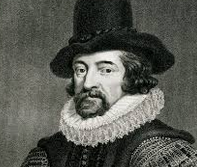
Books must follow sciences, and not sciences books.
▼
Source
source
Proposition touching Amendment of Laws

8 months 4 weeks ago
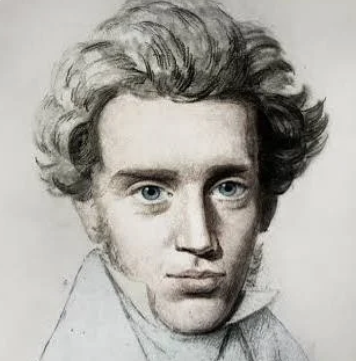
Jesus Christ raised women above the condition of mere slaves, mere ministers to the passions of the man, raised them by His sympathy, to be Ministers of God. He gave them moral activity. But the Age, the World, Humanity, must give them the means to exercise this moral activity, must give them intellectual cultivation, spheres of action.
11 months 2 weeks ago
My doubt goes like this: How could the Loving One have the heart to let human beings become so guilty that they got his murder on their consciences?
6 months 4 weeks ago
A genius doesn't adjust his treatment of a theme to a tyrant's taste.
10 months 2 weeks ago
I regard it as the irresistible effect of the Copernican astronomy to have made the theological scheme of redemption absolutely incredible.
▼
Source
source
Quoted in Robert D. Richardson, Jr., Emerson, the Mind On Fire (Univ. of Calif Press 1995), p. 124
7 months 1 week ago
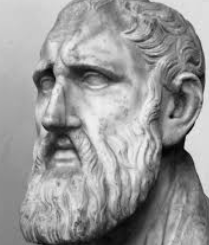
Cannot we understand how these men worshipped Canopus; became what we call Sabeans, worshipping the stars? Such is to me the secret of all forms of Paganism. Worship is transcendent wonder; wonder for which there is now no limit or measure; that is worship.
9 months 4 weeks ago
No one entrusts a secret to a drunken man; but one will entrust a secret to a good man; therefore, the good man will not get drunk.
▼
Source
source
As quoted in Epistulae morales ad Lucilium by Seneca, Epistle LXXXIII (trans. R. M. Gummere)
8 months 3 weeks ago
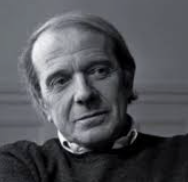
Schizophrenia is like love: there is no specifically schizophrenic phenomenon or entity; schizophrenia is the universe of productive and reproductive desiring machines, universal primary production as "the essential reality of man and nature".
▼
Source
source
The Desiring Machine

9 months 2 weeks ago
People talk sometimes of bestial cruelty, but that's a great injustice and insult to the beasts; a beast can never be so cruel as a man, so artistically cruel.

10 months 2 weeks ago
The philosophy of nature must not be unduly terrestrial; for it, the earth is merely one of the smaller planets of one of the smaller stars of the Milky Way. It would be ridiculous to warp the philosophy of nature in order to bring out results that are pleasing to the tiny parasites of this insignificant planet. Vitalism as a philosophy, and evolutionism, show, in this respect, a lack of sense of proportion and logical relevance. They regard the facts of life, which are personally interesting to us, as having a cosmic significance, not a significance confined to the earth's surface. Optimism and pessimism, as cosmic philosophies, show the same naive humanism; the great world, so far as we know it from the philosophy of nature, is neither good nor bad, and is not concerned to make us happy or unhappy. All such philosophies spring from self-importance and are best corrected by a little astronomy.

8 months 1 week ago
Like many others, I came to philosophy to study matters of life and death, and was taught that professionalization required forgetting them. The more I learned, the more I grew convinced of the opposite: the history of philosophy was indeed animated by the questions that drew us there.

11 months 2 weeks ago
I was brought up in the Christian religion, and although I can scarcely sanction all the improper attempts to gain the emancipation of woman, all paganlike reminiscences also seem foolish to me. My brief and simple opinion is that woman is certainly as good as man-period. Any more discursive elaboration of the difference between the sexes or deliberation on which sex is superior is an idle intellectual occupation for loafers and bachelors.
10 months 2 weeks ago
When a sixth of the population of a nation which has undertaken to be the refuge of liberty are slaves, and a whole country is unjustly overrun and conquered by a foreign army, and subjected to military law, I think that it is not too soon for honest men to rebel and revolutionize. What makes this duty the more urgent is the fact that the country so overrun is not our own, but ours is the invading army.

8 months 1 week ago
If it's really true, that the museum at Liberty University has dinosaur fossils which are labelled as being 3000 years old, then that is an educational disgrace. It is debauching the whole idea of a university, and I would strongly encourage any members of Liberty University who may be here...to leave and go to a proper university.
▼
Source
source
At Randolph-Macon Woman's College in Lynchburg, Virginia, (23 October 2006) Broadcasted by C-SPAN2

8 months 1 day ago
As Gandhi taught, freedom can be reclaimed only by refusing to cooperate with unjust, immoral laws. The fight for truth-employing the principles of civil disobedience, nonviolence, and noncooperation-is not just our right as free citizens of free societies. It is our duty as citizens of the earth.
▼
Source
source
(p184)

9 months 3 weeks ago
If it is not true, it is a good story.
▼
Source
source
as quoted in A Book of Quotations, Proverbs and Household Words (1907) edited by Sir William Gurney Benham
9 months 2 weeks ago
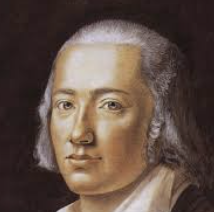
What has always made the state a hell on earth has been precisely that man has tried to make it heaven.

7 months 3 weeks ago
If we want eternal life, then we'll need to rewrite our bug-ridden genetic code and become god-like. "May all that have life be delivered from suffering", said Gautama Buddha. It's a wonderful sentiment. Sadly, only hi-tech solutions can ever eradicate suffering from the living world. Compassion alone is not enough.
▼
Source
source
Interview with Nick Bostrom and David Pearce, Dec. 2007

10 months 3 weeks ago
No matter that we may mount on stilts, we still must walk on our own legs. And on the highest throne in the world, we still sit only on our own bottom.
▼
Source
source
Ch. 13

9 months ago
What is beginning to emerge, then, is a theory about psychic sensitivity. It runs as follows. When I relax deeply, it is as if someone opened up the partition between the two compartments of my brain, turning them into a single large room. I experience a sense of mental freedom as if I can suddenly breathe more deeply, and a feeling of contact with things. Everyone has had the experience of being in a state of hurry or excitement, and failing to notice that they have bruised or scratched themselves -- until the excitement evaporates and the pain makes itself known. Hurry and tension raise our sensitivity threshold, and at the same time, erect a glass wall between us and reality. In the "unicameral" state, this wall vanishes, and everything seems more real.
▼
Source
source
p. 51
7 months 1 week ago
When the oak-tree is felled, the whole forest echoes with it; but a hundred acorns are planted silently by some unnoticed breeze.
▼
Source
source
On History.
9 months 2 days ago
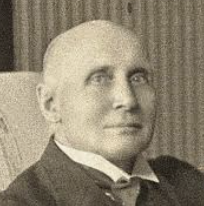
In the study of ideas, it is necessary to remember that insistence on hard-headed clarity issues from sentimental feeling, as if it were a mist, cloaking the perplexities of fact. Insistence on clarity at all costs is based on sheer superstition as to the mode in which human intelligence functions. Our reasoning grasps at straws for premises and floats on gossamer for deductions.
▼
Source
source
p. 91.

10 months 3 weeks ago
As all those have shown who have discussed civil institutions, and as every history is full of examples, it is necessary to whoever arranges to found a Republic and establish laws in it, to presuppose that all men are bad and that they will use their malignity of mind every time they have the opportunity; and if such malignity is hidden for a time, it proceeds from the unknown reason that would not be known because the experience of the contrary had not been seen, but time, which is said to be the father of every truth, will cause it to be discovered.
▼
Source
source
Book 1, Ch. 3
11 months 2 weeks ago
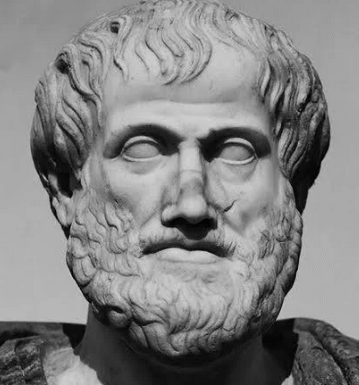
In cases of this sort, let us say adultery, rightness and wrongness do not depend on committing it with the right woman at the right time and in the right manner, but the mere fact of committing such action at all is to do wrong.

10 months 1 week ago
The appearance in nineteenth-century psychiatry, jurisprudence, and literature of a whole series of discourses on the species and subspecies of homosexuality, inversion, pederasty, and "psychic hermaphroditism" made possible a strong advance of social controls into this area of "perversity"; but it also made possible the formation of a "reverse" discourse: homosexuality began to speak in its own behalf, to demand that its legitimacy or "naturality" be acknowledged, often in the same vocabulary, using the same categories by which it was medically disqualified.
▼
Source
source
Vol. I, p. 101
CivilSimian.com created by AxiomaticPanic, CivilSimian, Kalokagathia