


3 months 4 weeks ago
I should like to believe my people's religion, which was just what I could wish, but alas, it is impossible. I have really no religion, for my God, being a spirit shown merely by reason to exist, his properties utterly unknown, is no help to my life. I have not the parson's comfortable doctrine that every good action has its reward, and every sin is forgiven. My whole religion is this: do every duty, and expect no reward for it, either here or hereafter.
▼
Source
source
Greek Exercises (1888), written two days after his sixteenth birthday.

4 months 3 weeks ago
In my fiction I am careful to make everything probable and to tie up all loose ends. Real life is not hampered by such considerations.
2 months 3 weeks ago
What can a man say about woman, his own opposite? I mean of course something sensible, that is outside the sexual program, free of resentment, illusion, and theory. Where is the man to be found capable of such superiority? Woman always stands just where the man's shadow falls, so that he is only too liable to confuse the two. Then, when he tries to repair this misunderstanding, he overvalues her and believes her the most desirable thing in the world.
▼
Source
source
P. 236

4 months 5 days ago
Insurrection ... never brings about the desired improvement. For insurrection lacks discernment; it generally harms the innocent more than the guilty. Hence, no insurrection is ever right, no matter how right the cause it seeks to promote.
▼
Source
source
pp. 62-63

2 months 1 week ago
The rather more dubious side of Nietzsche's 'evolutionism' is his glorification of the warrior -- particularly when, as an exemplification of the warrior-hero, he chooses an archetypal 'spoilt brat' like Cesare Borgia. Nietzsche's own physical weakness and consequent inability to escape the atmosphere of the study leads him to take a rather unrealistic view of the man of action.
▼
Source
source
p. 87

2 months 3 weeks ago
The pursuit of individual happiness within those limits prescribed by social conditions, is the first requisite to the attainment of the greatest general happiness.
▼
Source
source
Ethics (New York:1915), § 70, pp. 190-191

2 months 4 weeks ago
In all persuasions the bigots are persecutors; the men of a cool and reasonable piety are favourers of toleration; because the former sort of men not taking the pains to be acquainted with the grounds of their adversaries tenets, conceive them to be so absurd and monstrous, that no man of sense can give into them in good earnest. For which reason they are convinced that some oblique bad motive induces them to pretend to the belief of such doctrines, and to the maintaining of them with obstinacy. This is a very general principle in all religious differences, and it is the corner stone of all persecution.
▼
Source
source
Volume II, p. 148
1 week 1 day ago
Only the search back to the origins of one's ideas in order to see the real arguments for them, before people became so certain of them that they ceased thinking about them at all, can liberate us. Our study of history has taught us to laugh at the follies of the whole past, the monarchies, oligarchies, theocracies, and aristocracies with the fanaticism for empire or salvation, once taken so seriously. But we have very few tools for seeing ourselves in the same way, as others will see us. Each age always conspires to make its own way of thinking appear to be the only possible or just way, and our age has the least resistance to the triumph of its own way. There is less real presence of respectable alternatives and less knowledge of the titanic intellectual figures who founded our way.
▼
Source
source
Western Civ, p. 20.

2 months 3 weeks ago
It is a proof that the state is not an arbitrary invention, but is established by nature and reason, when we actually find that, in places where men have lived together for a time and have become educated, states are erected, although the people in the one such place know not that the same thing has been done in other places. Each people, which does not live in a condition of nature, but has a government, no matter how constituted, has a right to compel its recognition from all adjoining states.
▼
Source
source
P. 474, 477

3 months 4 weeks ago
The unity is brought about by force.
▼
Source
source
Notebook I, The Chapter on Money, p. 70.
3 months 4 weeks ago
That Man is the product of causes that had no prevision of the end they were achieving; that his origin, his growth, his hopes and fears, his loves and his beliefs, are but the outcome of accidental collocations of atoms; that no fire, no heroism, no intensity of thought and feeling, can preserve individual life beyond the grave; that all the labors of the ages, all the devotion, all the inspiration, all the noonday brightness of human genius, are destined to extinction in the vast death of the solar system, and that the whole temple of Man's achievement must inevitably be buried beneath the debris of a universe in ruins - all these things, if not quite beyond dispute, are yet so nearly certain that no philosophy which rejects them can hope to stand. Only within the scaffolding of these truths, only on the firm foundation of unyielding despair, can the soul's habitation henceforth be safely built.

4 months 1 day ago
Extreme pride or dejection indicates extreme ignorance of self.
▼
Source
source
Part IV, Prop. LV

3 months 4 weeks ago
Lead, follow, or get out of the way.
▼
Source
source
George S. Patton: "Lead me, follow me, or get out of my way", as quoted in Pocket Patriot: Quotes from American Heroes (2005) edited by Kelly Nickell, p. 157

2 months 3 weeks ago
To have committed every crime but that of being a father.

3 months 4 weeks ago
The brain may be regarded as a kind of parasite of the organism, a pensioner, as it were, who dwells with the body.

1 month 3 weeks ago
In spite the mountains of books written about art, no precise definition of art has been constructed. And the reason for this is that the conception of art has been based on the conception of beauty.
1 week 1 day ago
Anyone who proposes to do good must not expect people to roll stones out of his way, but must accept his lot calmly if they even roll a few more upon it. A strength which becomes clearer and stronger through its experience of such obstacles is the only strength that can conquer them. Resistance is only a waste of strength.
▼
Source
source
p. 164
3 months 4 weeks ago
Wisdom and contrivance are shown in overcoming difficulties, so there is no place for them in a Being for whom no difficulties exist.
▼
Source
source
pages 176-177; Early Modern Texts page 16
2 months 1 week ago
I believe that the fundamental alternative for man is the choice between "life" and "death"; between creativity and destructive violence; between reality and illusions; between objectivity and intolerance; between brotherhood-independence and dominance-submission.
3 months 4 weeks ago
No rules, however wise, are a substitute for affection and tact.
▼
Source
source
Ch. 12: Education and Discipline

3 months 3 weeks ago
My dear Wormwood, I note what you say about guiding your patient's reading and taking care that he sees a good deal of his materialist friend. But are you not being a trifle naive? It sounds as if you suppose that argument was the way to keep him out of the enemy's clutches. That might have been so if he had lived a few centuries earlier.
▼
Source
source
Letter I
1 week 6 days ago
The habit of the religious way of thinking has biased our mind so grievously that we are - terrified at ourselves in our nakedness and naturalness; it has degraded us so that we deem ourselves depraved by nature, born devils.
▼
Source
source
Dover 2005, p. 162
2 months 3 weeks ago
The dynamic principle of fantasy is play, a characteristic also of the child, and as such it appears inconsistent with the principle of serious work. But without this playing with fantasy no creative work has ever yet come to birth. The debt we owe to the play of imagination is incalculable. It is therefore short-sighted to treat fantasy, on account of its risky or unacceptable nature, as a thing of little worth.
▼
Source
source
Ch. 1, p. 82
2 months 2 weeks ago
Men looke not at the greatnesse of the evill past, but the greatnesse of the good to follow.
▼
Source
source
The First Part, Chapter 15, p. 76 (Italics as per text)
1 month 6 days ago
Philosophy is said to have taken the 'linguistic turn' in this century. One hundred years ago, a philosopher would think in terms of mind, spirit, experience, consciousness; now the by-word is language.
▼
Source
source
Chapter 2, Metaphysics and Metaphor, p. 26

4 months 6 days ago
Aristotle, a mere bond-servant to his logic, thereby rendering it contentious and well nigh useless.
▼
Source
source
Rerum Novarum
3 months 3 weeks ago
The Prodigal Son at least walked home on his own feet. But who can duly adore that Love which will open the high gates to a prodigal who is brought in kicking, struggling, resentful, and darting his eyes in every direction for a chance of escape?
4 months 5 days ago
One should hasten to put such witches to death. Statement of 20 August 1538;
▼
Source
source
as quoted in Conversations With Martin Luther (1915), translated and edited by Preserved Smith and Herbert Percival Gallinger, p. 163
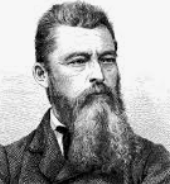
2 months 3 weeks ago
Demonstrating is therefore only the means through which I strip my thought of the form of "mine-ness" so that the other person may recognize it as his own.
▼
Source
source
Z. Hanfi, trans., in The Fiery Brook (1972), p. 66

3 weeks 1 day ago
The invasion... exhibits in stark terms, the choice that is before us today between maintaining a liberal government that respects the rights of individuals, or moving over to a form of centralized illiberal dictatorship, even if that... illiberal government is somehow democratically legitimated. ...That's the central issue in global politics today. ...That's basically what the... Ukraine invasion is about, and that's why... all liberal societies that care about those individual freedoms... have a very powerful interest in the outcome of that war, because Putin and Russia are at the center of an international network of illiberal forces that are seeking to overturn liberal values in virtually every part of the world, and therefore... that's all part of a larger global struggle over our fundamental liberal values.
▼
Source
source
26:50 Question & Answer period follows

3 months 1 week ago
Truth is so great a perfection, that if God would render himself visible to men, he would choose light for his body and truth for his soul.
▼
Source
source
As quoted in A Dictionary of Thoughts: Being a Cyclopedia of Laconic Quotations from the Best Authors of the World, both Ancient and Modern (1908) by Tyron Edwards, p. 592
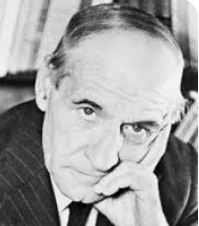
2 months 2 weeks ago
Hatred is a feeling which leads to the extinction of values.
▼
Source
source
Cited in the Oxford Dictionary of Quotations by Subject, ed. Susan Ratcliffe (2010), p. 223
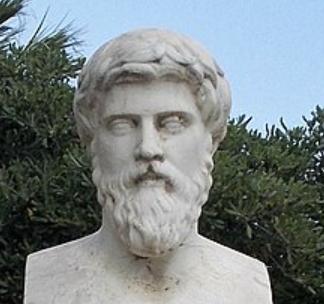
3 months 2 weeks ago
There were two brothers called Both and Either; perceiving Either was a good, understanding, busy fellow, and Both a silly fellow and good for little, Philip said, "Either is both, and Both is neither."
▼
Source
source
35 Philip

4 months 5 days ago
There is little less trouble in governing a private family than a whole kingdom.
▼
Source
source
Book I, Ch. 39
3 months 3 weeks ago
What can you ever really know of other people's souls - of their temptations, their opportunities, their struggles? One soul in the whole creation you do know: and it is the only one whose fate is placed in your hands. If there is a God, you are, in a sense, alone with Him. You cannot put Him off with speculations about your next door neighbours or memories of what you have read in books.
▼
Source
source
Book IV, Chapter 10, "Nice People or New Men"
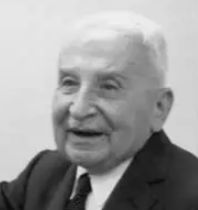
1 week 6 days ago
A man who chooses between drinking a glass of milk and a glass of a solution of potassium cyanide does not choose between two beverages; he chooses between life and death. A society that chooses between capitalism and socialism does not choose between two social systems; it chooses between social cooperation and the disintegration of society. Socialism is not an alternative to capitalism; it is an alternative to any system under which men can live as human beings.
▼
Source
source
1963 edition, p. 680
4 months 2 weeks ago
Opposition brings concord. Out of discord comes the fairest harmony.
3 months 4 weeks ago
I do not believe that science per se is an adequate source of happiness, nor do I think that my own scientific outlook has contributed very greatly to my own happiness, which I attribute to defecating twice a day with unfailing regularity.
▼
Source
source
Letter to W. W. Norton (publisher), 27 January, 1931
3 months 4 weeks ago
In every stock-jobbing swindle everyone knows that some time or other the crash must come, but every one hopes that it may fall on the head of his neighbour, after he himself has caught the shower of gold and placed it in safety.
▼
Source
source
Vol. I, Ch. 10, Section 5, pg. 296.

4 months 3 weeks ago
The preceding merely defines a way of thinking. But the point is to live.

3 months 2 weeks ago
And yet it will be obvious that it is difficult to really know of what sort each thing is.

4 months 1 day ago
A man must always live by his work, and his wages must at least be sufficient to maintain him. They must even upon most occasions be somewhat more, otherwise it would be impossible for him to bring up a family, and the race of such workmen could not last beyond the first generation.
▼
Source
source
Chapter VIII, p. 81.
2 months 1 week ago
The kind of relatedness to the world may be noble or trivial, but even being related to the basest kind of pattern is immensely preferable to being alone.
▼
Source
source
Ch. 1
2 months 3 weeks ago
Christianity set itself the goal of fulfilling man's unattainable desires, but for that very reason ignored his attainable desires. By promising man eternal life, it deprived him of temporal life, by teaching him to trust in God's help it took away his trust in his own powers; by giving him faith in a better life in heaven, it destroyed his faith in a better life on earth and his striving to attain such a life. Christianity gave man what his imagination desires, but for that very reason failed to give him what he really and truly desires.
▼
Source
source
Lecture XXX, Atheism alone a Positive View
2 months 3 weeks ago
It's not worth the bother of killing yourself, since you always kill yourself too late.

3 months 4 weeks ago
Men remain in their present low and primitive condition; but if they should feel the influence of the spring of springs arousing them, they would of necessity rise to a higher and more ethereal life.
▼
Source
source
p. 49

3 months 3 days ago
This reasonable moderator, and equal piece of justice, Death.
▼
Source
source
Section 38
3 months 3 weeks ago
The process of being brought up, however well it is done, cannot fail to offend.

3 months 3 weeks ago
The sentiment of reality can indeed attach itself so strongly to our object of belief that our whole life is polarized through and through, so to speak, by its sense of the existence of the thing believed in, and yet that thing, for the purpose of definite description, can hardly be said to be present to our mind at all.
▼
Source
source
Lecture III, "The Reality of the Unseen"

2 weeks 4 days ago
It is the very joy of man's heart to admire, where he can; nothing so lifts him from all his mean imprisonments, were it but for moments, as true admiration.
CivilSimian.com created by AxiomaticPanic, CivilSimian, Kalokagathia