


3 months 3 weeks ago
Every poet has trembled on the verge of science.
▼
Source
source
July 18, 1852

3 months 3 weeks ago
Luxury is the opposite of the naturally necessary.
▼
Source
source
Notebook V, The Chapter on Capital, p. 448.
2 months 3 weeks ago
India is pre-eminently distinguished for the many traits of original grandeur of thought and of the wonderful remains of immediate knowledge.
▼
Source
source
quoted in Londhe, S. (2008). A tribute to Hinduism: Thoughts and wisdom spanning continents and time about India and her culture. New Delhi: Pragun Publication.

2 months 1 week ago
It is a profoundly erroneous truism, repeated by all copy-books and by eminent people when they are making speeches, that we should cultivate the habit of thinking of what we are doing. The precise opposite is the case. Civilization advances by extending the number of important operations which we can perform without thinking about them. Operations of thought are like cavalry charges in a battle - they are strictly limited in number, they require fresh horses, and must only be made at decisive moments.
▼
Source
source
ch. 5.
2 months 5 days ago
Happiness is the indication that man has found the answer to the problem of human existence: the productive realization of his potentialities and thus, simultaneously, being one with the world and preserving the integrity of his self. In spending his energy productively he increases his powers, he "burns without being consumed."
▼
Source
source
p.189



2 months 3 weeks ago
Money is coined liberty, and so it is ten times dearer to the man who is deprived of freedom. If money is jingling in his pocket, he is half consoled, even though he cannot spend it. But money can always and everywhere be spent, and, moreover, forbidden fruit is sweetest of all.
▼
Source
source
The House of the Dead (1862) ch. 1; as translated by Constance Garnett (1915), p. 16

3 months 3 weeks ago
It is easy to live for others; everybody does. I call on you to live for yourselves.
▼
Source
source
May 3, 1845
3 months 2 weeks ago
The human being is not the lord of beings, but the shepherd of Being.
▼
Source
source
Letter on Humanism
1 month 6 days ago
The wave of the future is coming and there is no fighting it.
▼
Source
source
The Wave of the Future

1 month 2 weeks ago
It's almost impossible to say anything against Islam in this country, because you are accused of being racist or Islamophobic.
▼
Source
source
2008 comment quoted in "Fury over Richard Dawkins's burka jibe as atheist tells of his 'visceral revulsion' at Muslim dress", Daily Mail

1 month 2 weeks ago
The late philosopher Morris R. Cohen of CCNY was asked by a student in the metaphysics course, "Professor Cohen, how do I know that I exist?" The keen old prof replied, "And who is asking?"
▼
Source
source
Humboldt's Gift (1996), p. 163
3 months 3 weeks ago
The stars awaken a certain reverence, because though always present, they are inaccessible; but all natural objects make a kindred impression, when the mind is open to their influence. Nature never wears a mean appearance. Neither does the wisest man extort her secret, and lose his curiosity by finding out all her perfection. Nature never became a toy to a wise spirit. The flowers, the animals, the mountains, reflected the wisdom of his best hour, as much as they had delighted the simplicity of his childhood.
▼
Source
source
Nature
4 days ago
I can say without affectation that I belong to the Russian convict world no less ... than I do to Russian literature. I got my education there, and it will last forever.

4 months 1 week ago
I have read in Plato and Cicero sayings that are very wise and very beautiful; but I never read in either of them, "Come unto me, all ye that labor and are heavy laden."
▼
Source
source
p. 62

2 months 2 weeks ago
Thanks to depression - that alpinism of the indolent - we scale every summit and daydream over every precipice from our bed.

2 months 2 weeks ago
From the cradle to the grave, each individual pays for the sin of not being God. That's why life is an uninterrupted religious crisis, superficial for believers, shattering for doubters.

3 months 3 weeks ago
There is needed, no doubt, a body of servants (ministerium) of the invisible church, but not officials (officiales), in other words, teachers but not dignitaries, because in the rational religion of every individual there does not yet exist a church as a universal union (omnitudo collectiva).
▼
Source
source
Book IV, Part 1, Section 1, "The Christian religion as a natural religion"
2 months 2 weeks ago
A philosopher worthy of the name has never said more than a single thing: and even then it is something he has tried to say, rather than actually said. And he has said only one thing because he has seen only one point: and at that it was not so much a vision as a contact...
▼
Source
source
"L'intuition philosophique (Philosophical Intuition)" (10 April 1911); translated by Mabelle L. Andison in: Henri Bergson, The Creative Mind: An Introduction to Metaphysics, Courier Dover Publications, 2012, p. 91
3 months 3 weeks ago
If the single man plant himself indomitably on his instincts, and there abide, the huge world will come round to him. 6. Nature, Addresses and Lectures.
▼
Source
source
The American Scholar

3 months 3 weeks ago
If good music has charms to soothe the savage breast, bad music has no less powerful spells for filling the mildest breast with rage, the happiest with horror and disgust. Oh, those mammy songs, those love longings, those loud hilarities! How was it possible that human emotions intrinsically decent could be so ignobly parodied.
▼
Source
source
"Silence is Golden," p. 59
3 months 3 weeks ago
The days .... come and go like muffled and veiled figures, sent from a distant friendly party; but they say nothing, and if we do not use the gifts they bring, they carry them as silently away.
▼
Source
source
Works and Days

4 months 2 weeks ago
I am not a visual person. I have spent so many bounded years in my childhood that I have grown used to having books as my window on reality.
2 months 2 days ago
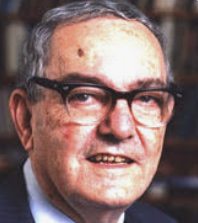
We need to augment and amend the existing body of classical and neoclassical economic theory to achieve a more realistic picture of economic process.
▼
Source
source
Herbert A. Simon (1986) in Preface to: Gilad & Kaish (eds.), Handbook of Behavioral Economics, p. xvi.

3 months 3 weeks ago
Real culture lives by sympathies and admirations, not by dislikes and disdain - under all misleading wrappings it pounces unerringly upon the human core.
▼
Source
source
The Social Value of the College-Bred

3 months 3 weeks ago
That I, a funny little gesticulating animal on two legs, should stand beneath the stars and declaim in a passion about my rights - it seems so laughable, so out of all proportion. Much better, like Archimedes, to be killed because of absorption in eternal things... There is a possibility in human minds of something mysterious as the night-wind, deep as the sea, calm as the stars, and strong as Death, a mystic contemplation, the "intellectual love of God." Those who have known it cannot believe in wars any longer, or in any kind of hot struggle. If I could give to others what has come to me in this way, I could make them too feel the futility of fighting. But I do not know how to communicate it: when I speak, they stare, applaud, or smile, but do not understand.
▼
Source
source
Letter to Miss Rinder, July 30, 1918
2 months 2 weeks ago
No one should try to live if he has not completed his training as a victim.
1 week 1 day ago
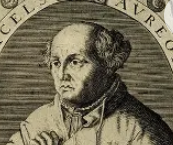
Who else is the enemy of Nature but he who mistakes himself for more intelligent than Nature, though it is the highest school for all of us?
1 month 2 days ago
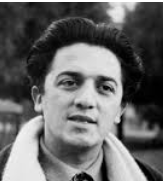
Even if I set out to make a film about a fillet of sole, it would be about me.
▼
Source
source
On the autobiographical nature of his films, in The Atlantic
3 months 3 weeks ago
The old often envy the young; when they do, they are apt to treat them cruelly.

2 months 3 weeks ago
Mere parsimony is not economy. Expense, and great expense, may be an essential part in true economy.
4 months 1 week ago
Therefore, on hearing His words let no one say either: "These are not Christ's words," or "These are not my words." On the contrary, if he knows that he is in the body of Christ, let him say: "These are both Christ's words and my words." Say nothing without Him, and He will say nothing without thee. We must not consider ourselves as strangers to Christ, or look upon ourselves as other than Himself.
▼
Source
source
p.422

3 months 2 weeks ago
A serious and good philosophical work could be written consisting entirely of jokes.
▼
Source
source
As quoted in "A View from the Asylum" in Philosophical Investigations from the Sanctity of the Press (2004), by Henry Dribble, p. 87

4 months 3 weeks ago
This fact, that the opposite of sin is by no means virtue, has been overlooked. The latter is partly a pagan view, which is content with a merely human standard, and which for that very reason does not know what sin is, that all sin is before God. No, the opposite of sin is faith.

3 months 3 weeks ago
Now, as there is an infinity of possible universes in the Ideas of God, and as only one of them can exist, there must be a sufficient reason for God's choice, which determines him toward one rather than another. And this reason can be found only in the fitness, or the degrees of perfection, that these worlds contain, since each possible thing has the right to claim existence in proportion to the perfection it involves.
▼
Source
source
La monadologie (53 & 54).

2 months 2 weeks ago
I think that the philosopher must, for his own purposes, carry methodological strictness to an extreme when he is investigating and pursuing his truths, but when he is ready to enunciate them and give them out, he ought to avoid the cynical skill with which some scientists, like a Hercules at the fair, amuse themselves by displaying to the public the biceps of their technique.
▼
Source
source
pp. 19-20

4 months 1 week ago
There is no city that is truly one other than this city that we are involved in bringing forth.
3 months 3 weeks ago
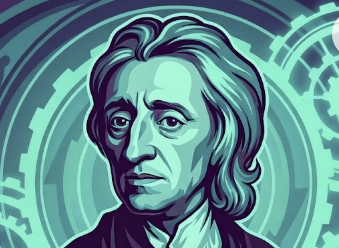
Those truly natural wants, which reason alone, without some other help, is not able to fence against, nor keep from disturbing us. The pains of sickness and hurts, hunger, thirst, and cold, want of sleep and rest or relaxation of the part weary'd with labour, are what all men feel and the best dispos'd minds cannot but be sensible of their uneasiness; and therefore ought, by fit applications, to seek their removal, though not with impatience, or over great haste, upon the first approaches of them, where delay does not threaten some irreparable harm. The pains that come from the necessities of nature, are monitors to us to beware of greater mischiefs, which they are the forerunner of; and therefore they must not be wholly neglected, and strain'd too far. But yet the more children can be inur'd to hardships of this kind, by a wise care to make them stronger in body and mind, the better it will be for them.
▼
Source
source
Sec. 107
2 months 3 weeks ago
Yes, I dreamed a dream, my dream of the third of November. They tease me now, telling me it was only a dream. But does it matter whether it was a dream or reality, if the dream made known to me the truth? If once one has recognized the truth and seen it, you know that it is the truth and that there is no other and there cannot be, whether you are asleep or awake. Let it be a dream, so be it, but that real life of which you make so much I had meant to extinguish by suicide, and my dream, my dream - oh, it revealed to me a different life, renewed, grand and full of power!


3 months 3 weeks ago
Three o'clock is always too late or too early for anything you want to do.
2 months 2 weeks ago
When all these things are lacking there is no culture; there is in the strictest sense of the word, barbarism. And let us not deceive ourselves, this is what is beginning to appear in Europe under the progressive rebellion of the masses. The traveller who arrives in a barbarous country knows that in that territory there are no ruling principles to which it is possible to appeal. Properly speaking, there are no barbarian standards. Barbarism is the absence of standards to which appeal can be made.
▼
Source
source
Chap. VIII: The Masses Intervene In Everything, And Why Their Intervention Is Solely By Violence
3 months 3 weeks ago
To understand political power aright, and derive from it its original, we must consider what estate all men are naturally in, and that is, a state of perfect freedom to order their actions, and dispose of their possessions and persons as they think fit, within the bounds of the law of Nature, without asking leave or depending upon the will of any other man.
▼
Source
source
Second Treatise of Government, Ch. II, sec. 4

2 months 6 days ago
I prefer to reach the few who really want to learn, rather than the many who come to be amused.

3 months 3 weeks ago
The human imagination has seldom had before it an object so sublimely ordered as the medieval cosmos. If it has an aesthetic fault, it is perhaps, for us who have known romanticism, a shade too ordered. For all its vast spaces it might in the end afflict us with a kind of claustrophobia. Is there nowhere any vagueness? No undiscovered by-ways? No twilight? Can we never really get out of doors?
▼
Source
source
The Discarded Image: An Introduction to Medieval and Renaissance Literature, 1964
3 months 3 weeks ago
The value of a principle is the number of things it will explain; and there is no good theory of disease which does not at once suggest a cure.
▼
Source
source
p. 212
2 months 2 weeks ago
What am I, other than a chance in the infinite probabilities of not having been!
CivilSimian.com created by AxiomaticPanic, CivilSimian, Kalokagathia