

2 months 3 days ago
The deliberate aim at Peace very easily passes into its bastard substitute, Anesthesia.
▼
Source
source
p. 284.

3 months 2 weeks ago
Every story of conversion is the story of a blessed defeat.
▼
Source
source
Foreword to Joy Davidman's Smoke on the Mountain, 1954
2 months 3 days ago
No epoch is homogeneous; whatever you may have assigned as the dominant note of a considerable period, it will always be possible to produce men, and great men, belonging to the same time, who exhibit themselves as antagonistic to the tone of their age.
▼
Source
source
Ch. 4: "The Eighteenth Century", p. 93

3 months 2 weeks ago
You won't - I really believe - get too much out of reading it. Because you won't understand it; the content will seem strange to you. In reality, it isn't strange to you, for the point is ethical. I once wanted to give a few words in the foreword which now actually are not in it, which, however, I'll write to you now because they might be a key for you: I wanted to write that my work consists of two parts: of the one which is here, and of everything which I have not written. And precisely this second part is the important one.
▼
Source
source
On his Tractatus Logico-Philosophicus, in a letter to Ludwig von Ficker (1919), published in Wittgenstein : Sources and Perspectives (1979) by C. Grant Luckhard

1 month 2 weeks ago
Perhaps the promise of phallus is always dissatisfying in some way.
▼
Source
source
"The Lesbian Phallus and the Morphological Imaginary" (1993), later published in The Judith Butler Reader (2004) edited by Sarah Salih with Judith Butler

3 months 2 weeks ago
Thee will find out in time that I have a great love of professing vile sentiments, I don't know why, unless it springs from long efforts to avoid priggery.
▼
Source
source
Letter to Alys Pearsall Smith (1894). Smith was a Quaker, thus the archaic use of "Thee" in this and other letters to her.
4 months 2 weeks ago
Beholding beauty with the eye of the mind, he will be enabled to bring forth, not images of beauty, but realities (for he has hold not of an image but of a reality), and bringing forth and nourishing true virtue to become the friend of God and be immortal, if mortal man may.

1 week 2 days ago
I will remark again, however, as a fact not unimportant to be understood, that the different sphere constitutes the grand origin of such distinction; that the Hero can be Poet, Prophet, King, Priest or what you will, according to the kind of world he finds himself born into. I confess, I have no notion of a truly great man that could not be all sorts of men.

1 month 2 weeks ago
The media themselves are the avant-garde of our society. Avant-garde no longer exists in painting, music and poetry, it's the media themselves.
▼
Source
source
p. 274
4 months 2 weeks ago
They despised everything but virtue, caring little for their present state of life, and thinking lightly of the possession of gold and other property, which seemed only a burden to them; neither were they intoxicated by luxury; nor did wealth deprive them of their self-control; but they were sober, and saw clearly that all these goods are increased by virtue and friendship with one another, whereas by too great regard and respect for them, they are lost and friendship with them.
1 month 4 weeks ago
A on his lips and not-A in his heart.
▼
Source
source
E 95
1 month 2 weeks ago
If the immutable character of sex is contested, perhaps this construct called 'sex' is as culturally constructed as gender; indeed, perhaps it was always already gender, with the consequence that the distinction between sex and gender turns out to be no distinction at all.
▼
Source
source
Gender Trouble: Feminism and the Subversion of Identity
2 months 3 weeks ago
It is said that desire is a product of the will, but the converse is in fact true: will is a product of desire.
▼
Source
source
"Will, Freedom"

3 months 2 weeks ago
Last words are for fools who haven't said enough.
▼
Source
source
Various attributions,


2 months 2 weeks ago
That I should by necessity be either wise and good, or foolish or vicious, without having in one case or the other merit or fault - this it was that filled me with aversion and horror.The determination of my actions by a cause out of myself, whose manifestations were again determined by other causes - this it was from which I so violently revolted.The freedom which was not mine, but that of a foreign power, and, in that, only a conditional, half freedom - this it was with which I could not rest satisfied. I myself - that which in this system only appears as the manifestation of a higher existence, I will be independent, - will be something, not by another or through another, but of myself.
▼
Source
source
Jane Sinnett, trans 1846 p. 21
1 month 2 weeks ago
The mask, like the side-show freak, is mainly participatory rather than pictorial in its sensory appeal.
▼
Source
source
(p. 352)
1 week 2 days ago
The inventive genius of great England will not forever sit patient with mere wheels and pinions, bobbins, straps and billy-rollers whirring in the head of it. The inventive genius of England is not a Beaver's, or a Spinner's or Spider's genius: it is a Man's genius, I hope, with a God over him!
2 months 1 day ago
We Americans claim to be a peace-loving people. We hate bloodshed; we are opposed to violence. Yet we go into spasms of joy over the possibility of projecting dynamite bombs from flying machines upon helpless citizens. We are ready to hang, electrocute, or lynch anyone, who, from economic necessity, will risk his own life in the attempt upon that of some industrial magnate. Yet our hearts swell with pride at the thought that America is becoming the most powerful nation on earth, and that it will eventually plant her iron foot on the necks of all other nations. Such is the logic of patriotism.
3 months 6 days ago
Lamachus chid a captain for a fault; and when he had said he would do so no more, "Sir," said he, "in war there is no room for a second miscarriage." Said one to Iphicrates, "What are ye afraid of?" "Of all speeches," said he, "none is so dishonourable for a general as 'I should not have thought of it.'"
▼
Source
source
52 Iphicrates
2 months 1 day ago
For this is our central human problem: that we are almost constantly the victims of our emotions, always being swept up and down on a kind of inner-switchback. We possess a certain control over them; we can 'direct our thoughts' -- or feelings -- in such a way as to intensify them. This is certainly our most remarkable human characteristic: imagination. Animals require actual physical stimuli to trigger their experience. A man can retreat into a book -- or a daydream -- and live through certain experiences quite independent of the physical world. He can even, for example, imagine a sexual encounter, and not only experience all the appropriate physical responses, but even the sexual climax. Such a curious ability is far beyond the power of any animal.
▼
Source
source
p. 23

3 months 3 weeks ago
What is prudence in the conduct of every private family, can scarce be folly in that of a great kingdom.
▼
Source
source
Chapter II, p. 490.

3 months 2 weeks ago
Of course I base my characters partly on the people I know-one can't escape it-but fictional characters are oversimplified; they're much less complex than the people one knows.
▼
Source
source
Interview, The Paris Review, 1960
1 month 2 weeks ago
Moral philosophers say things like, 'What is actually wrong with cannibalism?' There are two ways of responding to that: one is to shrink back in horror and say, 'Cannibalism! Cannibalism! We can't talk about cannibalism!' The other is to say, 'Well, actually, what is wrong with cannibalism?' Then you work it out and you tease it out and you decide yes, actually, cannibalism is wrong, but for the following reasons. So I'd like to think that my moral values at least partly come from reasoning. Trying to suppress the gut reaction as much as possible.
▼
Source
source
Interview with Sophie Elmhirst (2015),

4 months 3 weeks ago
Forgetting our intentions is the most frequent of all acts of stupidity.
1 month 2 weeks ago
Invention is the mother of all necessities.
4 months 3 weeks ago
The worst readers are those who behave like plundering troops: they take away a few things they can use, dirty and confound the remainder, and revile the whole.

3 months 1 week ago
The task of universal pragmatics is to identify and reconstruct universal conditions of possible mutual understanding.
▼
Source
source
p. 21
2 months 2 weeks ago
The old dualistic notion of mind and matter, so prominent in Cartesianism, as two radically different kinds of substance, will hardly find defenders to-day. Rejecting this, we are driven to some form of hylopathy, otherwise called monism.

1 month 2 weeks ago
No longer able to believe in the Church religion, whose falsehood they had detected, and incapable of accepting true Christian teaching, which denounced their whole manner of life, these rich and powerful people, stranded without any religious conception of life, involuntarily returned to that pagan view of things which places life's meaning in personal enjoyment. And then among the upper classes what is called the "Renaissance of science and art" took place, which was really not only a denial of every religion, but also an assertion that religion was unnecessary.
3 months 3 weeks ago
A very poor man may be said in some sense to have a demand for a coach and six; he might like to have it; but his demand is not an effectual demand, as the commodity can never be brought to market in order to satisfy it.
▼
Source
source
Chapter VII, p. 67.
3 months 1 week ago
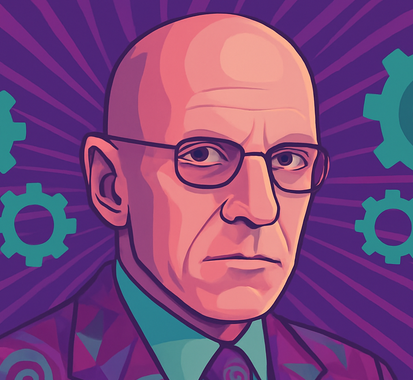
A utopia of judicial reticence: take away life, but prevent the patient from feeling it; deprive the prisoner of all rights, but do not inflict pain; impose penalties free of all pain. Recourse to psycho-pharmacology and to various physiological 'disconnectors', even if it is temporary, is a logical consequence of this 'non-corporal' penalty.
▼
Source
source
Chapter One, The Spectacle of the Scaffold
2 months 1 week ago
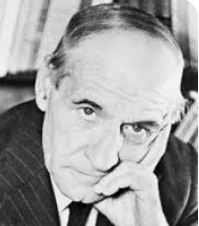
That Marxism should triumph in Russia, where there is no industry, would be the greatest contradiction that Marxism could undergo. But there is no such contradiction, for there is no such triumph. Russia is Marxist more or less as the Germans of the Holy Roman Empire were Romans.
▼
Source
source
Chapter XIV: Who Rules The World?

3 months 3 weeks ago
Beauty is no quality in things themselves: It exists merely in the mind which contemplates them; and each mind perceives a different beauty. One person may even perceive deformity, where another is sensible of beauty; and every individual ought to acquiesce in his own sentiment, without pretending to regulate those of others.
▼
Source
source
Part I, Essay 23: Of The Standard of Taste
3 months 2 weeks ago
There's only one corner of the universe you can be certain of improving, and that's your own self.
3 months 2 weeks ago
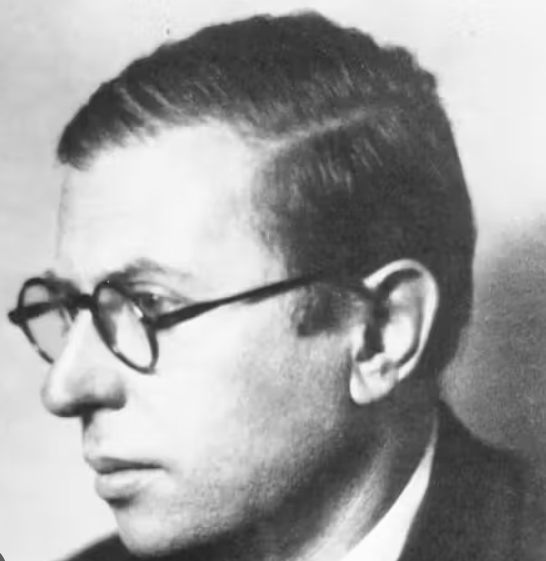
We are in hell and I will have my turn!
▼
Source
source
Inès warns Garcin and Estelle not to make love in her presence, Act 1, sc. 5
1 week 2 days ago
It was a rude gross error, that of counting the Great Man a god. Yet let us say that it is at all times difficult to know what he is, or how to account of him and receive him!
3 months 2 weeks ago
It seems that sin is geographical. From this conclusion, it is only a small step to the further conclusion that the notion of "sin" is illusory, and that the cruelty habitually practised in punishing it is unnecessary.
▼
Source
source
A Fresh Look at Empiricism: 1927-42 (1996), p. 283
3 months 2 weeks ago
If you die, I will lie down beside you and I will stay there until the end, without eating or drinking, you will rot in my arms and I will love you as carcass: for you love nothing if you do not love everything.
▼
Source
source
Act 10, sc. 2
2 months 2 weeks ago
First then, we find that when we regard ideas from a nominalistic, individualistic, sensualistic way, the simplest facts of mind become utterly meaningless. That one idea should resemble another or influence another, or that one state of mind should so much as be thought of in another is, from that standpoint, sheer nonsense.

1 week 6 days ago
All agreed in rejecting that blasphemy, that Greece was ever a province of Asia, that the Greek spirit, so free, so objective, so limpid, could contain any element of the vague and obscure spirit of the Orient.
▼
Source
source
"Des Religions de l'antiquité et leurs derniers historiens", Mondes, vol. 23, no. 2 (1853) p. 835
2 months 2 weeks ago
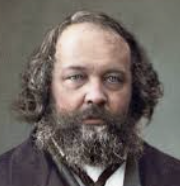
Freedom is the absolute right of every human being to seek no other sanction for his actions but his own conscience, to determine these actions solely by his own will, and consequently to owe his first responsibility to himself alone.
▼
Source
source
As quoted in Anarchism: From Theory to Practice, Daniel Guérin, New York: NY, Monthly Review Press (1970) p. 31
4 months 1 week ago
Corpses are more fit to be cast out than dung.
1 month 2 weeks ago
Honest work is much better than a mansion.
▼
Source
source
p. 82
1 week 2 days ago
The battling Reformer too is, from time to time, a needful and inevitable phenomenon. Obstructions are never wanting: the very things that were once indispensable furtherances become obstructions; and need to be shaken off, and left behind us,-a business often of enormous difficulty.
3 months 2 weeks ago
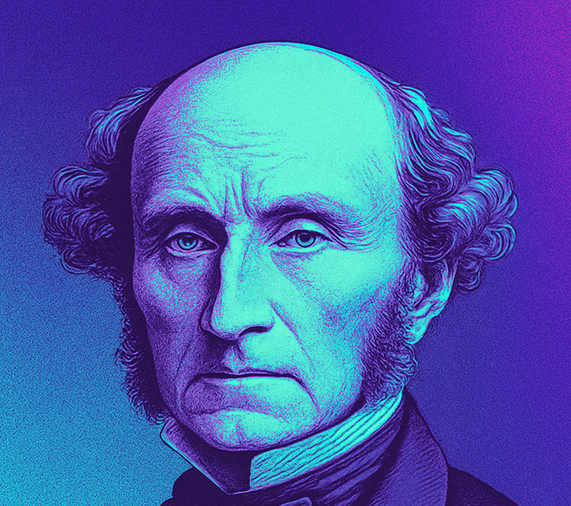
It was the period of my mental progress which I have now reached that I formed the friendship which has been the honour and chief blessing of my existence, as well as the source of a great part of all that I have attempted to do, or hope to effect hereafter, for human improvement. My first introduction to the lady who, after a friendship of twenty years, consented to become my wife, was in 1830, when I was in my twenty-fifth and she in her twenty-third year.
▼
Source
source
(p. 184)
3 months 1 week ago
All these present struggles revolve around the question: Who are we? They are a refusal of these abstractions, of economic and ideological state violence, which ignore who we are individually, and also a refusal of a scientific or administrative inquisition which determines who one is.
▼
Source
source
p. 781
2 months 2 weeks ago
When all capital, all production, all exchange have been brought together in the hands of the nation, private property will disappear of its own accord, money will become superfluous, and production will so expand and man so change that society will be able to slough off whatever of its old economic habits may remain.
CivilSimian.com created by AxiomaticPanic, CivilSimian, Kalokagathia