

4 months 2 weeks ago
A tragedy, then, is the imitation of an action that is serious and also, as having magnitude, complete in itself; in language ... not in a narrative form; with incidents arousing pity and fear, wherewith to accomplish its catharsis of such emotions.
2 months 2 weeks ago
The criterion which we use to test the genuineness of apparent statements of fact is the criterion of verifiability. We say that a sentence is factually significant to any given person, if, and only if, he knows how to verify the proposition which it purports to express - that is, if he knows what observations would lead him, under certain conditions, to accept the proposition as being true, or reject it as being false.
▼
Source
source
p. 16.

3 months 2 weeks ago
Most people would sooner die than think; in fact, they do so.
2 months 1 week ago
This idea is that laws which purport to be statements of what actually occurs are statistical in character as distinct from so-called dynamic laws that are abstract and mathematical, and disguised definitions. Recognition of the statistical nature of physical laws was first effected in the case of gases when it became evident that generalizations regarding the behavior of swarms of molecules were not descriptions or predictions of the behavior of any individual particle. A single molecule is not and cannot be a gas. It is consequently absurd to suppose that a scientific law is about the elementary constituents of a gas. It is a statement of what happens when a large number of such constituents interact with one another under certain conditions.
3 months 3 weeks ago
[S]he became the Mother of God, in which work so many and such great good things are bestowed on her as pass man's understanding. For on this there follows all honor, all blessedness, and her unique place in the whole of mankind, among which she has no equal, namely, that she had a child by the Father in heaven, and such a Child.... Hence men have crowded all her glory into a single word, calling her the Mother of God.... None can say of her nor announce to her greater things, even though he had as many tongues as the earth possesses flowers and blades of grass: the sky, stars; and the sea, grains of sand. It needs to be pondered in the heart what it means to be the Mother of God.
▼
Source
source
Luther's Works, 21:326, cf. 21:346

2 months ago
If life can no longer be narrated, wisdom deteriorates, and its place is taken by problem-solving.
1 month 2 weeks ago
A series of accidents creates a positively lighthearted state.
▼
Source
source
Chapter 4
1 month 1 week ago
And perhaps this habit of much travel, and the engendering of scattered friendships, may prepare the euthanasia of ancient nations.
▼
Source
source
Pt. I, ch. II.
4 months 2 weeks ago
What is asked of a man that he may be able to pray for his enemies? To pray for one's enemies is the hardest thing of all. That is why it exasperates us so much in our present day situation.

3 months 2 weeks ago
The necessity of faith as an ingredient in our mental attitude is strongly insisted on by the scientific philosophers of the present day; but by a singularly arbitrary caprice they say that it is only legitimate when used in the interests of one particular proposition, - the proposition, namely, that the course of nature is uniform. That nature will follow to-morrow the same laws that she follows to-day is, they all admit, a truth which no man can know; but in the interests of cognition as well as of action we must postulate or assume it.

1 month 2 weeks ago
The future masters of technology will have to be lighthearted and intelligent. The machine easily masters the grim and the dumb.
▼
Source
source
(p. 55)
2 months 3 days ago
It is difficult to fit the work of Nikolai Berdyaev into any neat category. The label that was used most frequently to characterize him was that of an "existential Christian philosopher" but ... his voice is equally relevant to psychology and psychoanalysis and it also constitutes a uniquely original commentary on the very nature of the person in our postmodern world especially in relation to spirituality.
▼
Source
source
Renos K. Papadopoulos, in C.G. Jung and Nikolai Berdyaev: Individuation and the Person (2011) by Georg Nicolaus, Foreword, p. xiii

1 week 1 day ago
For the whole Past, as I keep repeating, is the possession of the Present; the Past had always something true, and is a precious possession. In a different time, in a different place, it is always some other side of our common Human Nature that has been developing itself. The actual True is the sum of all these; not any one of them by itself constitutes what of Human Nature is hitherto developed. Better to know them all than misknow them. "To which of these Three Religions do you specially adhere?" inquires Meister of his Teacher. "To all the Three!" answers the other: "To all the Three; for they by their union first constitute the True Religion."

2 months ago
The mystical impulse in men is somehow a desire to possess the universe. In women, it's a desire to be possessed.
▼
Source
source
p. 108
2 months 1 week ago
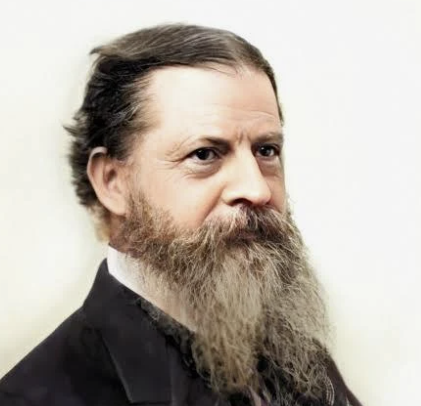
I have taken pains to make my distinction of icons, indices, and tokens clear, in order to enunciate this proposition: in a perfect system of logical notation signs of these several kinds must all be employed. Without tokens there would be no generality in the statements, for they are the only general signs; and generality is essential to reasoning. ... But tokens alone do not state what is the subject of discourse ; and this can, in fact, not be described in general terms ; it can only be indicated. The actual world cannot be distinguished from a world of imagination by any description. Hence the need of pronoun and indices, and the more complicated the subject the greater the need of them.
2 months 2 weeks ago
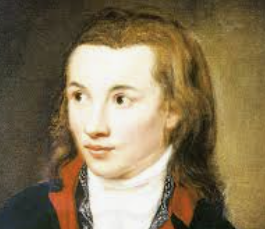
Nothing is more indispensable to true religiosity than a mediator that links us with divinity.
▼
Source
source
Fragment No. 74
1 month ago
Of the twenty or so civilizations known to modern Western historians, all except our own appear to be dead or moribund, and, when we diagnose each case, in extremis or post mortem, we invariably find that the cause of death has been either War or Class or some combination of the two. To date, these two plagues have been deadly enough, in partnership, to kill off nineteen out of twenty representatives of this recently evolved species of human society; but, up to now, the deadliness of these scourges has had a saving limit.
▼
Source
source
Ch. 2: The Present Point in History
2 months 1 week ago
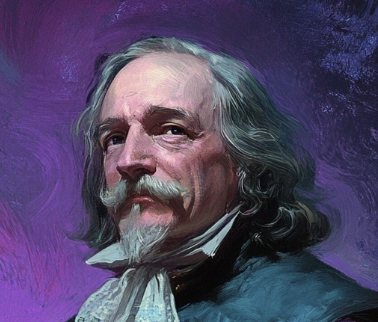
As first a man cannot lay down the right of resisting them, that assault him by force, to take away his life; because he cannot be understood to ayme thereby, at any Good to himself.
▼
Source
source
The First Part, Chapter 14, p. 66

4 months 2 weeks ago
A punishment that penalizes without forestalling is indeed called revenge.

1 month 1 day ago
Scarcity is not a result of uneven endowments-that is diversity. Scarcity is having a mismatch between a culture and nature's giving. Cultures have evolved cultural diversity to mimic the biological diversity of climates and ecosystems. It's when that relationship is disrupted that you get unsustainable population growth.
3 months 1 week ago
Death takes the mean man with the proud; The fatal urn has room for all.
▼
Source
source
Book III, ode i, line 14 (trans. John Conington)
1 month 1 week ago
There is no duty we so much underrate as the duty of being happy.
▼
Source
source
An Apology for Idlers.

2 months 3 days ago
Alexander is to a peasant proprietor what Don Juan is to a happily married husband.
▼
Source
source
p. 78,
4 months 2 weeks ago
Irony limits, finitizes, and circumscribes and thereby yields truth, actuality, content; it disciplines and punishes and thereby yields balance and consistency.

3 months 2 weeks ago
Skepticism is slow suicide.
▼
Source
source
p. 240

3 months 1 week ago
No one deserves to live who has not at least one good-man-and-true for a friend.

2 months 2 weeks ago
Prejudice is of ready application in the emergency; it previously engages the mind in a steady course of wisdom and virtue and does not leave the man hesitating in the moment of decision sceptical, puzzled, and unresolved. Prejudice renders a man's virtue his habit, and not a series of unconnected acts. Through just prejudice, his duty becomes a part of his nature.
2 months 2 weeks ago
All the time that this horrid scene was acting or avenging, as well as for some time before, and ever since, the wicked instigators of this unhappy multitude, guilty, with every aggravation, of all their crimes, and screened in a cowardly darkness from their punishment, continued without interruption, pity, or remorse, to blow up the blind rage of the populace, with a continued blast of pestilential libels, which infected and poisoned the very air we breathed in.
▼
Source
source
Speech at Bristol Previous to the Election, referring to the Gordon Riots (6 September 1780), quoted in The Works of the Right Honourable Edmund Burke, Vol. II (1855), pp. 158-159

2 months 1 week ago
If those who lead you say, 'See, the Kingdom is in the sky,' then the birds of the sky will precede you. If they say to you, 'It is in the sea,' then the fish will precede you. Rather, the Kingdom is inside of you, and it is outside of you. When you come to know yourselves, then you will become known, and you will realize that it is you who are the sons of the living Father. But if you will not know yourselves, you dwell in poverty and it is you who are that poverty. (3) And when he was demanded of the Pharisees, when the kingdom of God should come, he answered them and said, The kingdom of God cometh not with observation: Neither shall they say, Lo here! or, lo there! for, behold, the kingdom of God is within you.
▼
Source
source
(Luke 17:21)
3 months 2 weeks ago
Two Chinamen visiting Europe went to the theatre for the first time. One of them occupied himself with trying to understand the theatrical machinery, which he succeeded in doing. The other, despite his ignorance of the language, sought to unravel the meaning of the play. The former is like the astronomer, the latter the philosopher.
▼
Source
source
Vol. 2 "On Various Subjects" as translated in Essays and Aphorisms (1970), as translated by R. J. Hollingdale
2 weeks ago
The modern man who has ceased to believe, without ceasing to be credulous, hangs, as it were, between heaven and earth, and is at rest nowhere.
▼
Source
source
Ch. I: "The Problem of Unbelief", §2, p. 9.

3 months 2 weeks ago
He who dares not offend cannot be honest.
▼
Source
source
24 April 1776, The Forester's Letters", Letter III: To Cato, Pennsylvania Journal
1 week 1 day ago
World,-this man is not a slave with thee! None of thy promotions is necessary for him. His place is with the stars of Heaven: to thee it may be momentous, to him it is indifferent, whether thou place him in the lowest hut, or forty feet higher at the top of thy stupendous high tower, while here on Earth. The joys of Earth that are precious, they depend not on thee and thy promotions. Food and raiment, and, round a social hearth, souls who love him, whom he loves: these are already his. He wants none of thy rewards;
2 months 1 week ago
Whoever believes and is baptized will be saved, but whoever does not believe will be condemned. And these signs will accompany those who believe: In my name they will drive out demons; they will speak in new tongues; they will pick up snakes with their hands; and when they drink deadly poison, it will not hurt them at all; they will place their hands on sick people, and they will get well.
▼
Source
source
Jesus, Mark 16:16-18
1 month 2 weeks ago
Just acquiring this amount of "education" will not, by itself, make you an educated person, even less will it give you what Oakeshott calls "judgment." But if the manner of instruction is adequate, the student should be able to acquire this much knowledge in a way that combines intellectual openness, critical scrutiny, and logical clarity. If so, learning will not stop when the student leaves the university.
2 days ago
In the four quarters of the globe, who reads an American book? Or goes to an American play? or looks at an American picture or statue? What does the world yet owe to American physicians or surgeons? What new substances have their chemists discovered? Or what old ones have they advanced? What new constellations have been discovered by the telescopes of Americans? Who drinks out of American glasses? Or eats from American plates? Or wears American coats or gowns? or sleeps in American blankets? Finally, under which of the old tyrannical governments of Europe is every sixth man a slave, whom his fellow-creatures may buy and sell and torture?
▼
Source
source
Referring to the lack of established culture and the established institution of slavery in the United States, in "Review of Seybert's Annals of the United States", The Edinburgh Review (1820), pp. 79-80
4 months 2 weeks ago
Oh, can I really believe the poet's tales, that when one first sees the object of one's love, one imagines one has seen her long ago, that all love like all knowledge is remembrance, that love too has its prophecies in the individual. ... it seems to me that I should have to possess the beauty of all girls in order to draw out a beauty equal to yours; that I should have to circumnavigate the world in order to find the place I lack and which the deepest mystery of my whole being points towards, and at the next moment you are so near to me, filling my spirit so powerfully that I am transfigured for myself, and feel that it's good to be here.

3 months 3 weeks ago
I have seen something of the project of M. de St. Pierre, for maintaining a perpetual peace in Europe. I am reminded of a device in a cemetery, with the words: Pax perpetua; for the dead do not fight any longer: but the living are of another humor; and the most powerful do not respect tribunals at all. Letter 11 to Grimarest: Passages Concerning the Abbe de St. Pierre's 'Project for Perpetual Peace' (June 1712).
▼
Source
source
Taken from Leibniz: Political Writings (2nd Edition, 1988), Edited by Patrick Riley.

3 months 2 weeks ago
You can put this another way by saying that while in other sciences the instruments you use are things external to yourself (things like microscopes and telescopes), the instrument through which you see God is your whole self. And if a man's self is not kept clean and bright, his glimpse of God will be blurred-like the Moon seen through a dirty telescope. That is why horrible nations have horrible religions: they have been looking at God through a dirty lens.
▼
Source
source
Book IV, Chapter 2, "The Three-personal God"
1 month 1 week ago
With so many mind-bytes to be downloaded, so many mental codons to be replicated, it is no wonder that child brains are gullible, open to almost any suggestion, vulnerable to subversion, easy prey to Moonies, Scientologists and nuns. Like immune-deficient patients, children are wide open to mental infections that adults might brush off without effort.

1 month 1 week ago
Statues are not about history. We don't memorialize each piece of history. We memorialize things that we want to value and things that we want our children to walk by and say "This person embodied the values that I care about." Therefore, statues are about values not about history.

3 months 3 weeks ago
The government of an exclusive company of merchants is, perhaps, the worst of all governments for any country whatever.
▼
Source
source
Chapter VII, Part Second, p. 619.
4 months 2 weeks ago
Since the science of nature is conversant with magnitudes, motion, and time, each of which must necessarily be either infinite or finite...[we] should speculate the infinite, and consider whether it is or not; and if it is what it is. ...[A]ll those who appear to have touched on a philosophy of this kind... consider it as a certain principle of beings. Some, indeed, as the Pythagoreans and Plato, consider it, per se, not as being an accident to any thing else, but as having an essential subsistence... the Pythagoreans... consider the infinite as subsisting in sensibles; for they do not make number to be separate; and they assert that what is beyond the heavens is infinite; but Plato says that beyond the heavens there is not any body, nor ideas, because these are no where: he affirms, however, that the infinite is both in sensibles, and in ideas. ...Plato establishes two infinities, viz. the great and the small.

3 months 3 weeks ago
He who fears he shall suffer, already suffers what he fears.
▼
Source
source
Book III, Ch. 13
2 months 2 weeks ago
The whole nature of man presupposes woman, both physically and spiritually. His system is tuned into woman from the start, just as it is prepared for a quite definite world where there is water, light, air, salt, carbohydrates etc.
▼
Source
source
"Two Essays in Analytical Psychology" In CW 7: P. 188
1 month 1 week ago
I discovered that rejections are not altogether a bad thing. They teach a writer to rely on his own judgment and to say in his heart of hearts, "To hell with you."
▼
Source
source
Quoted in "Feeling Rejected? Join Updike, Mailer, Oates..." by Barbara Bauer and Robert F. Moss, New York Times (21 July 1985), section 7, page 1, column 1

2 months ago
Human nature asserts itself regardless of all laws, nor is there any plausible reason why nature should adapt itself to a perverted conception of morality.
3 months 2 weeks ago
I am almost inclined to set it up as a canon that a children's story which is enjoyed only by children is a bad children's story. The good ones last. A waltz which you can like only when you are waltzing is a bad waltz.
▼
Source
source
"On Three Ways of Writing for Children" (1952) - in Of Other Worlds: Essays and Stories (1967), p. 24
3 months 1 week ago
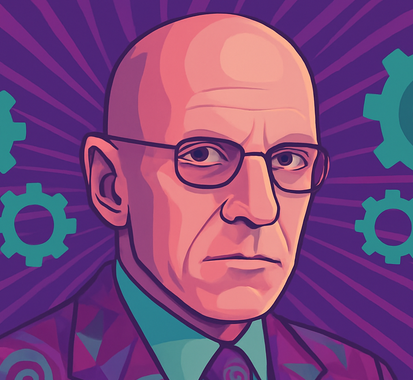
What all these people are doing is not aggressive; they are inventing new possibilities of pleasure with strange parts of their body - through the eroticization of the body. I think it's ... a creative enterprise, which has as one of its main features what I call the desexualization of pleasure.
▼
Source
source
In reference to Sadism and Masochism, as quoted in Who's Who in Contemporary Gay & Lesbian History: From World War II to the Present Day (2001) by Robert Aldrich and Gary Wotherspoon
1 month 1 week ago
Whenever you say anything good about East Germany, immediately somebody jumps up and says, "My God, you're a Stalinist..." I'm not defending everything about it, of course. But I laboured on the chapter that talks about the east. I fact-checked it; I had somebody else fact-check it. I knew that I was going to get a lot of flak for that. But in the beginning, East Germany did a better job. They just did.
▼
Source
source
From an interview with Alex Clark, as cited in "Nazism, slavery, empire: can countries learn from national evil?", The Guardian
CivilSimian.com created by AxiomaticPanic, CivilSimian, Kalokagathia