


3 months 1 week ago
When I was a child the atmosphere in the house was one of puritan piety and austerity. There were family prayers at eight o'clock every morning. Although there were eight servants, food was always of Spartan simplicity, and even what there was, if it was at all nice, was considered too good for children. For instance, if there was apple tart and rice pudding, I was only allowed the rice pudding. Cold baths all the year round were insisted upon, and I had to practice the piano from seven-thirty to eight every morning although the fires were not yet lit. My grandmother never allowed herself to sit in an armchair until the evening. Alcohol and tobacco were viewed with disfavor although stern convention compelled them to serve a little wine to guests. Only virtue was prized, virtue at the expense of intellect, health, happiness, and every mundane good.
▼
Source
source
p. 9

1 month 3 weeks ago
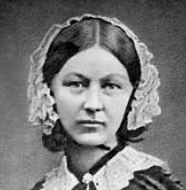
Can the "word" be pinned down to either one period or one church? All churches are, of course, only more or less unsuccessful attempts to represent the unseen to the mind.
▼
Source
source
Letter quoted in Florence Nightingale in Rome : Letters Written by Florence Nightingale in Rome in the Winter of 1847-1848 (1981)

3 months 3 weeks ago
States as great engines move slowly.
▼
Source
source
Book II

3 months 2 weeks ago
I have seen no more evident monstrosity and miracle in the world than myself.
▼
Source
source
Ch. 11

1 month 3 weeks ago
Depression is a narcissistic malady.

2 months 1 week ago
What is not heartrending is superfluous, at least in music.

3 months 3 weeks ago
Those of our pleasures which come most rarely give the greatest delight.
▼
Source
source
Fragment 33 (Oldfather translation)

4 months 1 week ago
The whole business is the crudest sort of stratagem, since we have no way of foreseeing it to the end. It is a mere paying out of rope on the chance that somewhere along the length of it will be a noose.

1 month 1 week ago
I am not advocating a morality based on evolution. I am saying how things have evolved. I am not saying how we humans morally ought to behave.
▼
Source
source
Ch. 1. Why Are People?

3 months 2 weeks ago
Descartes is rightly regarded as the father of modern philosophy primarily and generally because he helped the faculty of reason to stand on its own feet by teaching men to use their brains in place whereof the Bible, on the one hand, and Aristotle, on the other, had previously served.
▼
Source
source
E. Payne, trans. (1974) Vol. 1, p. 3

3 months 1 week ago
The 'Enlightenment', which discovered the liberties, also invented the disciplines.

1 month 1 week ago
The pre-atomist multisensory void was an animate, pulsating, and moving vibrant interval, neither container nor contained, acoustic space penetrated by tactility.
▼
Source
source
p. 34
4 months 1 week ago
Well, then, arrest him. You can accuse him of something or other afterward.

2 months 1 week ago
Eros is a superhuman power which, like nature herself, allows itself to be conquered and exploited as though it were impotent. But triumph over nature is dearly paid for. Nature requires no explanations of principle, but asks only for tolerance and wise measure. "Eros is a mighty daemon," as the wise Diotima said to Socrates. We shall never get the better of him, or only to our own hurt. He is not the whole of our inward nature, though he is at least one of its essential aspects.
▼
Source
source
Two Essays on Analytical Psychology, CW 7 (1957). "On the Psychology of the Unconscious" P.32f

1 month 5 days ago
There is no need to make an inventory of the times. It is demoralizing to describe ourselves to ourselves yet again. It is especially hard on us since we believe (as we have been educated to believe) that history has formed us and that we are all mini-summaries of the present age.
▼
Source
source
Mozart: An Overture (1992), pp. 13-14

3 months 1 week ago
I am not sure but I should betake myself in extremities to the liberal divinities of Greece, rather than to my country's God. Jehovah, though with us he has acquired new attributes, is more absolute and unapproachable, but hardly more divine, than Jove. He is not so much of a gentleman, not so gracious and catholic, he does not exert so intimate and genial an influence on nature, as many a god of the Greeks.
2 months 1 week ago
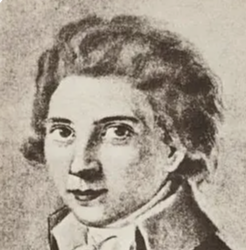
Only a man who is at one with the world can be at one with himself.
▼
Source
source
"Ideas," Lucinde and the Fragments, P. Firchow, trans. (1991), § 130

3 months 1 week ago
I have learned to seek my happiness by limiting my desires, rather than in attempting to satisfy them.
▼
Source
source
Attributed to John Stuart Mill in The Phrenological Journal and Science of Health, Vol. LXXXV (September 1887), p. 170

2 months 1 week ago
A difficulty which confronts the synechistic philosophy is this. In considering personality, that philosophy is forced to accept the doctrine of a personal God; but in considering communication, it cannot but admit that if there is a personal God, we must have a direct perception of that person and indeed be in personal communication with him. Now, if that be the case, the question arises how it is possible that the existence of this being should ever have been doubted by anybody. The only answer that I can at present make is that facts that stand before our face and eyes and stare us in the face are far from being, in all cases, the ones most easily discerned. That has been remarked since time immemorial.

3 months 3 weeks ago
For what is life but a play in which everyone acts a part until the curtain comes down?

1 month 3 weeks ago
There is no greater impediment to progress in the sciences than the desire to see it take place too quickly.
▼
Source
source
K 72
2 months 2 weeks ago
And now I have explained the series of social and intellectual conditions by which the discovery of sociological laws, and consequently the foundation of Positivism, was fixed for the precise date at which I began my philosophical career: that is to say, one generation after the progressive dictatorship of the Convention, and almost immediately after the fall of the retrograde tyranny of Bonaparte.
▼
Source
source
p. 71

2 months 2 weeks ago
Pithy sentences are like sharp nails which force truth upon our memory.
▼
Source
source
As quoted in A Dictionary of Thoughts : Being a Cyclopedia of Laconic Quotations (1908) by Tryon Edwards, p. 338
2 months 1 week ago
The dynamic principle of fantasy is play, a characteristic also of the child, and as such it appears inconsistent with the principle of serious work. But without this playing with fantasy no creative work has ever yet come to birth. The debt we owe to the play of imagination is incalculable. It is therefore short-sighted to treat fantasy, on account of its risky or unacceptable nature, as a thing of little worth.
▼
Source
source
Ch. 1, p. 82
3 months 3 weeks ago
The human understanding is moved by those things most which strike and enter the mind simultaneously and suddenly, and so fill the imagination; and then it feigns and supposes all other things to be somehow, though it cannot see how, similar to those few things by which it is surrounded.
▼
Source
source
Aphorism 47

3 months 1 week ago
I must plunge into the water of doubt again and again.
▼
Source
source
Ch. 7 : Remarks on Frazer's Golden Bough, p. 119

2 months 5 days ago
Outside the academic establishment, the "far-reaching change in all our habits of thought" is more serious. It serves to coordinate ideas and goals with those exacted by the prevailing system, to enclose them in the system, and to repel those which are irreconcilable with the system. The reign of such a one-dimensional reality does not mean that materialism rules, and that the spiritual, metaphysical, and bohemian occupations are petering out. On the contrary, there is a great deal of "Worship together this week," "Why not try God," Zen, existentialism, and beat ways of life, etc. But such modes of protest and transcendence are no longer contradictory to the status quo and no longer negative. They are rather the ceremonial part of practical behaviorism, its harmless negation, and are quickly digested by the status quo as part of its healthy diet.
▼
Source
source
pp. 13-14
4 months 1 week ago
Start with a planet like the earth, with a complement of simple compounds bound to exist upon it, add the energy of a nearby sun, and you are bound to end with nucleic acids. You can't avoid it.
2 months 1 week ago
In a republic, that paradise of debility, the politician is a petty tyrant who obeys the laws.

2 months 3 days ago
The demagogues, impresarios of alteracion, who have already caused the death of several civilizations, harass men so that they shall not reflect, see to it that they are kept herded together in crowds so that they cannot reconstruct their individuality in the one place where it can be reconstructed, which is in solitude.
▼
Source
source
p. 33
3 months 1 week ago
The world would be astonished if it knew how great a proportion of its brightest ornaments-of those most distinguished even in popular estimation for wisdom and virtue-are complete sceptics in religion...
▼
Source
source
(p. 45)

4 months 1 day ago
To master this instrument the religious thinker must make a preliminary study of logic, just as the lawyer must study legal reasoning. This is no more heretical in the one case than in the other. And logic must be learned from the ancient masters, regardless of the fact that they were not Muslims.

4 months 1 week ago
It happens that the stage sets collapse. Rising, streetcar, four hours in the office or the factory, meal, streetcar, four hours of work, meal, sleep and Monday Tuesday Wednesday Thursday Friday and Saturday according to the same rhythm this path is easily followed most of the time. But one day the "why" arises and everything begins in that weariness tinged with amazement.

2 months 3 weeks ago
Practice justice in word and deed, and do not get in the habit of acting thoughtlessly about anything.
▼
Source
source
As quoted in Divine Harmony: The Life and Teachings of Pythagoras by John Strohmeier and Peter Westbrook.

4 months 2 days ago
There are two kinds of pleasure: one consisting in a state of rest, in which both body and mind are undisturbed by any kind of pain; the other arising from an agreeable agitation of the senses, producing a correspondent emotion in the soul. It is upon the former of these that the enjoyment of life chiefly depends. Happiness may therefore be said to consist in bodily ease, and mental tranquility.
2 months 3 weeks ago
There are men and gods, and beings like Pythagoras.
▼
Source
source
Of himself, as quoted in A History of Western Philosophy (1945) by Bertrand Russell

3 months 1 week ago
Every age has its own poetry; in every age the circumstances of history choose a nation, a race, a class to take up the torch by creating situations that can be expressed or transcended only through poetry.
▼
Source
source
"Orphée Noir (Black Orpheus)"

1 month 3 weeks ago
Phenomenology is not a philosophy; it is a philosophical method, a tool. It is like an adjustable spanner that can be used for dismantling a refrigerator or a car, or used for hammering in nails, or even for knocking somebody out.
▼
Source
source
p. 92
4 months 2 days ago
Those animals which are incapable of making binding agreements with one another not to inflict nor suffer harm are without either justice or injustice; and likewise for those peoples who either could not or would not form binding agreements not to inflict nor suffer harm.
3 months 2 days ago
Poverty is a virtue which one can teach oneself.
▼
Source
source
Stobaeus, iv. 32a. 19
3 months 1 week ago
I do wish I believed in the life eternal, for it makes me quite miserable to think man is merely a kind of machine endowed, unhappily for himself, with consciousness.
▼
Source
source
Greek Exercises (1888); at the age of fifteen, Russell used to write down his reflections in this book, for fear that his people should find out what he was thinking.


3 months 4 weeks ago
Yes, you see the Trinity if you see charity.
▼
Source
source
De Trinitate VIII 8,12.

3 days ago
Our grand business undoubtedly is, not to see what lies dimly at a distance, but to do what lies clearly at hand.
2 months 3 days ago
At the parting of ways in the life-order, where the question is between the new creation or decay, that man will be decisive for new creation who is able on his own initiative to seize the helm and steer a course of his own choosing - even if that course be opposed to the will of the masses. Should the emergence of such persons become impossible a lamentable shipwreck will be inevitable.
3 days ago
To me, in these circumstances, that of "Hero-worship" becomes a fact inexpressibly precious; the most solacing fact one sees in the world at present. There is an everlasting hope in it for the management of the world. Had all traditions, arrangements, creeds, societies that men ever instituted, sunk away, this would remain. The certainty of Heroes being sent us; our faculty, our necessity, to reverence Heroes when sent: it shines like a polestar through smoke-clouds, dust-clouds, and all manner of down-rushing and conflagration.
CivilSimian.com created by AxiomaticPanic, CivilSimian, Kalokagathia