

2 months 6 days ago
This new philosophy, however, was far from giving the temporal an inherent position and function in the constitution of things. Change was acting on the side of man but only because of fixed laws which governed the changes that take place. There was hope in change just because the laws that govern it do not change.

3 months 2 weeks ago
Man is a rational animal - so at least I have been told. Throughout a long life, I have looked diligently for evidence in favor of this statement, but so far I have not had the good fortune to come across it, though I have searched in many countries spread over three continents. Often paraphrased as "It has been said that man is a rational animal. All my life I have been searching for evidence which could support this."

2 months 1 week ago
What a judgment upon the living, if it is true, as has been maintained, that what dies has never existed!
2 months 5 days ago
The surrealist thinks he has outstripped the whole of literary history when he has written (here a word that there is no need to write) where others have written "jasmines, swans and fauns." But what he has really done has been simply to bring to light another form of rhetoric which hitherto lay hidden in the latrines.
▼
Source
source
Chapter XI: The Self-Satisfied Age

1 month 2 weeks ago
"What's this? Am I falling? My legs are giving way under me," he thought, and fell on his back. He opened his eyes, hoping to see how the struggle of the French soldiers with the artilleryman was ending, and eager to know whether the red-haired gunner artilleryman was killed or not, whether the cannons had been taken or saved. But he saw nothing of all that. Above him there was nothing but the sky - the lofty sky, not clear, but still immeasurably lofty, with gray clouds creeping quietly over it.
▼
Source
source
Bk. III, Ch. 16

1 month 1 week ago
Literacy, in translating man out of the closed world of tribal depth and resonance, gave man an eye for an ear and ushered him into a visual open world of specialized and divided consciousness.

5 days ago
All the gifted souls, of every rank, who are born to you in this generation. These are appointed, by the true eternal "divine right" which will never become obsolete, to be your governors and administrators; and precisely as you employ them, or neglect to employ them, will your State be favored of Heaven or disfavored. This noble young soul, you can have him on either of two conditions; and on one of them, since he is here in the world, you must have him. As your ally and coadjutor; or failing that, as your natural enemy: which shall it be? I consider that every Government convicts itself of infatuation and futility, or absolves and justifies itself before God and man, according as it answers this question.

4 months 1 week ago
I do not want to found anything on the incomprehensible. I want to know whether I can live with what I know and with that alone.

1 week 3 days ago
Fleeing from a life of constant insecurity and forced mobility is good preparation for dealing with and resisting the typical forms of exploitation of immaterial labor.
▼
Source
source
133

2 months 1 week ago
Hegel's theological discussion repeatedly asks what the true relation is between the individual man and a state that no longer satisfies his capacities but exists rather as an 'estranged' institution from which the active political interest of the citizens has disappeared. Hegel defined this state with almost the same categories as those of eighteenth century liberalism: the state rests on the consent of the individuals, it circumscribes their rights and duties and protects its members from those internal and external dangers that might threaten the perpetuation of the whole.
▼
Source
source
P. 32
4 weeks ago
I have had to suffer the violence and brutality that comes with rising fundamentalism, and I've asked myself how a society that is the cradle of peace, the land of Gandhi and Buddha, could be reduced to one of the most volatile societies in the world.
2 months 1 week ago
In the case of colors, there is a tridimensional spread of feelings. Originally all feelings may have been connected in the same way, and the presumption is that the number of dimensions was endless. For development essentially involves a limitation of possibilities. But given a number of dimensions of feeling, all possible varieties are obtainable by varying the intensities of the different elements.
5 days ago
Get, by six hundred and fifty-eight votes, or by no vote at all, by the silent intimation of your own eyesight and understanding given you direct out of Heaven, and more sacred to you than anything earthly, and than all things earthly,-a correct image of the fact in question, as God and Nature have made it: that is the one thing needful; with that it shall be well with you in whatsoever you have to do with said fact. Get, by the sublimest constitutional methods, belauded by all the world, an incorrect image of the fact: so shall it be other than well with you; so shall you have laud from able editors and vociferous masses of mistaken human creatures; and from the Nature's Fact, continuing quite silently the same as it was, contradiction, and that only. What else?
2 months ago
God is denied either because the world is so bad or because the world is so good.
▼
Source
source
Original: Бога отрицают или потому, что мир так плох, или потому, что мир так хорош.
1 month 1 week ago
Invention is the mother of all necessities.
1 month 3 weeks ago
In the end, I am moved by causes and ideas that I can actually choose to support because they conform to values and principles that I believe in.
▼
Source
source
p. 88
2 months 1 week ago
Every interpretation is hypothetical, for it is a mere attempt to read an unfamiliar text. An obscure dream, taken by itself, can rarely be interpreted with any certainty, so that I attach little importance to the interpretation of single dreams. With a series of dreams we can have more confidence in our interpretations, for the later dreams correct the mistakes we have made m handling those that went before. We are also better able, in a dream series, to recognize the important contents and basic themes.
▼
Source
source
p. 14

2 months 1 week ago
Do not be afraid. I am the First and the Last, and the living one, and I became dead, but look! I am living forever and ever, and I have the keys of death and of the Grave.
▼
Source
source
Revelation 1:17-18, NWT
4 months 2 weeks ago
The greatest danger, that of losing one's own self, may pass off as quietly as if it were nothing; every other loss, that of an arm, a leg, five dollars, a wife etc., is sure to be noticed.

4 months 1 week ago
It is change, continuing change, inevitable change, that is the dominant factor in society today. No sensible decision can be made any longer without taking into account not only the world as it is, but the world as it will be ... This, in turn, means that our statesmen, our businessmen, our everyman must take on a science fictional way of thinking.
1 month 2 weeks ago
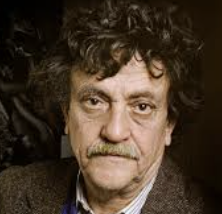
High school is closer to the core of the American experience than anything else I can think of.
▼
Source
source
Introduction to Our Time Is Now: Notes From the High School Underground, John Birmingham, ed.

2 months 2 weeks ago
Writers, especially when they act in a body and with one direction, have great influence on the public mind.

3 months 1 week ago
What should we gain by a definition, as it can only lead us to other undefined terms?
▼
Source
source
p. 26
4 months 1 week ago
The essential is to cease being free and to obey, in repentance, a greater rogue than oneself. When we are all guilty, that will be democracy.
3 months 4 days ago
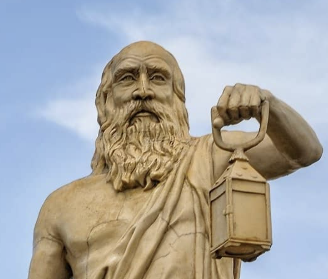
Plato had defined Man as an animal, biped and featherless, and was applauded. Diogenes plucked a fowl and brought it into the lecture-room with the words, "Behold Plato's man!"
▼
Source
source
Diogenes Laërtius, vi. 40
2 months 1 week ago
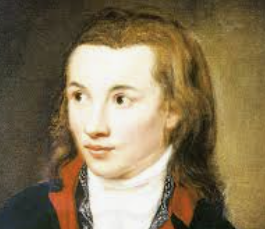
The best thing about the sciences is their philosophical ingredient, like life for an organic body. If one dephilosophizes the sciences, what remains left? Earth, air, and water.
▼
Source
source
Fragment No. 62
3 months 1 week ago
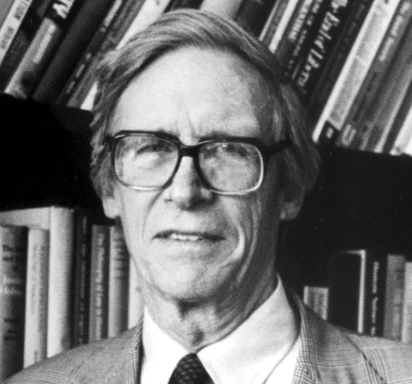
We must choose for others as we have reason to believe they would choose for themselves if they were at the age of reason and deciding rationally.
▼
Source
source
Chapter IV, Section 33, p. 209

3 months 2 weeks ago
Do not be too timid and squeamish about your actions. All life is an experiment. The more experiments you make the better.
▼
Source
source
November 11, 1842
3 months 4 days ago
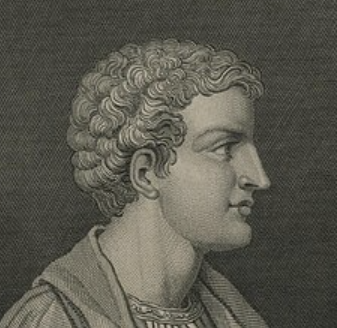
A host is like a general: calamities often reveal his genius.
▼
Source
source
Book II, satire viii, lines 73-74
4 months 1 week ago
The rest of the story, to Grand's thinking, was very simple. The common lot of married couples. You get married, you go on loving a bit longer, you work. And you work so hard that it makes you forget to love.

3 months 2 weeks ago
Those only are happy (I thought) who have their minds fixed on some object other than their own happiness; on the happiness of others, on the improvement of mankind, even on some art or pursuit, followed not as a means, but as itself an ideal end. Aiming thus at something else, they find happiness by the way.
▼
Source
source
(p. 142)
4 months 1 week ago
I believe that only scientists can understand the universe. It is not so much that I have confidence in scientists being right, but that I have so much in nonscientists being wrong.
3 months 5 days ago
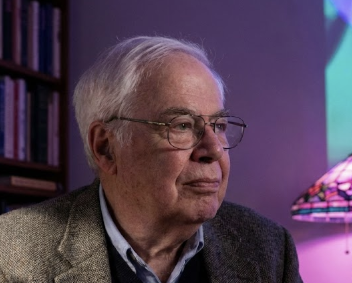
Rather, we heirs of Enlightenment think of enemies of liberal democracy like Nietzsche or Loyola as, to use Rawls's word, "mad." We do so because there is no way to see them as fellow citizens of our constitutional democracy, people whose life plans might, given ingenuity and good will, be fitted in with those of other citizens. They are crazy because the limits of sanity are set by what we can take seriously. This, in turn, is determined by our upbringing, our historical situation.
2 months 6 days ago
Every great advance in science has issued from a new audacity of imagination.
▼
Source
source
The Quest for Certainty (1929), Ch. XI

3 months 1 week ago
We all want progress. But progress means getting nearer to the place where you want to be. And if you have taken a wrong turning, then to go forward does not get you any nearer. If you are on the wrong road, progress means doing an about-turn and walking back to the right road; in that case the man who turns back soonest is the most progressive man.
▼
Source
source
Book I, Chapter 5, "We Have Cause to Be Uneasy"

4 months 4 days ago
It is more shameful to distrust our friends than to be deceived by them.
3 months 2 weeks ago
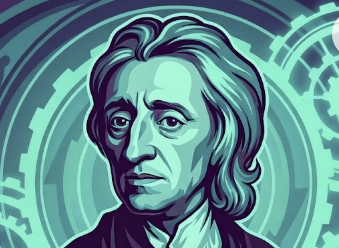
Stop Traveller! Near this place lieth John Locke. If you ask what kind of a man he was, he answers that he lived content with his own small fortune. Bred a scholar he made his learning subservient only to the cause of truth. This thou will learn from his writings, which will show thee everything else concerning him, with greater truth, than the suspect praises of an epitaph. His virtues, indeed, if he had any, were too little for him to propose as matter of praise to himself, or as an example to thee. Let his vices be buried together. As to an example of manners, if you seek that, you have it in the Gospels; of vices, to wish you have one nowhere; if mortality, certainly, (and may it profit thee), thou hast one here and everywhere.
▼
Source
source
Epitaph, as translated from the Latin.
3 months 1 week ago
Properly understood, then, the desire to act justly derives in part from the desire to express most fully what we are or can be, namely free and equal rational beings with the liberty to choose.
▼
Source
source
Chapter IV, Section 40, p. 256
2 months 2 weeks ago
There never, gentlemen, was a period in which the steadfastness of some men has been nut to so sore a trial. It is not very difficult for well-formed minds to abandon their interest; but the separation of fame and virtue is an harsh divorce. Liberty is in danger of being made unpopular to Englishmen. Contending for an imaginary power, we begin to acquire the spirit of domination, and to lose the relish of honest equality.
1 week ago
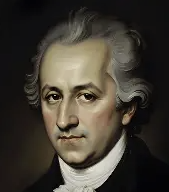
Young Schopenhauer, a zealous and thorough-going Kantian, tried to explain that light would cease to exist along with the seeing eye. "What!" he said, according to Schopenhauer's own report, "looking at him with his Jove-like eyes,"-"You should rather say that you would not exist if the light could not see you?"
▼
Source
source
As quoted by Friedrich Jodl, "Goethe and Kant," The Monist (1901) f. Edward C. Hegeler, ed. Paul Carus, Vol. 11, p. 264. As translated from Professor Jodl's MS. by W. H. Carruth, of the University of Kansas.
4 months ago
On Ps 60:3: To Thee have I cried from the ends of the earth.

2 months ago
Whenever a human being, through the commission of a crime, has become exiled from good, he needs to be reintegrated with it through suffering. The suffering should be inflicted with the aim of bringing the soul to recognize freely some day that its infliction was just. This reintegration with the good is what punishment is. Every man who is innocent, or who has finally expiated guilt, needs to be recognized as honourable to the same extent as anyone else.
3 months 4 days ago
In peace, as a wise man, he should make suitable preparation for war.
▼
Source
source
Book II, satire ii, line 111
3 months 2 weeks ago
Human nature is not a machine to be built after a model, and set to do exactly the work prescribed for it, but a tree, which requires to grow and develop itself on all sides, according to the tendency of the inward forces which make it a living thing.
▼
Source
source
Ch. III: Of Individuality, As One of the Elements of Well-Being

3 months 2 weeks ago
That virtue we appreciate is as much ours as another's. We see so much only as we possess.
▼
Source
source
June 22, 1839

3 months 2 weeks ago
However hard they try, men cannot create a social organism, they can only create an organization. In the process of trying to create an organism they will merely create a totalitarian despotism.
▼
Source
source
Chapter 3 (p. 24)
2 months 6 days ago
The difference between the artificial and the artful in the artistic lies on the surface in the former there is a split between what is overly done and what is intended. The appearance is one of cordiality; the intent is that of gaining favor. Whenever this split between what is done and its purpose exists, there is insincerity, a trick, a simulation of an act that intrinsically has another effect. When the natural and the cultivated blend into one, acts of social intercourse are works of art. The animating impulsion of genial friendship and the deed performed completely coincide without intrusion of ulterior motive. Awkwardness may prevent adequacy of expression.

2 months 2 weeks ago
I am beginning to feel that I am growing old; soon, I shall have to eat mush like children. I shall no longer be able to speak, which will be a rather great advantage for others and but a small inconvenience for myself.... The time in which I count in years is gone; that in which I count in days is here.... I had thought that the fibers of the heart would grow callous with age, it's not at all the case. I am not sure that my sensitivity hasn't increased; everything moves me, affects me.... To fade out between a man feeling your pulse and another bothering your head; not to know where one comes from, why one came, where one is going ...
▼
Source
source
Letter to his sister Denise, as quoted in Diderot, Reason and Resonance (1982) by Élisabeth de Fontenay, pp. 270-271
2 months 1 week ago
That higher and "complete" man is begotten by the "unknown" father and born from Wisdom, and it is he who, in the figure of the puer aeternus-"vultu mutabilis albus et ater"-represents our totality, which transcends consciousness. It was this boy into whom Faust had to change, abandoning his inflated onesidedness which saw the devil only outside. Christ's "Except ye become as little children" is a prefiguration of this, for in them the opposites lie close together; but what is meant is the boy who is born from the maturity of the adult man, and not the unconscious child we would like to remain.
▼
Source
source
Answer to Job, R. Hull, trans. (1984), pp. 157-158

2 months 2 weeks ago
The people reign over the American political world as God rules over the universe. It is the cause and the end of all things; everything rises out of it and is absorbed back into it.
▼
Source
source
Chapter IV, Part I.
CivilSimian.com created by AxiomaticPanic, CivilSimian, Kalokagathia