

3 months 2 weeks ago
Between the Shaman of the Tungus, the European prelate who rules church and state, the Voguls, and the Puritans, on the one hand, and the man who listens to his own command of duty, on the other, the difference is not that the former make themselves slaves, while the latter is free, but that the former have their lord outside themselves, while the latter carries his lord in himself, yet at the same time is his own slave.

3 months 2 weeks ago
As these people are not convicted of forfeiting freedom, they have still a natural, perfect right to it; and the Governments whenever they come should, in justice set them free, and punish those who hold them in slavery.

2 months 1 week ago
Let us speak plainly: everything which keeps us from self-dissolution, every lie which protects us against our unbreathable certitudes is religious.

3 months 2 weeks ago
There is nothing in any object, consider'd in itself, which can afford us a reason for drawing a conclusion beyond it; [...] even after the observation of the frequent or constant conjunction of objects, we have no reason to draw any inference concerning any object beyond those of which we have had experience.
▼
Source
source
Part 3, Section 12
3 months 2 weeks ago
In short, competition has to shoulder the responsibility of explaining all the meaningless ideas of the economists, whereas it should rather be the economists who explain competition.
▼
Source
source
Vol. III, Ch. L, Illusions Created by Competition, p. 866.
1 month 3 weeks ago
If the importance of science does not lie in its constituting the whole of human knowledge, even less does it lie, in my view, in its technological applications. Science at the best is a way of coming to know, and hopefully a way of acquiring some reverence for, the wonders of nature. The philosophical study of science, at the best, has always been a way of coming to understand both some of the nature and some of the limitations of human reason. These seem to me to be sufficient grounds for taking science and philosophy of science seriously; they do not justify science worship.
▼
Source
source
"Introduction: Science as approximation to truth"

3 months 2 weeks ago
Blessed are those who have no talent!
▼
Source
source
February 1850
Just now
All right, men are as they should be, can be. What should they be? Surely not more than they can be! And what can they be? Not more, again, than they - can, than they have the competence, the force, to be. But this they really are, because what they are not, they are incapable of being; for to be capable means - really to be. One is not capable for anything that one really is not; one is not capable of anything that one does not really do. Could a man blinded by cataract see? Oh, yes, if he had his cataract successfully removed. But now he cannot see because he does not see. Possibility and reality always coincide. One can do nothing that one does not, as one does nothing that one cannot.
▼
Source
source
Cambridge 1995, p. 291
1 month 3 weeks ago
An absolute power would be one that never becomes apparent, never pointed to itself, one that rather blended completely into what goes without saying. Power shines in its own absence.
3 months 2 weeks ago
What point of morals, of manners, of economy, of philosophy, of religion, of taste, of the conduct of life, has he not settled? What mystery has he not signified his knowledge of? What office, or function, or district of man's work, has he not remembered? What king has he not taught state, as Talma taught Napoleon? What maiden has not found him finer than her delicacy? What lover has he not outloved? What sage has he not outseen? What gentleman has he not instructed in the rudeness of his behavior?
▼
Source
source
Shakespeare; or, The Poet
2 months 1 week ago
My soul, my soul, where are you? Do you hear me? I speak, I call you-are you there? I have returned, here I am again. I have shaken the dust of all the lands from my feet, and I have come to you again, I am with you. After long years of long wandering, I have come to you anew. Shall I tell you everything I have seen, experienced, and drunk in? Or do you not want to hear about all the noise of life and the world? But one thing you must know, the one thing I have learned is that one must live this life. This life is the way, the long sought-after way to the unfathomable, which we call "divine". There is no other way. All other ways are false paths.
▼
Source
source
Book 2, 12. Nov. 1913
2 months 5 days ago
Montaigne puts not self-satisfied understanding but a consciousness astonished at itself at the core of human existence.
▼
Source
source
Signs, trans. R. McCleary (Evanston: 1964), p. 203

2 months 3 weeks ago
In this theater of man's life it is reserved only for God and angels to be lookers on.
▼
Source
source
Francis Bacon, in The Advancement of Learning (1605) Book II, xx, 8.
3 months 2 weeks ago
The concept of space is not abstracted from external sensations.

3 months 2 weeks ago
There are those who blame the Press, but in this I think they are mistaken. The Press is such as the public demands, and the public demands bad newspapers because it has been badly educated.
▼
Source
source
p. 133
1 month 1 week ago
The imagination loves to trifle with what is not.
▼
Source
source
The Sea Fogs
3 months 2 weeks ago
Philosophy is by its nature something esoteric, neither made for the mob nor capable of being prepared for the mob.
▼
Source
source
Introduction to the Critical Journal of Philosophy, cited in W. Kaufmann, Hegel (1966), p. 56
3 months 2 weeks ago
Separate an individual from society, and give him an island or a continent to possess, and he cannot acquire personal property. He cannot be rich. So inseparably are the means connected with the end, in all cases, that where the former do not exist the latter cannot be obtained. All accumulation, therefore, of personal property, beyond what a man's own hands produce, is derived to him by living in society; and he owes on every principle of justice, of gratitude, and of civilization, a part of that accumulation back again to society from whence the whole came.
▼
Source
source
Means by Which the Fund Is to Be Created

3 months 1 week ago
The sins of the flesh are bad, but they are the least bad of all sins. All the worst pleasures are purely spiritual: the pleasure of putting other people in the wrong, of bossing and patronising and spoiling sport, and back-biting; the pleasures of power, of hatred. For there are two things inside me, competing with the human self which I must try to become. They are the Animal self, and the Diabolical self. The Diabolical self is the worse of the two. That is why a cold, self-righteous prig who goes regularly to church may be far nearer to hell than a prostitute. But, of course, it is better to be neither.
▼
Source
source
Book III, Chapter 5, "Sexual Morality"
1 month 1 week ago
No doubt some of your cousins and great-uncles died in childhood, but not a single one of your ancestors did. Ancestors just don't die young!
▼
Source
source
Ch. 3. Immortal Coils
3 months 2 weeks ago
Act, if you like,-but you do it at your peril. Men's actions are too strong for them. Show me a man who has acted, and who has not been the victim and slave of his action. What they have done commits and enforces them to do the same again. The first act, which was to be an experiment, becomes a sacrament. The fiery reformer embodies his aspiration in some rite or covenant, and he and his friends cleave to the form, and lose the aspiration. The Quaker has established Quakerism, the Shaker has established his monastery and his dance; and, although each prates of spirit, there is no spirit, but repetition, which is anti-spiritual.
▼
Source
source
Goethe; or, the Writer
4 months ago
For if a thing is not diminished by being shared with others, it is not rightly owned if it is only owned and not shared.
▼
Source
source
1:1:1 English Latin Latin: Omnis enim res quae dando non deficit, dum habetur et non datur, nondum habetur quomodo habenda est.
1 week 1 day ago
Every definition implies an axiom, since it asserts the existence of the object defined. The definition then will not be justified, from the purely logical point of view, until we have proved that it involves no contradiction either in its terms or with the truths previously admitted.
▼
Source
source
Part II. Ch. 2 : Mathematical Definitions and Education, p. 131

4 months 1 week ago
There is a kind of selective memory that afflicts men when they view the past. They see the good and overlook the evil.
7 months 2 weeks ago
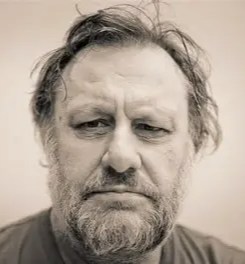
One should oppose the fascination with Hitler according to which Hitler was, of course, a bad guy, responsible for the death of millions — but he definitely had balls, he pursued with iron will what he wanted. … This point is not only ethically repulsive, but simply wrong: no, Hitler did not ‘have the balls’ to really change things; he did not really act, all his actions were fundamentally reactions, i.e., he acted so that nothing would really change, he stages a big spectacle of Revolution so that the capitalist order could survive.”
In this precise sense of violence, Gandhi was more violent than Hitler: Gandhi’s movement effectively endeavored to interrupt the basic functioning of the British colonial state.


3 months 2 weeks ago
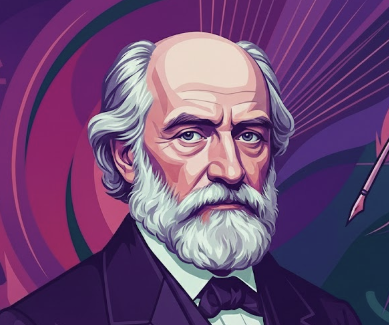
It seldom happens, however, that a great proprietor is a great improver.
▼
Source
source
Chapter IV, p. 420.
3 months 2 weeks ago
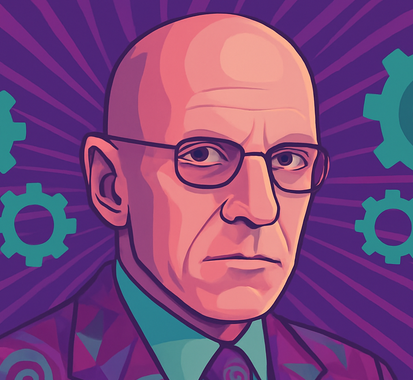
A mother gave her children Aesop's fables to read, in the hope of educating and improving their minds; but they very soon brought the book back, and the eldest, wise beyond his years, delivered himself as follows: This is no book for us; it's much too childish and stupid. You can't make us believe that foxes and wolves and ravens are able to talk; we've got beyond stories of that kind! In these young hopefuls you have the enlightened Rationalists of the future.
▼
Source
source
"Similes, Parables and Fables" Parerga and Paralipomena
3 months 1 week ago
There is hardly a philosophy which has not invoked something like the will or desire to know, the love of truth, etcetera. But, in truth, very few philosophers-apart, perhaps, from Spinoza and Schopenhauer-have accorded it more than a marginal status; as if there was no need for philosophy to say first of all what the name that it bears actually refers to. As if placing at the head of its discourse the desire to know, which it repeats in its name, was enough to justify its own existence and show-at a stroke-that it is necessary and natural: All men desire to know. Who, then, is not a philosopher, and how could philosophy not be the most necessary thing in the world?
▼
Source
source
pp. 4-5
2 months 1 week ago
Every moment celebrates obsequies over the virtues of its predecessor.
▼
Source
source
Ch. XIV
3 months 2 weeks ago
It is a want of feeling to talk of priests and bells while so many infants are perishing in the hospitals, and aged and infirm poor in the streets, from the want of necessaries.
▼
Source
source
Worship and Church Bells, 1797

3 months 4 days ago
And yet it will be obvious that it is difficult to really know of what sort each thing is.
1 month 3 weeks ago
Though he made a joke when asked to do the right thing, he always did it. He was so much more in earnest than he appeared. He did not do himself justice.
▼
Source
source
On Henry John Temple, 3rd Viscount Palmerston, as quoted in Victorian England : Aspects of English and Imperial History, 1837-1901 (1973) by Lewis Charles Bernard Seaman, p. 108

3 months 2 weeks ago
Our inventions are wont to be pretty toys, which distract our attention from serious things. They are but improved means to an unimproved end, an end which it was already but too easy to arrive at.
▼
Source
source
pp. 60-61

1 month 2 weeks ago
So the majority of the highest classes of that age, even the popes and ecclesiastics, really believed in nothing at all. They did not believe in the Church doctrine, for they saw its insolvency; but neither could they follow Francis of Assisi, Kelchitsky, and most of the sectarians in acknowledging the moral, social teaching of Christ, for that undermined their social position. And so these people remained without any religious view of life. And, having none, they could have no standard with which to estimate what was good and what was bad art, but that of personal enjoyment.

2 months 1 day ago
He who bases or thinks he bases his conduct - his inward or his outward conduct, his feeling or his action - upon a dogma or a principle which he deems incontrovertible, runs the risk of becoming a fanatic, and moreover, the moment that this dogma is weakened or shattered, the morality based upon it gives way. If the earth that he thought firm begins to rock, he himself trembles at the earthquake, for we do not all come up to the standard of the ideal Stoic who remains undaunted among the ruins of a world shattered into atoms. Happily the stuff that is underneath a man's ideas will save him. For if a man should tell you that he does not defraud or cuckold his best friend only because he is afraid of hell, you may depend upon it that neither would he do so even if he were to cease to believe in hell, but that he would invent some other excuse instead. And this is all to the honor of the human race.

1 month 3 weeks ago
These men traveling down to the City in the morning, reading their newspapers or staring at advertisements above the opposite seats, they have no doubt of who they are. Inscribe on the placard in place of the advertisement for corn-plasters, Elliot's lines: We are the hollow men

3 months 2 weeks ago
In the days before machinery men and women who wanted to amuse themselves were compelled, in their humble way, to be artists. Now they sit still and permit professionals to entertain them by the aid of machinery. It is difficult to believe that general artistic culture can flourish in this atmosphere of passivity.
3 months 2 weeks ago
It is impossible to pursue this nonsense any further.
▼
Source
source
(Bastiat and Carey), p. 813 (last text page, second last line).
2 months 1 week ago
When all capital, all production, all exchange have been brought together in the hands of the nation, private property will disappear of its own accord, money will become superfluous, and production will so expand and man so change that society will be able to slough off whatever of its old economic habits may remain.
2 months 1 week ago
Can it really be that for us existence means exile, and nothingness, home?
1 month 1 week ago
He dies twice who perishes by his own hand.
▼
Source
source
Maxim 97
1 month 1 week ago
Even the constantly reiterated insistence that we are miserable offenders, born in sin, is a kind of inverted arrogance: such vanity, to presume that our moral conduct has some sort of cosmic significance, as though the Creator of the Universe wouldn't have better things to do than tot up our black marks and our brownie points. The universe is all concerned with me. Is that not the arrogance that passeth all understanding? The Intellectual and Moral Courage of Atheism
▼
Source
source
Originally from 2007; quotes are from the slightly revised 2019 version on the website
3 months 2 weeks ago
Revolutions never go backwards.
▼
Source
source
p. 214
4 months 1 week ago
Probably, the most-often-repeated lesson in history is that foreigners who are called in to help one side in a civil war take over for themselves. It is a lesson that seems never to be learned despite endless repetition.
1 month 3 weeks ago
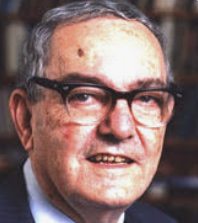
Computers were within my sphere of attention, but only computers used as number crunchers. In spite of the "giant brain" metaphor, there is little suggestion in this 1950 talk that the most important application of computers might lie in imitating intelligence symbolically, not numerically.
▼
Source
source
p. 199.

3 months 1 week ago
There are uncertain truths - even true statements that we may take to be false - but there are no uncertain certainties. Since we can never know anything for sure, it is simply not worth searching for certainty; but it is well worth searching for truth; and we do this chiefly by searching for mistakes, so that we have to correct them.
1 month 3 weeks ago
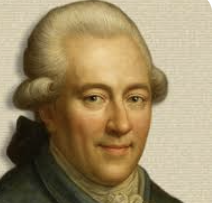
So-called professional mathematicians have, in their reliance on the relative incapacity of the rest of mankind, acquired for themselves a reputation for profundity very similar to the reputation for sanctity possessed by theologians.
▼
Source
source
K 52

1 month 3 weeks ago
The average mind is slow in grasping a truth, but when the most thoroughly organized, centralized institution, maintained at an excessive national expense, has proven a complete social failure, the dullest must begin to question its right to exist. The time is past when we can be content with our social fabric merely because it is "ordained by divine right," or by the majesty of the law.

1 month 1 week ago
Applied knowledge in the Renaissance had to take the form of translation of the auditory into visual terms, of the plastic into retinal form.
▼
Source
source
(p. 180)
CivilSimian.com created by AxiomaticPanic, CivilSimian, Kalokagathia