


4 months 2 weeks ago
Certainly He says this for me, for thee, for this other man, since He bears His body, the Church. Unless you imagine, brethren, that when He said: My Father, if it be possible, let this cup pass away from (Matt. 26:39), it was the Lord that feared to die. . . . But Paul longed to die, that he might be with Christ. What? The Apostle desires to die, and Christ Himself should fear death? What can this mean, except that He bore our infirmity in Himself, and uttered these words for those who are in His body and still fear death? It is from these that the voice came; it was the voice of His members, not of the Head. When He said, My soul is sorrowful unto death (Matt. 26:38), He manifested Himself in thee, and thee in Himself. And when He said, My God, my God, why has Thou forsaken Me? (Matt. 27:46), the words He uttered on the cross were not His own, but ours.

2 weeks 2 days ago
Who is everywhere is nowhere. When a person spends all his time in foreign travel, he ends by having many acquaintances, but no friends.
▼
Source
source
Line 2.
3 months 3 weeks ago
But what is lawful for all extends across wide-ruling aether and, without cease, through endless sunshine.
▼
Source
source
fr. 135, as quoted in Aristotle's Rhetoric, 1373 b16

4 months 1 day ago
To travel is to discover that everyone is wrong.
▼
Source
source
Part II: Malaya,
1 month 2 weeks ago
I do not believe that civilizations have to die...Civilization is not an organism. It is a product of wills.
▼
Source
source
In "Prophet of Hope & Fear" [Review of A Study of History, Vols. 7-10] TIME (18 October 1954) p. 108
4 months 1 day ago
But such a straight identification of religion with any and every form of happiness leaves the essential peculiarity of religious happiness out. The more commonplace happinesses which we get are 'reliefs,' occasioned by our momentary escapes from evils either experienced or threatened. But in its most characteristic embodiments, religious happiness is no mere feeling of escape. It cares no longer to escape. It consents to the evil outwardly as a form of sacrifice - inwardly it knows it to be permanently overcome. ... In the Louvre there is a picture, by Guido Reni, of St. Michael with his foot on Satan's neck. The richness of the picture is in large part due to the fiend's figure being there. The richness of its allegorical meaning also is due to his being there - that is, the world is all the richer for having a devil in it, so long as we keep our foot upon his neck.
▼
Source
source
Lecture II, "Circumscription of the Topic"
1 month 4 weeks ago
Confidence is the only bond of friendship.
▼
Source
source
Maxim 34

2 months 3 weeks ago
Mind, even more deadly to empires than to individuals, erodes them, compromises their solidity.
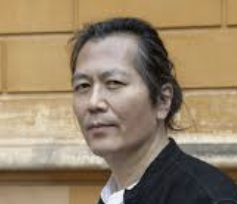
2 months 2 weeks ago
Thinking is an expedition into quietness.

1 day ago
You say that I have been dished up to you as an antifederalist, and ask me if it be just. My opinion was never worthy enough of notice to merit citing; but since you ask it I will tell it you. I am not a Federalist, because I never submitted the whole system of my opinions to the creed of any party of men whatever in religion, in philosophy, in politics, or in anything else where I was capable of thinking for myself. Such an addiction is the last degradation of a free and moral agent. If I could not go to heaven but with a party, I would not go there at all. Therefore I protest to you I am not of the party of federalists. But I am much farther from that than of the Antifederalists.
▼
Source
source
Letter to Francis Hopkinson
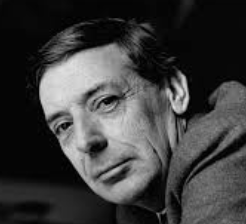
2 months 2 weeks ago
Positivism ... implies the double falsehood that no interpretation is needed, and that it is not needed because the story which the positivist writer tells, such as it is, is obvious. The story he or she tells is usually a bad one, and its being obvious only means that it is familiar.
▼
Source
source
p. 12
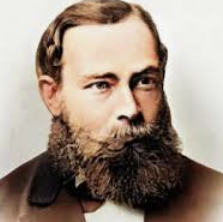
2 months 3 weeks ago
The ideal of strictly scientific method in mathematics which I have tried to realise here, and which perhaps might be named after Euclid I should like to describe in the following way... The novelty of this book does not lie in the content of the theorems but in the development of the proofs and the foundations on which they are based... With this book I accomplish an object which I had in view in my Begriffsschrift of 1879 and which I announced in my Grundlagen der Arithmetik. I am here trying to prove the opinion on the concept of number that I expressed in the book last mentioned.
▼
Source
source
Vol. 1. pp. 137-140, as cited in: Ralph H. Johnson (2012), Manifest Rationality: A Pragmatic Theory of Argument, p. 87

3 months 2 days ago
The unbought grace of life, the cheap defence of nations, the nurse of manly sentiment and heroic enterprise, is gone!
▼
Source
source
Volume iii, p. 331
3 months 3 weeks ago
But, when the elements have been mingled in the fashion of a man and come to the light of day, or in the fashion of the race of wild beasts or plants or birds, then men say that these come into being; and when they are separated, they call that woeful death. They call it not aright; but I too follow the custom, and call it so myself.
▼
Source
source
fr. 9 As quoted by John Burnet, Early Greek philosophy (1908) p. 240

4 months 1 day ago
Though thou loved her as thyself, As a self of purer clay, Tho' her parting dims the day, Stealing grace from all alive, Heartily know, When half-gods go, The gods arrive.
▼
Source
source
Give All to Love, st. 4
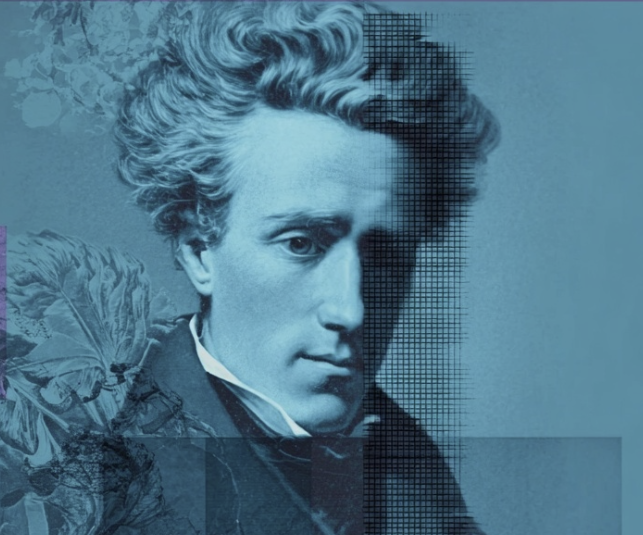
5 months 2 days ago
It is the duty of the human understanding to understand that there are things which it cannot understand, and what those things are. Human understanding has vulgarly occupied itself with nothing but understanding, but if it would only take the trouble to understand itself at the same time it would simply have to posit the paradox.
3 months 3 weeks ago
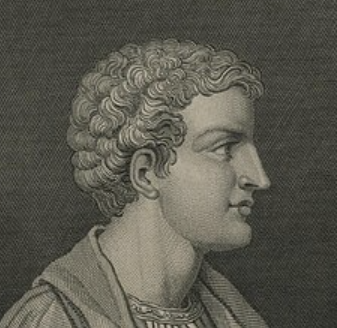
What is to prevent one from telling truth as he laughs, even as teachers sometimes give cookies to children to coax them into learning their A B C?
▼
Source
source
Book I, satire i, line 24 (translation by H. Fairclough)
1 day ago
I have always said, and always will say, that the studious perusal of the sacred volume will make better citizens, better fathers, and better husbands.
▼
Source
source
Attributed to Jefferson by Daniel Webster in a letter of 15 June 1852 addressed to Professor Pease, recalling a Sunday spent with Jefferson more than a quarter of a century before.
1 month 2 weeks ago
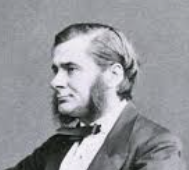
Most of us, shrinking from the difficulties and dangers which beset the seeker after original answers to these riddles, are contented to ignore them altogether, or to smother the investigating spirit under the featherbed of respected and respectable tradition. But, in every age, one or two restless spirits, blessed with that constructive genius, which can only build on a secure foundation, or cursed with the mere spirit of scepticism, are unable to follow in the well-worn and comfortable track of their forefathers and contemporaries, and unmindful of thorns and stumbling-blocks, strike out into paths of their own.
▼
Source
source
Ch.2, p. 71
2 months 1 week ago
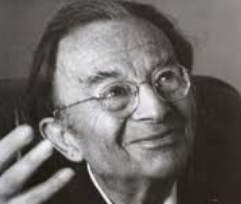
The spirit of a production-centered, commodity-greedy society is such that only the non-conformist can defend himself sufficiently against it. Those who are seriously concerned with love as the only rational answer to the problem of human existence must, then, arrive at the conclusion that important and radical changes in our social structure are necessary, if love is to become a social and not a highly individualistic, marginal phenomenon.
2 months 2 weeks ago
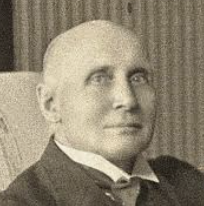
Error is the price we pay for progress.
4 months ago
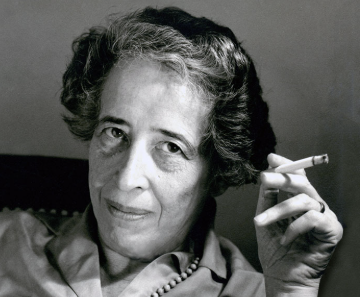
The phenomenon of the will [in Epictetus ] [...] a different mental ability whose chief characteristic is that it speaks an imperative even when it commands nothing but our ability to think. The goal is to annihilate reality insofar it concerns me.
▼
Source
source
Hannah Arendt Lecture on Thinking
3 months 2 days ago
There is, however, a limit at which forbearance ceases to be a virtue.
▼
Source
source
Observations on a Late Publication on the Present State of the Nation (1769), volume i, p. 273

4 months 3 days ago
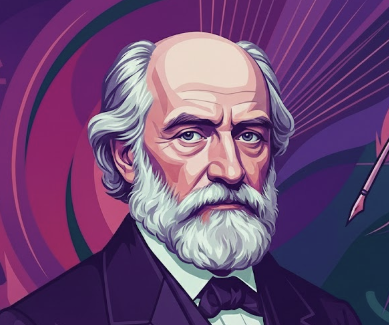
The effect of music is so very much more powerful and penetrating than is that of the other arts, for these others speak only of the shadow, but music of the essence.
▼
Source
source
Vol. I, Ch. II

4 months 2 days ago
In fact, contempt for happiness is usually contempt for other people's happiness, and is an elegant disguise for hatred of the human race.
▼
Source
source
p. 198
3 weeks 4 days ago
As we can not give a general definition of energy, the principle of the conservation of energy signifies simply that there is something which remains constant.

2 months 2 weeks ago
But many of us seek community solely to escape the fear of being alone. Knowing how to be solitary is central to the art of loving. When we can be alone, we can be with others without using them as a means of escape.
▼
Source
source
All About Love: New Visions, 1999

3 weeks 1 day ago
Consider the great elements of human enjoyment, the attainments and possessions that exalt man's life to its present height, and see what part of these he owes to institutions, to Mechanism of any kind; and what to the instinctive, unbounded force, which Nature herself lent him.

4 months 3 weeks ago
Only after Winter comes do we know that the pine and the cypress are the last to fade.

4 months 1 week ago
Who then to frail mortality shall trust But limns the water, or but writes in dust.
1 day ago
In order to be able to meet a general combination of the banks against us in a critical emergency, could we not make a beginning towards an independent use of our own money, towards holding our own bank in all the deposits where it is received, and letting the treasurer give his draft or note for payment at any particular place, which, in a well-conducted government, ought to have as much credit as any private draft or bank note or bill, and would give us the same facilities which we derive from the banks?
▼
Source
source
Letter to Albert Gallatin, 1803. ME 10:439

4 months 4 weeks ago
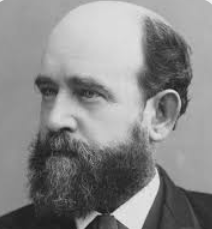
I joke sometimes to the effect that when I approach a part of a book where I must explain something I don't understand, I just type faster and faster and faster. Then, when I get to the part I don't understand, sheer inertia pushes me through. That's not literally true, of course, but there's something to it psychologically.
Just now
My primary object is to defend and advance a principle in which I see the only possible relief from much that enthralls and degrades and distorts, turning light to darkness and good to evil, rather than to gage a philosopher or weigh a philosophy. Yet the examination I propose must lead to a decisive judgment upon both.
▼
Source
source
Introduction : The Reason for the Examination

4 months ago
I wanted for the moments in my life to follow each other and order themselves like those of a life remembered. It would be just as well to try to catch time by the tail.

3 months 3 weeks ago
You always hear people say that philosophy makes no progress and that the same philosophical problems which were already preoccupying the Greeks are still troubling us today. But people who say that do not understand the reason why it has to be so. The reason is that our language has remained the same and always introduces us to the same questions. ... I read: "philosophers are no nearer to the meaning of 'Reality' than Plato got,...". What a strange situation. How extraordinary that Plato could have got even as far as he did! Or that we could not get any further! Was it because Plato was so extremely clever?
▼
Source
source
p. 15e
4 months 1 day ago
I see that sensible men and conscientious men all over the world were of one religion.
▼
Source
source
The Preacher
2 months 1 week ago
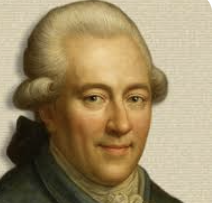
One cannot demand of a scholar that he show himself a scholar everywhere in society, but the whole tenor of his behavior must none the less betray the thinker, he must always be instructive, his way of judging a thing must even in the smallest matters be such that people can see what it will amount to when, quietly and self-collected, he puts this power to scholarly use.
▼
Source
source
J 85
2 weeks 2 days ago
Would you not think him an utter fool who wept because he was not alive a thousand years ago? And is he not just as much of a fool who weeps because he will not be alive a thousand years from now? It is all the same; you will not be, and you were not. Neither of these periods of time belongs to you.

2 months 1 week ago
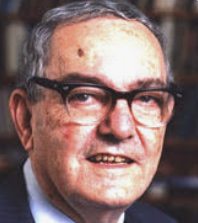
Roughly speaking, rationality is concerned with the selection of preferred behavior alternatives in terms of some system of values, whereby the consequences of behavior can be evaluated.
▼
Source
source
p. 84.
1 month 1 week ago
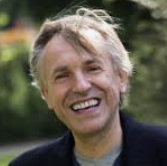
[H]uman nature as encoded in our DNA isn't immutable. Mankind's barbaric track-record to date is an unreliable guide to the future. If Homo sapiens' nastier alleles and their more sinister combinations can be silenced or edited out of the genome, and new improved code-sequences inserted instead, then the pessimists will be confounded. A major discontinuity in the development of life lies ahead. Providentially, we've learned that the DNA-driven world isn't written in God-given proprietary code it would be hubris to tamper with, but in bug-ridden open source amenable to improvement.
▼
Source
source
Utopian Pharmacology: Mental Health in the Third Millennium MDMA and Beyond, BLTC Research, last updated 2020
4 months 2 days ago
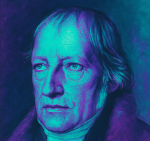
The good is the idea, or unity of the conception of the will with the particular will. Abstract right, well-being, the subjectivity of consciousness, and the contingency of external reality, are in their independent and separate existences superseded in this unity, although in their real essence they are contained in it and preserved. This unity is realized freedom, the absolute final cause of the world. Addition.-Every stage is properly the idea, but the earlier steps contain the idea only in more abstract form. The I, as person, is already the idea, although in its most abstract guise. The good is the idea more completely determined; it is the unity of the conception of will with the particular will. It is not something abstractly right, but has a real content, whose substance constitutes both right and well-being.
▼
Source
source
Georg Wilhelm Friedrich Hegel, Philosophy of Right translated by SW Dyde Queen's University Canada 1896 p. 123
4 months 1 week ago
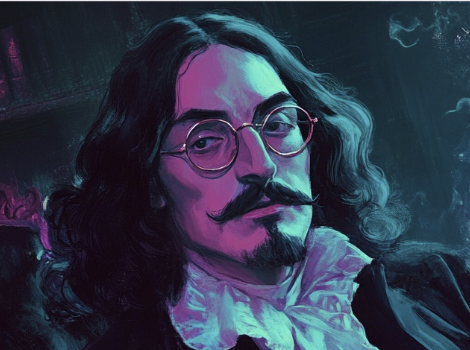
So blind is the curiosity by which mortals are possessed, that they often conduct their minds along unexplored routes, having no reason to hope for success, but merely being willing to risk the experiment of finding whether the truth they seek lies there.
▼
Source
source
Rules for the Direction of the Mind: IV

1 day ago
On eroding, ecologically degraded, increasingly toxic landscapes, worked by failing or subsidy-dependent farmers and by the cheap labor of migrants, we have erected the tottering tower of "agribusiness," which prospers and "feeds the world" (incompletely and temporarily) by undermining its own foundations.
4 months 1 day ago
Great men are they who see that spiritual is stronger than any material force, that thoughts rule the world. No hope so bright but is the beginning of its own fulfillment.
▼
Source
source
July 18, 1867, Progress of Culture Phi Beta Kappa Address
2 months 3 weeks ago
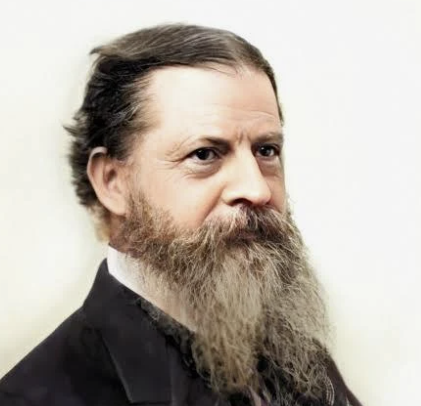
From these two immediate perceptions, we gain a mediate, or inferential perception of the relation of all four instants. This mediate perception is objectively, or as to the object being represented, spread over the four instants; but subjectively, or as itself the subject of duration, it is completely embraced in the second moment. (The reader will observe that I use the word instant to mean a point in time, and moment to mean an infinitesimal duration.

3 months 1 week ago
The universal Intellect is the intimate, most real, peculiar and powerful part of the soul of the world. This is the single whole which filleth the whole, illumineth the universe and directeth nature to the production of natural things, as our intellect with the congruous production of natural kinds.
2 months 1 week ago
Since my world picture approximates reality only crudely, I cannot aspire to optimize anything; at most, I can aim at satisficing. Searching for the best can only dissipate scarce cognitive resources; the best is the enemy of the good.
▼
Source
source
(p.361) p. 361; As cited in Ronald J. Baker (2010) Implementing Value Pricing: A Revolutionary Business Model for Professional Firms. p. 122.
4 months 1 day ago
The union of the mathematician with the poet, fervor with measure, passion with correctness, this surely is the ideal.
▼
Source
source
Ch. 11 - Clifford's Lectures and Essays, 1879
CivilSimian.com created by AxiomaticPanic, CivilSimian, Kalokagathia