


4 months 1 week ago
All passions that suffer themselves to be relished and digested are but moderate.
▼
Source
source
Ch. 2. Of Sorrow, tr. Cotton, rev. W. Hazlitt, 1842
2 months 4 days ago
Descartes may have made a lot of mistakes, but he was right about this: you cannot doubt the existence of your own consciousness. That's the first feature of consciousness, it's real and irreducible. You cannot get rid of it by showing that it's an illusion in a way that you can with other standard illusions.
4 months ago
What will happen once the authentic mass man takes over, we do not know yet, although it may be a fair guess that he will have more in common with the meticulous, calculated correctness of Himmler than with the hysterical fanaticism of Hitler, will more resemble the stubborn dullness of Molotov than the sensual vindictive cruelty of Stalin.
▼
Source
source
Part 3, Ch. 10, § 2
1 week 3 days ago
No one realizes how beautiful it is to travel until he comes home and rests his head on his old, familiar pillow.
▼
Source
source
"A Trip to Anhwei", in With Love And Irony (1940), p. 145
3 weeks 5 days ago
To apply oneself to great inventions, starting from the smallest beginnings, is no task for ordinary minds; to divine that wonderful arts lie hid behind trivial and childish things is a conception for superhuman talents.
4 months 3 days ago
If two men who were friends in their youth meet again when they are old, after being separated for a life-time, the chief feeling they will have at the sight of each other will be one of complete disappointment at life as a whole; because their thoughts will be carried back to that earlier time when life seemed so fair as it lay spread out before them in the rosy light of dawn, promised so much - and then performed so little.
▼
Source
source
"On the Sufferings of the World"
4 months 3 days ago
We can come to look upon the deaths of our enemies with as much regret as we feel for those of our friends, namely, when we miss their existence as witnesses to our success.
▼
Source
source
Vol. 2, Ch. 26, sect. 311a

4 months 2 days ago
With our present industrial technique we can, if we choose, provide a tolerable subsistence for everybody. We could also secure that the world's population should be stationary if we were not prevented by the political influence of churches which prefer war, pestilence, and famine to contraception. The knowledge exists by which universal happiness can be secured; the chief obstacle to its utilization for that purpose is the teaching of religion. Religion prevents our children from having a rational education; religion prevents us from removing fundamental causes of war; religion prevents us from teaching the ethic of scientific co-operation in place of the old fierce doctrines of sin and punishment. It is possible that mankind is on the threshold of a golden age; but, if so, it will be necessary first to slay the dragon that guards the door, and this dragon is religion.
▼
Source
source
"The Idea of Righteousness"
3 months 3 weeks ago
When he was asked what advantage had accrued to him from philosophy, his answer was, "The ability to hold converse with myself."
▼
Source
source
§ 4
1 month 5 days ago
Some anarchists have claimed not merely that we would be better off without a state, but that any state necessarily violates people's moral rights and hence is intrinsically immoral. Our starting point then, though nonpolitical, is by intention far from nonmoral. Moral philosophy sets the background for, and boundaries of, political philosophy. What persons may and may not do to one another limits what they may do through the apparatus of a state, or do to establish such an apparatus.
▼
Source
source
Ch. 1 : Why State of Nature Theory?; Political Philosophy, p. 6

4 months 5 days ago
Every thing in the world is purchased by labour.
▼
Source
source
Part II, Essay 1: Of Commerce
2 months 2 weeks ago
That passivity was the essence of the problem. The human being was intended to be passive only in a condition of fatigue, and not always then. Too much passivity of body produced surplus fat, short-windedness, indigestion: passivity of mind produced the same symptoms on the mental level. a feeling of spiritual dyspepsia. Since the average human being has no purposes that are not connected with the activities of keeping alive, the black room was bound to produce passivity, increasing dullness, a state in which the mind is at once awake and static, motionless, stagnant. This sense of dullness was nothing less than the collapse of the sense of reality and of values, the retreat into one's inner world.
▼
Source
source
p. 72

3 months 1 week ago
A constellation of the most pedantic, obstinate ignorance and presumption, mixed with a kind of rustic incivility, which would try the patience of Job.
▼
Source
source
Declaration about the scholars of England, particularly those of Oxford

3 weeks 6 days ago
The contradictory conceptual couple, identity and difference, is not the adequate framework for understanding the organization of the multitude. Instead we are a multiplicity of singular forms of life and at the same time share a common global existence. The anthropology of the multitude is an anthropology of singularity and commonality.
▼
Source
source
127

3 months 3 weeks ago
The world is all that is the case.
▼
Source
source
(1) Original German: Die Welt ist alles, was der Fall ist.

1 day ago
I am convinced that those societies (as the Indians) which live without government enjoy in their general mass an infinitely greater degree of happiness than those who live under the European governments.
▼
Source
source
Letter to Colonel Edward Carrington, Paris,
4 months 1 week ago
I do not speak the minds of others except to speak my own mind better.
▼
Source
source
Ch. 26. On the Education of Children
2 months 2 weeks ago
My theory was that we are all fundamentally 'multiple personalities', beginning with the baby and the child, and slowly developing into more complex selves. If, for some reason, we abruptly cease to develop -- through some trauma that undermines self-confidence -- all those potential personalities are stunted and repressed. And some accident or violent shock may give one of them the opportunity to 'take over'. This suggests, of course, that in some mysterious sense, our 'future' personalities are already there, in embryo, so to speak, and that they also develop as we mature. We move from personality to personality, as we might climb a ladder. The Beethovens and Leonardos got further up the ladder than most of us; yet even they failed to reach the top, as we can see if we study their lives.
▼
Source
source
pp. 228- 229

4 months 2 days ago
Good is a good doctor, but Bad is sometimes a better.
▼
Source
source
Considerations by the Way
3 weeks 6 days ago
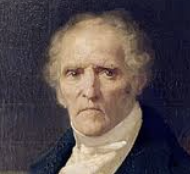
Nothing is more opposed to concord than the present condition of the domestic and salaried classes. By reducing this poor multitude to a condition very like slavery, civilization, on the rebound, imposes chains upon those who seem to dominate. Thus notables do not dare to amuse themselves openly at times when the people suffer from poverty. The rich are subject to individual as well as collective servitude. A wealthy man is often the slave of his valets. However in harmony the valet himself enjoys complete independence, while the rich are served with an assiduity and a devotion of which one sees not a trace in civilization.
▼
Source
source
Oeuvres completetes de Charles Fourier
2 months 2 weeks ago
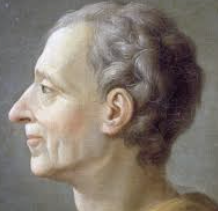
I acknowledge that history is full of religious wars: but we must distinguish; it is not the multiplicity of religions which has produced wars; it is the intolerant spirit animating that which believed itself in the ascendant.
▼
Source
source
No. 86. (Usbek writing to Mirza)
2 months 3 weeks ago
Loren von Stein thus turned the dialectic into an ensemble of objective laws calling for social reform as the adequate solution of all contradictions and neutralized the critical elements of the dialectic.
▼
Source
source
P. 388
3 months 1 day ago
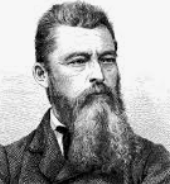
A subject interests me and holds my attention only so long as it presents me with difficulties, only so long as I am at odds with it and have, as it were, to struggle with it; but once I have mastered it I hurry on to something else, to a new subject; for my interest is not confined to any particular field or subject; it extends to everything human. This does not mean that I am an intellectual miser or egoist, who amasses knowledge for himself alone; by no means! What I do and think for myself, I must also think and do for others. But I feel the need of instructing others in a subject only so long as, while instructing others, I am also instructing myself.
▼
Source
source
Lecture I, , R. Manheim, trans. (1967), p. 2

3 months 6 days ago
People praise virtue, but they hate it, they run away from it. It freezes you to death, and in this world you've got to keep your feet warm.

4 months 2 days ago
In wildness is the preservation of the world. Every tree sends its fibers forth in search of the Wild. The city imports it at any price. Men plow and sail for it. From the forest and wilderness come the tonics and barks which brace mankind.

1 month 4 weeks ago
The images of mankind have become the most basic thing about them. And they're all software, and disembodied.
▼
Source
source
(p. 346)

1 day ago
The politicians have kept the environmental movement quiet by designating wilderness areas. And in the meantime, they've let corporations run completely out of control, and extraordinarily destructively, in the economic landscapes, without any acknowledgement at all that the natural world is out there just the same as it is in the parks.
1 month 3 weeks ago
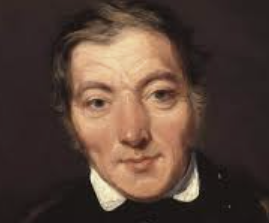
Man is the creature of circumstances.
▼
Source
source
"The Philanthropist"
2 days ago
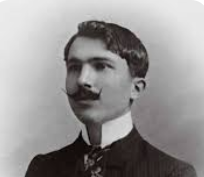
I possess no weapon but love. With that I have come to do battle. Help me!
1 month 4 weeks ago
The only cool PR is provided by one's enemies. They toil incessantly and for free.

2 months 4 weeks ago
The difference between a pessimistic and an optimistic mind is of such controlling importance in regard to every intellectual function, and especially for the conduct of life, that it is out of the question to admit that both are normal, and the great majority of mankind are naturally optimistic.
▼
Source
source
V
4 months 2 days ago
Many agnostics (including myself) are quite as doubtful of the body as they are of the soul, but this is a long story taking one into difficult metaphysics. Mind and matter alike, I should say, are only convenient symbol in discourse, not actually existing things.
▼
Source
source
What is an Agnostic?, 1953
2 months 2 weeks ago
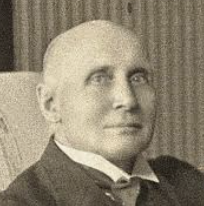
Life is an offensive, directed against the repetitious mechanism of the Universe.
▼
Source
source
p. 102.
2 months 2 weeks ago
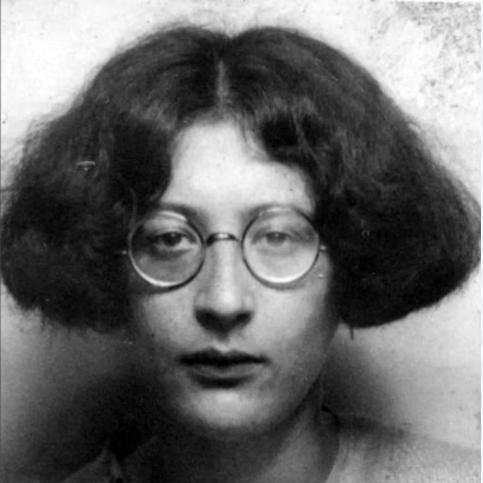
That is why St. John of the Cross calls faith a night. With those who have received a Christian education, the lower parts of the soul become attached to these mysteries when they have no right at all to do so. That is why such people need a purification of which St. John of the Cross describes the stages. Atheism and incredulity constitute an equivalent of such a purification.
▼
Source
source
Faiths of Meditation; Contemplation of the divine" as translated in The Simone Weil Reader (1957) edited by George A. Panichas, p. 418
3 months 3 weeks ago
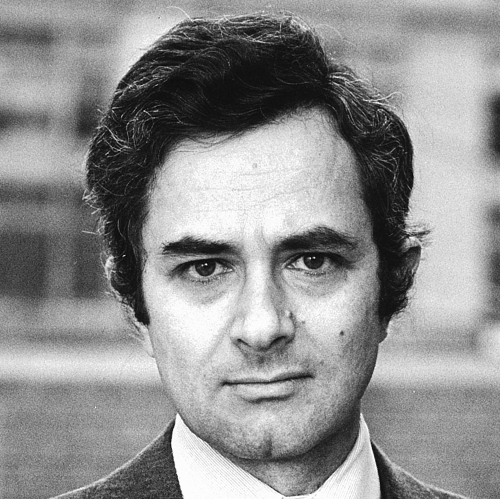
The essence of the belief that bats have experience is that there is something that it is like to be a bat. Now we know that most bats (the microchiroptera, to be precise) perceive the external world primarily by sonar, or echolocation. ... But bat sonar, though clearly a form of perception, is not similar in its operation to any sense that we possess, and there is no reason to suppose that it is subjectively like anything we can experience or imagine. This appears to create difficulties for the notion of what it is like to be a bat.
▼
Source
source
p. 168.
1 day ago
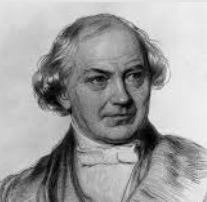
The " Five Words," 'genus', 'species', 'difference', 'property', 'accident', were used by the Aristotelians, in order to express the subordination of kinds, and to describe the nature of definitions and propositions. In modern times, these technical expressions have been more referred to by Natural Historians than by Metaphysicians.
4 months 4 weeks ago
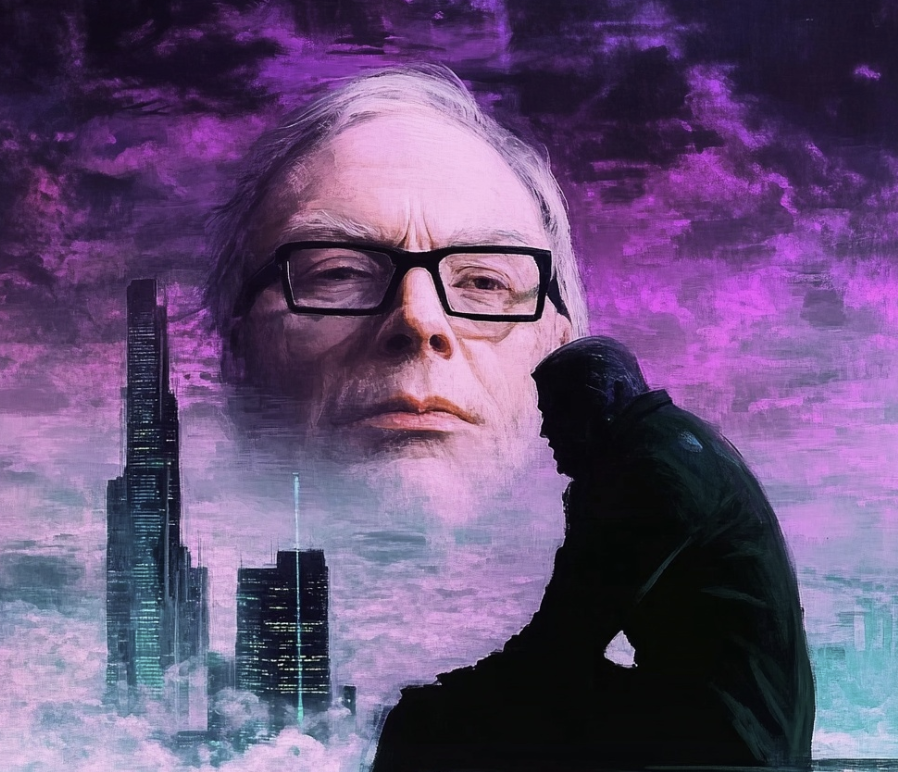
I don't believe in flying saucers... The energy requirements of interstellar travel are so great that it is inconceivable to me that any creatures piloting their ships across the vast depths of space would do so only in order to play games with us over a period of decades.

2 months 4 weeks ago
We die in proportion to the words we fling around us.
2 months 2 weeks ago
All science must start with some assumptions as to the ultimate analysis of the facts with which it deals. These assumptions are justified partly by their adherence to the types of occurrence of which we are directly conscious, and partly by their success in representing the observed facts with a certain generality, devoid of ad hoc suppositions.
▼
Source
source
Ch. 8: "The Quantum Theory", p. 189
1 month 2 weeks ago
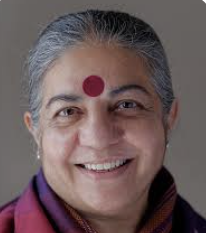
Nature shrinks as capital grows. The growth of the market cannot solve the very crisis it creates.
▼
Source
source
Soil Not Oil: Environmental Justice in an Age of Climate Crisis
1 month 1 week ago
The biology of suffering in intelligent agents is a deep underlying source of existential risk - and one that can potentially be overcome.
▼
Source
source
"Unsorted Postings", pre-2014

2 months 2 weeks ago
In France there are three kinds of professions: the church, the sword, and the long robe. Each hath a sovereign contempt for the other two. For example, a man who ought to be despised only for being a fool is often so because he is a lawyer.
▼
Source
source
No. 44 (Usbek writing to Rhedi)

2 months 1 day ago
We know very well that we are only allowed to go on eating our dinner, to finish seeing the new play, or to enjoy to the end the ball, the Christmas fete, the promenade, the races or, the hunt, thanks to the policeman's revolver or the soldier's rifle, which will shoot down the famished outcast who has been robbed of his share, and who looks round the corner with covetous eyes at our pleasures, ready to interrupt them instantly, were not policeman and soldier there prepared to run up at our first call for help.
▼
Source
source
Chapter XII, Conclusion-Repent Ye, for the Kingdom of Heaven is at Hand
4 months 1 week ago
The human understanding is unquiet; it cannot stop or rest, and still presses onward, but in vain. Therefore it is that we cannot conceive of any end or limit to the world, but always as of necessity it occurs to us that there is something beyond... But he is no less an unskilled and shallow philosopher who seeks causes of that which is most general, than he who in things subordinate and subaltern omits to do so.
▼
Source
source
Aphorism 48
5 months 2 days ago
What if the equality between us human being, in which we completely resemble one another, were that none of us really thinks about his being loved?

2 months 3 weeks ago
The Spirit of the Lord is on me, because he has anointed me to proclaim good news to the poor. He has sent me to proclaim freedom for the prisoners and recovery of sight for the blind, to set the oppressed free, to proclaim the year of the Lord's favor.
▼
Source
source
Luke 4:18-19 NIV
1 month 4 weeks ago
The popularity of the paranormal, oddly enough, might even be grounds for encouragement. I think that the appetite for mystery, the enthusiasm for that which we do not understand, is healthy and to be fostered. It is the same appetite which drives the best of true science, and it is an appetite which true science is best qualified to satisfy.
2 months 3 weeks ago
And in these foure things, Opinion of Ghosts, Ignorance of second causes, Devotion towards what men fear, and Taking of things Casuall for Prognostics, consisteth the Natural seed of Religion; which by reason of the different Fancies, Judgements, and Passions of severall men, hath grown up into ceremonies so different, that those which are used by one man, are for the most part ridiculous to another.
▼
Source
source
The First Part, Chapter 12, p. 54
CivilSimian.com created by AxiomaticPanic, CivilSimian, Kalokagathia