
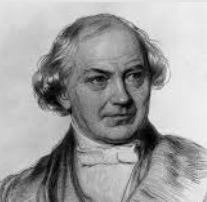
William Whewell — Science, Morality, and the Architecture of Knowledge (1794–1866)
William Whewell was a British polymath, philosopher of science, historian, theologian, and Master of Trinity College Cambridge — one of the most intellectually commanding figures of the Victorian age.
A man of almost intimidating breadth, he contributed to mechanics, mineralogy, architecture, economics, and the history and philosophy of science — and coined a remarkable number of the words that modern science still uses daily.
His central concern: that science is not merely the accumulation of observations but the progressive discovery of ideas that the mind brings to experience — and that understanding how science works is inseparable from understanding how knowledge itself is possible.
The Philosopher of Science Before the Profession Existed
Whewell wrote his monumental "History of the Inductive Sciences" and "Philosophy of the Inductive Sciences" in the 1830s and 1840s — works that together constituted the most comprehensive account of scientific knowledge yet attempted in the English language.
He argued that scientific progress occurs through what he called the "colligation of facts" — the binding together of observations under a unifying idea that was not itself derived from the observations but supplied by the mind. Discovery, on this account, is always partly a creative act.
He identified a pattern he called the "consilience of inductions" — the moment when a hypothesis originally proposed to explain one class of facts turns out to explain quite different classes of facts as well, without having been designed to do so. Such convergence, he argued, is the strongest possible evidence that a theory has genuinely grasped something true.
Darwin read him carefully. The consilience of inductions became one of the key concepts through which "On the Origin of Species" made its case.
"The colligation of facts by means of appropriate conceptions is the great work of inductive science."
The Man Who Named the Scientist
In 1833, at a meeting of the British Association for the Advancement of Science, the poet Samuel Taylor Coleridge complained that "natural philosopher" was no longer adequate to describe those who investigated nature professionally. Whewell — characteristically — had a solution ready.
He proposed "scientist" — by analogy with "artist" — to denote a person engaged in the systematic study of nature. The word was initially resisted, then grudgingly adopted, and is now so universal that its origin has been entirely forgotten.
Whewell also coined "physicist," "linguist," "consilience," "catastrophism," "uniformitarianism," "electrode," "ion," "anode," and "cathode" — the last four at the request of Michael Faraday, who needed a vocabulary for his electrical discoveries and turned to Whewell for the Greek and Latin roots.
No single person has contributed more coinages to the working vocabulary of science.
"We need very much a name to describe a cultivator of science in general. I should incline to call him a Scientist."
The Debate with Mill
Whewell's philosophy of science placed him in direct opposition to John Stuart Mill, whose "System of Logic" offered a rival empiricist account of induction.
Mill held that all knowledge is ultimately derived from experience — that the mind contributes nothing to science beyond the capacity to record and generalize from observations. Whewell countered that this account could not explain how scientific revolutions happen — how a Newton or a Kepler sees in familiar data something no one had seen before.
The mind, Whewell insisted, is not a passive receptacle. It brings to observation a set of fundamental ideas — space, time, cause, likeness — without which experience would be unintelligible. Discovery requires the right idea at the right moment, and ideas do not come from observations alone.
The debate between their positions maps onto one of philosophy's oldest fault lines — between empiricism and rationalism — and has never been fully resolved.
"Every act of knowledge consists of two elements: the sensations which the world supplies, and the ideas which the mind contributes."
Moral Philosophy and the Foundations of Ethics
Whewell was equally serious about moral philosophy, producing "The Elements of Morality" in 1845 — an attempt to ground ethics in a set of fundamental ideas analogous to those he had identified in natural science.
He argued against the utilitarian reduction of morality to consequences, insisting that moral knowledge, like scientific knowledge, required ideas — justice, truth, purity, order, beneficence — that were not derived from experience but were presupposed by any coherent moral life.
His moral philosophy was less influential than his philosophy of science, partly because Mill's utilitarian framework proved more congenial to the reformist spirit of the age. But his insistence that morality cannot be collapsed into calculation without losing something essential has lost none of its force.
Whewell saw the moral and the scientific life as expressions of the same fundamental human capacity — the ability to bring order, through ideas, to a world that does not deliver order ready-made.
"Morality without religion is a tree without roots — it may stand for a time, but it will not long endure."
Legacy — The Last Master of Everything
Sydney Smith is said to have quipped that science was Whewell's forte and omniscience his foible — a remark that captures both his achievement and his reputation. He knew more about more things than almost anyone of his era, and he was not shy about it.
His philosophical work was eclipsed in the later nineteenth century by the rising dominance of Millian empiricism and the professionalization of science into specialisms that made his synthetic ambition look unfashionable.
But his concepts — consilience of inductions, colligation of facts, the creative role of the mind in discovery — have been repeatedly rediscovered by philosophers of science who did not always know they were recovering Whewell.
He stands as one of the great examples of what a single synthesizing intelligence can achieve before the walls go up between disciplines — and as a reminder of what is lost when they do.
"Man is the interpreter of nature; science the right interpretation."
CivilSimian.com created by AxiomaticPanic, CivilSimian, Kalokagathia