
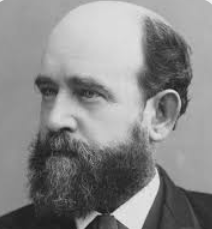
Henry George — Land, Labor, and the Single Tax (1839–1897)
Henry George was an American political economist and social reformer whose 1879 masterwork "Progress and Poverty" became one of the bestselling works of economic thought ever published — outselling every book in the world except the Bible in the years following its release.
A self-educated journalist and printer from Philadelphia who arrived in California during the gold rush era, he observed firsthand the paradox that haunted him for life: that the growth of wealth and the growth of poverty seemed to advance together, and that no one in economics had satisfactorily explained why.
His central concern: that the private ownership of land — not labor, not capital, not individual failure — is the root cause of poverty in the midst of plenty, and that a single reform could abolish it without confiscating what any person has earned.
Progress and Poverty — The Central Argument
George began with an observation that struck him as scandalous: that material progress — the growth of industry, technology, and wealth — had not lifted the laboring classes out of poverty but had in many cases deepened their misery. Why did wages tend toward subsistence even as the productive capacity of society expanded?
His answer centered on land. As a community grows and prospers, the value of land within and around it rises — not because landowners have done anything to improve it, but simply because the community's labor and investment makes the location more desirable. This unearned increment flows to landowners as rent, capturing the wealth that labor and capital produce before workers and investors can claim it.
The more prosperous a society becomes, the more valuable its land, and the larger the share of wealth that flows to those who merely own the ground on which everyone else must live and work. Progress, paradoxically, enriches the landlord at the expense of everyone else.
The solution was as elegant as the diagnosis: tax the unearned value of land — and only that — returning to the community the wealth the community itself created.
"The great cause of inequality in the distribution of wealth is inequality in the ownership of land."
The Single Tax
George's proposed remedy was the land value tax — a levy on the unimproved value of land, assessed regardless of what the owner builds or does on it.
The logic was precise. Land value arises from the community's presence and activity, not from anything the owner contributes. Taxing it does not penalize productive work — it reclaims for the public what the public itself created. Buildings, improvements, and the fruits of labor would go entirely untaxed.
He argued this single tax could replace all other taxes — on income, trade, and production — eliminating the drag that conventional taxation places on work and enterprise while funding all legitimate public needs.
Land speculation — the practice of holding land idle waiting for its value to rise while others pay rent for access — would be made unprofitable, freeing land for productive use and breaking the stranglehold of the landlord class.
"We must make land common property."
A Radical Who Defended Private Property
George occupied unusual political ground. His critique of landlordism was as sharp as any socialist's — yet he defended private property in the fruits of labor with an almost libertarian conviction.
He broke sharply with Marx, who dismissed him as a defender of capitalism. George returned the contempt, arguing that state ownership of the means of production was both unnecessary and dangerous — that the single reform of land value taxation would do everything socialism promised without requiring the coercive apparatus of the state to manage production.
What a person made, grew, or built was theirs absolutely. What no person made — the land itself, in its natural state — belonged to all, and its rental value should flow accordingly. The distinction was simple, the implications revolutionary.
He attracted followers who could not otherwise agree: free marketeers and social reformers, individualists and communitarians, finding in his framework a resolution to their apparent conflict.
"He who makes should have; he who saves should enjoy — but he who merely owns should not reap what he did not sow."
Global Influence and the Georgist Movement
The reach of George's influence was extraordinary. Leo Tolstoy was a passionate Georgist, attributing to him a moral clarity in economics that he found nowhere else. George Bernard Shaw, Sun Yat-sen, Winston Churchill, Albert Einstein, and John Dewey all acknowledged his influence.
The Georgist movement shaped early urban planning, progressive taxation debates, and land reform movements across Asia, Australasia, and Europe. Taiwan and Singapore implemented partial versions of his ideas. Several American cities experimented with land value taxation with measurably positive results.
His 1886 New York City mayoral campaign — running as a labor candidate — came within striking distance of victory, finishing ahead of Theodore Roosevelt in a race whose outcome many historians consider suspect.
He died during a second mayoral campaign in 1897, four days before the election, having refused his doctor's orders to rest.
"The equal right of all men to the use of land is as clear as their equal right to breathe the air — it is a right proclaimed by the fact of their existence."
Legacy — The Reform That Almost Was
George's eclipse is one of intellectual history's more instructive episodes. His ideas were suppressed not primarily by argument but by the organized opposition of landed interests who understood precisely what was at stake — and by the rise of academic economics as a professionalized discipline that had reasons of its own to marginalize his framework.
Among economists who have engaged with him seriously, the verdict has often been respectful. Milton Friedman called the land value tax the least bad tax in existence. Joseph Stiglitz and others have identified what has been called the "Henry George theorem" — a formal result showing that under certain conditions, land value taxation can fund public goods without deadweight loss.
In an era of soaring housing costs, urban unaffordability, land speculation, and widening inequality, George's diagnosis reads with uncomfortable precision. The mechanism he identified — land value capture by private owners at public expense — is more visible now than at any point since his death.
He remains the great reformer who almost changed everything — whose idea was simple enough to be understood by anyone and threatening enough to be buried by those with most to lose.
"It is not from top to bottom that societies die; it is from bottom to top."
CivilSimian.com created by AxiomaticPanic, CivilSimian, Kalokagathia