
Nationality, class, race, religion, culture....subgroup identity particularity does not supersede universality and humanity.



Technically speaking, since our complex societies are highly susceptible to interferences and accidents,they certainly offer ideal opportunities for a prompt disruption of normal activities. These disruptions can, with minimum expense, have considerably destructive consequences. Global terrorism is extreme both in its lack of realistic goals and in its cynical exploitation of the vulnerability of complex systems.
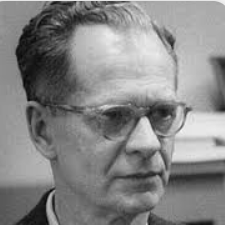
The real question is not whether machines think but whether men do. The mystery which surrounds a thinking machine already surrounds a thinking man.

Enough had been thought, and said, and felt, and imagined. It was about time that something should be done.

Why should I not regard this as desirable-not because the fire, burns me, but because it does not overcome me?
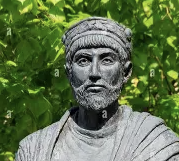
The same things, therefore, does the Sun communicate to things intelligible, over whom he was appointed by the Good to reign and to command: although these were created and began to exist at the same moment with himself.

Man loves company - even if it is only that of a small burning candle.

The effects of mescalin or LSD can be, in some respects, far more satisfying than those of alcohol. To begin with, they last longer; they also leave behind no hangover, and leave the mental faculties clear and unimpaired. They stimulate the faculties and produce the ideal ground for a peak experience.

All mortals are equal; it is not their birth,But virtue itself that makes the difference.

What is Europe really but a sterile trunk which owes everything to oriental grafts?

What strength belongs to every plant and animal in nature. The tree or the brook has no duplicity, no pretentiousness, no show. It is, with all its might and main, what it is, and makes one and the same impression and effect at all times. All the thoughts of a turtle are turtles, and of a rabbit, rabbits. But a man is broken and dissipated by the giddiness of his will; he does not throw himself into his judgments; his genius leads him one way but 't is likely his trade or politics in quite another.
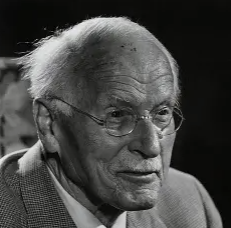
Without consciousness there would, practically speaking, be no world, for the world exists as such only in so far as it is consciously reflected and considered by a psyche. Consciousness is a precondition of being.
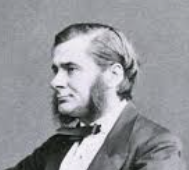
I do not advocate burning your ship to get rid of the cockroaches.

All of the days go toward death and the last one arrives there.

It is provable both that the historical sequence was, in its main outlines, a necessary one; and that the causes which determined it apply to the child as to the race. ...as the mind of humanity placed in the midst of phenomena and striving to comprehend them has, after endless comparisons, speculations, experiments, and theories, reached its present knowledge of each subject by a specific route; it may rationally be inferred that the relationship between mind and phenomena is such as to prevent this knowledge from being reached by any other route; and that as each child's mind stands in this same relationship to phenomena, they can be accessible to it only through the same route. Hence in deciding upon the right method of education, an inquiry into the method of civilization will help to guide us.

What thinkest thou, Simon? of whom do the kings of the earth take custom or tribute? of their own children, or of strangers?

Not only does the action of Governments not deter men from crimes; on the contrary, it increases crime by always disturbing and lowering the moral standard of society. Nor can this be otherwise, since always and everywhere a Government, by its very nature, must put in the place of the highest, eternal, religious law (not written in books but in the hearts of men, and binding on every one) its own unjust, man-made laws, the object of which is neither justice nor the common good of all but various considerations of home and foreign expediency.
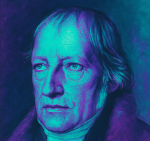
The destiny of the spiritual World, and, - since this is the substantial World, while the physical remains subordinate to it, or, in the language of speculation, has no truth as against the spiritual, - the final cause of the World at large, we allege to be the consciousness of its own freedom on the part of Spirit, and ipso facto, the reality of that freedom.
Among the Romans in Christian times Mithras-worship as very widely spread, and so late as the Middle Ages we meet with a secret Mithras-worship ostensibly connected with the order of the Knights-Templars. Mithras thrusting the knife into the neck of the ox is a figurative representation belonging essentially to the cult of Mithras, of which examples have been frequently found in Europe. Hegel, Georg Wilhelm Friedrich, Lectures on the philosophy of religion, together with a work on the proofs of the existence of God.

I think that there is nothing, not even crime, more opposed to poetry, to philosophy, ay, to life itself, than this incessant business.

My purpose is to explain, not the meaning of words, but the nature of things.
The little world of childhood with its familiar surroundings is a model of the greater world. The more intensively the family has stamped its character upon the child, the more it will tend to feel and see its earlier miniature world again in the bigger world of adult life. Naturally this is not a conscious, intellectual process.

Men fear thought as they fear nothing else on earth - more than ruin, more even than death. Thought is subversive and revolutionary, destructive and terrible; thought is merciless to privilege, established institutions, and comfortable habits; thought is anarchic and lawless, indifferent to authority, careless of the well-tried wisdom of the ages. Thought looks into the pit of hell and is not afraid. It sees man, a feeble speck, surrounded by unfathomable depths of silence; yet it bears itself proudly, as unmoved as if it were lord of the universe. Thought is great and swift and free, the light of the world, and the chief glory of man.

The consciousness of being betrayed is to the collective consciousness of a sacred group what a certain form of schizophrenia is to the individual...it is a form of madness.

By the air which I breathe, and by the water which I drink, I will not endure to be blamed on account of this discourse.

It is only the individual possessed of the most entire sincerity that can exist under Heaven, who can adjust the great invariable relations of mankind, establish the great fundamental virtues of humanity, and know the transforming and nurturing operations of Heaven and Earth; shall this individual have any being or anything beyond himself on which he depends? Call him man in his ideal, how earnest is he! Call him an abyss, how deep is he! Call him Heaven, how vast is he! Who can know him, but he who is indeed quick in apprehension, clear in discernment, of far-reaching intelligence, and all-embracing knowledge, possessing all Heavenly virtue?
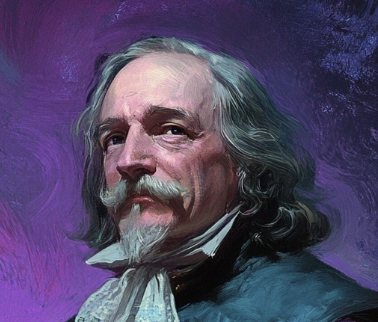
And the Science of them, is the true and onely Moral Philosophy. For Moral Philosophy is nothing else but the Science of what is Good, and Evill, in the conversation, and Society of mankind. Good, and Evill, are names that signify our Appetites, and Aversions; which in different tempers, customes, and doctrines of men, are different.

Melancholy redeems this universe, and yet it is melancholy that separates us from it.

You must go to Mahometanism, to Buddhism, to the East, to the Sufis & Fakirs, to Pantheism, for the right growth of mysticism.

The last peculiarity of consciousness to which attention is to be drawn in this first rough description of its stream is that it is always interested more in one part of its object than in another, and welcomes and rejects, or chooses, all the while it thinks.

We must learn how to imitate Cicero from Cicero himself. Let us imitate him as he imitated others.
Her absence is no more emphatic in those places than anywhere else. It's not local at all. I suppose if one were forbidden all salt one wouldn't notice it much more in any one food more than another. Eating in general would be different, every day, at every meal. It is like that. The act of living is different all through. Her absence is like the sky, spread over everything.
To those whose talents are above mediocrity, the highest subjects may be announced. To those who are below mediocrity, the highest subjects may not be announced.
I feel that the entire spiritual life consists in this: That we gradually turn from those things whose appearance is deceptive to those things that are real.
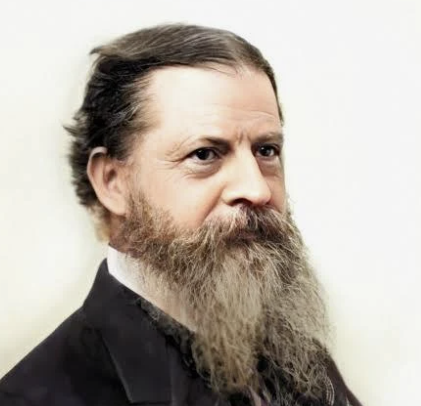
Time with its continuity logically involves some other kind of continuity than its own. Time, as the universal form of change, cannot exist unless there is something to undergo change, and to undergo a change continuous in time, there must be a continuity of changeable qualities.

There are pretenses which are very sincere, and marriage is their school.
We take foreigners to be incomplete Americans - convinced that we must help and hasten their evolution.
Ideas are cheap. It's only what you do with them that counts.
Doing what is for the good of the people, this must be the truest criterion of right government, in accordance with which the wise and good man will govern the affairs of his subjects. Just as the captain of a ship keeps watch for what is at any moment for the good of the vessel and the sailors, not by writing rules, but by making his science his law, and thus preserves his fellow voyagers, so may not a right government be established in the same way by men who could rule by this principle, making science more powerful than the laws? And whatever the wise rulers do, they can commit no error, so long as they maintain one great principle and by always dispensing absolute justice to them with wisdom and science are able to preserve the citizens and make them better than they were, so far as that is possible.
We are either going to have a future where women lead the way to make peace with the Earth or we are not going to have a future at all.

Idolatry is a more dangerous crime because it is apt by the authority of Kings & under very specious pretenses to insinuate it self into mankind. Kings being apt to enjoyn the honour of their dead ancestors: & it seeming very plausible to honour the souls of Heroes & Saints & to believe that they can heare us & help us & are mediators between God & man & reside & act principally in the temples & statues dedicated to their honour & memory? And yet this being against the principal part of religion is in scripture condemned & detested above all other crimes. The sin consists first in omitting the service of the true God.

Our senses are not receptors so much as reactors and makers of different modalities of space. Perhaps touch is not just skin contact with things, but the very life of things in the mind.

No man can justly censure or condemn another, because indeed no man truly knows another.
When Descartes said, "Conquer yourself rather than the world," what he meant was, at bottom, - the same - that we should act without hope. Marxists, to whom I have said thus have answered: "Your action is limited, obviously, by your death: but you can rely upon the help of others.

Much has been said of Mahomet's propagating his Religion by the sword. It is no doubt far nobler what we have to boast of the Christian Religion, that it propagated itself peaceably in the way of preaching and conviction. Yet withal, if we take this for an argument of the truth or falsehood of a religion, there is a radical mistake in it. The sword indeed: but where will you get your sword! Every new opinion, at its starting, is precisely in a minority of one. In one man's head alone, there it dwells as yet. One man alone of the whole world believes it; there is one man against all men. That he take a sword, and try to propagate with that, will do little for him. You must first get your sword! On the whole, a thing will propagate itself as it can. We do not find, of the Christian Religion either, that it always disdained the sword, when once it had got one.
Social and economic inequalities, for example inequalities of wealth and authority, are just only if they result in compensating benefits for everyone, and in particular for the least advantaged members of society.
Listen widely to remove your doubts and be careful when speaking about the rest and your mistakes will be few. See much and get rid of what is dangerous and be careful in acting on the rest and your causes for regret will be few. Speaking without fault, acting without causing regret: 'upgrading' consists in this.
A farewell does not dilute the presence of the past; it may make an even deeper presence.
Are not five sparrows sold for two farthings, and not one of them is forgotten before God? But even the very hairs of your head are all numbered. Fear not therefore: ye are of more value than many sparrows.
Unjust laws exist: shall we be content to obey them, or shall we endeavor to amend them, and obey them until we have succeeded, or shall we transgress them at once?
CivilSimian.com created by AxiomaticPanic, CivilSimian, Kalokagathia