

1 month 1 week ago
History warns us, however, that it is the customary fate of new truths to begin as heresies and to end as superstitions; and, as matters now stand, it is hardly rash to anticipate that, in another twenty years, the new generation, educated under the influences of the present day, will be in danger of accepting the main doctrines of the 'Origin of Species' with as little reflection, and it may be with as little justification, as so many of our contemporaries, twenty years ago, rejected them. Against any such a consummation let us all devoutly pray; for the scientific spirit is of more value than its products, and irrationally held truths may be more harmful than reasoned errors.
▼
Source
source
The Coming of Age of The Origin of Species (1880); Collected Essays, vol. 2
4 months 3 weeks ago
In all the flat, lethargic, dull moments, when the sensate dominates a person, to him Christianity is a madness because it is incommensurate with any finite wherefore. But then what good is it? Answer: Be quiet, it is the absolute. And that is how it must be presented, consequently as, that is, it must appear as madness to the sensate person. And therefore it is true, so true, and also in another sense so true when the sensible person in the situation of contemporaneity (see II A) censoriously says of Christ, “He is literally nothing”-quite so, for he is the absolute. Christianity is an absolute. Christianity came into the world as the absolute, not, humanly speaking, for comfort; on the contrary, it continually speaks about how the Christian must suffer or about how a person in order to become and remain a Christian must endure sufferings that he consequently can avoid simply by refraining from becoming a Christian.

2 weeks 5 days ago
Some economists also use the terms Fordism and pos-Fordism to mark the shift from an economy characterized by the stable-long-term employment typical of factory workers to one marked by flexible, mobile, and precarious labor relations: flexible because workers have to adapt to different tasks, mobile because workers have to move frequently between jobs, and precarious because no contracts guarantee stable, long-term employment. Whereas economic modernization, which developed Fordist labor relations, centered on the conomies of scale and larga systems of production and exchange, economic postmodernization, with its post-Fordist labor relations, develops smaller-scale, flexible systems.
▼
Source
source
112
4 months 1 week ago
Therefore let every Christian, yea, let the whole body of Christ everywhere cry out, despite the tribulations it endures, despite temptations and countless scandals, saying: "Preserve my soul, for I am holy; save Thy servant, O my God, that trusteth in thee" (Ps. 85:2) No, this holy one is not proud, for he trusts in God.
▼
Source
source
p.429
2 months 2 days ago
We are organization watchers in our role as citizens. Increasing attention has been fixed in recent years upon the functioning of society's organizations: its large corporations and its governments. Hence this could also be described as a book for Everyman-for it proposes a way of thinking about organizational issues that concern us all.
▼
Source
source
Simon (1975, p. ix); As cited in Stefano Franchi(2006) "Herbert simon, anti-philosopher." Computing and Philosophy. p. 34.

2 months 3 weeks ago
Example is the school of mankind, and they will learn at no other.
▼
Source
source
No. 1, volume v, p. 331

4 months 1 day ago
I find that the best goodness I have has some tincture of vice.
▼
Source
source
Ch. 20

2 weeks 4 days ago
The liberal world order that emerged, that... has these pragmatic and... moral dimensions has been severely challenged in the last few years, and the sources of this challenge are numerous. One is the rise of overtly authoritarian states like China and Russia. They have consolidated their rule. They seem to be stable internally, and they are increasingly seeking to project their power and influence, their model... across international borders.
▼
Source
source
19:23
1 month 3 weeks ago
My car and my adding machine understand nothing: they are not in that line of business.

2 months 2 weeks ago
Thanks to depression - that alpinism of the indolent - we scale every summit and daydream over every precipice from our bed.
3 months 1 week ago
Nowadays, to say that we are clever animals is not to say something philosophical and pessimistic but something political and hopeful - namely, if we can work together, we can make ourselves into whatever we are clever and courageous enough to imagine ourselves becoming. This is to set aside Kant's question "What is man?" and to substitute the question "What sort of world can we prepare for our great grandchildren?"
▼
Source
source
"Human Rights, Rationality, and Sentimentality." Truth and Progress: Philosophical Papers, Volume 3 (1998).

1 month 3 weeks ago
At the speed of light there is no sequence; everything happens at the same instant.

2 months 1 week ago
The whole economic system of Capitalism is an offshoot of a devouring and overwhelming lust, of a kind that can hold sway only in a society that has deliberately renounced the Christian asceticism and turned away from Heaven to give itself over exclusively to earthly gratifications. ... It is the result of a secularization of economic life, and by it the hierarchical subordination of the material to the spiritual is inverted. The autonomy of economics has ended in their dominating the whole life of human societies: the worship of Mammon has become the determining force of the age. And the worst of it is that this undisguised "mammonism" is regarded as a very good thing, an attainment to the knowledge of truth and a release from illusions. Economic materialism formulates this to perfection when it brands the whole spiritual life of man as a deception and a dream.
▼
Source
source
p. 92

2 months 1 week ago
It is the vital asserting itself, and in order to assert itself it creates, with the help of its enemy, the rational, a complete dogmatic structure, and this the Church defends against rationalism, against Protestantism, and against Modernism. The Church defends life. It stood up against Galileo, and it did right; for his discovery, in its inception and until it became assimilated to the general body of human knowledge, tended to shatter the anthropomorphic belief that the universe was created for man. It opposed Darwin, and it did right, for Darwinism tends to shatter our belief that man is an exceptional animal, created expressly to be eternalized. And lastly, Pius IX, the first Pontiff to be proclaimed infallible, declared he was irreconcilable with the so-called modern civilization. And he did right.

3 months 3 weeks ago
What the rest of us see only under the influence of mescalin, the artist is congenitally equipped to see all the time. His perception is not limited to what is biologically or socially useful.
▼
Source
source
Page 168
4 months 1 week ago
For this too is a very pleasant strand woven into the Cynic's pattern of life; he must needs be flogged like an ass, and while he is being flogged he must love the men who flog him, as though he were the father or brother of them all.
▼
Source
source
Book III, ch. 22, 54
4 months 3 weeks ago
Death induces the sensual person to say: Let us eat and drink, because tomorrow we shall die – but this is sensuality's cowardly lust for life, that contemptible order of things where one lives in order to eat and drink instead of eating and drinking in order to live.
1 month 2 weeks ago
The world and the universe is an extremely beautiful place, and the more we understand about it the more beautiful does it appear. It is an immensely exciting experience to be born in the world, born in the universe, and look around you and realise that before you die you have the opportunity of understanding an immense amount about that world and about that universe and about life and about why we're here. We have the opportunity of understanding far, far more than any of our predecessors ever. That is such an exciting possibility, it would be such a shame to blow it and end your life not having understood what there is to understand.

3 months 3 weeks ago
The best government is a benevolent tyranny tempered by an occasional assassination.
▼
Source
source
Attributed to Voltaire in Likharev, K.K. (2021). On Government and Politics. In: Likharev, K.K. (eds) Essential Quotes for Scientists and Engineers.
3 months 2 weeks ago
The question here is the same as the question I addressed with regard to madness, disease, delinquency and sexuality. In all of these cases, it was not a question of showing how these objects were for a long time hidden before being finally discovered, nor of showing how all these objects are only wicked illusions or ideological products to be dispelled in the light of reason finally having reached its zenith. It was a matter of showing by what conjunctions a whole set of practices-from the moment they become coordinated with a regime of truth-was able to make what does not exist (madness, disease, delinquency, sexuality, etcetera), nonetheless become something.
▼
Source
source
Lecture 1, January 10, 1979, p. 19
4 months 1 day ago
Ambition is not a vice of little people.
▼
Source
source
Book III, Ch. 10

3 months 3 weeks ago
What is a weed? A plant whose virtues have yet to be discovered.
▼
Source
source
Fortune of the Republic, 1878
3 months 3 weeks ago
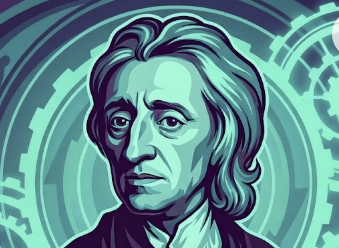
Popery so threatens and so nearly surrounds us...every sober man would think it seasonable at this time that all dissenting Protestants should be brought to a good understanding and compliance one with another...I think all Protestants ought now by all ways to be stirred up against them [Catholics] as People that have declared themselves ready by blood, violence, and destruction to ruine our Religion and Government...[they] are nothing but either Enemys in our bowells or spies among us, whilst their General commanders whom they blindly obey declare warr, and an unalterable designe to destroy us.
▼
Source
source
Critical Notes Upon Edward Stillingfleet's Mischief and Unreasonableness of Separation' (c. May 1681), quoted in John Marshall, John Locke: Resistance, Religion and Responsibility (Cambridge University Press, 1994), p. 110

3 months 3 weeks ago
To be taken without consent from my home and friends; to lose my liberty; to undergo all those assaults on my personality which modern psychotherapy knows how to deliver; to be re-made after some pattern of "normality" hatched in a Viennese laboratory to which I never professed allegiance; to know that this process will never end until either my captors have succeeded or I have grown wise enough to cheat them with apparent success-who cares whether this is called Punishment or not? "The Humanitarian Theory of Punishment"
▼
Source
source
1949
1 day ago
On the whole, the enjoyment of leisure is something which decidedly costs less than the enjoyment of luxury. All it requires is an artistic temperament which is bent on seeking a perfectly useless afternoon spent in a perfectly useless manner.
▼
Source
source
p. 153. Often quoted as: "If you can spend a perfectly useless afternoon in a perfectly useless manner, you have learned how to live."

3 months 3 weeks ago
Nothing contributes more to nourish elevation of sentiments in a people, than the large and free character of their habitations.
▼
Source
source
(p. 55)
1 month 2 weeks ago
Vanity dies hard; in some obstinate cases it outlives the man.
▼
Source
source
Prince Otto, reported in Bartlett's Familiar Quotations, 10th ed. (1919).
1 month 2 weeks ago
Americans must be the most sententious people in history. Far too busy to be religious, they have always felt that they sorely needed guidance.
▼
Source
source
The Jefferson Lectures (1977), p. 139
3 months 3 weeks ago
It is arrogance in us to call frankness, fairness and chivalry "masculine" when we see them in a woman; it is arrogance in them, to describe a man's sensitiveness or tact or tenderness as "feminine".
1 day ago
My faith in human dignity consists in the belief that man is the greatest scamp on earth. Human dignity must be associated with the idea of a scamp and not with that of an obedient, disciplined and regimented soldier.
▼
Source
source
Ch. I : The Awakening, p. 12
2 months 2 weeks ago
When we see a great man desiring power instead of his real goal we soon recognize that he is sick, or more precisely that his attitude to his work is sick. He overreaches himself, the work denies itself to him, the incarnation of the spirit no longer takes place, and to avoid the threat of senselessness he snatches after empty power. This sickness casts the genius on to the same level as those hysterical figures who, being by nature without power, slave for power, in order that they may enjoy the illusion that they are inwardly powerful, and who in this striving for power cannot let a pause intervene, since a pause would bring with it the possibility of self-reflection and self-reflection would bring collapse.
▼
Source
source
p. 180

1 week 1 day ago
Very often the things that cost nothing cost us the most heavily; I can show you many objects the quest and acquisition of which have wrested freedom from our hands.
2 months 2 weeks ago
No doubt the spirit or energy of the world is what is acting in us, as the sea is what rises in every little wave; but it passes through us, and cry out as we may, it will move on. Our privilege is to have perceived it as it moves.
▼
Source
source
p. 199
2 weeks 6 days ago
Looking back we can see how indirectly we know the environment in which nevertheless we live. We can see that the news of it comes to us now fast, now slowly; but that whatever we believe to be a true picture, we treat as if it were the environment itself.
▼
Source
source
Ch. I: "The World Outside and the Pictures in Our Heads", p. 4
4 months 1 week ago
The silent treasuring up of knowledge; learning without satiety; and instructing others without being wearied: which one of these things belongs to me? To keep silently in mind what one has seen and heard, to study hard and never feel contented, to teach others tirelessly; have I done (all of) these things?
3 months 3 weeks ago
Both in England and on the Continent a graduated property tax (l'impôt progressif) has been advocated, on the avowed ground that the state should use the instrument of taxation as a means of mitigating the inequalities of wealth. I am as desirous as any one that means should be taken to diminish those inequalities, but not so as to relieve the prodigal at the expense of the prudent.To tax the larger incomes at a higher percentage than the smaller is to lay a tax on industry and economy; to impose a penalty on people for having worked harder and saved more than their neighbours. It is not the fortunes which are earned, but those which are unearned, that it is for the public good to place under limitation.
▼
Source
source
Book V, Chapter II
2 months 2 weeks ago
As also the great number of Corporations; which are as it were many lesser Common-wealths in the bowels of a greater, like wormes in the entrayles of a natural man.
▼
Source
source
The Second Part, Chapter 29, p. 174

2 months 2 weeks ago
Go into the city to such a man, and say unto him, The Master saith, My time is at hand; I will keep the passover at thy house with my disciples.
▼
Source
source
26:18 (KJV)

2 months 2 weeks ago
Resignation' is a keynote in Comte's writings, deriving directly from assent to invariable social laws. 'True resignation, that is, a disposition to endure necessary evils steadfastly and without any hope of compensation therefore, can result only from a profound feeling for the invariable laws that govern the variety of natural phenomena.
▼
Source
source
P. 345
2 months 2 weeks ago
[I]t would be a piece of ingenuousness to accuse the man of to-day of his lack of moral code. The accusation would leave him cold, or rather, would flatter him. Immoralism has become a commonplace, and anybody and everybody boasts of practising it.
▼
Source
source
Chapter XV: We Arrive At The Real Question
1 week 1 day ago
No man expects such exact fidelity as a traitor.
▼
Source
source
De Ira (On Anger): Book 2, cap. 28, line 7.
2 months 2 weeks ago
Get hold of yourself, be confident once more, don't forget that it is not given to just anyone to have idolized discouragement without succumbing to it.

1 month 3 weeks ago
Just then another visitor entered the drawing room: Prince Andrew Bolkónski, the little princess' husband. He was a very handsome young man, of medium height, with firm, clearcut features. Everything about him, from his weary, bored expression to his quiet, measured step, offered a most striking contrast to his quiet, little wife. It was evident that he not only knew everyone in the drawing room, but had found them to be so tiresome that it wearied him to look at or listen to them. And among all these faces that he found so tedious, none seemed to bore him so much as that of his pretty wife. He turned away from her with a grimace that distorted his handsome face, kissed Anna Pávlovna's hand, and screwing up his eyes scanned the whole company.
▼
Source
source
Bk. I, Ch. IV
1 week 1 day ago
And what is freedom, you ask? It means not being a slave to any circumstance, to any constraint, to any chance; it means compelling Fortune to enter the lists on equal terms.

3 months 5 days ago
None can be free who is a slave to, and ruled by, his passions.
▼
Source
source
As quoted in Florilegium, XVIII, 23, as translated in Dictionary of Quotations (1906) by Thomas Benfield Harbottle, p. 368
CivilSimian.com created by AxiomaticPanic, CivilSimian, Kalokagathia