

1 month 4 weeks ago
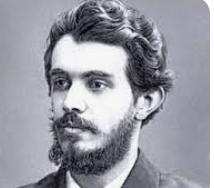
Fate and freedom alike play a part in history; and there are times, as in wars and revolutions, when fate is the stronger of the two. Freedom - the freedom of man and of nations - could never have been the origin of two world wars. These latter were brought about by fate, which exercises its power owing to the weakness and decline of freedom and of the creative spirit of man. Almost all contemporary political ideologies, with their characteristic tendency to state-idolatry, are likewise largely a product of two world wars, begotten as they are of the inexorability's of fate.
▼
Source
source
p. 32

3 days ago
The subject of a gestalt demonstration knows that his perception has shifted because he can make it shift back and forth repeatedly while he holds the same book or piece of paper in his hands. Aware that nothing in his environment has changed, he directs his attention increasingly not to the figure (duck or rabbit) but to the lines of the paper he is looking at. Ultimately he may even learn to see those lines without seeing either of the figures, and he may then say (what he could not legitimately have said earlier) that it is these lines that he really sees but that he sees them alternately as a duck and as a rabbit. ...As in all similar psychological experiments, the effectiveness of the demonstration depends upon its being analyzable in this way. Unless there were an external standard with respect to which a switch of vision could be demonstrated, no conclusion about alternate perceptual possibilities could be drawn. p. 114 (3rd edn.)

4 days ago
Mahomet was only fourteen; had no language but his own: much in Syria must have been a strange unintelligible whirlpool to him. But the eyes of the lad were open; glimpses of many things would doubtless be taken in, and lie very enigmatic as yet, which were to ripen in a strange way into views, into beliefs and insights one day. These journeys to Syria were probably the beginning of much to Mahomet. One other circumstance we must not forget: that he had no school-learning; of the thing we call school-learning none at all.

3 months 3 weeks ago
Origen, of course, is also a great advocate of the allegorical approach. Yet I think you will have to admit that our modem theologians either despise this method of interpretation or are completely ignorant of it. As a matter of fact they surpass the pagans of antiquity in the subtlety of their distinctions.
▼
Source
source
p. 63

3 months 2 weeks ago
It cannot be very difficult to determine who have been the contrivers of this whole mercantile system; not the consumers, we may believe, whose interest has been entirely neglected; but the producers, whose interests has been so carefully attended to; and among this later class our merchants and manufactures have been by far the principal architects. In the mercantile regulations, which have been taken notice of in this chapter, the interest of our manufacturers has been most peculiarly attended to;and the interest, not so much of the consumers, as that of some other sets of producers, has been sacrificed to it.
▼
Source
source
Chapter VIII, p. 721.

4 months 1 week ago
What will be left of the power of example if it is proved that capital punishment has another power, and a very real one, which degrades men to the point of shame, madness, and murder?

3 months 1 week ago
We suffer not only from the development of capitalist production, but also from the incompleteness of that development. Alongside the modern evils, we are oppressed by a whole series of inherited evils, arising from the passive survival of archaic and outmoded modes of production, with their accompanying train of anachronistic social and political relations. We suffer not only from the living, but from the dead.
▼
Source
source
Preface to the First Edition, Capital Volume 1, Peinguin Classics edition 1976.
4 days ago
Philosophy complains that Custom has hoodwinked us, from the first; that we do everything by Custom, even Believe by it; that our very Axioms, let us boast of Free-thinking as we may, are oftenest simply such Beliefs as we have never heard questioned. Nay, what is Philosophy throughout but a continual battle against Custom; an ever-renewed effort to transcend the sphere of blind Custom, and so become Transcendental?
▼
Source
source
Bk. III, ch. 8.

3 months 2 weeks ago
All mortals are equal; it is not their birth,But virtue itself that makes the difference.
▼
Source
source
Ériphyle Act II, scene I (1732); these lines were also later used in Voltaire's Mahomet, Act I, scene IV (1741)

2 weeks 5 days ago
Cheating ageing by a low-calorie diet, uploading one's mind into a super-computer, migrating into outer space ... Longing for everlasting life, humans show that they remain the death-defined animal.
▼
Source
source
Sweet Morality (p. 235)
3 months 4 weeks ago
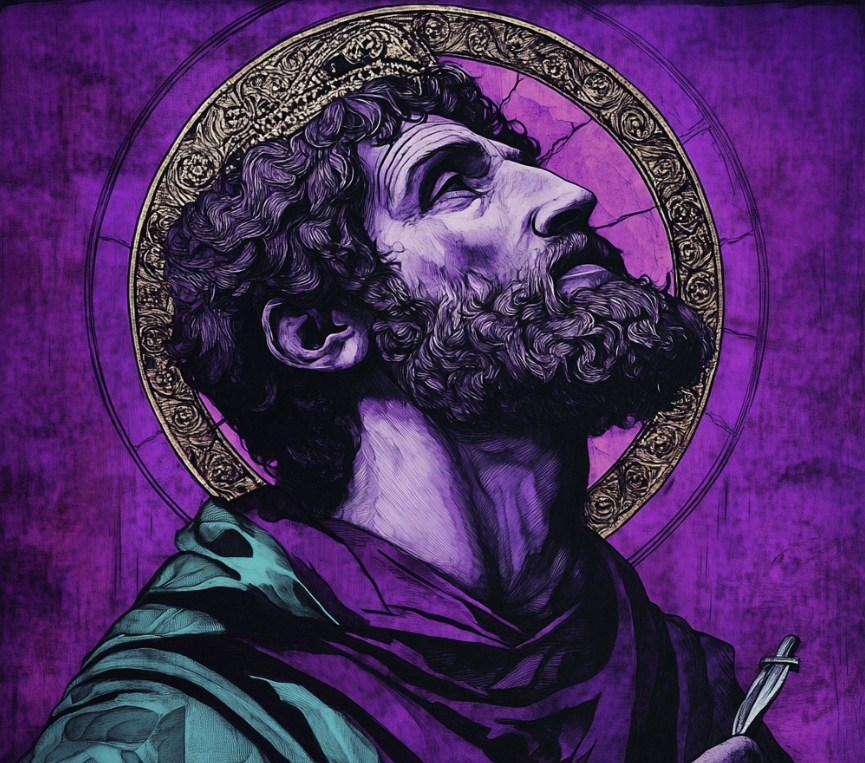
The true servants of God are not solicitous that He should order them to do what they desire to do, but that they may desire to do what He orders them to do.
▼
Source
source
p. 616
3 weeks 5 days ago
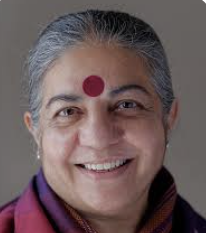
I've had letters from Chinese scientists at the peak of the SARS epidemic who said the problem is a hybridization between the viruses planted into GMO feed, which is then fed to animals, then the virus jumped from the animals to humans. We're going to see more and more of these kinds of risks. I think the whole issue of the H1N1 virus was the fact that it had genes for three influenza types--human, chicken, pig. All of these crossings are becoming possible because of the crossing of genes across species barriers.
▼
Source
source
On the SARS epidemic, as quoted in "A Visit to My Kitchen: Vandana Shiva", The Huffington Post
1 month 4 weeks ago
It appears that liberty is bound up with imperfection, with a right to imperfection. Socialism leads to the same type of authoritarian state as Theocracy. ... One must choose: either Socialism or liberty of spirit, the liberty of man's conscience. ... Socialism uses a "sacred" authority and establishes a "sacred" society in which there is no place for the "lay," for the free, for choice, for the unrestrained activity of human forces.
▼
Source
source
pp. 188-189

3 months 1 week ago
In philosophy the race is to the one who can run slowest-the one who crosses the finish line last.
▼
Source
source
p. 40e
1 month 1 week ago
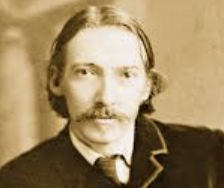
The devil, depend upon it, can sometimes do a very gentlemanly thing.
▼
Source
source
The Suicide Club, Story of the Young Man with the Cream Tarts.
1 month 1 day ago
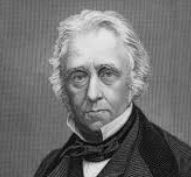
It will hardly be disputed, I suppose, that the department of literature in which the Eastern writers stand highest is poetry. And I certainly never met with any orientalist who ventured to maintain that the Arabic and Sanscrit poetry could be compared to that of the great European nations. But when we pass from works of imagination to works in which facts are recorded and general principles investigated, the superiority of the Europeans becomes absolutely immeasurable. It is, I believe, no exaggeration to say that all the historical information which has been collected from all the books written in the Sanscrit language is less valuable than what may be found in the most paltry abridgments used at preparatory schools in England. In every branch of physical or moral philosophy, the relative position of the two nations is nearly the same.

3 months 2 weeks ago
To understand a name you must be acquainted with the particular of which it is a name.

3 months 2 weeks ago
In early youth, as we contemplate our coming life, we are like children in a theatre before the curtain is raised, sitting there in high spirits and eagerly waiting for the play to begin. It is a blessing that we do not know what is really going to happen. Could we foresee it, there are times when children might seem like innocent prisoners, condemned, not to death, but to life, and as yet all unconscious of what their sentence means.
▼
Source
source
"On the Sufferings of the World"
3 months 3 weeks ago
Most Christians are superstitious rather than pious, and except for the name of Christ differ hardly at all from superstitious pagans.
▼
Source
source
The Erasmus Reader (1990), pp. 140-141.

3 months 1 week ago
Science does not know its debt to imagination.
▼
Source
source
Poetry and Imagination
3 months 2 weeks ago
The Austrians are a highly civilised race, half-surrounded by Slavs in a relatively backward state of culture. ... Servia, a country so barbaric that a man can secure the throne by instigating the assassination of his predecessor, is engaged constantly in fermenting the racial discontent of men of the same race who are Austrian subjects.
▼
Source
source
War: The Offspring of Fear (1914), quoted in Ray Monk, Bertrand Russell: The Spirit of Solitude, 1872-1921 (1996), p. 373

3 months 1 week ago
Truth never turns to rebuke falsehood; her own straightforwardness is the severest correction.
▼
Source
source
Pearls of Thought (1881) p. 264
3 months 2 weeks ago
Our stubbornness is right, because we want to preserve the liberty which we have in Christ. Only by preserving our liberty shall we be able to retain the truth of the Gospel inviolate.
▼
Source
source
Chapter 2

4 months 2 days ago
Perfect is the virtue which is according to the Mean! Rare have they long been among the people, who could practice it!
3 months 1 week ago
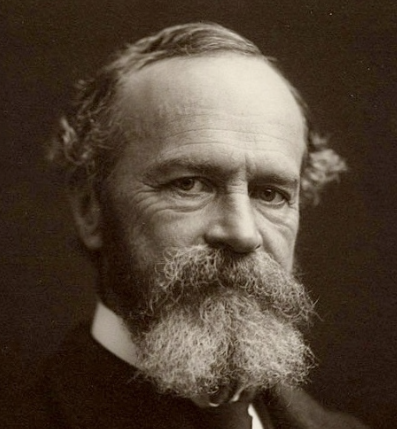
If this life be not a real fight, in which something is eternally gained for the universe by success, it is no better than a game of private theatricals from which one may withdraw at will. But it feels like a real fight.
▼
Source
source
"Is Life Worth Living?"
3 months 2 weeks ago
In our monogamous part of the world, to marry means to halve one's rights and double one's duties.
▼
Source
source
Vol. 2, Ch. 27, § 370 Variant translation: To marry is to halve your rights and double your duties.

1 month 3 weeks ago
An absolute power would be one that never becomes apparent, never pointed to itself, one that rather blended completely into what goes without saying. Power shines in its own absence.
4 months 1 week ago
But in the end one needs more courage to live than to kill himself.
3 months 1 week ago
Great men, great nations, have not been boasters and buffoons, but perceivers of the terror of life, and have manned themselves to face it.
▼
Source
source
Fate

1 month 1 week ago
And therefore just as a brigand caught in broad daylight in the act cannot persuade us that he did not lift his knife in order to rob his victim of his purse, and had no thought of killing him, we too, it would seem, cannot persuade ourselves or others that the soldiers and policemen around us are not to guard us, but only for defense against foreign foes, and to regulate traffic and fetes and reviews; we cannot persuade ourselves and others that we do not know that the men do not like dying of hunger, bereft of the right to gain their subsistence from the earth on which they live; that they do not like working underground, in the water, or in the stifling heat, for ten to fourteen hours a day, at night in factories to manufacture objects for our pleasure. One would imagine it impossible to deny what is so obvious. Yet it is denied.
▼
Source
source
Chapter XII, Conclusion-Repent Ye, for the Kingdom of Heaven is at Hand
4 months 1 week ago
He kept the middle way, that's all: he was the type of man for whom one has an affection of the mild but steady order - which is the kind that wears best.

3 months 1 week ago
The bourgeois public sphere may be conceived above all as the sphere of private people come together as a public; they soon claimed the public sphere regulated from above against the public authorities themselves, to engage them in a debate over the general rules governing relations in the basically privatized but publicly relevant sphere of commodity exchange and social labor.
▼
Source
source
p. 27

2 months 1 week ago
At the edge of life you feel that you are no longer master of the life within you, that subjectivity is an illusion, and that uncontrollable forces are seething inside you, evolving with no relation to a personal center or a definite, individual rhythm.
▼
Source
source
essay 2 - On not wanting to live
4 days ago
No man who has once heartily and wholly laughed can be altogether irreclaimably bad.
▼
Source
source
Bk. I, ch. 4.
3 months 1 week ago
Free in this world as the birds in the air, disengaged from every kind of chains, those who have practiced the Yoga gather in Brahmin the certain fruit of their works. Depend upon it; rude and careless as I am, I would fain practice the yoga faithfully. This Yogi, absorbed in contemplation, contributes in his degree to creation; he breathes a divine perfume, he heard wonderful things. Divine forms traverse him without tearing him and he goes, he acts as animating original matter. To some extent, and at rare intervals, even I am a Yogi.
▼
Source
source
Letter to H. G. O. Blake, November 20, 1849
3 months 2 weeks ago
Monopoly of one kind or another, indeed, seems to be the sole engine of the mercantile system.
▼
Source
source
Chapter VII, Part Third, p. 684.
3 months 1 week ago
The idea that in order to get clear about the meaning of a general term one had to find the common element in all its applications has shackled philosophical investigation; for it has not only led to no result, but also made the philosopher dismiss as irrelevant the concrete cases, which alone could have helped him understand the usage of the general term.
▼
Source
source
p. 19
1 month 3 weeks ago
People have committed suicide because of their failure to realize the passions for love, power, fame, revenge. Cases of suicide because of a lack of sexual satisfaction are virtually nonexistent.
▼
Source
source
p. 30
2 months 1 week ago
The refutation of suicide: is it not inelegant to abandon a world which has so willingly put itself at the service of our melancholy?
2 months 1 week ago
Woes and wonders of power, that tonic hell, synthesis of poison and panacea.
2 months 5 days ago
Without some affinity in human ideas art would certainly be impossible; but it can never be exactly determined how far the intentions of the poet are realized.
▼
Source
source
Gottlob Frege (1892). On Sense and Reference.

2 months 1 week ago
It is an advantage to all narrow wisdom and narrow morals that their maxims have a plausible air; and, on a cursory view, appear equal to first principles. They are light and portable. They are as current as copper coin; and about as valuable. They serve equally the first capacities and the lowest; and they are, at least, as useful to the worst men as to the best. Of this stamp is the cant of not man, but measures; a sort of charm by which many people get loose from every honourable engagement.

3 months 1 week ago
It is for the sake of order that I seduced Clytemnestra, for the sake of order that I killed my king. I wanted for order to rule and that it rule through me. I have lived without desire, without love, without hope: I made order. Oh! terrible and divine passion!
▼
Source
source
Aegistheus, Act 2
2 months 1 week ago
Even in childhood I watched the hours flow, independent of any reference, any action, any event, the disjunction of time from what was not itself, its autonomous existence, its special status, its empire, its tyranny. I remember quite clearly that afternoon when, for the first time, confronting the empty universe, I was no more than a passage of moments reluctant to go on playing their proper parts. Time was coming unstuck from being - at my expense.
2 months 1 week ago
Once we reject lyricism, to blacken a page becomes an ordeal: what's the use of writing in order to say exactly what we had to say?
3 months 1 week ago
Worte sind Taten. Words are deeds.
▼
Source
source
p. 50e

1 month 1 week ago
Any loss of identity prompts people to seek reassurance and rediscovery of themselves by testing, and even by violence. Today, the electric revolution, the wired planet, and the information environment involve everybody in everybody to the point of individual extinction.
▼
Source
source
Letter to Clare Westcott, November 26 1975. Letters of Marshall McLuhan, p. 514
1 week 2 days ago
Democracy is a meaningless word unless it signifies that differences of opinion have been expressed, represented, and even satisfied in the decision.
▼
Source
source
Ch. IV: "The Line of Least Resistance", pp. 47-48
3 months 1 week ago
The stars awaken a certain reverence, because though always present, they are inaccessible; but all natural objects make a kindred impression, when the mind is open to their influence. Nature never wears a mean appearance. Neither does the wisest man extort her secret, and lose his curiosity by finding out all her perfection. Nature never became a toy to a wise spirit. The flowers, the animals, the mountains, reflected the wisdom of his best hour, as much as they had delighted the simplicity of his childhood.
▼
Source
source
Nature

2 months 5 days ago
The range of socially permissible and desirable satisfaction is greatly enlarged, but through this satisfaction, the Pleasure Principle is reduced-deprived of the claims which are irreconcilable with the established society. Pleasure, thus adjusted, generates submission.
▼
Source
source
p. 75
CivilSimian.com created by AxiomaticPanic, CivilSimian, Kalokagathia