But...objective reality determines the grade he gets...


But among all the discoveries and corrections probably none has resulted in a deeper influence on the human spirit than the doctrine of Copernicus.... Possibly mankind has never been demanded to do more, for considering all that went up in smoke as a result of realizing this change: a second Paradise, a world of innocence, poetry and piety: the witness of the senses, the conviction of a poetical and religious faith. No wonder his contemporaries did not wish to let all this go and offered every possible resistance to a doctrine which in its converts authorized and demanded a freedom of view and greatness of thought so far unknown indeed not even dreamed of.

Analytical philosophy was very interesting. It always struck me as being very interesting and full of tremendous intellectual curiosities. It is wonderful to see the mind at work in such an intense manner, but, for me, it was still too far removed from my own issues.
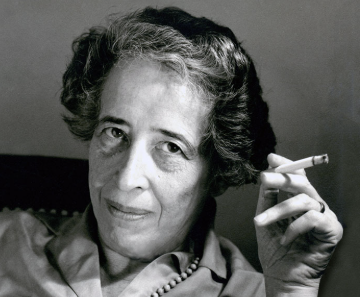
The case of the conscience of Eichmann, which is admittedly complicated but is by no means unique, is scarcely comparable to the case of the German generals, one of whom, when asked at Nuremberg, "How was it possible that all of you honorable generals could continue to serve a murderer with such unquestioning loyalty?," replied that it was "not the task of a soldier to act as judge over his supreme commander. Let history do that or God in Heaven."

The "interface" of the Renaissance was the meeting of medieval pluralism and modern homogeneity and mechanism - a formula for blitz and metamorphosis.

I have no hesitation in saying that although the American woman never leaves her domestic sphere and is in some respects very dependent within it, nowhere does she enjoy a higher station. And if anyone asks me what I think the chief cause of the extraordinary prosperity and growing power of this nation, I should answer that it is due to the superiority of their women.

As to riots and tumults, let those answer for them, who, by willful misrepresentations, endeavor to excite and promote them; or who seek to stun the sense of the nation, and to lose the great cause of public good in the outrages of a misinformed mob. We take our ground on principles that require no such riotous aid. We have nothing to apprehend from the poor; for we are pleading their cause. And we fear not proud oppression, for we have truth on our side.
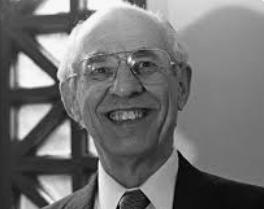
The real significance of the Russell paradox, from the standpoint of the modal-logic picture, is this: it shows that no concrete structure can be a standard model for the naive conception of the totality of all sets; for any concrete structure has a possible extension that contains more 'sets'. (If we identify sets with the points that represent them in the various possible concrete structures, we might say: it is not possible for all possible sets to exist in any one world!) Yet set theory does not become impossible. Rather, set theory becomes the study of what must hold in, e.g. any standard model for Zermelo set theory.

Beauty is the main positive form of the aesthetic assimilation of reality, in which aesthetic ideal finds it direct expression...
Death is a friend of ours; and he that is not ready to entertain him is not at home.
A lot of people recoil from the word "drugs" - which is understandable given today's noxious street drugs and their uninspiring medical counterparts. Yet even academics and intellectuals in our society typically take the prototypical dumb drug, ethyl alcohol. If it's socially acceptable to take a drug that makes you temporarily happy and stupid, then why not rationally design drugs to make people perpetually happier and smarter? Presumably, in order to limit abuse-potential, one would want any ideal pleasure drug to be akin - in one limited but important sense - to nicotine, where the smoker's brain finely calibrates its optimal level: there is no uncontrolled dose-escalation.

Awareness of time: assault on time . . .
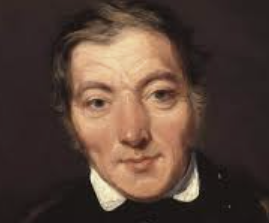
Eight hours daily labour is enough for any human being, and under proper arrangements sufficient to afford an ample supply of food, raiment and shelter, or the necessaries and comforts of life, and for the remainder of his time, every person is entitled to education, recreation and sleep.
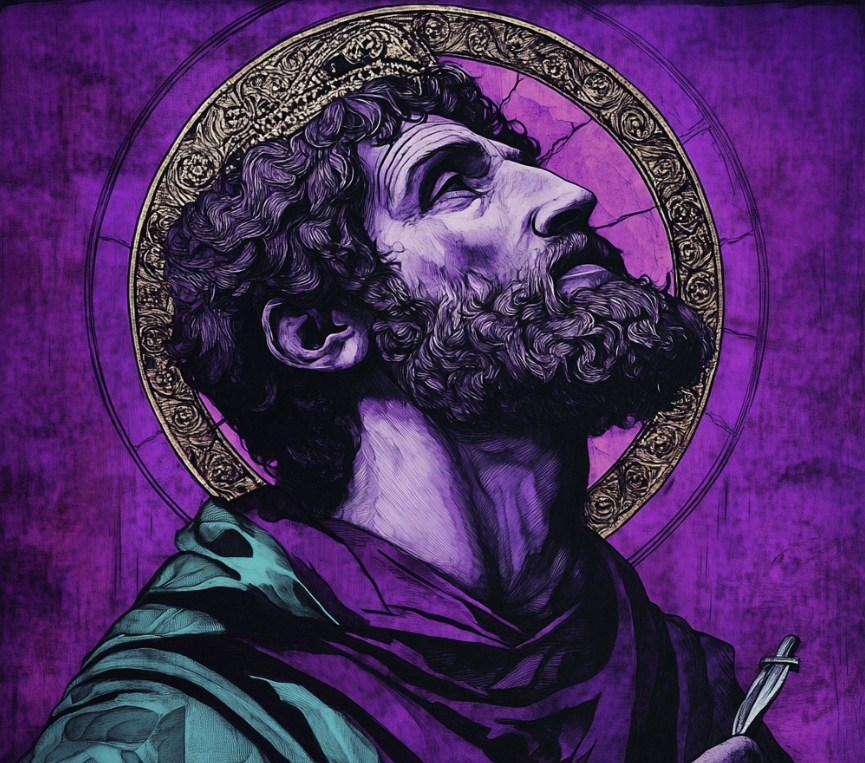
When the Head and members are despised, then the whole Christ is despised, for the whole Christ, Head and body, is that just man against whom deceitful lips speak iniquity (Ps. 30:19).
For some identify happiness with virtue, some with practical wisdom, others with a kind of philosophic wisdom, others with these, or one of these, accompanied by pleasure or not without pleasure; while others include also external prosperity. Now ... it is not probable that these should be entirely mistaken, but rather that they should be right in at least some one respect or even in most respects.

Obey the voice at eve obeyed at prime.
Money is everywhere but so is poetry. What we lack are the poets.
The way in which the vast mass of the poor are treated by modern society is truly scandalous. They are herded into great cities where they breathe a fouler air than in the countryside which they have left.
In future, nerve cell responsiveness to naturally occurring endogenous opioids can be increased via receptor enrichment in the brain too. In principle, we can modulate their lifelong "overexpression", intermittently heightened (or gently diminished) by whatever kinds of personal and environmental contingencies we judge fit. Both functionally and anatomically, our reward pathways can be made "bigger and better". But intelligent emotional self-mastery will involve re-engineering the mind-brain so we derive the most intense rewards from activities we deem most lastingly worthwhile: i.e. prioritising our higher-order desires over legacy first-order appetites. Natural selection has "encephalised" our emotions to benefit our genes. Rational agents can "re-encephalise" our emotions to benefit us.
Is it not the interest of the human race, that every one should be so taught and placed, that he would find his highest enjoyment to arise from the continued practice of doing all in his power to promote the well-being, and happiness, of every man, woman, and child, without regard to their class, sect, party, country or colour?

It is proof of a base and low mind for one to wish to think with the masses or majority, merely because the majority is the majority. Truth does not change because it is, or is not, believed by a majority of the people.

Ambition is the death of thought.
There are two things which a democratic people will always find very difficult-to begin a war and to end it.
Of all calumnies the worst is the one which attacks our indolence, which contests its authenticity.


A great man shows his greatness by the way he treats little men.
The Present Age, according to my view of it, stands in that Epoch which in my former lecture I named the THIRD, and which I characterized as the Epoch of Liberation-directly from the external ruling Authority, indirectly from the power of Reason as Instinct, and generally from Reason in any form; the Age of absolute indifference towards all truth, and of entire and unrestrained licentiousness:-the state of completed sinfulness.

But he, with these burthens on him, planned, commenced, and completed, the History of India; and this in the course of about ten years, a shorter time than has been occupied (even by writers who had no other employment) in the production of almost any other historical work of equal bulk, and of anything approaching to the same amount of reading and research. And to this is to be added, that during the whole period, a considerable part of almost every day was employed in the instruction of his children: in the case of one of whom, myself, he exerted an amount of labour, care, and perseverance rarely, if ever, employed for a similar purpose, in endeavouring to give, according to his own conception, the highest order of intellectual education.

Ever since the first World War, when the system of liberalism began to shape into the system of authoritarianism, a widespread opinion has blames Hegelianism for the ideological of the new system.
Does man think because he has found that thinking pays? Does he bring his children up because he has found it pays?
The ideal subject of totalitarian rule is not the convinced Nazi or the convinced Communist, but people for whom the distinction between fact and fiction (i.e., the reality of experience) and the distinction between true and false (i.e., the standards of thought) no longer exist.
The more we devote ourselves to observing animals and their behaviour, the more we love them, on seeing how gready they care for their young; in such a context, we cannot even contemplate cruelty to a wolf. Leibnitz put the grub he had been observing back on the tree with its leaf, lest he should be guilty of doing any harm to it. It upsets a man to destroy such a creature for no reason, and this tenderness is subsequently transferred to man.
To one that promised to give him hardy cocks that would die fighting, "Prithee," said Cleomenes, "give me cocks that will kill fighting."
The working classes may be injuriously degraded and oppressed in three ways: 1st - When they are neglected in infancy 2nd - When they are overworked by their employer, and are thus rendered incompetent from ignorance to make a good use of high wages when they can procure them. 3rd - When they are paid low wages for their labour.

Custom renders love attractive; for that which is struck by oft-repeated blows however lightly, yet after long course of time is overpowered and gives way. See you not too that drops of water falling on rocks after long course of time scoop a hole through these rocks?
What will be the influence of communist society on the family? It will transform the relations between the sexes into a purely private matter which concerns only the persons involved and into which society has no occasion to intervene. It can do this since it does away with private property and educates children on a communal basis, and in this way removes the two bases of traditional marriage - the dependence rooted in private property, of the women on the man, and of the children on the parents.

Love is not consolation, it is light.
Loren von Stein thus turned the dialectic into an ensemble of objective laws calling for social reform as the adequate solution of all contradictions and neutralized the critical elements of the dialectic.
The state monopolizes violence by calling its critics "violent". [...] Hence, we should be wary about those who claim that violence is necessary to curb or check violence; those who praise the forces of law, including the police and the prisons, as the final arbiters. To oppose violence is to understand that violence does not always take the form of the blow.

This disposition to admire, and almost to worship, the rich and powerful, and to despise or, at least, neglect persons of poor and mean conditions, though necessary both to establish and to maintain the distinction of ranks and the order of society, is, at the same time, the great and most universal cause of the corruption of our moral sentiments.

Tis from the resemblance of the external actions of animals to those we ourselves perform, that we judge their internal likewise to resemble ours; and the same principle of reasoning, carry'd one step farther, will make us conclude that since our internal actions resemble each other, the causes, from which they are deriv'd, must also be resembling.
Heroism feels and never reasons and therefore is always right.

Take the question whether other people exist. ...It is plain that it makes for happiness to believe that they exist - for even the greatest misanthropist would not wish to be deprived of the objects of his hate. Hence the belief that other people exist is, pragmatically, a true belief. But if I am troubled by solipsism, the discovery that a belief in the existence of others is 'true' in the pragmatist's sense is not enough to allay my sense of loneliness: the perception that I should profit by rejecting solipsism is not alone sufficient to make me reject it. For what I desire is not that the belief in solipsism should be false in the pragmatic sense, but that other people should in fact exist. And with the pragmatist's meaning of truth, these two do not necessarily go together. The belief in solipsism might be false even if I were the only person or thing in the universe.

Setting the mind to remember... involves a continual minimal irradiation of excitement into paths which lead thereto... the continued presence of the thing in the 'fringe' of our consciousness. Letting the thing go involves withdrawal of the irradiation, unconsciousness of the thing, and... obliteration of the paths.
Thanks to depression - that alpinism of the indolent - we scale every summit and daydream over every precipice from our bed.
For the first time in the revolutionary movement of 1848, for the first time since 1793, a nation surrounded by superior counter-revolutionary forces dares to counter the cowardly counter-revolutionary fury by revolutionary passion, the terreur blanche by the terreur rouge. For the first time after a long period we meet with a truly revolutionary figure, a man who in the name of his people dares to accept the challenge of a desperate struggle, who for his nation is Danton and Carnot in one person - Lajos Kossuth.
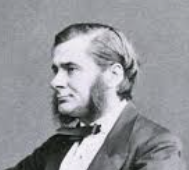
Within the last fifty years, the extraordinary growth of every department of physical science has spread among us mental food of so nutritious and stimulating a character that a new ecdysis seems imminent.
Sound knowledge respecting the habits and mode of life of the man-like Apes has been even more difficult of attainment than correct information regarding their structure.

It is better to suffer, than to do, wrong.
CivilSimian.com created by AxiomaticPanic, CivilSimian, Kalokagathia