




2 months 2 weeks ago
"You really should come to the house - one of these days we might die without having seen each other again." - "Since we have to die in any case, what's the use of seeing each other again?"

3 months 3 weeks ago
It is the nature and intention of a constitution to prevent governing by party, by establishing a common principle that shall limit and control the power and impulse of party, and that says to all parties, thus far shalt thou go and no further. But in the absence of a constitution, men look entirely to party; and instead of principle governing party, party governs principle.

2 months 1 week ago
But if Germany, thanks to Hitler and his successors, were to enslave the European nations and destroy most of the treasures of their past, future historians would certainly pronounce that she had civilized Europe.
▼
Source
source
p. 124

3 months 3 weeks ago
And striving to be man, the worm Mounts through all the spires of form.
▼
Source
source
May-Day

1 month 2 weeks ago
While Poe and the Symbolists were exploring the irrational in literature, Freud had begun to explore the resonant figure/ground double-plot of the conscious and unconscious.
▼
Source
source
p. 52

4 months 2 weeks ago
Accepting the absurdity of everything around us is one step, a necessary experience: it should not become a dead end. It arouses a revolt that can become fruitful.
3 weeks 5 days ago
Our main conclusions about the state are that a minimal state, limited, to the narrow functions of protection against force, theft, fraud, enforcement of contracts, and so on, is justified, but any more extensive state will violate persons' rights not to be forced to do certain things, and is unjustified; and that the minimal state is inspiring as well as right.
▼
Source
source
Preface, p. ix

3 months 3 weeks ago
The tool, as we have seen, is not exterminated by the machine.
▼
Source
source
Vol. I, Ch. 15, Section 2, pg. 422.

4 months 1 week ago
In all things success depends on previous preparation, and without such previous preparation there is sure to be failure. If what is to be spoken be previously determined, there will be no stumbling. If affairs be previously determined, there will be no difficulty with them. If one's actions have been previously determined, there will be no sorrow in connection with them. If principles of conduct have been previously determined, the practice of them will be inexhaustible.

3 months 3 weeks ago
Of all tyrannies a tyranny sincerely exercised for the good of its victims may be the most oppressive. It may be better to live under robber barons than under omnipotent moral busybodies. The robber baron's cruelty may sometimes sleep, his cupidity may at some point be satiated; but those who torment us for our own good will torment us without end for they do so with the approval of their own conscience. They may be more likely to go to Heaven yet at the same time likelier to make a Hell of earth. This very kindness stings with intolerable insult. To be "cured" against one's will and cured of states which we may not regard as disease is to be put on a level of those who have not yet reached the age of reason or those who never will; to be classed with infants, imbeciles, and domestic animals.
▼
Source
source
"The Humanitarian Theory of Punishment" (1949), p. 292 Similar statements were included in "A Reply to Professor Haldane" (1946) (see above), published posthumously.

1 week ago
Take your fill when the cask is first opened and when it is nearly spent, but midways be sparing: it is poor saving when you come to the lees.
▼
Source
source
Line 5 This quote is often directly attributed to Seneca, but he is referring to lines 368-369 of Works and Days by the Greek poet Hesiod, (translated by Hugh G. Evelyn-White)
3 months 3 weeks ago
The very cannibalism of the counterrevolution will convince the nations that there is only one way in which the murderous death agonies of the old society and the bloody birth throes of the new society can be shortened, simplified and concentrated, and that way is revolutionary terror.
▼
Source
source
"The Victory of the Counter-Revolution in Vienna," Neue Rheinische Zeitung, 7 November 1848.

1 month 3 weeks ago
"He who exalts himself shall be humbled; and he who humbles himself shall be exalted." (Matthew 23:12) The person who exalts himself ... will be humbled, because a person who considers himself to be good, intelligent, and kind will not even try to become better, smarter, kinder. The humble person will be exalted, because he considers himself bad and will try to become better, kinder, and more reasonable.
▼
Source
source
p. 110
2 months 1 week ago
Existential envy which is directed against the other person's very nature, is the strongest source of ressentiment. It is as if it whispers continually: "I can forgive everything, but not that you are- that you are what you are-that I am not what you are-indeed that I am not you." This form of envy strips the opponent of his very existence, for this existence as such is felt to be a "pressure," a "reproach," and an unbearable humiliation. In the lives of great men there are always critical periods of instability, in which they alternately envy and try to love those whose merits they cannot but esteem. Only gradually, one of these attitudes will predominate. Here lies the meaning of Goethe's reflection that "against another's great merits, there is no remedy but love."
▼
Source
source
L. Coser, trans. (1973), pp. 52-53

3 months 3 weeks ago
The rich man... is always sold to the institution which makes him rich.
3 months 3 weeks ago
Then he tried to recall the lessons of Mr. Wisdom. "it is I myself, eternal Spirit, who drives this Me, the slave, along that ledge. I ought not to care whether he falls and breaks his neck or not. It is not he that is real, it is I - I - I.
▼
Source
source
Pilgrim's Regress 137

3 months 3 weeks ago
Though the principles of the banking trade may appear somewhat abstruse, the practice is capable of being reduced to strict rules. To depart upon any occasion from these rules, in consequence of some flattering speculation of extraordinary gain, is almost always extremely dangerous, and frequently fatal to the banking company which attempts it.
▼
Source
source
Chapter I, Part III, p. 820.
2 months 2 weeks ago
If death is as horrible as is claimed, how is it that after the passage of a certain period of time we consider happy any being, friend or enemy, who has ceased to live?
2 months 1 week ago
When, as a result of what was called Enlightenment in the eighteenth century, the priests had in fact almost entirely lost this function of guidance. Their place was taken by writers and scientists. In both cases it is equally absurd. Mathematics, physics, and biology are as remote from spiritual guidance as the art of arranging words. When that function is usurped by literature and science it proves there is no longer any spiritual life.
▼
Source
source
"Morality and literature," pp. 164-165

4 months 2 weeks ago
Earth is a ball that is over 12,000 kilometres in diameter, and if it were modelled into an object the size of a billiard ball, with all its surface unevenness reproduced exactly to scale, the model would be smoother than an ordinary billiard ball and the ocean would be an all but unnoticeable mist of dampness over 70 percent of its surface.
1 month 3 weeks ago
Condemn me if you choose - I do that myself, - but condemn me, and not the path which I am following, and which I point out to those who ask me where, in my opinion, the path is.
▼
Source
source
"Letter to N.N.," quoted by Havelock Ellis in "The New Spirit" (1892) p. 226
3 months 1 week ago
The ethical commonplaces of any period include ideas that may have been radical discoveries in a previous age. This is true of modern conceptions of liberty, equality, and democracy, and we are in the midst of ethical debates which will probably result two hundred years hence in a disseminated moral sensibility that people of our time would find very unfamiliar.
▼
Source
source
"Ethics without Biology" (1978), p. 143.
1 week 5 days ago
Happiness is the free play of the instincts, and so is youth.
▼
Source
source
Ch. 2 : On Youth

4 weeks 1 day ago
Blair has been the modern man he claims to be: for him, a sense of subjective certainty is all that is needed for an action to be right. If deception is needed to realise the providential design, it cannot be truly deceitful.
▼
Source
source
Neoconned!: How Blair took New Labour for a ride, The Independent
3 months 3 weeks ago
Men are what their mothers made them.
▼
Source
source
Fate
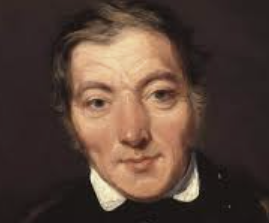
1 month 2 weeks ago
The advanced members of the medical profession know that the health of society is not to be obtained or maintained by medicines; - that it is far better, far more easy and far wiser, to adopt substantive measures to prevent disease of body or mind, than to allow substantive measure to remain continually to generate causes to produce physical and mental disorders.
▼
Source
source
3rd Part

3 months 3 weeks ago
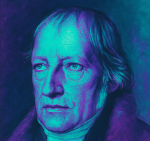
Here am I who have written on all sorts of subjects calculated to excite hostility, moral, political, and religious, and yet I have no enemies - except, indeed, all the Whigs, all the Tories, and all the Christians.
▼
Source
source
Statement to a friend shortly before his death, as recounted in Men of Letters by Lord Henry Brougham
3 months 3 weeks ago
To be aware of limitations is already to be beyond them.
▼
Source
source
As quoted in Inwardness and Existence (1989) by Walter A. Davis, p. 18
2 months 1 week ago
The number 2 thought of by one man cannot be added to the number 2 thought of by another man so as to make up the number 4.
▼
Source
source
Oppression and Liberty (1958), p. 82
1 week ago
Other vices can be concealed and cherished in secret; anger shows itself openly and appears in the countenance, and the greater it is, the more plainly it boils forth. Do you not see how in all animals certain signs appear before they proceed to mischief, and how their entire bodies put off their usual quiet appearance and stir up their ferocity? Boars foam at the mouth and sharpen their teeth by rubbing them against trees, bulls toss their horns in the air and scatter the sand with blows of their feet

2 months 1 week ago
Conformity is an imitation of grace.
▼
Source
source
p. 146

2 months 3 weeks ago
The education of the child must accord both in mode and arrangement with the education of mankind, considered historically. In other words, the genesis of knowledge in the individual, must follow the same course as the genesis of knowledge in the race. In strictness, this principle may be considered as already expressed by implication; since both being processes of evolution, must conform to those same general laws of evolution... and must therefore agree with each other. Nevertheless this particular parallelism is of value for the specific guidance it affords. To M. Comte we believe society owes the enunciation of it; and we may accept this item of his philosophy without at all committing ourselves to the rest.
4 months 2 weeks ago
Ironic philosophies produce passionate works. Any thought that abandons unity glorifies diversity! And diversity is the home of art. The only thought to liberate the mind is that which leaves it alone, certain of its limits and of its impending end. No doctrine tempts it. It awaits the ripening of the work and of life.

2 months 1 week ago
If a philosopher is not a man, he is anything but a philosopher; he is above all a pedant, and a pedant is a caricature of a man. The cultivation of any branch of science - of chemistry, of physics, of geometry, of philology - may be a work of differentiated specialization, and even so, only within very narrow limits and restrictions; but philosophy, like poetry, is a work of integration and synthesis, or else it is merely pseudo-philosophical erudition.
1 week ago
If you wish to be loved, love.
▼
Source
source
Seneca quotes this in Epistulae Morales ad Lucilium; Epistle IX and attributes it to Hecato
1 week ago
If any one is angry with you, meet his anger by returning benefits for it: a quarrel which is only taken up on one side falls to the ground: it takes two men to fight.
▼
Source
source
De Ira (On Anger): Book 2, cap. 34, line 5.
3 months 3 weeks ago
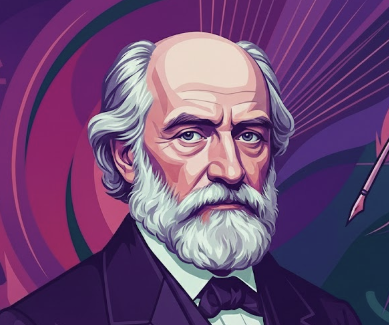
If two men who were friends in their youth meet again when they are old, after being separated for a life-time, the chief feeling they will have at the sight of each other will be one of complete disappointment at life as a whole; because their thoughts will be carried back to that earlier time when life seemed so fair as it lay spread out before them in the rosy light of dawn, promised so much - and then performed so little.
▼
Source
source
"On the Sufferings of the World"
2 weeks 1 day ago
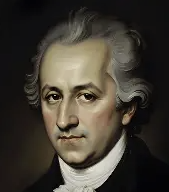
The spirits that I summoned up, I now can't rid myself of.
▼
Source
source
Der Zauberlehrling (The Sorcerer's Apprentice)
2 months 2 weeks ago
One does not inhabit a country; one inhabits a language. That is our country, our fatherland - and no other. Variant translation: We inhabit a language rather than a country.
2 months 3 weeks ago
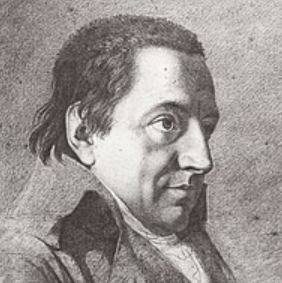
Of what I am, I know no more than that I am, but here no tie is necessary between subject and object. My own being is this tie, I am at once the subject knowing, and the object known of; and this reflection or return of the knowledge on itself is what I designate by the term I, if I have any determinate meaning.
▼
Source
source
Jane Sinnett, trans 1846 p. 50
1 week 1 day ago
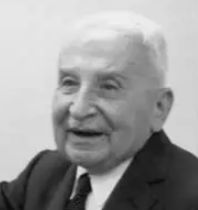
All rational action is economic. All economic activity is rational action. All rational action is in the first place individual action. Only the individual thinks. Only the individual reasons. Only the individual acts.
▼
Source
source
Part II : The Economics of a Socialist Community, § I : The Economics of an Isolated Socialist Community, Ch. 5 : The Nature of Economic Activity, p. 97
2 months 1 day ago
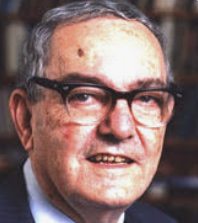
The first consequence of the principle of bounded rationality is that the intended rationality of an actor requires him to construct a simplified model of the real situation in order to deal with it. He behaves rationally with respect to this model, and such behavior is not even approximately optimal with respect to the real world. To predict his behavior we must understand the way in which this simplified model is constructed, and its construction will certainly be related to his psychological properties as a perceiving, thinking, and learning animal.
▼
Source
source
p. 198; Cited in P. Slovic (1972, p. 2).

3 weeks 1 day ago
What makes The Present Age and The Difference Between a Genius and an Apostle important is not so much that the former essay anticipates Heidegger and the latter, Barth: it would be more accurate to say that Heidegger's originality is widely overestimated, and that many things he says at great length in his highly obscure German were said earlier by various writers who had made the same points much more elegantly, and that some of these writers, including Kierkegaard, were known to Heidegger. Why should Kierkegaard's significance depend on someone else's, quite especially when many points that others copied from him may be wrong?
▼
Source
source
Walter Kaufmann, Preface to The Present Age, by Soren Kierkegaard, Dru translation 1962 p. 15-16
1 month 3 weeks ago
A real mother, who knows the will of God by experience, will prepare her children also to fulfil it. Such a mother will suffer if she sees her child overfed, effeminate, and dressed-up, for she knows that these things will make it difficult for it to fulfil the will of God which she recognizes.
2 months 1 week ago
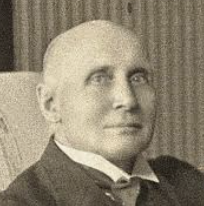
There is a greatness in the lives of those who build up religious systems, a greatness in action, in idea and in self-subordination, embodied in instance after instance through centuries of growth. There is a greatness in the rebels who destroy such systems: they are the Titans who storm heaven, armed with passionate sincerity. It may be that the revolt is the mere assertion by youth of its right to its proper brilliance, to that final good of immediate joy. Philosophy may not neglect the multifariousness of the world - the fairies dance, and Christ is nailed to the cross.
▼
Source
source
Pt. V, ch. 1, sec. 1.

3 months 3 weeks ago
The problem of establishing a perfect civic constitution is dependent upon the problem of a lawful external relation among states and cannot be solved without a solution of the latter problem.
▼
Source
source
Seventh Thesis
3 months 3 weeks ago
Only a male intellect clouded by the sexual drive could call the stunted, narrow-shouldered, broad-hipped and short-legged sex the fair sex.
▼
Source
source
Vol. 2, Ch. 27, § 369
CivilSimian.com created by AxiomaticPanic, CivilSimian, Kalokagathia