

4 months 1 week ago
A robot, the man had said, is logical but not reasonable.
3 months 2 weeks ago
I am an investigator by inclination. I feel a great thirst for knowledge and an impatient eagerness to advance, also satisfaction at each progressive step. There was a time when I thought that all this could constitute the honor of humanity, and I despised the mob, which knows nothing about it. Rousseau set me straight. This dazzling excellence vanishes; I learn to honor men, and would consider myself much less useful than common laborers if I did not believe that this consideration could give all the others a value, to establish the rights of humanity.
▼
Source
source
Part III : Selection on Education from Kant's other Writings, Ch. I Pedagogical Fragments, # 55

3 months 2 weeks ago
Every faculty in one man is the measure by which he judges of the like faculty in another. I judge of your sight by my sight, of your ear by my ear, of your reason by my reason, of your resentment by my resentment, of your love by my love. I neither have, nor can have, any other way of judging about them.
▼
Source
source
Section I, Chap. III.
3 months 2 weeks ago
God the Almighty has made our rulers mad; they actually think they can do-and order their subjects to do-whatever they please. And the subjects make the mistake of believing that they, in turn, are bound to obey their rulers in everything.
▼
Source
source
p. 83
1 month 5 days ago
A civilization is a social entity that manifests religious, political , legal, and customary uniformity over an extended period, and which confers on its members the benefits of socially accumulated knowledge.
▼
Source
source
"What is Culture?" (p. 2)

2 months 1 week ago
A modest man is steady, an humble man timid, and a vain one presumptuous.
▼
Source
source
Ch. 7
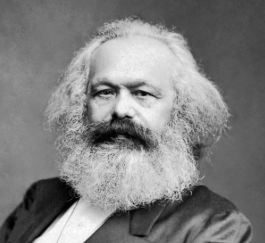
3 months 1 week ago
The foundation of irreligious criticism is: Man makes religion, religion does not make man.
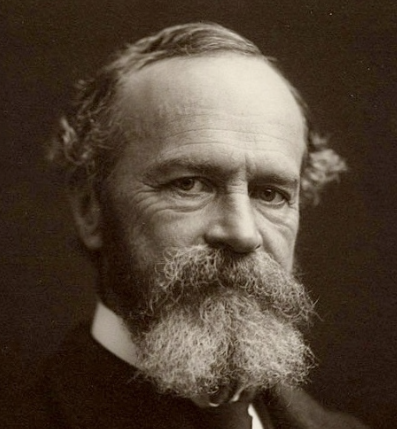
3 months 1 week ago
Our minds thus grow in spots; and like grease-spots, the spots spread. But we let them spread as little as possible: we keep unaltered as much of our old knowledge, as many of our old prejudices and beliefs, as we can. We patch and tinker more than we renew. The novelty soaks in; it stains the ancient mass; but it is also tinged by what absorbs it.
▼
Source
source
Lecture V, Pragmatism and Common Sense

2 months 1 week ago
Only one thing matters: learning to be the loser.
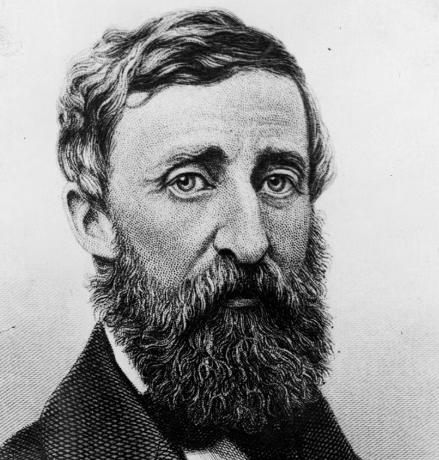
3 months 1 week ago
Men and boys are learning all kinds of trades but how to make men of themselves. They learn to make houses; but they are not so well housed, they are not so contented in their houses, as the woodchucks in their holes. What is the use of a house if you haven't got a tolerable planet to put it on? - If you cannot tolerate the planet that it is on? Grade the ground first. If a man believes and expects great things of himself, it makes no odds where you put him, or what you show him ... he will be surrounded by grandeur. He is in the condition of a healthy and hungry man, who says to himself, - How sweet this crust is!
▼
Source
source
Letter to Harrison Blake (20 May 1860); published in Familiar Letters, 1865
2 months 1 week ago
Some propose mere welfare measures - while others come forward with grandiose systems of reform which, under the pretense of re-organizing society, are in fact intended to preserve the foundations, and hence the life, of existing society. Communists must unremittingly struggle against these bourgeois socialists because they work for the enemies of communists and protect the society which communists aim to overthrow.
1 month 1 week ago
Although the medium is the message, the controls go beyond programming. The restraints are always directed to the "content," which is always another medium. The content of the press is literary statement, as the content of the book is speech, and the content of the movie is the novel. So the effects of radio are quite independent of its programming.
▼
Source
source
(p. 267)
2 months 5 days ago
And when all the world is overcharged with Inhabitants, then the last remedy of all is Warre, which provideth for every man, by Victory or Death.
▼
Source
source
The Second Part, Chapter 30, p. 181
1 month 3 weeks ago
Broadly stated, the task is to replace the global rationality of economic man with a kind of rational behavior that is compatible with the access to information and the computational capacities that are actually possessed by organisms, including man, in the kinds of environments in which such organisms exist.
▼
Source
source
Simon (1955) "A behavioral model of rational choice", The Quarterly Journal of Economics, Vol. 69 (1); As cited in: Gustavo Barros (2010, p. 462).

3 months 1 week ago
Whoso walketh in solitude, And inhabiteth the wood, Choosing light, wave, rock, and bird, Before the money-loving herd, Into that forester shall pass From these companions power and grace.
▼
Source
source
Wood-notes, no. II, st. 4

4 months ago
Now what has been said about the Jews is also to be understood about Cahorsins, and anyone else depending upon the depravity of usury.
▼
Source
source
art. 4
4 weeks ago
It cannot be doubted, I think, that Mr. Darwin has satisfactorily proved that what he terms selection, or selective modification, must occur, and does occur, in nature; and he has also proved to superfluity that such selection is competent to produce forms as distinct, structurally, as some genera even are. If the animated world presented us with none but structural differences, I should have no hesitation in saying that Mr. Darwin has demonstrated the existence of a true physical cause, amply competent to account for the origin of living species, and of man among the rest.
▼
Source
source
Ch.2, p. 126
3 months 3 weeks ago
Any one thing in the creation is sufficient to demonstrate a Providence to an humble and grateful mind.
▼
Source
source
Book I, ch. 16,7.
3 months 1 week ago
For what avail the plough or sail, Or land or life, if freedom fail?
▼
Source
source
Boston
1 month 3 weeks ago
Organizations are systems of coordinated action among individuals and groups whose preferences, information, interests, or knowledge differ. Organization theories describe the delicate conversion of conflict into cooperation, the mobilization of resources, and the coordination of effort that facilitate the joint survival of an organization and its members.
▼
Source
source
Simon (1993. p. 2); Cited in Mario Catalani, Giuseppe F. Clerico (1996) Decision making structures. p. 1.
1 month 3 weeks ago
The American who first discovered Columbus made a bad discovery.
▼
Source
source
G 42
3 months ago
Dionysius the Elder, being asked whether he was at leisure, he replied, "God forbid that it should ever befall me!"
▼
Source
source
32 Dionysius
2 months 1 week ago
Only through blind Instinct, in which the only possible guidance of the Imperative is awanting, does the Power in Intuition remain undetermined; where it is schematised as absolute it becomes infinite; and where it is presented in a determinate form, as a principle, it becomes at least manifold. By the above-mentioned act of Intelligising, the Power liberates itself from Instinct, to direct itself towards Unity.
3 months 2 weeks ago
A prince who is not wise himself will never take good advice.
▼
Source
source
The Prince (1513), Ch. 23; translated by W. K. Marriot
2 months 3 days ago
Similarly a work of art vanishes from sight for a beholder who seeks in it nothing but the moving fate of John and Mary or Tristan and Isolde and adjusts his vision to this. Tristan's sorrows are sorrows and can evoke compassion only in so far as they are taken as real. But an object of art is artistic only in so far as it is not real. In order to enjoy Titian's portrait of Charles the Fifth on horseback we must forget that this is Charles the Fifth in person and see instead a portrait - that is, an image, a fiction. The portrayed person and his portrait are two entirely different things; we are interested in either one or the other. In the first case we "live" with Charles the Fifth, in the second we look at an object of art.
▼
Source
source
"The Dehumanization of Art"

3 months 1 week ago
To sum up all these steps, each of which is very lengthy and complex, we will have put the game of truth back in the network of constraints and dominations. Truth, I should say rather, the system of truth and falsity, will have revealed the face it turned away from us for so long and which is that of its violence.
▼
Source
source
p. 4
4 months 1 week ago
An observer studying the Solar system dispassionately, and finding himself capable of bringing the four giant planets to his notice, could reasonably say that the Solar system consisted of one star, four planets, and some traces of debris.

3 months 1 week ago
I was a solitary, shy, priggish youth. I had no experience of the social pleasures of boyhood and did not miss them. But I liked mathematics, and mathematics was suspect because it has no ethical content. I came also to disagree with the theological opinions of my family, and as I grew up I became increasingly interested in philosophy, of which they profoundly disapproved. Every time the subject came up they repeated with unfailing regularity, 'What is mind? No matter. What is matter? Never mind.' After some fifty or sixty repetitions, this remark ceased to amuse me.
▼
Source
source
p. 9
3 months 1 week ago
I mistrust illuminations: what we take for a discovery is very often only a familiar thought that we have not recognized.
▼
Source
source
p. 439
4 months 1 week ago
It is not necessary to ask whether soul and body are one, just as it is not necessary to ask whether the wax and its shape are one, nor generally whether the matter of each thing and that of which it is the matter are one. For even if one and being are spoken of in several ways, what is properly so spoken of is the actuality.
3 months 2 weeks ago
The annual produce of the land and labour of any nation can be increased in its value by no other means, but by increasing either the number of its productive labourers, or the productive powers of those labourers who had before been employed.
▼
Source
source
Chapter III, p. 377.
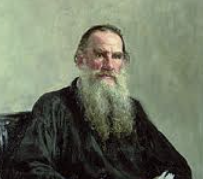
1 month 1 week ago
Some teachers of mankind - as Plato... the first Christians, the orthodox Muslims, and the Buddhists - have gone so far as to repudiate art. ...[They consider it] so highly dangerous in its power to infect people against their wills, that mankind will lose far less by banishing all art than by tolerating each and every art. ...such people were wrong in repudiating all art, for they denied that which cannot be denied - one of the indispensable means of communication, without which mankind could not exist. ...Now there is only fear, lest we should be deprived of any pleasures art can afford, so any type of art is patronized. And I think the last error is much grosser than the first and that its consequences are far more harmful.
2 months 5 days ago
Because the peculiarity of man is that his machinery for reaction on external things has involved an imaginative transcript of these things, which is preserved and suspended in his fancy; and the interest and beauty of this inward landscape, rather than any fortunes that may await his body in the outer world, constitute his proper happiness. By their mind, its scope, quality, and temper, we estimate men, for by the mind only do we exist as men, and are more than so many storage-batteries for material energy. Let us therefore be frankly human. Let us be content to live in the mind.
▼
Source
source
p. 64
2 days ago
[after quoting from Lucretius] In the face of warfare and inevitable death, there is no wisdom but in ataraxia, "to look on all things with a mind at peace"." Here, clearly, the old pagan joy of life is gone, and an almost exotic spirit touches a broken lyre. History, which is nothing if not humorous, was never so facetious as when she gave to this abstemious and epic pessimist the name of Epicurean.
1 month 3 weeks ago
There is in Shaw, as in Gurdjieff and Nietzsche, a recognition of the immense effort of Will that is necessary to express even a little freedom, that places them beside Pascal and St. Augustine as religious thinkers. Their view is saved from pessimism only by its mystical recognition of the possibilities of pure Will, freed from the entanglements of automatism.
▼
Source
source
p. 292
2 months 5 days ago
The Interpretation of the Laws of Nature in a Common-wealth, dependeth not on the books of Moral Philosophy. The Authority of writers, without the Authority of the Commonwealth, maketh not their opinions Law, be they never so true.
▼
Source
source
The Second Part, Chapter 26, p. 143

3 months 1 week ago
A serious and good philosophical work could be written consisting entirely of jokes.
▼
Source
source
As quoted in "A View from the Asylum" in Philosophical Investigations from the Sanctity of the Press (2004), by Henry Dribble, p. 87

3 months 2 weeks ago
Look round this universe. What an immense profusion of beings, animated and organised, sensible and active! You admire this prodigious variety and fecundity. But inspect a little more narrowly these living existences, the only beings worth regarding. How hostile and destructive to each other! How insufficient all of them for their own happiness! How contemptible or odious to the spectator! The whole presents nothing but the idea of a blind Nature, impregnated by a great vivifying principle, and pouring forth from her lap, without discernment or parental care, her maimed and abortive children!
▼
Source
source
Philo to Cleanthes, Part XI
1 month 2 weeks ago
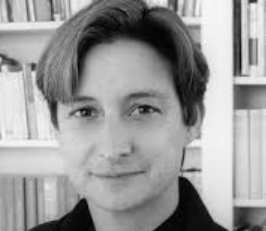
The ethical and political practice of nonviolence can rely neither exclusively on the dyadic encounter, nor on the bolstering of a prohibition; it requires a political opposition to the biopolitical forms of racism and war logics that rely on phantasmagoric inversions that occlude the binding and interdependent character of the social bond. It requires, as well, an account of why, and under what conditions, the frameworks for understanding violence and nonviolence, or violence and self-defense, seem to invert into one another, causing confusion about how best to pin down those terms.
▼
Source
source
p. 62

2 months 5 days ago
What man shall there be among you, that shall have one sheep, and if it fall into a pit on the sabbath day, will he not lay hold on it, and lift it out? How much then is a man better than a sheep? Wherefore it is lawful to do well on the sabbath days.
▼
Source
source
12:11-12 (KJV) Said to the Pharisees.

2 weeks 5 days ago
If there is anything unique about the human animal it is that it has the ability to grow knowledge at an accelerating rate while being chronically incapable of learning from experience. Science and technology are cumulative, whereas ethics and politics deal with recurring dilemmas. Whatever they are called, torture and slavery are universal evils; but these evils cannot be consigned to the past like redundant theories in science. They return under different names: torture as enhanced interrogation techniques, slavery as human trafficking. Any reduction in universal evils is an advance in civilization. But, unlike scientific knowledge, the restraints of civilized life cannot be stored on a computer disc. They are habits of behaviour, which once broken are hard to mend. Civilization is natural for humans, but so is barbarism.
▼
Source
source
An Old Chaos: Humanism and Flying Saucers (p. 75)
4 weeks ago
The improver of natural knowledge absolutely refuses to acknowledge authority, as such. For him, scepticism is the highest of duties; blind faith the one unpardonable sin. And it cannot be otherwise, for every great advance in natural knowledge has involved the absolute rejection of authority, the cherishing of the keenest scepticism, the annihilation of the spirit of blind faith; and the most ardent votary of science holds his firmest convictions, not because the men he most venerates hold them; not because their verity is testified by portents and wonders; but because his experience teaches him that whenever he chooses to bring these convictions into contact with their primary source, Nature - whenever he thinks fit to test them by appealing to experiment and to observation - Nature will confirm them. The man of science has learned to believe in justification, not by faith, but by verification. On the advisableness of improving natural knowledge
▼
Source
source
1866
3 months 1 week ago
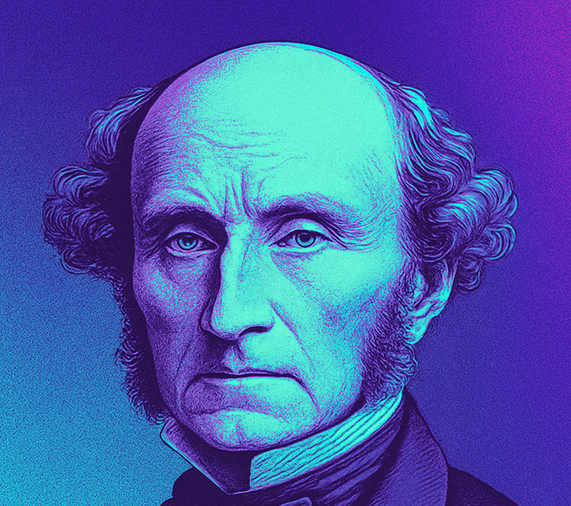
It is also a study peculiarly adapted to an early stage in the education of philosophical students, since it does not presuppose the slow process of acquiring, by experience and reflection, valuable thoughts of their own.
▼
Source
source
(pp. 19-20)
1 month 1 day ago
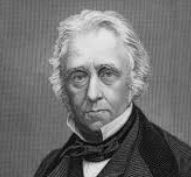
I have no knowledge of either Sanscrit or Arabic. But I have done what I could to form a correct estimate of their value. I have read translations of the most celebrated Arabic and Sanscrit works. I have conversed, both here and at home, with men distinguished by their proficiency in the Eastern tongues. I am quite ready to take the oriental learning at the valuation of the orientalists themselves. I have never found one among them who could deny that a single shelf of a good European library was worth the whole native literature of India and Arabia. The intrinsic superiority of the Western literature is indeed fully admitted by those members of the committee who support the oriental plan of education.

1 month 3 weeks ago
Emptiness empties the one seeing into what is seen.

4 months ago
I [prefer] a short life with width to a narrow one with length.
3 months 2 weeks ago
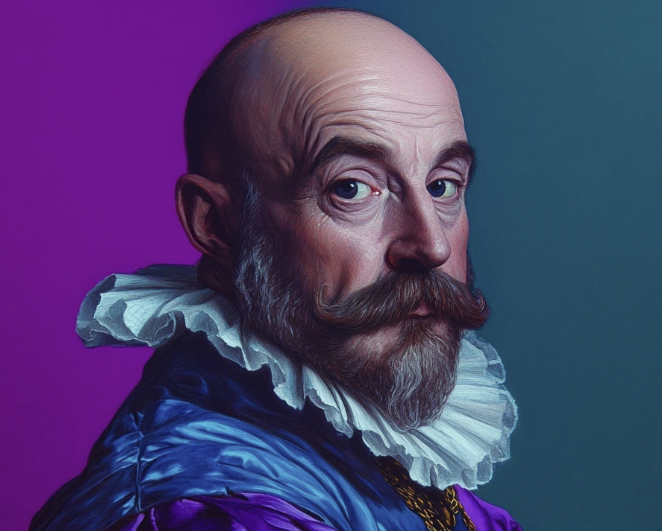
We can be knowledgeable with other men's knowledge, but we cannot be wise with other men's wisdom.
▼
Source
source
Book I, Ch. 25

3 months 1 week ago
At this point we find ourselves confronted by a very disquieting question: Do we really wish to act upon our knowledge?
▼
Source
source
Chapter 12 (p. 116)
2 months 1 week ago
If just once you were depressed for no reason, you have been so all your life without knowing.


CivilSimian.com created by AxiomaticPanic, CivilSimian, Kalokagathia