


2 months 3 weeks ago
Again, Amyclas the Heracleotean, one of Plato's familiars, and Menæchmus, the disciple, indeed, of Eudoxus, but conversant with Plato, and his brother Dinostratus, rendered the whole of geometry as yet more perfect. But Theudius, the Magnian, appears to have excelled, as well in mathematical disciplines, as in the rest of philosophy. For he constructed elements egregiously, and rendered many particulars more universal. Besides, Cyzicinus the Athenian, flourished at the same period, and became illustrious in other mathematical disciplines, but especially in geometry. These, therefore, resorted by turns to the Academy, and employed themselves in proposing common questions.
▼
Source
source
Ch. IV.
2 months 3 days ago
Liberalism - it is well to recall this today-is the supreme form of generosity; it is the right which the majority concedes to minorities and hence it is the noblest cry that has ever resounded in this planet. It announces the determination to share existence with the enemy; more than that, with an enemy which is weak. It was incredible that the human species should have arrived at so noble an attitude, so paradoxical, so refined, so acrobatic, so anti-natural. Hence, it is not to be wondered at that this same humanity should soon appear anxious to get rid of it. It is a discipline too difficult and complex to take firm root on earth.
▼
Source
source
Chap. VIII: The Masses Intervene In Everything, And Why Their Intervention Is Solely By Violence
2 months 1 week ago
Countless attempts have been made to no avail to construct a continuity from the supreme principle of the intellectual world to the finite world. The oldest and most frequent of these attempts is well known: the principle of emanation, according to which the outflowings from the godhead, in gradual increments and detachment from the ordinary source, losing their divine perfection until, in the end, they pass into the opposite (matter, privation), just as light is finally confined by darkness.
▼
Source
source
P. 24

1 month 4 weeks ago
Only the feeble resign themselves to final death and substitute some other desire for the longing for personal immortality. In the strong the zeal for perpetuity overrides the doubt of realizing it, and their superabundance of life overflows upon the other side of death.

3 months 2 weeks ago
Poor David Hume is dying very fast, but with great cheerfulness and good humour and with more real resignation to the necessary course of things then any whining Christian ever dyed with pretended resignation to the will of God.
▼
Source
source
Letter to Alexander Wedderburn 14 August 1776. The Correspondence of Adam Smith edited by E.C. Mossner and Ian Simpson Ross, 2nd edition, Oxford University Press 1986. The Future Hope in Adam Smith's System, Paul Oslington
1 month 3 weeks ago
The ideas of Freud were popularized by people who only imperfectly understood them, who were incapable of the great effort required to grasp them in their relationship to larger truths, and who therefore assigned to them a prominence out of all proportion to their true importance.
▼
Source
source
Ch. 28, June 3, 1943.
1 month 1 week ago
Evolution is a fact. Beyond reasonable doubt, beyond serious doubt, beyond sane, informed, intelligent doubt, beyond doubt evolution is a fact. The evidence for evolution is at least as strong as the evidence for the Holocaust, even allowing for eye witnesses to the Holocaust. It is the plain truth that we are cousins of chimpanzees, somewhat more distant cousins of monkeys, more distant cousins still of aardvarks and manatees, yet more distant cousins of bananas and turnips... continue the list as long as desired.
▼
Source
source
The Greatest Show on Earth: The Evidence for Evolution (2009) (p. 8)
2 months 5 days ago
The liberating force of technology-the instrumentalization of things-turns into ... the instrumentalization of man.
▼
Source
source
p. 159
1 month 3 weeks ago
If there were no limits to human rationality administrative theory would be barren. It would consist of the single precept: Always select that alternative, among those available, which will lead to the most complete achievement of your goals.
▼
Source
source
Simon (1945, p. 240); As cited in:
3 months 2 weeks ago
For Christ is Joy and Sweetness to a broken heart. Christ is a Lover of poor sinners, and such a Lover that He gave Himself for us. Now if this is true, and it is true, then are we never justified by our own righteousness.
▼
Source
source
Chapter 3, verse 20

1 week ago
So today... red and blue voters rely on a completely different set of facts. ...Polls ...suggest that a substantial... majority of Republican voters believe that the Democrats... stole the election, and that Joe Biden is not the legitimate president... When you don't have a common factual basis, you... reinforce the kinds of filter bubbles that people have started to move into.
2 months 3 days ago
It is a great good fortune, as Stendhal said, for one "to have his passion as a profession."
▼
Source
source
p. 4

4 months 2 weeks ago
We obtain the concept, as we do the form, by overlooking what is individual and actual; whereas nature is acquainted with no forms and no concepts, and likewise with no species, but only with an X which remains inaccessible and undefinable for us.

1 month 3 weeks ago
Men and women meet now to be idle. Is it extraordinary that they do not know each other, and that, in their mutual ignorance, they form no surer friendships? Did they meet to do something together, then indeed they might form some real tie. But, as it is, they are not there, it is only a mask which is there - a mouth-piece of ready-made sentences about the "topics of the day"; and then people rail against men for choosing a woman "for her face" - why, what else do they see?
3 months 3 weeks ago
The source of the errors of these two sects, is in not having known that the state of man at the present time differs from that of his creation; so that the one, remarking some traces of his first greatness and being ignorant of his corruption, has treated nature as sound and without need of redemption, which leads him to the height of pride; whilst the other, feeling the present wretchedness and being ignorant of the original dignity, treats nature as necessarily infirm and irreparable, which precipitates it into despair of arriving at real good, and thence into extreme laxity.
3 months 1 week ago
The ideal subject of totalitarian rule is not the convinced Nazi or the convinced Communist, but people for whom the distinction between fact and fiction (i.e., the reality of experience) and the distinction between true and false (i.e., the standards of thought) no longer exist.
▼
Source
source
Part 3, Ch. 13, § 3

2 months 1 week ago
As the animus is partial to argument, he can best be seen at work in disputes where both parties know they are right. Men can argue in a very womanish way, too, when they are anima-possessed and have thus been transformed into the animus of their own anima.
▼
Source
source
Aion (1951). CW 9, Part II: P.29
1 week 1 day ago
We admire people to the extent that we cannot explain what they do, and the word "admire" then means "marvel at."
▼
Source
source
Beyond Freedom and Dignity

2 months 2 weeks ago
The universe comprises all being in a totality; for nothing that exists is outside or beyond infinite being, as the latter has no outside or beyond.

2 months 1 week ago
A state without the means of some change is without the means of its conservation.



3 days ago
In the learned professions as in the unlearned, and in human things throughout, in every place and in every time, the true function of intellect is not that of talking, but of understanding and discerning with a view to performing!
3 weeks ago
[O]ne might naively suppose that a negative utilitarian would welcome human extinction. But only (trans)humans - or our potential superintelligent successors - are technically capable of phasing out the cruelties of the rest of the living world on Earth. And only (trans)humans - or rather our potential superintelligent successors - are technically capable of assuming stewardship of our entire Hubble volume.
▼
Source
source
"Unsorted Postings", Facebook, pre-2014
3 months 3 days ago
The idealist tradition, including contemporary phenomenology, has of course admitted subjective points of view as basic and has gone to the opposite length of denying an irreducible objective reality. ... I find the idealist solution unacceptable ...: objective reality cannot be analyzed or shut out of existence any more than subjective reality can. Even if not everything is something from no point of view, some things are.The deep source of both idealism and its objectifying opposite is the same: a conviction that a single world cannot contain both irreducible points of view and irreducible objective reality - that one of them must be what there really is and the other somehow reducible or dependent on it. This is a very powerful idea. To deny it is in a sense to deny that there is a single world.
▼
Source
source
"Subjective and Objective" (1979), p. 212.
3 months 2 weeks ago
She [virtue] requires a rough and stormy passage; she will have either outward difficulties to wrestle with, ... or internal difficulties.
▼
Source
source
Book II, Ch. 11. Of Cruelty
1 month 2 weeks ago
Even though the model referred to satisfies the theory, etc., it is 'unintended'; and we recognize that it is unintended from the description through which it is given (as in the intuitionist case). Models are not lost noumenal waifs looking for someone to name them; they are constructions within our theory itself. and they have names from birth.
▼
Source
source
Models and Reality


3 months 2 weeks ago
When we run over libraries, persuaded of these principles, what havoc must we make? If we take in our hand any volume; of divinity or school metaphysics, for instance; let us ask, Does it contain any abstract reasoning concerning quantity or number? No. Does it contain any experimental reasoning concerning matter of fact and existence? No. Commit it then to the flames: For it can contain nothing but sophistry and illusion.
▼
Source
source
Section 12 : Of the Academical or Sceptical Philosophy Pt. 3

3 months 3 weeks ago
But by far the greatest hindrance and aberration of the human understanding proceeds from the dullness, incompetency, and deceptions of the senses; in that things which strike the sense outweigh things which do not immediately strike it, though they be more important. Hence it is that speculation commonly ceases where sight ceases; insomuch that of things invisible there is little or no observation.
▼
Source
source
Aphorism 50

3 months 2 weeks ago
Morality is thus the relation of actions to the autonomy of the will, that is, to a possible giving of universal law through its maxims. An action that can coexist with the autonomy of the will is permitted; one that does not accord with it is forbidden. A will whose maxims necessarily harmonize with the laws of autonomy is a holy, absolutely good will. The dependence upon the principle of autonomy of a will that is not absolutely good (moral necessitation) is obligation. This, accordingly, cannot be attributed to a holy being. The objective of an action from obligation is called duty.

3 months 1 week ago
Enough had been thought, and said, and felt, and imagined. It was about time that something should be done.
4 months 1 week ago
The reason I cannot really say that I positively enjoy nature is that I do not quite realize what it is that I enjoy. A work of art, on the other hand, I can grasp. I can - if I may put it this way - find that Archimedian point, and as soon as I have found it, everything is readily clear for me. Then I am able to pursue this one main idea and see how all the details serve to illuminate it.

3 months 1 week ago
I was a solitary, shy, priggish youth. I had no experience of the social pleasures of boyhood and did not miss them. But I liked mathematics, and mathematics was suspect because it has no ethical content. I came also to disagree with the theological opinions of my family, and as I grew up I became increasingly interested in philosophy, of which they profoundly disapproved. Every time the subject came up they repeated with unfailing regularity, 'What is mind? No matter. What is matter? Never mind.' After some fifty or sixty repetitions, this remark ceased to amuse me.
▼
Source
source
p. 9
3 months 1 week ago
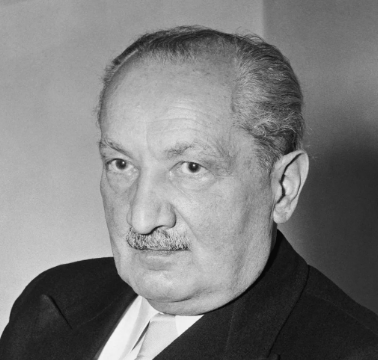
Transcendence constitutes selfhood.
▼
Source
source
Essence of Ground
3 weeks 5 days ago
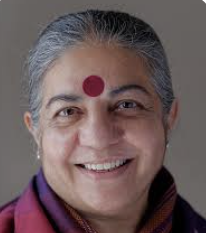
Biopiracy is biological theft; illegal collection of indigenous plants by corporations who patent them for their own use.
▼
Source
source
On biopiracy, from the booklet "No Patents on Seeds: A Handbook For Activists"

1 month 3 weeks ago
One cannot demand of a scholar that he show himself a scholar everywhere in society, but the whole tenor of his behavior must none the less betray the thinker, he must always be instructive, his way of judging a thing must even in the smallest matters be such that people can see what it will amount to when, quietly and self-collected, he puts this power to scholarly use.
▼
Source
source
J 85
2 months 1 week ago
Reflect how you are to govern a people who think they ought to be free, and think they are not. Your scheme yields no revenue; it yields nothing but discontent, disorder, disobedience; and such is the state of America, that after wading up to your eyes in blood, you could only end just where you begun; that is, to tax where no revenue is to be found, to - my voice fails me; my inclination indeed carries me no farther - all is confusion beyond it.

3 months 1 week ago
That what we seek we shall find; what we flee from flees from us.
▼
Source
source
Fate
3 weeks 4 days ago
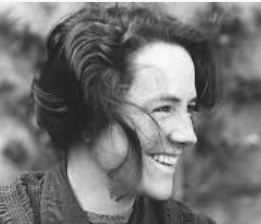
I do not believe that sheer suffering teaches. If suffering alone taught, all the world would be wise, since everyone suffers. To suffering must be added mourning, understanding, patience, love, openness and the willingness to remain vulnerable. All these and other factors combined, if the circumstances are right, can teach and can lead to rebirth.
▼
Source
source
Hour of Gold, Hour of Lead: Diaries and Letters of Anne Morrow Lindbergh, 1929-1932 (1973), p. 3
3 months 2 weeks ago
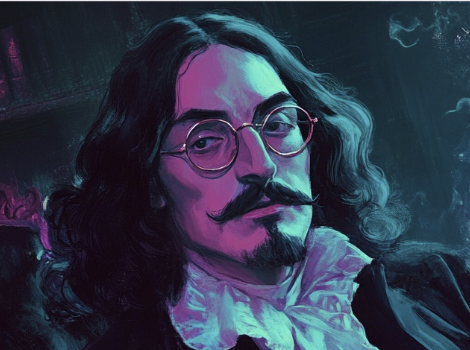
I suppose the body to be nothing but a statue or machine made of earth, which God forms with the explicit intention of making it as much as possible like us.
▼
Source
source
Descartes, René (1662). Le Homme (The Treatise on Man), XI:119, CSM I:99 in The Stanford Encyclopedia of Philosophy: "Descartes and the Pineal Gland - 2.1 "The Treatise of Man".
2 months 1 week ago
Religion is usually nothing but a supplement to or even a substitute for education, and nothing is religious in the strict sense which is not a product of freedom.
▼
Source
source
"Selected Aphorisms from the Athenaeum (1798)", Dialogue on Poetry and Literary Aphorisms, Ernst Behler and Roman Struc, trans. (Pennsylvania University Press:1968) #233
2 months 1 week ago
...a monarchy is a thing perfectly susceptible of reform; perfectly susceptible of a balance of power; and that, when reformed and balanced, for a great country, it is the best of all governments. The example of our country might have led France, as it has led him, to perceive that monarchy is not only reconcilable to liberty, but that it may be rendered a great and stable security to its perpetual enjoyment.
▼
Source
source
p. 400
1 month 3 weeks ago
Mysticism: to dwell on the unseen, to withdraw ourselves from the things of sense into communion with God - to endeavour to partake of the Divine nature; that is, of Holiness. When we ask ourselves only what is right, or what is the will of God (the same question), then we may truly be said to live in His light.
3 months 4 weeks ago
Therefore let every Christian, yea, let the whole body of Christ everywhere cry out, despite the tribulations it endures, despite temptations and countless scandals, saying: "Preserve my soul, for I am holy; save Thy servant, O my God, that trusteth in thee" (Ps. 85:2) No, this holy one is not proud, for he trusts in God.
▼
Source
source
p.429
2 months 5 days ago
Many, and I think the determining, constitutive facts remain outside the reach of the operational concept. And by virtue of this limitation-this methodological injunction against transitive concepts which might show the facts in their true light and call them by their true name-the descriptive analysis of the facts blocks the apprehension of facts and becomes an element of the ideology that sustains the facts. Proclaiming the existing social reality as its own norm, this sociology fortifies in the individuals the "faithless faith" in the reality whose victims they are.
▼
Source
source
p. 119
2 months 1 week ago
The true object of moral and political disquisition is pleasure or happiness.The primary, or earliest, class of human pleasure is the pleasures of external senses.In addition to these, man is susceptible of certain secondary pleasures, as the pleasures of intellectual feeling, the pleasures of sympathy, and the pleasures of self-approbation. The secondary pleasures are probably more exquisite than the primary; Or, at least,The most desirable state of man is that in which he has access to all these sources of pleasure, and is in possession of a happiness the most varied and uninterrupted. This state is a state of high civilization.
▼
Source
source
Summary of Principles 1.1
4 months 1 week ago
For the things we have to learn before we can do, we learn by doing.
1 month 3 weeks ago
The haste of day rules over the night as empty form.

4 months 1 week ago
Science fiction writers foresee the inevitable, and although problems and catastrophes may be inevitable, solutions are not.

3 months 1 week ago
Nothing is so difficult as not deceiving oneself.
▼
Source
source
p. 39e
CivilSimian.com created by AxiomaticPanic, CivilSimian, Kalokagathia