

3 months 3 weeks ago
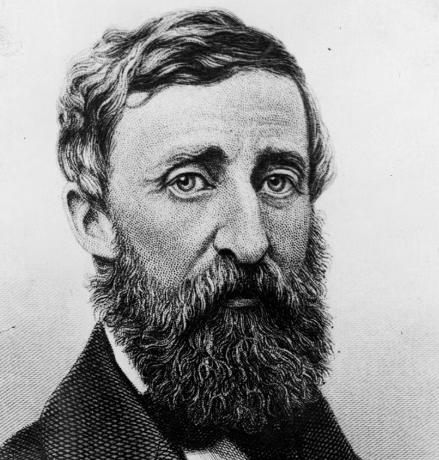
If a man walk in the woods for love of them half of each day, he is in danger of being regarded as a loafer; but if he spends his whole day as a speculator, shearing off those woods and making earth bald before her time, he is esteemed an industrious and enterprising citizen. As if a town had no interest in its forests but to cut them down!
▼
Source
source
p. 485


3 months 3 weeks ago
Four snakes gliding up and down a hollow for no purpose that I could see - not to eat, not for love, but only gliding.
▼
Source
source
April 11, 1834

2 months 1 week ago
The philosophical thought of Kant, the supreme flower of the Germanic people, has its roots in the religious feeling of Luther, and it is not possible for Kantism, especially the practical part of it, to take root and bring forth flower and fruit in peoples who have not undergone the experience of the Reformation and who perhaps were incapable of experiencing it. Kantism is Protestant, and we Spaniards are fundamentally Catholic. And if Krause struck some roots here - more numerous and more permanent than is commonly supposed - it is because Krause has roots in pietism, and pietism, as Ritschl has demonstrated in his Geschichte des Pietismus, has specifically Catholic roots and may be described as the irruption, or rather the persistence of Catholic mysticism in the heart of Protestant rationalism. And this explains why not a few Catholic thinkers in Spain became followers of Krause.
4 months 2 weeks ago
There is no mystery in humans creation. Will performs this miracle. But at least there is no true creation without a secret.
2 months 1 week ago
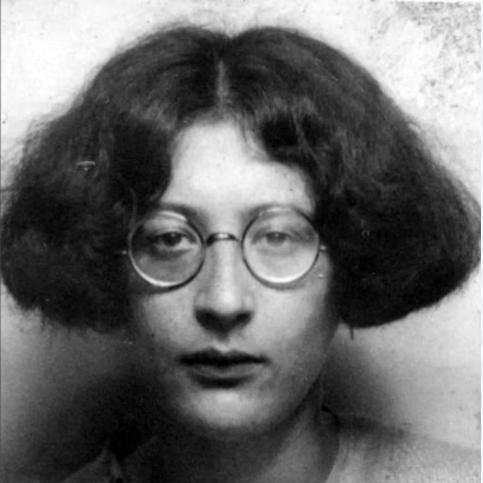
I have sometimes told myself that if only there were a notice on church doors forbidding entry to anyone with an income above a certain figure, and a low one, I would be converted at once.
▼
Source
source
Letter to Georges Bernanos (1938), in Seventy Letters, as translated by Richard Rees (Wipf and Stock: 1965), p. 105

3 months 3 weeks ago
The Chinese are a great nation, incapable of permanent suppression by foreigners. They will not consent to adopt our vices in order to acquire military strength; but they are willing to adopt our virtues in order to advance in wisdom. I think they are the only people in the world who quite genuinely believe that wisdom is more precious than rubies. That is why the West regards them as uncivilized.
▼
Source
source
The Problem of China (1922), Ch. XIII: Higher education in China
2 months 1 week ago
When I was a student I was assigned "Mythologies" and "A Lover's Discourse," by Roland Barthes, and felt at once that something momentous had happened to me, that I had met a writer who had changed my course in life somehow; and looking back now, I think he did.
▼
Source
source
Zadie Smith Interview
4 months 3 weeks ago
The most exciting phrase to hear in science, the one that heralds new discoveries, is not 'Eureka!', but 'That's funny ...'

2 months 2 weeks ago
Man is a thinking being. His reason enables him to recognize his own potentialities and those of his world. He is thus not at the mercy of the facts that surround him, but is capable of subjecting them to a higher standard, that of reason.
▼
Source
source
P. 6

3 months 3 weeks ago
Let's not be dazzled by the sententious glitter with which error and lying often cover themselves. Society is not created by the crowd, and bodies come together in vain when hearts reject each other. The truly sociable man is more difficult in his relationships than others; those which consist only in false appearances cannot suit him. He prefers to live far from wicked men without thinking about them, than to see them and hate them. He prefers to flee his enemy rather than seek him out to harm him. A person who knows no other society than that of the heart will not seek his society in your circles. That is How J.J. must have thought and behaved before the conspiracy of which he is the object.
▼
Source
source
Second Dialogue; translated by Judith R. Bush, Christopher Kelly, Roger D. Masters

1 month 2 weeks ago
The selfish gene theory is Darwin's theory, expressed in a way that Darwin did not choose but whose aptness, I should like to think, he would instantly have recognized and delighted in. It is in fact a logical outgrowth of orthodox neo-Darwinism, but expressed as a novel image. Rather than focus on the individual organism, it takes a gene's eye view of nature. It is a different way of seeing, not a different theory.
▼
Source
source
Preface to Second Edition
4 months 3 weeks ago
Those who purge the soul believe that the soul can receive no benefit from any teachings offered to it until someone by cross-questioning reduces him who is cross-questioned to an attitude of modesty, by removing the opinions that obstruct the teachings, and thus purges him and makes him think that he knows only what he knows, and no more.

3 months ago
Of the eternal corporeal substance (which is not producible ex nihilo, nor reducible ad nihilum, but rarefiable, condensable, formable, arrangeable, and "fashionable") the composition is dissolved, the complexion is changed, the figure is modified, the being is altered, the fortune is varied, only the elements remaining what they are in substance, that same principle persevering which was always the one material principle, which is the true substance of things, eternal, ingenerable and incorruptible.
▼
Source
source
As translated by Arthur Imerti
1 month 3 days ago
True hedonic engineering, as distinct from mindless hedonism or reckless personal experimentation, can be profoundly good for our character. Character-building technologies can benefit utilitarians and non-utilitarians alike. Potentially, we can use a convergence of biotech, nanorobotics and information technology to gain control over our emotions and become better (post-)human beings, to cultivate the virtues, strength of character, decency, to become kinder, friendlier, more compassionate: to become the type of (post)human beings that we might aspire to be, but aren't, and biologically couldn't be, with the neural machinery of unenriched minds. Given our Darwinian biology, too many forms of admirable behaviour simply aren't rewarding enough for us to practise them consistently: our second-order desires to live better lives as better people are often feeble echoes of our baser passions.
▼
Source
source
Utopian Neuroscience, BLTC Research, 2019
2 months 3 weeks ago
I have distinctly announced the grounds upon which I regard the Apostle John as the only teacher of true Christianity:-namely, that the Apostle Paul and his party, as the authors of the opposite system of Christianity, remained half Jews, and left unaltered the fundamental error of Judaism as well as of Heathenism, which we must afterwards notice. For the present the following may be enough: -It is only with John that the philosopher can deal, for he alone has respect for Reason, and appeals to that evidence which alone has weight with the philosopher-the internal. "If any man will do the will of him that sent me, he shall know of the doctrine, whether it be of God." But this Will of God, accord ing to John, is, that we should truly believe in God, and in Jesus Christ whom he hath sent. The other promulgators of Christianity, however, rely upon the external evidence of Miracle, which, to us at least, proves nothing.
▼
Source
source
P. 96-97
2 months 3 days ago
The pleasures of the imagination are as it were only drawings and models which are played with by poor people who cannot afford the real thing.
▼
Source
source
C 38

3 months 4 weeks ago
There is nothing in any object, consider'd in itself, which can afford us a reason for drawing a conclusion beyond it; [...] even after the observation of the frequent or constant conjunction of objects, we have no reason to draw any inference concerning any object beyond those of which we have had experience.
▼
Source
source
Part 3, Section 12
4 months 2 weeks ago
Even before the bomb, one did not breathe too easily in this tortured world. Now we are given a new source of anguish; it has all the promise of being our greatest anguish ever. There can be no doubt that humanity is being offered its last chance. Perhaps this is an occasion for the newspapers to print a special edition. More likely, it should be cause for a certain amount of reflection and a great deal of silence.
1 month 3 days ago
All moral tradeoffs are messy. However, on some fairly modest ethical assumptions, when a severe and irreconcilable conflict of interests occurs, then the interests of the more sentient take precedence over the less sentient. This rule of thumb holds regardless of the age, race or species of the victim. Reply to "Why is David Pearce a vegan and a negative utilitarian given industrial agriculture's decimation of insect populations and, therefore, suffering the greater number of insects than farm animals? Shouldn't insects outweigh farm animals?
▼
Source
source
, Quora, 3 Sept. 2019

3 months 3 weeks ago
If there is equality, it is in His love, not in us.

2 months 1 week ago
In most men, the conscious and the unconscious being hardly ever make contact; consequently the conscious aim is to make himself as comfortable as possible with as little effort as possible. But there are other men, whom we have been calling, for convenience, 'Outsiders', whose conscious and unconscious being keep in closer contact, and the conscious mind is forever aware of the urge to care about 'more abundant life', and care less about comfort and stability and the rest of the notions that are so dear to the bourgeois.
▼
Source
source
Chapter Nine, Breaking the Circuit
2 months 1 week ago
The more reified the world becomes, the thicker the veil cast upon nature, the more the thinking weaving that veil in its turn claims ideologically to be nature, primordial experience.
▼
Source
source
p. 7
2 months 3 weeks ago
The original thinking force of the universe progresses and develops itself in all possible determinations of which it is capable, just as the other original natural forces progress and assume all possible configurations. I am a particular determination of the formative force, like the plant; a particular determination of the peculiar motive force, like the animal; and in addition to this a determination of the thinking force: and the union of these three basic forces into one force, into one harmonious development, is the distinguishing characteristic of my species.
▼
Source
source
P. Preuss, trans. (1987), p. 12
3 months 3 weeks ago
Marriage is for women the commonest mode of livelihood, and the total amount of undesired sex endured by women is probably greater in marriage than in prostitution.
4 months 6 days ago
A doubtful balance is made between truth and pleasure, and... the knowledge of one and the feeling of the other stir up a combat the success of which is very uncertain, since, in order to judge of it, it would be necessary to know all that passes in the innermost spirit of the man, of which man himself is scarcely ever conscious.
4 months 1 week ago
I too have sworn heedlessly and all the time, I have had this most repulsive and death-dealing habit. I'm telling your graces; from the moment I began to serve God, and saw what evil there is in forswearing oneself, I grew very afraid indeed, and out of fear I applied the brakes to this old, old, habit.
▼
Source
source
180:10:1
2 days ago
If compelled to indicate my religion on an immigration blank, I might be tempted to put down the word "Taoist," to the amazement of the customs officer who probably never heard of it.
▼
Source
source
The Wisdom of Laotse (1948), Introduction, p. 15
4 months 3 weeks ago
There is less trouble and trauma involved in writing a new piece than in trying to salvage an unsatisfactory old one.

2 months 1 week ago
A man really writes for an audience of about ten persons. Of course if others like it, that is clear gain. But if those ten are satisfied, he is content.
▼
Source
source
p. 66

2 months 2 weeks ago
However intimate we may be with the operations of the mind, we cannot think more than two or three minutes a day; - unless, by taste or by profession, we practice, for hours on end, brutalizing words in order to extract ideas from them. The intellectual represents the major disgrace, the culminating failure of Homo sapiens.
1 month 2 weeks ago
Happily for poor traduced and degraded human nature, the principle for which we now content will speedily divest it of all the ridiculous and absurd mystery with which it has been hitherto enveloped by the ignorance of preceding times: and all the ''complicated'' and ''counteracting'' motives for good conduct, which have been multiplied almost to infinity, will be reduced to ''one single principle of action'', which, by its evident operation and sufficiency, shall render this intricate system ''unnecessary'', and ultimately supersede it in all parts of the earth. That principle is THE HAPPINESS OF SELF CLEARLY UNDERSTOOD AND UNIFORMLY PRACTICED; WHICH CAN ONLY BE ATTAINED BY CONDUCT THAT MUST PROMOTE THE HAPPINESS OF THE COMMUNITY.
▼
Source
source
Essay First, The Formation of Human Character.
4 months 3 weeks ago
Once you've dissected a joke, you're about where you are when you've dissected a frog. It's dead. Banquets of the Black Widowers (1984), p. 49; comparable to "Humor can be dissected, as a frog can, but the thing dies in the process and the innards are discouraging to any but the pure scientific mind."
3 months 3 weeks ago
Enough had been thought, and said, and felt, and imagined. It was about time that something should be done.
2 months 1 week ago
When I was in my teens, I invented a term to describe them. I call it 'holiday consciousness' . . . because I often experienced this sense of optimism and wide-awakeness when setting out on a journey or a holiday. It was always the feeling that the world is self-evidently complex and beautiful, and that life is so obviously good that man's boredom and defeat is an absurdity . . . And then I used to ask: Why do men forget this so easily? And the answer seemed obvious: because the human will is so flabby and weak. Instead of being self-controlled, self-driven creatures, most men are little more than leaves on a stream, they drift along hoping for the best. I once wrote that men are like grandfather clocks driven by watchsprings.
▼
Source
source
p. 75

1 month 3 weeks ago
In former times the chief method of justifying the use of violence and thereby infringing the law of love was by claiming a divine right for the rulers: the Tsars, Sultans, Rajahs, Shahs, and other heads of states. But the longer humanity lived the weaker grew the belief in this peculiar, God-given right of the ruler. That belief withered in the same way and almost simultaneously in the Christian and the Brahman world, as well as in Buddhist and Confucian spheres, and in recent times it has so faded away as to prevail no longer against man's reasonable understanding and the true religious feeling. People saw more and more clearly, and now the majority see quite clearly, the senselessness and immorality of subordinating their wills to those of other people just like themselves, when they are bidden to do what is contrary not only to their interests but also to their moral sense.
▼
Source
source
III
2 months 2 weeks ago
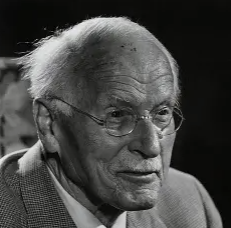
Here and there it happened in my practice that a patient grew beyond himself because of unknown potentialities, and this became an experience of prime importance to me. I had learned in the meanwhile that the greatest and most important problems of life are all in a certain sense insoluble. They must be so because they express the necessary polarity inherent in every self-regulating system. They can never be solved, but only outgrown.
▼
Source
source
The Secret of the Golden Flower, ibid.
2 months 2 days ago
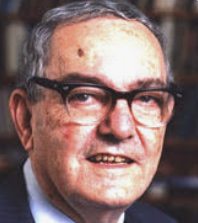
If we accept values as given and consistent, if we postulate an objective description of the world as it really is, and if we assume that the decision maker's computational powers are unlimited, then two important consequences follow. First, we do not need to distinguish between the real world and the decision maker's perception of it: he or she perceives the world as it really is. Second, we can predict the choices that will be made by a rational decision maker entirely from our knowledge of the real world and without a knowledge of the decision maker's perceptions or modes of calculation. (We do, of course, have to know his or her utility function.)
1 month 3 weeks ago
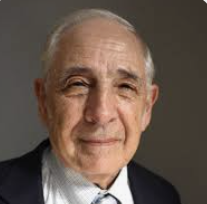
Where questions of style and exposition are concerned I try to follow a simple maxim: if you can't say it clearly you don't understand it yourself.
▼
Source
source
P. x.
1 month 3 days ago
So what is the alternative to traditional anthropocentric ethics? Antispeciesism is not the claim that "All Animals Are Equal", or that all species are of equal value, or that a human or a pig is equivalent to a mosquito. Rather the antispeciesist claims that, other things being equal, equally strong interests should count equally. Experiences that are subjectively negative or positive in hedonic tone to the same degree must count for the same.
▼
Source
source
"The Antispeciesist Revolution", Institute for Ethics and Emerging Technologies, 26 Jul. 2013
2 months 2 weeks ago
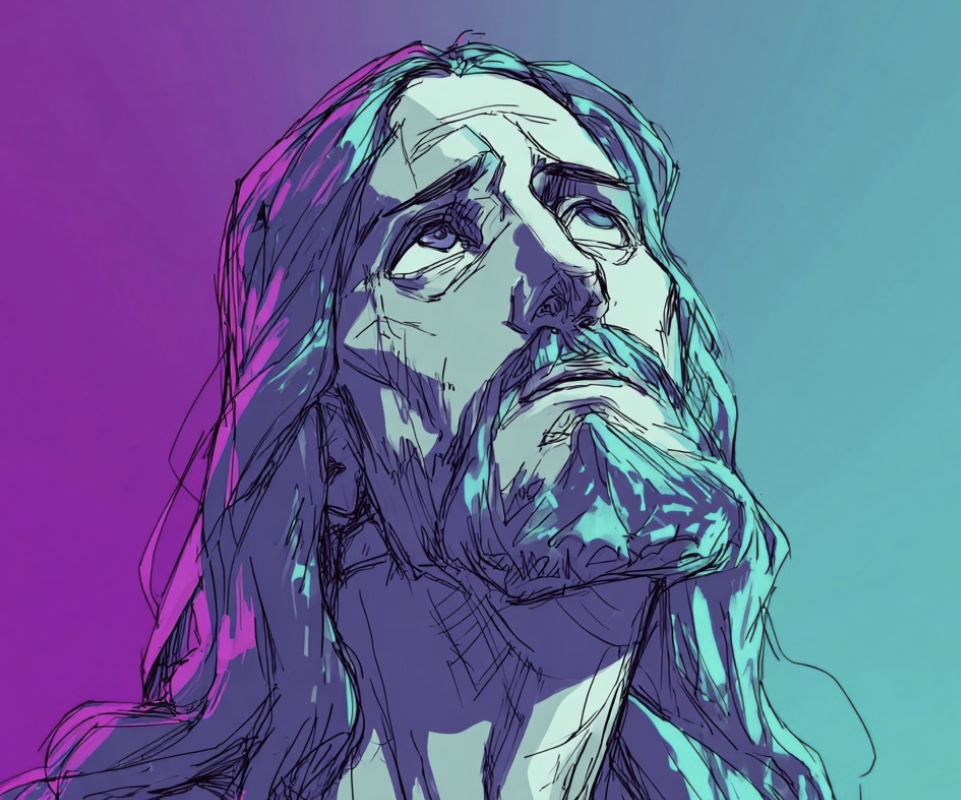
A new commandment I give unto you, That ye love one another; as I have loved you, that ye also love one another. By this shall all men know that ye are my disciples, if ye have love one to another.
▼
Source
source
13:34-35 KJV
1 month 2 weeks ago
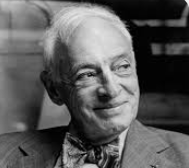
Reading Decline of the West I learned that in Spengler's view ours was a Faustian civilization and that we, the Jews, were Magians, the survivors and representatives of an earlier type, totally incapable of comprehending the Faustian spirit that had created the great civilization of the West. ... What Magians were to Faustians, Faustians might very well be to Americans.
▼
Source
source
Part I, p. 26
2 months 2 weeks ago
Nothing deserves to be undone, doubtless because nothing deserved to be done.
1 month 2 weeks ago
I think that New York is not the cultural center of America, but the business and administrative center of American culture.
▼
Source
source
BBC radio interview, The Listener
3 months ago
Divinity reveals herself in all things... everything has Divinity latent within itself. For she enfolds and imparts herself even unto the smallest beings, and from the smallest beings, according to their capacity. Without her presence nothing would have being, because she is the essence of the existence of the first unto the last being.
▼
Source
source
As translated by Arthur Imerti
3 months 3 weeks ago
The process of philosophizing, to my mind, consists mainly in passing from those obvious, vague, ambiguous things, that we feel quite sure of, to something precise, clear, definite, which by reflection and analysis we find is involved in the vague thing that we start from, and is, so to speak, the real truth of which that vague thing is a sort of shadow.

4 months 1 week ago
But there is nothing sweeter than to dwell in towers that rise On high, serene and fortified with teachings of the wise, From which you may peer down upon the others as they stray This way and that, seeking the path of life, losing their way: The skirmishing of wits, the scramble for renown, the fight, Each striving harder than the next, and struggling day and night, To climb atop a heap of riches and lay claim to might.
▼
Source
source
Book II, lines 7-13 (tr. Stallings)
1 month 3 days ago
The biology of suffering in intelligent agents is a deep underlying source of existential risk - and one that can potentially be overcome.
▼
Source
source
"Unsorted Postings", pre-2014

4 months 2 days ago
But the other conception, namely the infusion of the soul, it is piously and suitably believed, was without any sin, so that while the soul was being infused, she would at the same time be cleansed from original sin and adorned with the gifts of God to receive the holy soul thus infused. And thus, in the very moment in which she began to live, she was without all sin.
▼
Source
source
Weimar edition of Martin Luther's Works, English translation edited by J. Pelikan [Concordia: St. Louis], Vol. 4, 694
CivilSimian.com created by AxiomaticPanic, CivilSimian, Kalokagathia