

1 month 2 weeks ago
There is a similarity between writers and SDS [Students for a Democratic Society, a radical left-wing group]: Plenty of paranoia, but no ideas.
3 months 1 week ago
It is understandable then that tragic heroes, unlike the baroque characters who had preceded them, could never be mad, and that inversely madness could never take on the tragic value we have known since Nietzsche and Artaud. In the classical epoch, tragic characters and the mad face each other without any possible dialogue or common language, for the one can only pronounce the decisive language of being, where the truth of light and the depths of night meet in a flash, and the other repeats endlessly an indifferent murmur where the empty chatter of the day is cancelled out by the deceptive lies of the shadows.
▼
Source
source
Part Two: 2. The Transcendence of Delirium
3 months 2 weeks ago
Who loves not woman, wine, and song / Remains a fool his whole life long.
▼
Source
source
As quoted by Anonymous, "On Luther's Love for and Knowledge of Music" in The Musical World. Vol VII, No. 83 (Oct 13, 1837).
1 month 5 days ago
A writer who says that there are no truths, or that all truth is 'merely relative,' is asking you not to believe him. So don't.
▼
Source
source
"The Nature of Philosophy" (p. 6)

3 months 1 week ago
When I obey a rule, I do not choose. I obey the rule blindly.
▼
Source
source
§ 219
1 month 3 weeks ago
A girl, if she has any pride, is so ashamed of having anything she wishes to say out of the hearing of her own family, she thinks it must be something so very wrong, that it is ten to one, if she have the opportunity of saying it, that she will not. And yet she is spending her life, perhaps, in dreaming of accidental means of unrestrained communion.

3 months 1 week ago
A spider conducts operations that resemble those of a weaver, and a bee puts to shame many an architect in the construction of her cells. But what distinguishes the worst of architects from the best of bees is this, that the architect raises his structure in imagination before he erects it in reality.
▼
Source
source
Vol. I, Ch. 7, pg. 198.
2 months 1 week ago
They think of the philosopher as holding the ideal or subjective in one hand and the real or objective in the other and then have him strike the palms of his hands together so that one abrades the other. The product of this abrasion is the Absolute.
▼
Source
source
P. 12

2 months 1 week ago
The march of the human mind is slow.

4 months 2 weeks ago
He who is punished is never he who performed the deed. He is always the scapegoat.

2 months 1 week ago
No one commits suicide for external reasons, only because of inner disequilibrium. Under similar adverse circumstances, some are indifferent, some are moved, some are driven to suicide.

4 months 1 week ago
Irony is a qualification of subjectivity.
1 month 2 weeks ago
I don't think there would be many jokes, if there weren't constant frustration and fear and so forth. It's a response to bad troubles like crime.
▼
Source
source
Interview Public Radio International
4 weeks ago
It cannot be doubted, I think, that Mr. Darwin has satisfactorily proved that what he terms selection, or selective modification, must occur, and does occur, in nature; and he has also proved to superfluity that such selection is competent to produce forms as distinct, structurally, as some genera even are. If the animated world presented us with none but structural differences, I should have no hesitation in saying that Mr. Darwin has demonstrated the existence of a true physical cause, amply competent to account for the origin of living species, and of man among the rest.
▼
Source
source
Ch.2, p. 126

1 month 4 weeks ago
I am the center of my universe, the center of the universe, and in my supreme anguish I cry with Michelet, "Mon moi, ils m'arrachent mon moi!" What is a man profited if he shall gain the world and lose his own soul? (Matt. xvi. 26).
3 months 2 weeks ago
Staying as I am, one foot in one country and the other in another, I find my condition very happy, in that it is free.
▼
Source
source
Letter to Elisabeth of Bohemia, Princess Palatine, Paris, June/July 1648

4 months 1 week ago
The absurd ... is an experience to be lived through, a point of departure, the equivalent, in existence of Descartes' methodical doubt. Absurdism, like methodical doubt, has wiped the slate clean. It leaves us in a blind alley. But, like methodical doubt, it can, by returning upon itself, open up a new field of investigation, and in the process of reasoning then pursues the same course. I proclaim that I believe in nothing and that everything is absurd, but I cannot doubt the validity of my proclamation and I must at least believe in my protest. The first and only evidence that is supplied me, within the terms of the absurdist experience, is rebellion ... Rebellion is born of the spectacle of irrationality, confronted with an unjust and incomprehensible condition.
3 weeks 4 days ago
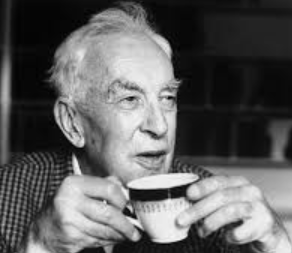
As human beings, we are endowed with this freedom of choice, and we cannot shuffle off our responsibility upon the shoulders of God or nature. We must shoulder it ourselves. It is up to us.
▼
Source
source
Ch. 3: Does History Repeat Itself?
1 month 2 weeks ago
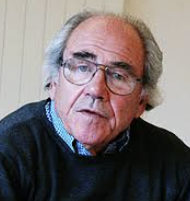
The discourse of truth is quite simply impossible. It eludes itself. Everything eludes itself, everything scoffs at its own truth, seduction renders everything elusive. The fury to unveil the truth, to get at the naked truth, the one which haunts all discourses of interpretation, the obscene rage to uncover the secret, is proportionate to the impossibility of ever achieving this. ...But this rage, this fury, only bears witness to the eternity of seduction and to the impossibility of mastering it.
▼
Source
source
(p. 73)

1 month 3 weeks ago
There is no greater impediment to progress in the sciences than the desire to see it take place too quickly.
▼
Source
source
K 72
2 months 1 week ago
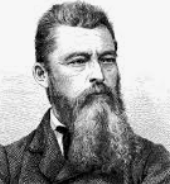
Though I myself am an atheist, I openly profess religion in the sense just mentioned, that is, a nature religion. I hate the idealism that wrenches man out of nature; I am not ashamed of my dependency on nature; I openly confess that the workings of nature affect not only my surface, my skin, my body, but also my core, my innermost being, that the air I breathe in bright weather has a salutary effect not only on my lungs but also on my mind, that the light of the sun illumines not only my eyes but also my spirit and my heart. And I do not, like a Christian, believe that such dependency is contrary to my true being or hope to be delivered from it. I know further that I am a finite moral being, that I shall one day cease to be. But I find this very natural and am therefore perfectly reconciled to the thought.
▼
Source
source
Lecture V, R. Manheim, trans. (1967), pp. 35-36

1 month 3 weeks ago
An army and navy represents the people's toys.
2 months 1 week ago
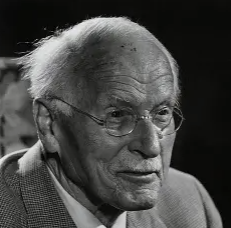
The dream is the small hidden door in the deepest and most intimate sanctum of the soul, which opens to that primeval cosmic night that was soul long before there was conscious ego and will be soul far beyond what a conscious ego could ever reach.
▼
Source
source
The Meaning of Psychology for Modern Man

3 months 3 weeks ago
I doubt if a single individual could be found from the whole of mankind free from some form of insanity. The only difference is one of degree. A man who sees a gourd and takes it for his wife is called insane because this happens to very few people.
▼
Source
source
As quoted in Words from the Wise : Over 6,000 of the Smartest Things Ever Said (2007) by Rosemarie Jarski, p. 312. From The Praise of Folly.
5 days ago
In limitations he first shows himself the master,And the law can only bring us freedom.
▼
Source
source
Was Wir Bringen

1 month 1 week ago
What happens to one man may happen to all.
▼
Source
source
Maxim 171
2 months 3 days ago
All the seemingly positive valuations and judgments of ressentiment are hidden devaluations and negations.
▼
Source
source
L. Coser, trans. (1973), p. 67
3 months 1 week ago
Supply and demand constantly determine the prices of commodities; never balance, or only coincidentally; but the cost of production, for its part, determines the oscillations of supply and demand.
▼
Source
source
Notebook I, The Chapter on Money, p. 58.
3 months 3 weeks ago
What is it, in your opinion, to be a great nobleman? It is to be master of several objects that men covet, and thus to be able to satisfy the wants and the desires of many. It is these wants and these desires that attract them towards you, and that make them submit to you: were it not for these, they would not even look at you; but they hope, by these services... to obtain from you some part of the good which they desire, and of which they see that you have the disposal.
5 days ago
Patriotism ruins history.
▼
Source
source
Conversation with Friedrich Wilhem Riemer

1 week 1 day ago
The capitalist call workers to the factory, for example, directing them to collaborate and communicate in production and giving them the means to do so. In the paradigm of immaterial production, in contrast, labor itself tends to produce the means of interaction, communication, and cooperation for production directly. Affective labor always directly constructs a relationship.
▼
Source
source
147

3 days ago
Books-there is a good kind of a book and a bad kind of a book. I am not to assume that you are all ill acquainted with this; but I may remind you that it is a very important consideration at present. It casts aside altogether the idea that people have that if they are reading any book-that if an ignorant man is reading any book, he is doing rather better than nothing at all.
3 months 2 days ago
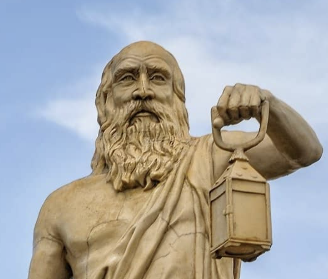
Plato had defined Man as an animal, biped and featherless, and was applauded. Diogenes plucked a fowl and brought it into the lecture-room with the words, "Behold Plato's man!"
▼
Source
source
Diogenes Laërtius, vi. 40
1 month 5 days ago
A civilization is a social entity that manifests religious, political , legal, and customary uniformity over an extended period, and which confers on its members the benefits of socially accumulated knowledge.
▼
Source
source
"What is Culture?" (p. 2)

2 months 2 weeks ago
With much care and skill power has been broken into fragments in the American township, so that the maximum possible number of people have some concern with public affairs.
▼
Source
source
Chapter V.

3 months 1 week ago
When a whole nation is roaring Patriotism at the top of its voice, I am fain to explore the cleanness of its hands and purity of its heart.
▼
Source
source
December 10, 1824

3 months 2 weeks ago
Let the punishments of criminals be useful. A hanged man is good for nothing; a man condemned to public works still serves the country, and is a living lesson.
▼
Source
source
"Civil and Ecclesiastical Laws," Dictionnaire philosophique (1785-1789)

1 month 3 weeks ago
Nature is a structure of evolving processes. The reality is the process.
▼
Source
source
Ch. 4: "The Eighteenth Century", p. 102
1 month 3 weeks ago
It seems as if the female spirit of the world were mourning everlastingly over blessings, not lost, but which she has never had, and which, in her discouragement she feels that she never will have, they are so far off.

1 month 2 weeks ago
Whatever the explicit strategic or political aims of a war may be, they prove to be weak in comparison with its aims of destruction; what war destroys first are the very restrictions imposed on destructive license. If we can rightly speak about the unstated "aim" of war, it is neither primarily to alter the political landscape nor to establish a new political order, but rather to destroy the social basis of politics itself.
▼
Source
source
p. 154
2 months 1 week ago
The notion of nothingness is not characteristic of laboring humanity: those who toil have neither time nor inclination to weigh their dust; they resign themselves to the difficulties or the doltishness of fate; they hope: hope is a slave's virtue.

3 weeks ago
[L]ike nonhuman animals in human factory farms, free-living nonhumans who are starving - or being disembowelled, asphyxiated or eaten alive - cannot console themselves by chanting the Four Noble Truths of Buddhism. The moral case for helping other sentient beings, regardless or race or species, does not rest on the distress their plight does (or doesn't) cause spectators.
▼
Source
source
Reply to Meet the people who want to turn predators into herbivores, TreeHugger, 2 Apr. 2015
1 month 1 week ago
Everything is worth what its purchaser will pay for it.
▼
Source
source
Maxim 847

3 months 1 week ago
Fanaticism is the danger of the world, and always has been, and has done untold harm. I might almost say that I was fanatical against fanaticism.
▼
Source
source
The Future of Science (1959), p. 79; also in BBC The Listener, Vol. 61 (1959), p. 505
2 months 1 week ago
I am well aware, that men love to hear of their power, but have an extreme disrelish to be told of their duty.
▼
Source
source
p. 441
4 months 1 week ago
One does not discover the absurd without being tempted to write a manual of happiness. "What! — by such narrow ways — ?" There is but one world, however. Happiness and the absurd are two sons of the same earth. They are inseparable. It would be a mistake to say that happiness necessarily springs from the absurd discovery. It happens as well that the feeling of the absurd springs from happiness.

2 months 2 weeks ago
We attest that He is the Willer of all things that are, the ruler of all originated phenomena; there does not come into the visible or invisible world anything meager or plenteous, small or great, good or evil, or any advantage or disadvantage, belief or unbelief, knowledge or ignorance, success or failure, increase or decrease, obedience or disobedience, except by His will. What He wills is, and what He does not, will not; there is not a glance of the eye, nor a stray thought of the heart that is not subject to His will. He is the Creator, the Restorer, the Doer of whatsoever He wills. There is none that rescinds His command, none that supplements His decrees, none that dissuades a servant from disobeying Him, except by His help and mercy, and none has power to obey Him except by His will.
▼
Source
source
Ihyaa 'Ulum al-Deen. Beirut: Dar Ibn Hazm (2005), p. 107.
1 month 4 weeks ago
How are we to adjudicate among rival ontologies? Certainly the answer is not provided by the semantical formula "To be is to be the value of a variable"; this formula serves rather, conversely, in testing the conformity of a given remark or doctrine to a prior ontological standard.
▼
Source
source
"On What There Is"

3 months 1 week ago
The hatefulness of a hated person is "real"-in hatred you see men as they are; you are disillusioned; but the loveliness of a loved person is merely a subjective haze concealing a "real" core of sexual appetite or economic association. Wars and poverty are "really" horrible; peace and plenty are mere physical facts about which men happen to have certain sentiments.
▼
Source
source
Letter XXX
2 months 1 week ago
The conscious mind allows itself to be trained like a parrot, but the unconscious does not - which is why St. Augustine thanked God for not making him responsible for his dreams.
▼
Source
source
par. 51 p.46
CivilSimian.com created by AxiomaticPanic, CivilSimian, Kalokagathia