

1 month 2 weeks ago
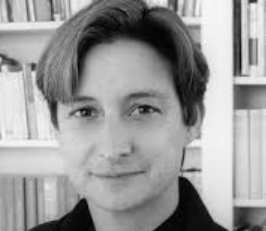
There was a brief moment after 9/11 when Colin Powell said "we should not rush to satisfy the desire for revenge." It was a great moment, an extraordinary moment, because what he was actually asking people to do was to stay with a sense of grief, mournfulness, and vulnerability.
▼
Source
source
Interview with Judith Butler. in: The Believer. May 2003
3 months 2 days ago
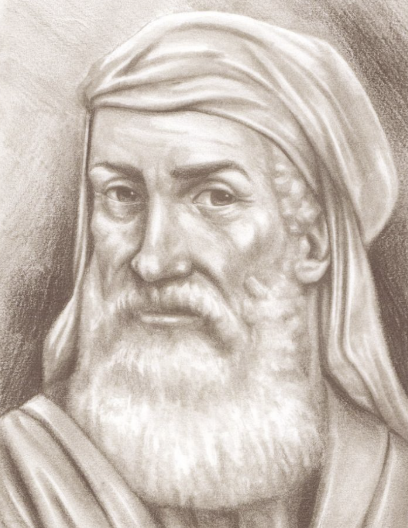
As it has long been and shall be, not ever, I think, will unfathomable time be emptied of either. This quote refers to Love and Strife, the fundamental opposing and ordering forces in Empedocles' model of the cosmos.
▼
Source
source
fr. 16
2 months 4 days ago
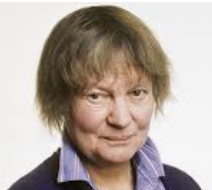
All art is the struggle to be, in a particular sort of way, virtuous.
▼
Source
source
The Black Prince (1973); 2003, p. 181.

2 months 5 days ago
...whoever is not against us is for us.
▼
Source
source
9:40

2 months 1 week ago
Each of us is born with a share of purity, predestined to be corrupted by our commerce with mankind, by that sin against solitude.
2 days ago
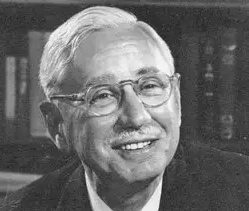
The death of Alexander (323 BC) quickened this process of decay. The boy-emperor, barbarian though he remained after all of Aristotle's tutoring, had yet learned to revere the rich culture of Greece, and had dreamed of spreading that culture through the Orient in the wake of his victorious armies.... But he had underrated the inertia and resistance of the Oriental mind, and the mass and depth of Oriental culture. It was only a youthful fancy, after all, to suppose that so immature and unstable a civilization as that of Greece could be imposed upon a civilization immeasurably more widespread, and rooted in the most venerable traditions. The quantity of Asia proved too much for the quality of Greece.
2 months 1 week ago
The need to devour oneself absolves one of the need to believe.

2 months 2 weeks ago
But how shall we expect charity towards others, when we are uncharitable to ourselves? Charity begins at home, is the voice of the world, yet is every man his greatest enemy, and as it were, his own executioner.
▼
Source
source
Section 4

2 months 1 week ago
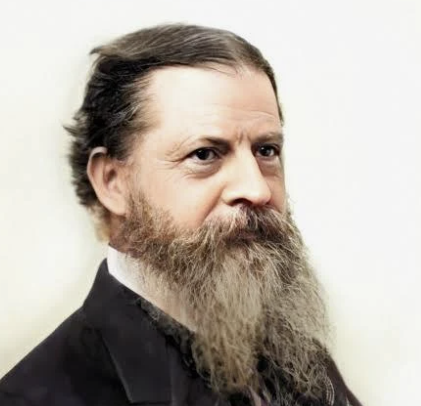
The recognition by one person of another's personality takes place by means to some extent identical to the means by which he is conscious of his own personality. The idea of the second personality, which is as much as to say that second personality itself, enters within the direct consciousness of the first person, and is immediately perceived as his ego, though less strongly. At the same time, the opposition between the two persons is perceived, so that the externality of the second is perceived.

4 months 2 days ago
Gentleness, as opposed to an irascible temper, greatly contributes to the tranquility and happiness of life, by preserving the mind from perturbation, and arming it against the assaults of calumny and malice.
3 months 1 week ago
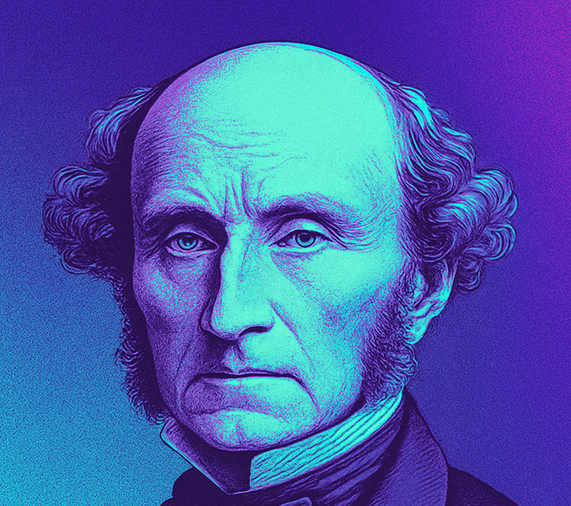
Everybody knows that the same sum of money is of much greater value to a poor man that to a rich one. Give £10 a year to the man who has but £10 a year, you double his income, and you nearly double his enjoyments. Add £10 more, you do not add to his enjoyments so much as you did by the first £10. The third £10 is less valuable than the second, and the fourth less valuable than the third. To the possessor of £1,000 a year the addition of £10 would be scarcely perceptible; to the possessor of £10,000 it would not be worth slooping for.The richer a man is the less he is benefited by any further addition to his income. The man of £4,000 a year has four times the income of the man who has but £1,000; but does anybody suppose that he has four times the happiness?
▼
Source
source
John Stuart Mill, Primogeniture, in The Collected Works of John Stuart Mill, Toronto, 1988, vol. 26, p. 336

3 months 2 weeks ago
Some impose upon the world that they believe that which they do not; others, more in number, make themselves believe that they believe, not being able to penetrate into what it is to believe.
▼
Source
source
Book II, Ch. 12. Apology for Raimond Sebond

3 months 1 week ago
If there is a kind of "proof" of the sincerity of the parrhesiastes, it is his courage... Saying something dangerous-different from what the majority believes-is a strong indication that he is a parrhesiastes.
2 months 1 week ago
The Protestant churches generally hold that the elements of the sacrament are flesh and blood only in a tropical sense; they nourish our souls as meat and the juice of it would our bodies. But the Catholics maintain that they are literally just that; although they possess all the sensible qualities of wafer-cakes and diluted wine. But we can have no conception of wine except what may enter into a belief, either -
3 months 2 days ago
He who has begun has half done. Dare to be wise; begin!
▼
Source
source
Book I, epistle ii, lines 40-41

3 months 2 weeks ago
Beauty is no quality in things themselves: It exists merely in the mind which contemplates them; and each mind perceives a different beauty. One person may even perceive deformity, where another is sensible of beauty; and every individual ought to acquiesce in his own sentiment, without pretending to regulate those of others.
▼
Source
source
Part I, Essay 23: Of The Standard of Taste

3 months 2 weeks ago
Superstition sets the whole world in flames; philosophy quenches them.
▼
Source
source
Dictionnaire philosophique (1822), "Superstition"

3 months 1 week ago
The secret of happiness is to face the fact that the world is horrible, horrible, horrible.
▼
Source
source
Said in conversation with Mrs. Alan Wood; quoted in Alan Wood's Bertrand Russell, the Passionate Sceptic (Allen and Unwin, 1957), pp. 236-7
2 months 1 week ago
Time with its continuity logically involves some other kind of continuity than its own. Time, as the universal form of change, cannot exist unless there is something to undergo change, and to undergo a change continuous in time, there must be a continuity of changeable qualities.

3 months 1 week ago
The heavens are as deep as our aspirations are high.
▼
Source
source
Quoted in Maturin M. Ballou (ed.) Pearls of Thought (Boston: Houghton, Mifflin and Co., 1881) p. 21

3 months 2 weeks ago
The origin of our passions, the root and spring of all the rest, the only one which is born with man, which never leaves him as long as he lives, is self-love; this passion is primitive, instinctive, it precedes all the rest, which are in a sense only modifications of it. In this sense, if you like, they are all natural. But most of these modifications are the result of external influences, without which they would never occur, and such modifications, far from being advantageous to us, are harmful. They change the original purpose and work against its end; then it is that man finds himself outside nature and at strife with himself.
1 month 4 weeks ago
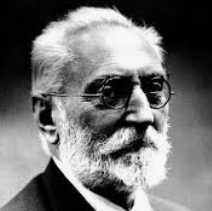
I will not say that the more or less poetical and unphilosophical doctrines that I am about to set forth are those which make me live; but I will venture to say that it is my longing to live and to live for ever that inspires these doctrines within me. And if by means of them I succeed in strengthening and sustaining this same longing in another, perhaps when it is all but dead, then I shall have performed a man's work, and above all, I shall have lived. In a word, be it with reason or without reason or against reason, I am resolved not to die. And if, when at last I die out, I die altogether, then I shall not have died out of myself - that is, I shall not have yielded myself to death, but my human destiny shall have killed me. Unless I come to lose my head, or rather my heart, I will not abdicate from life - life will be wrested from me.

3 months 1 week ago
We boil at different degrees.
▼
Source
source
Eloquence
3 months 1 week ago
All the thoughts of a turtle are turtle.
▼
Source
source
1855
3 months 2 weeks ago
No circumstance is ever so desperate that one cannot nurture some spark of hope.
▼
Source
source
Act I, scene i
3 months 1 week ago
We may define "faith" as a firm belief in something for which there is no evidence. Where there is evidence, no one speaks of "faith". We do not speak of faith that two and two are four or that the earth is round. We only speak of faith when we wish to substitute emotion for evidence. The substitution of emotion for evidence is apt to lead to strife, since different groups substitute different emotions.
▼
Source
source
p. 215
4 months 1 week ago
Neither family, nor privilege, nor wealth, nor anything but Love can light that beacon which a man must steer by when he sets out to live the better life.
3 months 1 week ago
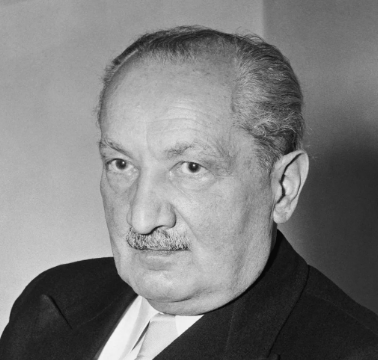
The word "art" does not designate the concept of a mere eventuality; it is a concept of rank.
▼
Source
source
p. 125

4 months 2 days ago
The way which the superior man pursues, reaches wide and far, and yet is secret. Common men and women, however ignorant, may intermeddle with the knowledge of it; yet in its utmost reaches, there is that which even the sage does not know. Common men and women, however much below the ordinary standard of character, can carry it into practice; yet in its utmost reaches, there is that which even the sage is not able to carry into practice. Great as heaven and earth are, men still find some things in them with which to be dissatisfied. Thus it is that, were the superior man to speak of his way in all its greatness, nothing in the world would be found able to embrace it, and were he to speak of it in its minuteness, nothing in the world would be found able to split it.
3 months 2 days ago
To all my friends without distinction I am ready to display my opulence: come one, come all; and whosoever likes to take a share is welcome to the wealth that lies within my soul.
▼
Source
source
iv. 35

3 months 1 week ago
How you produce volume after volume the way you do is more than I can conceive. ...But you haven't to forge every sentence in the teeth of irreducible and stubborn facts as I do. It is like walking through the densest brush wood.
▼
Source
source
Letter to Henry James (ca. 1890) as quoted by Robert D. Richardson, William James: In the Maelstrom of American Modernism (2007) p. 297.
3 months 1 week ago
The end of the human race will be that it will eventually die of civilization.
▼
Source
source
Civilization
1 month 4 weeks ago
And what is its moral proof? We may formulate it thus: Act so that in your own judgment and in the judgment of others you may merit eternity, act so that you may become irreplaceable, act so that you may not merit death. Or perhaps thus: Act as if you were to die tomorrow, but to die in order to survive and be eternalized. The end of morality is to give personal, human finality to the Universe; to discover the finality that belongs to it - if indeed it has any finality - and to discover it by acting.

3 months 1 week ago
Those who believe that they are exclusively in the right are generally those who achieve something.
▼
Source
source
"Note on Dogma"
2 months 4 days ago
To regiment artists, to make them servants of some particular cause does violence to the very springs of artistic creation. But it does more than that. It betrays the very cause of a better future it would serve, for in its subjugation of the individuality of the artist it annihilates the source of that which is genuinely new. Where the regimentation is successful, it would cause the future to be but a rearrangement of the past.
1 month 3 weeks ago
The vitality of thought is in adventure. Ideas won't keep. Something must be done about them. When the idea is new, its custodians have fervor, live for it, and, if need be, die for it.
▼
Source
source
p. 100; Ch. 12, April 28, 1938.
3 weeks ago
[I]n the wake of the growth of the animal-rights movement, there has recently arisen a hitherto unfelt need to demonise and demean our non-human victims - and those who try to help them - now that our previously well-nigh unquestioned right to kill and exploit them is being challenged. Bloodsports enthusiasts, for instance, currently spend a lot of time cataloguing the alleged depredations of our victims on the environment. Recreational animal-killers go to extraordinarily lengths to avoid admitting that they themselves enjoy hunting and killing other creatures for fun. But then until a few years ago such rationalisations seemed scarcely called for. Selfish DNA had honed our intuitions so that the most agonising bloodshed seemed simply "natural". "The Post-Darwinian Transition", The Animal Rights Library, 1996

3 months 3 weeks ago
No Man is wise at all Times, or is without his blind Side.
▼
Source
source
The Alchymyst, in Colloquies of Erasmus, Volume I.
3 months 1 week ago
The imitator dooms himself to hopeless mediocrity. The inventor did it because it was natural to him, and so in him it has a charm. In the imitator something else is natural, and he bereaves himself of his own beauty, to come short of another man's.
▼
Source
source
p. 26
3 months 3 weeks ago
For human beings, the measure of every action is the impression of the senses.
▼
Source
source
Book I, ch. 28, 10

2 months 3 weeks ago
We have two ears and one mouth, so we should listen more than we say.
▼
Source
source
As quoted in Diogenes Laërtius Lives and Opinions of Eminent Philosophers, vii. 23.
3 weeks 4 days ago
The extinction of race consciousness as between Muslims is one of the outstanding achievements of Islam, and in the contemporary world there is, as it happens, a crying need for the propagation of this Islamic virtue.
▼
Source
source
Ch. 10: Islam, the West, and the Future
1 month 3 weeks ago
As the few adepts in such things well know, universal morality is to be found in little everyday penny-events just as much as in great ones. There is so much goodness and ingenuity in a raindrop that an apothecary wouldn't let it go for less than half-a-crown.
▼
Source
source
B 33
1 month 2 weeks ago
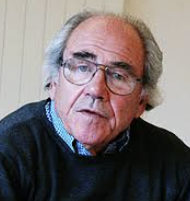
The very ideology of "cultural production" is antithetical to all culture, as is that of visibility and of the polyvalent space: culture is a site of the secret, of seduction, of initiation, of a restrained and highly ritualized symbolic exchange.
▼
Source
source
"The Beaubourg Effect," p. 64

3 months 1 week ago
The French bourgeois doesn't dislike shit, provided it is served up to him at the right time.
▼
Source
source
Book 2, "To Succeed in Being All, Strive to be Nothing in Anything"
3 months 1 week ago
I am ashamed of belonging to the species Homo Sapiens...You & I may be thankful to have lived in happier times - you more than I, because you have no children.
▼
Source
source
Letter to Lucy Donnelly, 6/23/1946
1 month 4 weeks ago
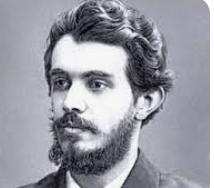
There is absolute truth in anarchism and it is to be seen in its attitude to the sovereignty of the state and to every form of state absolutism. ... The religious truth of anarchism consists in this, that power over man is bound up with sin and evil, that a state of perfection is a state where there is no power of man over man, that is to say, anarchy. The Kingdom of God is freedom and the absence of such power... the Kingdom of God is anarchy.
▼
Source
source
Slavery and Freedom (1939), p. 147
3 months 1 week ago
Religion...is a man's total reaction upon life.
▼
Source
source
Lecture II, "Circumscription of the Topic"
CivilSimian.com created by AxiomaticPanic, CivilSimian, Kalokagathia