

1 month 2 weeks ago
To affirm equality is to affirm a cohabitation defined in part by an interdependency that takes the edge off the individual boundaries of the body, or that works that edge for its social and political potential.
▼
Source
source
p. 148
3 months 3 weeks ago
If you only notice human proceedings, you may observe that all who attain great power and riches, make use of either force or fraud; and what they have acquired either by deceit or violence, in order to conceal the disgraceful methods of attainment, they endeavor to sanctify with the false title of honest gains. Those who either from imprudence or want of sagacity avoid doing so, are always overwhelmed with servitude and poverty; for faithful servants are always servants, and honest men are always poor; nor do any ever escape from servitude but the bold and faithless, or from poverty, but the rapacious and fraudulent. God and nature have thrown all human fortunes into the midst of mankind; and they are thus attainable rather by rapine than by industry, by wicked actions rather than by good. Hence it is that men feed upon each other, and those who cannot defend themselves must be worried.
▼
Source
source
Book III, Chapter 13
3 months 2 weeks ago
Secrecy is an instrument of conspiracy; it ought not, therefore, to be the system of a regular government.
▼
Source
source
On Publicity from The Works of Jeremy Bentham volume 2, part 2, 1839

3 months 3 weeks ago
Saturninus said, "Comrades, you have lost a good captain to make him an ill general."
▼
Source
source
Book III, Ch. 9. Of Vanity

3 months 2 weeks ago
All the entertainment and talk of history is nothing almost but fighting and killing: and the honour and renown that is bestowed on conquerers (who for the most part are but the great butchers of mankind) farther mislead growing youth, who by this means come to think slaughter the laudible business of mankind, and the most heroick of virtues. By these steps unnatural cruelty is planted in us; and what humanity abhors, custom reconciles and recommends to us, by laying it in the way to honour. Thus, by fashioning and opinion, that comes to be a pleasure, which in itself neither is, nor can be any.
▼
Source
source
Sec. 116

2 months 2 weeks ago
Circumstances (which with some gentlemen pass for nothing) give in reality to every political principle its distinguishing colour, and discriminating effect. The circumstances are what render every civil and political scheme beneficial or noxious to mankind.
1 week 3 days ago
Everyone is sure of this [that errors are normally distributed], Mr. Lippman told me one day, since the experimentalists believe that it is a mathematical theorem, and the mathematicians that it is an experimentally determined fact.
▼
Source
source
Calcul des probabilités (2nd ed., 1912), p. 171

1 week ago
Nothing that was worthy in the past departs; no truth or goodness realized by man ever dies, or can die.
1 day ago
The English, generally remarkable for doing very good things in a very bad manner, seem to have reserved the maturity and plenitude of their awkwardness for the pulpit.
▼
Source
source
Vol. I, ch. 3, p. 83

3 months 2 weeks ago
The Hindoos are most serenely and thoughtfully religious than the Hebrews. They have perhaps a purer, more independent and impersonal knowledge of God. Their religious books describe the first inquisitive and contemplative access to God; the Hebrew bible a conscientious return, a grosser and more personal repentance. Repentance is not a free and fair highway to God. A wise man will dispense with repentance. It is shocking and passionate. God prefers that you approach him thoughtful, not penitent, though you are chief of sinners. It is only by forgetting yourself that you draw near to him. The calmness and gentleness with which the Hindoo philosophers approach and discourse on forbidden themes is admirable. In 1853.
▼
Source
source
A Tribute to Hinduism, 2008

3 months 2 weeks ago
IV. Every tax ought to be contrived as both to take out and to keep out of the pockets of the people as little as possible, over and above what it brings into the public treasury of the state.
▼
Source
source
Chapter II, Part II, p. 893.

1 week 5 days ago
The groups are not unified under any single authority but rather relate to each other in a network structure. Social forums, affinity groups, and other forms of democratic decision-making are the basis of the movements, and they manage to act together based on what they have in common. ... These globalization protest movements are obviously limited in many regards. First of all, although their vision and desire is global in scope, they have thus far only involved significant numbers in North America and Europe. Second, so long, as they remain merely protests movements, traveling from one summit meeting to the next, they will be incapable of becoming a foundational struggle and of articulating an alternative to social relations. These limitations may only be temporary obstacles, and the movements may discover ways to overcome them.
▼
Source
source
86-87
1 week 5 days ago
Disobedience to authority is one of the most natural and healthy acts.
▼
Source
source
210

3 months 2 weeks ago
There ought to be some regulation with respect to the spirit of denunciation that now prevails. If every individual is to indulge his private malignancy or his private ambition, to denounce at random and without any kind of proof, all confidence will be undermined and all authority be destroyed. Calumny is a species of treachery that ought to be punished as well as any other kind of treachery. It is a private vice productive of public evils; because it is possible to irritate men into disaffection by continual calumny who never intended to be disaffected. It is therefore equally as necessary to guard against the evils of unfounded or malignant suspicion as against the evils of blind confidence. It is equally as necessary to protect the characters of public officers from calumny as it is to punish them for treachery or misconduct.
▼
Source
source
Letter to George Jacques Danton

4 months 2 weeks ago
If you have hitherto believed that life was one of the highest value and now see yourselves disappointed, do you at once have to reduce it to the lowest possible price?

3 months 2 weeks ago
I think all the great religions of the world - Buddhism, Hinduism, Christianity, Islam, and Communism - both untrue and harmful. It is evident as a matter of logic that, since they disagree, not more than one of them can be true. With very few exception, the religions which a man accepts is that of the community in which he lives, which makes it obvious that the influence of environment is what has led him to accept the religion in question.
▼
Source
source
Preface, 1957
2 months 1 week ago
It is as if thinking itself had been reduced to the level of industrial processes, subjected to a close schedule-in short, made part and parcel of production.
▼
Source
source
p. 21.

3 months 2 weeks ago
They [Christians] believe that the living, dynamic activity of love has been going on in God forever and has created everything else. And that, by the way, is perhaps the most important difference between Christianity and all other religions: that in Christianity God is not an impersonal thing nor a static thing-not even just one person-but a dynamic pulsating activity, a life, a kind of drama, almost, if you will not think me irreverent, a kind of dance ... (The) pattern of this three-personal life is ... the great fountain of energy and beauty spurting up at the very center of reality.
▼
Source
source
Book IV, Chapter 4, "Good Infection"

2 months 2 weeks ago
Life is a disease of the spirit; a working incited by Passion. Rest is peculiar to the spirit.
2 months 1 week ago
It makes unavoidably necessary an entirely new organization of society in which production is no longer directed by mutually competing individual industrialists but rather by the whole society operating according to a definite plan and taking account of the needs of all.
1 month 2 weeks ago
"The Precession of Simulacra,"
▼
Source
source
p. 6
3 months 2 weeks ago
"A pleasure is full grown only when it is remembered. You are speaking, Hmān, as if the pleasure were one thing and the memory another. It is all one thing. The séroni could say it better than I say it now. Not better than I could say it in a poem. What you call remembering is the last part of the pleasure, as the crah is the last part of a poem. When you and I met, the meeting was over very shortly, it was nothing. Now it is growing something as we remember it. But still we know very little about it. What it will be when I remember it as I lie down to die, what it makes in me all my days till then-that is the real meeting. The other is only the beginning of it."
▼
Source
source
Hyoi, p. 73

3 months 2 weeks ago
United States! the ages plead, - Present and Past in under-song, - Go put your creed into your deed, Nor speak with double tongue.
▼
Source
source
Ode, st. 5

3 months 2 weeks ago
Out of my experience, such as it is (and it is limited enough) one fixed conclusion dogmatically emerges, and that is this, that we with our lives are like islands in the sea, or like trees in the forest. The maple and the pine may whisper to each other with their leaves. ... But the trees also commingle their roots in the darkness underground, and the islands also hang together through the ocean's bottom. Just so there is a continuum of cosmic consciousness, against which our individuality builds but accidental fences, and into which our several minds plunge as into a mother-sea or reservoir.
▼
Source
source
"Confidences of a 'Psychical Researcher'", in The American Magazine, Vol. 68 (1909), p. 589

3 months 2 weeks ago
Newton... (after having remarked that geometry only requires two of the mechanical actions which it postulates, namely, to describe a straight line and a circle) says: geometry is proud of being able to achieve so much while taking so little from extraneous sources. One might say of metaphysics, on the other hand: it stands astonished, that with so much offered it by pure mathematics it can effect so little. In the meantime, this little is something which mathematics indispensably requires in its application to natural science, which, inasmuch as it must here necessarily borrow from metaphysics, need not be ashamed to allow itself to be seen in company with the latter.
▼
Source
source
Preface, Tr. Bax (1883) citing Isaac Newton's Principia

1 month 4 weeks ago
Steiner goes further than this -- and this is his own central contribution to modern thought. He states that once we have made a habit of remembering Mozart and the stars, we shall find ourselves developing powers of 'spiritual vision.' We shall never again feel ourselves to be helpless victims of the external world.
▼
Source
source
p. 169
1 month 3 weeks ago
In an information-rich world, the wealth of information means a dearth of something else: a scarcity of whatever it is that information consumes. What information consumes is rather obvious: it consumes the attention of its recipients. Hence a wealth of information creates a poverty of attention and a need to allocate that attention efficiently among the overabundance of information sources that might consume it.
▼
Source
source
Simon, H. A. (1971) "Designing Organizations for an Information-Rich World" in: Martin Greenberger, Computers, Communication, and the Public Interest, Baltimore. MD: The Johns Hopkins Press. pp. 40-41.
2 months 1 week ago
To call war the soil of courage and virtue is like calling debauchery the soil of love.
▼
Source
source
Ch. III: Industry, Government, the peasants

1 month 1 week ago
A happy man or woman is a better thing to find than a five-pound note. He or she is a radiating focus of goodwill; and their entrance into a room is as though another candle had been lighted. We need not care whether they could prove the forty-seventh proposition; they do a better thing than that, they practically demonstrate the great Theorem of the Liveableness of Life.
▼
Source
source
An Apology for Idlers.
3 months 2 weeks ago
I have at last come to the end of the Faerie Queene: and though I say "at last", I almost wish he had lived to write six books more as he had hoped to do - so much have I enjoyed it.
▼
Source
source
On Edmund Spenser's long poem in a letter to Arthur Greeves (7 March 1916), published in The Collected Letters of C.S. Lewis

4 months 2 weeks ago
What the age needs is not a genius - it has had geniuses enough, but a martyr, who in order to teach men to obey would himself be obedient unto death. What the age needs is awakening. And therefore someday, not only my writings but my whole life, all the intriguing mystery of the machine will be studied and studied. I never forget how God helps me and it is therefore my last wish that everything may be to his honour.

2 months 1 week ago
I know well that many of my readers do not think as I do. This also is most natural and confirms the theorem. For although my opinion turn out erroneous, there will always remain the fact that many of those dissentient readers have never given five minutes' thought to this complex matter. How are they going to think as I do? But by believing that they have a right to an opinion on the matter without previous effort to work one out for themselves, they prove patently that they belong to that absurd type of human being which I have called the "rebel mass." It is precisely what I mean by having one's soul obliterated, hermetically closed. Here it would be the special case of intellectual hermetism.
▼
Source
source
Chap. VIII: The Masses Intervene In Everything, And Why Their Intervention Is Solely By Violence
3 months 1 week ago
Common sense doesn't have the last word in ethics or anywhere else, but it has, as J. L. Austin said about language, the first word: it should be examined before it is discarded.
▼
Source
source
p. 166.

2 months 2 weeks ago
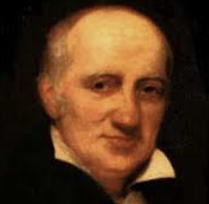
It is comparatively easy for the philosopher in his closet to invent imaginary schemes of policy, and to shew how mankind, if they were without passions and without prejudices, might best be united in the form of a political community. But, unfortunately, men in all ages are the creatures of passions, perpetually prompting them to defy the rein, and break loose from the dictates of sobriety and speculation.
▼
Source
source
History of the Commonwealth of England. From its Commencement, to the Restoration of Charles the Second. Volume the Fourth. Oliver, Lord Protector (1828), p. 579

3 months 2 weeks ago
Thus, while the refugee serfs only wished to be free to develop and assert those conditions of existence which were already there, and hence, in the end, only arrived at free labour, the proletarians, if they are to assert themselves as individuals, will have to abolish the very condition of their existence hitherto (which has, moreover, been that of all society up to the present), namely, labour. Thus they find themselves directly opposed to the form in which, hitherto, the individuals, of which society consists, have given themselves collective expression, that is, the State. In order, therefore, to assert themselves as individuals, they must overthrow the State.
▼
Source
source
"Communism. The Production of the Form of Intercourse Itself", The Marx-Engels Reader

3 months 1 week ago
A sovereign shows himself to be a tyrant if he disregards his honest advisors, or punishes them for what they have said.
2 months 1 week ago
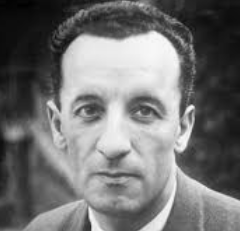
By becoming the pure subject who knows the world objectively, man ultimately realizes that absolute consciousness with respect to which the body and individual existence are no longer anything but objects; death is deprived of meaning. Reduced to the status of object of consciousness, the body could not be conceived as an intermediary between "things" and the consciousness which knows them.
▼
Source
source
p. 204
3 months 2 weeks ago
The book written against fame and learning has the author's name on the title-page.
▼
Source
source
1857
3 months 2 weeks ago
The Hudson's Bay Company, before their misfortunes in the late war, had been much more fortunate than the Royal African Company.
▼
Source
source
Chapter I, Part III, p. 806.
3 months 2 weeks ago
The good King of France desires only that you would take his word and let him be quiet till he has got the West Indies into his hands and his grandson well established in Spain, and then you may be sure you shall be as safe as he will let you be in your religion, property and trade, to all which who can be such an infidel as not to believe him a great friend?
▼
Source
source
Letter to Peter King (5 April 1701), quoted in Maurice Cranston, John Locke: A Biography (1957; 1985), p. 452

1 week 4 days ago
Never has any one been less a priest than Jesus, never a greater enemy of forms, which stifle religion under the pretext of protecting it. By this we are all his disciples and his successors; by this he has laid the eternal foundation-stone of true religion; and if religion is essential to humanity, he has by this deserved the Divine rank the world has accorded him.
▼
Source
source
Ch. 5.
3 months 2 weeks ago
I believe in Christianity as I believe that the sun has risen. Not only because I see it, but because by it I see everything else.
▼
Source
source
"Is Theology Poetry?", 1945

3 months 3 weeks ago
The reproduction of mankind is a great marvel and mystery. Had God consulted me in the matter, I should have advised him to continue the generation of the species by fashioning them of clay, in the way Adam was fashioned.
▼
Source
source
752

2 months 1 week ago
The more intense a spiritual leader's appetite for power, the more he is concerned to limit it to others.

1 month 3 weeks ago
Man is a masterpiece of creation if for no other reason than that, all the weight of evidence for determinism notwithstanding, he believes he has free will.
▼
Source
source
J 249
3 months 2 weeks ago
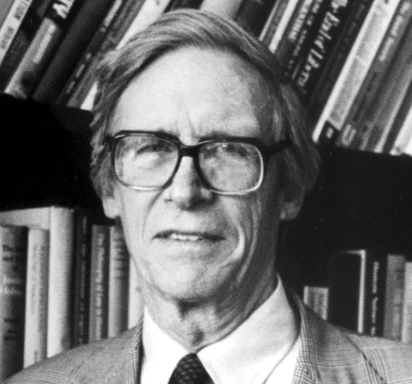
The claims of existing social arrangements and of self interest have been duly allowed for. We cannot at the end count them a second time because we do not like the result.
▼
Source
source
Chapter III, Section 23, pg. 135
3 months 3 weeks ago
Dear rulers ... I maintain that the civil authorities are under obligation to compel the people to send their children to school. ... If the government can compel such citizens as are fit for military service to bear spear and rifle, to mount ramparts, and perform other martial duties in time of war, how much more has it a right to compel the people to send their children to school, because in this case we are warring with the devil, whose object it is secretly to exhaust our cities and principalities of their strong men.
▼
Source
source
letter to the German rulers (1524), as quoted in The History of Compulsory Education in New England, John William Perrin, 1896
2 months 1 week ago
Every living creature is happy when he fulfills his destiny, that is, when he realizes himself, when he is being that which in truth he is. For this reason, Schlegel, inverting the relationship between pleasure and destiny, said, "We have a genius for what we like." Genius, man's superlative gift for doing something, always carries a look of supreme pleasure.
▼
Source
source
pp. 16-17

4 months 2 days ago
"For I am holy." When I hear these words I recognize the voice of the Saviour. But shall I take away my own? Certainly when He speaks thus He speaks in inseparable union with His body. But can I say, "I am holy"? If I mean a holiness that I have not received, I should be proud and a liar; but if I mean a holiness that I have received - as it is written: "Be ye holy because I the Lord your God am holy" (Lev. 19:2) - then let the body of Christ say these words. And let this one man, who cries from the ends of the earth, say with his Head and united with his Head: "I am holy." … That is not foolish pride, but an expression of gratitude. If you were to say that you are holy of yourselves, that would be pride; but if, as one of Christ's faithful and as a member of Christ, you say that you are not holy, you are ungrateful.
▼
Source
source
p.428
CivilSimian.com created by AxiomaticPanic, CivilSimian, Kalokagathia