

2 months 1 week ago
Frugality is founded on the principle that all riches have limits.
3 months 1 week ago
Private property has made us so stupid and one-sided that an object is only ours when we have it - when it exists for us as capital, or when it is directly possessed, eaten, drunk, worn, inhabited, etc., - in short, when it is used by us. Although private property itself again conceives all these direct realizations of possession as means of life, and the life which they serve as means is the life of private property - labour and conversion into capital. In place of all these physical and mental senses there has therefore come the sheer estrangement of all these senses - the sense of having. The human being had to be reduced to this absolute poverty in order that he might yield his inner wealth to the outer world.
▼
Source
source
p. 87, The Marx-Engels Reader

3 months 4 weeks ago
Those who deny the first principle should be flogged or burned until they admit that it is not the same thing to be burned and not burned, or whipped and not whipped.
1 month 3 weeks ago
My thoughts have been shaped by the conviction that feminism must become a mass based political movement if it is to have a revolutionary, transformative impact on society.
▼
Source
source
p. xiii.
1 month 1 week ago
There is one particular property of living things, however, that I want to single out as explicable only by Darwinian selection. This property is the one that has been the recurring topic of this book: adaptive complexity.
▼
Source
source
Chapter 11 "Doomed Rivals" (p. 288)
3 months 1 week ago
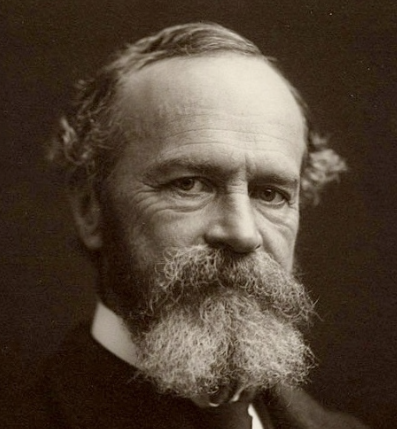
At the present day, civilized opinion is a curious mental mixture. The military instincts and ideals are as strong as ever, but they are confronted by reflective criticisms which sorely curb their ancient freedom. Innumerable writers are showing up the bestial side of military service. Pure loot and mastery seem no longer morally allowable motives, and pretexts must be found for attributing them solely to the enemy.
4 days ago
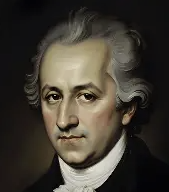
One lives but once in the world.
▼
Source
source
Clavigo, Act I, sc. i
1 month 1 week ago
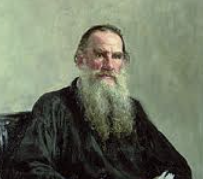
Despite the fact that the doctors treated him, bled him, and gave him medicines to drink, he recovered.
▼
Source
source
[sometimes quoted as "Though the doctors treated him, let his blood, and gave him medications to drink, he nevertheless recovered."] Bk. XV, ch. 12
1 month 5 days ago
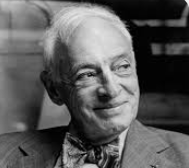
Human beings can lose their lives in libraries. They ought to be warned.
▼
Source
source
Him with His Foot in His Mouth, from Him with His Foot in His Mouth and Other Stories (1984) [Penguin Classics, 1998, ISBN 0-141-18023-4], p. 11
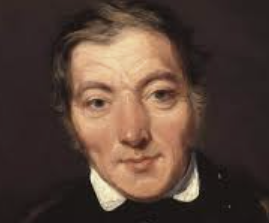
1 month 5 days ago
It is therefore, the interest of all, that every one, from birth, should be well educated, physically and mentally, that society may be improved in its character, - that everyone should be beneficially employed, physically and mentally, that the greatest amount of wealth may be created, and knowledge attained, - that everyone should be placed in the midst of those external circumstances that will produce the greatest number of pleasurable sensations, through the longest life, that man may be made truly intelligent, moral and happy, and be thus prepared to enter upon the coming Millennium.
▼
Source
source
A Development of the Principles & Plans on which to establish self-supporting Home Colonies
1 month 3 weeks ago
As we search as a nation for constructive ways to challenge racism and white supremacy, it is absolutely essential that progressive female voices gain a hearing.
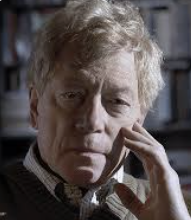
1 month 5 days ago
The future of mankind, for the socialist, is simple: pull down the existing order and allow the future to emerge.
▼
Source
source
"Eliot and Conservatism" (p. 208)

2 months 1 week ago
The Creation was the first act of sabotage.
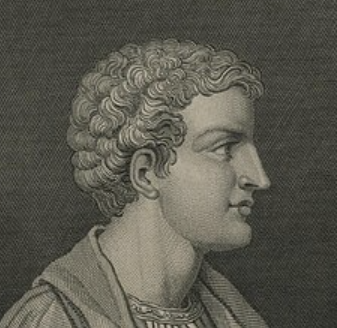
3 months 1 day ago
At times the world sees straight, but many times the world goes astray.
▼
Source
source
Book II, epistle i, line 63
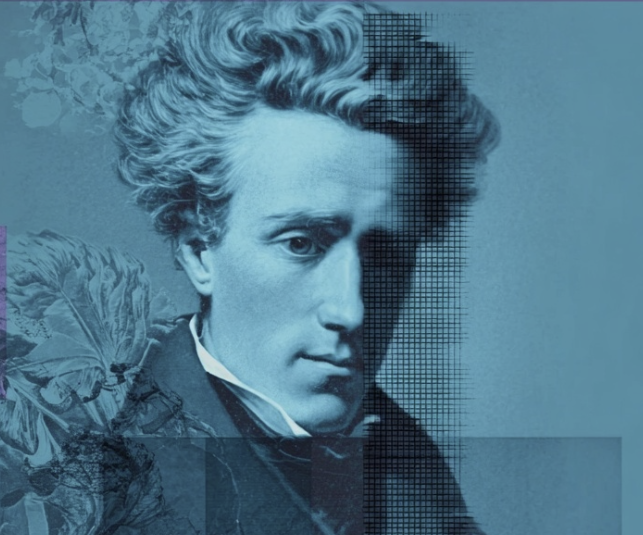
4 months 1 week ago
And how does the God's existence emerge from the proof? Does it follow straightway, without any breach of continuity? Or have we not here an analogy to the behavior of the little Cartesian dolls? As soon as I let go of the doll it stands on its head. As soon as I let it go, I must therefore let it go. So also with the proof. As long as I keep my hold on the proof, i.e., continue to demonstrate, the existence does not come out, if for no other reason than that I am engaged in proving it; but when I let the proof go, the existence is there. But this act of letting go is surely also something; it is indeed a contribution of mine. Must not this also be taken into the account, this little moment, brief as it may be – it need not be long, for it is a leap. However brief this moment, if only an instantaneous now, this "now" must be included in the reckoning.

1 month 1 week ago
We are not arrogant, not hubristic, to celebrate the sheer bulk and detail of what we know through science. We are simply telling the honest and irrefutable truth. Also honest is the frank admission of how much we don't yet know - how much more work remains to be done. That is the very antithesis of hubristic arrogance. Science combines a massive contribution, in volume and detail, of what we do know with humility in proclaiming what we don't. Religion, by embarrassing contrast, has contributed literally zero to what we know, combined with huge hubristic confidence in the alleged facts it has simply made up.
▼
Source
source
The Intellectual and Moral Courage of Atheism

3 months 1 week ago
All human activity is prompted by desire. There is a wholly fallacious theory advanced by some earnest moralists to the effect that it is possible to resist desire in the interests of duty and moral principle. I say this is fallacious, not because no man ever acts from a sense of duty, but because duty has no hold on him unless he desires to be dutiful. If you wish to know what men will do, you must know not only, or principally, their material circumstances, but rather the whole system of their desires with their relative strengths.
▼
Source
source
(wav audio file of Russell's voice)
2 months 1 week ago
It cannot at this time be too often repeated; line upon line; precept upon precept; until it comes into the currency of a proverb, To innovate is not to reform.
▼
Source
source
p. 20
2 months 3 days ago
Happiness is a matter of one's most ordinary everyday mode of consciousness being busy and lively and unconcerned with self. To be damned is for one's ordinary everyday mode of consciousness to be unremitting agonising preoccupation with self.
▼
Source
source
The Nice and the Good (1968), ch. 22.
2 months 1 week ago
Of all that makes us suffer, nothing - so much as disappointment - gives us the sensation of at last touching Truth.


4 months 2 weeks ago
It says nothing against the ripeness of a spirit that it has a few worms.

1 month 3 weeks ago
There certainly is self division. The man who watches a woman undressing has the red eyes of an ape; yet the man who sees two young lovers, really alone for the first time, who brings out all the pathos, the tenderness and uncertainty when he tells about it, is no brute; he is very much human. And the ape and the man exist in one body; and when the ape's desires are about to be fulfilled, he disappears and is succeeded by the man, who is disgusted with the ape's appetite.
▼
Source
source
Chapter one, The Country of the Blind
2 months 1 week ago
The proletariat is that class in society which lives entirely from the sale of its labor and does not draw profit from any kind of capital; whose weal and woe, whose life and death, whose sole existence depends on the demand for labor - hence, on the changing state of business, on the vagaries of unbridled competition.
3 months 1 week ago
When He died in the Wounded World He died not for men, but for each man. If each man had been the only man made, He would have done no less. Each thing, from the single grain of Dust to the strongest eldil, is the end and the final cause of all creation and the mirror in which the beam of His brightness comes to rest and so returns to Him. Blessed be He!
3 months 1 week ago
We do not "have" a body; rather, we "are" bodily.
▼
Source
source
p. 99
2 months 1 week ago
Refinement is a sign of a deficient vitality, in art, in love, and in everything.

4 months 1 week ago
How then to enforce peace? Not by reason, certainly, nor by education. If a man could not look at the fact of peace and the fact of war and choose the former in preference to the latter, what additional argument could persuade him? What could be more eloquent as a condemnation of war than war itself? What tremendous feat of dialectic could carry with it a tenth the power of a single gutted ship with its ghastly cargo?

3 months 2 weeks ago
The commodities of Europe were almost all new to America, and many of those of America were new to Europe. A new set of exchanges, therefore, began..and which should naturally have proved as advantageous to the new, as it certainly did to the old continent. The savage injustice of the Europeans rendered an event, which ought to have been beneficial to all, ruinous and destructive to several of those unfortunate countries.
▼
Source
source
Chapter I, p. 481.

3 months 2 days ago
I will now tell you who are assembled here the wise sayings of Mazda, the praises of Ahura and the hymns of the Good Spirit, the sublime truth which I see rising out of these flames. You shall therefore harken to the Soul of Nature. Contemplate the beams of fire with a most pious mind. Every one, both men and women, ought to-day to choose his creed. Ye offspring of renowned ancestors, awake to agree with us. So preached Zoroaster, the proph of the Parsis, in one of his earliest sermons nearly 3,500 years ago.
▼
Source
source
p. 15 (Introduction), S. A. Kapadia
4 months 1 week ago
Never let your sense of morals prevent you from doing what is right.
2 months 2 days ago
If the result of a war is to change nothing, but only to destroy, with the mere result that a group of human beings who do not differ notably from the conquered acquires preponderant advantages for the future, there is lacking the affective strength of an existence that has inspired faith, of an existence whose destiny would have been decided by the war.
3 months 3 weeks ago
The fellow who eggs you on to avenge yourself will rob you of what you were going to say, as we forgive our debtors. When you have forfeited that, all your sins will be held against you; absolutely nothing is forgiven.
▼
Source
source
2.382673611
2 months 1 week ago
Philosophers write for professors; thinkers for writers.
3 months 1 week ago
In the welter of conflicting fanaticisms, one of the few unifying forces is scientific truthfulness, by which I mean the habit of basing our beliefs upon observations and inferences as impersonal, and as much divested of local and temperamental bias, as is possible for human beings.
▼
Source
source
Chapter XXXI "The Philosophy of Logical Analysis"

3 days ago
If you find many people who are hard and indifferent to you in a world that you consider to be unhospitable and cruel-as often, indeed, happens to a tender-hearted, stirring young creature-you will also find there are noble hearts who will look kindly on you, and their help will be precious to you beyond price.
3 months 6 days ago
A utopia of judicial reticence: take away life, but prevent the patient from feeling it; deprive the prisoner of all rights, but do not inflict pain; impose penalties free of all pain. Recourse to psycho-pharmacology and to various physiological 'disconnectors', even if it is temporary, is a logical consequence of this 'non-corporal' penalty.
▼
Source
source
Chapter One, The Spectacle of the Scaffold
4 days ago
While the positivists were proclaiming the end "once and for all" of unverifiable metaphysical systems and speculative philosophy in general, new doctrines in flagrant contradiction to those ideals have sprung up one after the other. Positivists see no more in this development than evidence of human stupidity, not any reflection on themselves.
▼
Source
source
Chapter Eight, Logical Empiricism, p. 198
3 months 2 weeks ago
Man is certainly crazy. He could not make a mite, and he makes gods by the dozen.
▼
Source
source
Ch. 12
2 weeks 1 day ago
Is not the minimal state, the framework for utopia, an inspiring vision? The minimal state treats us as inviolate individuals, who may not be used in certain ways by others as means or tools or instruments or resources; it treats us as persons having individual right with the dignity this constitutes. Treating us with respect by respecting our rights, it allows us, individually or with whom we please, to choose our life and to realize our ends and our conception of ourselves, insofar as we can, aided by the voluntary cooperation of other individuals possessing the same dignity. How dare any state or group of individuals do more. Or less.
▼
Source
source
Ch. 10 : A Framework for Utopia; Utopia and the Minimal State, p. 333
4 months 1 week ago
Now men seem, not unreasonably, to form their notions of the supreme good and of happiness from the lives of men.
2 months 4 weeks ago
Socrates thought that if all our misfortunes were laid in one common heap, whence every one must take an equal portion, most persons would be contented to take their own and depart.

3 months 1 week ago
As for 'taking sides' - the choice, it seems to me, is no longer between two users of violence, two systems of dictatorship. Violence and dictatorship cannot produce peace and liberty; they can only produce the results of violence and dictatorship, results with which history has made us only too sickeningly familiar. The choice now is between militarism and pacifism. To me, the necessity of pacifism seems absolutely clear.
▼
Source
source
Authors Take Sides on the Spanish War (1937) edited by Nancy Cunard and published by the Left Review
1 month 1 week ago
Human perception is literally incarnation.
▼
Source
source
"Catholic Humanism and Modern Letters", in Christian Humanism in Letters, The McAuley Lectures (1954), p. 49-67
1 day ago
Time, subjectively, is the conscious sequence of perceptions.
▼
Source
source
Ch. 6 : Our Souls
2 months 1 week ago
True, the law is sacred to the bourgeois, for it is his own composition, enacted with his consent, and for his benefit and protection. He knows that, even if an individual law should injure him, the whole fabric protects his interests; and more than all, the sanctity of the law, the sacredness of order as established by the active will of one part of society, and the passive acceptance of the other, is the strongest support of his social position. Because the English bourgeois finds himself reproduced in his law, as he does in his God, the policeman's truncheon which, in a certain measure, is his own club, has for him a wonderfully soothing power. But for the working-man quite otherwise! The working-man knows too well, has learned from too oft-repeated experience, that the law is a rod which the bourgeois has prepared for him; and when he is not compelled to do so, he never appeals to the law.
1 month 1 week ago
You contain a trillion copies of a large, textual document written in a highly accurate, digital code, each copy as voluminous as a substantial book. I'm talking, of course, of the DNA in your cells.
CivilSimian.com created by AxiomaticPanic, CivilSimian, Kalokagathia