

1 month 3 weeks ago
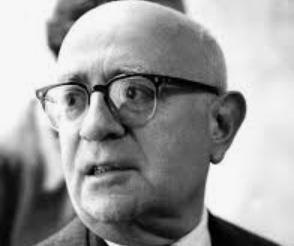
Impulse, subjectivity and profanation, the old adversaries of materialistic alienation, now succumb to it. ... The representatives of the opposition to the authoritarian schema become witnesses to the authority of commercial success. ... In the service of success they renounce that insubordinate character which was theirs.
▼
Source
source
p. 273
4 months 1 week ago
As for the life of money-making, it is one of constraint, and wealth is manifestly not the good of which we are in search, for it is only useful as a means to something else, and for this reason there is less to be said for it than for the ends mentioned before, which are, at any rate, desired for their own sakes.
3 months 1 week ago
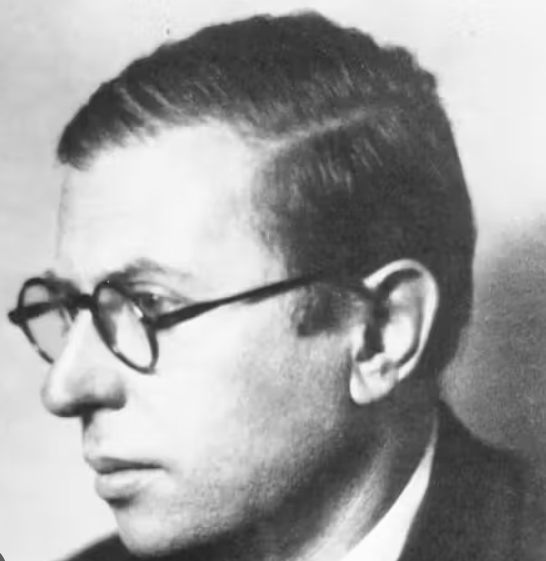
Life has no meaning a priori ... It is up to you to give it a meaning, and value is nothing but the meaning that you choose.
▼
Source
source
p. 58

3 months 2 weeks ago
Books must follow sciences, and not sciences books.
▼
Source
source
Proposition touching Amendment of Laws
1 month 3 weeks ago
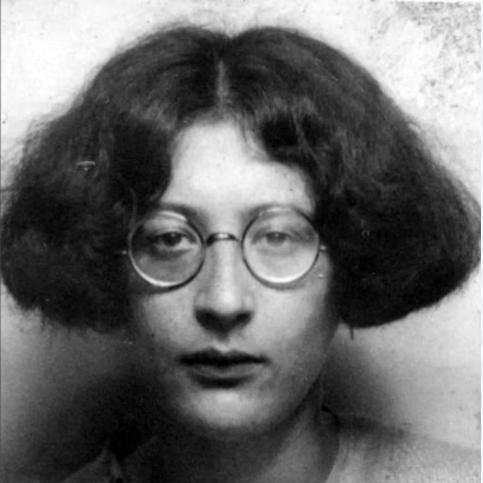
There is nothing that comes closer to true humility than the intelligence. It is impossible to feel pride in one's intelligence at the moment when one really and truly exercises it.
▼
Source
source
As quoted in the Introduction (by Siân Miles) p. 35

3 months 1 week ago
People will tell us that without the consolations of religion they would be intolerably unhappy. So far as this is true, it is a coward's argument. Nobody but a coward would consciously choose to live in a fool's paradise. When a man suspects his wife of infidelity, he is not thought the better of for shutting his eyes to the evidence. And I cannot see why ignoring evidence should be contemptible in one case and admirable in the other.
▼
Source
source
"Is There a God?", 1952

1 month 3 weeks ago
It was not until the ant and Veig had passed each other that Niall realized that he had been reading the ant's mind. It was a sensation like actually being the ant, as if he had momentarily taken possession of its body. And while he had been inside the ant's body, he had also become aware of all the other ants in the nest. It was a bewildering feeling, as if his mind had shattered into thousands of fragments, yet each fragment remained a coherent part of the whole.
▼
Source
source
p. 57

3 months 1 week ago
It goes without saying that the normal durability of fixed capital is calculated on the supposition that all the conditions under which it can perform its functions normally during that time are fulfilled, just as we assume, in placing a mans life at 30 years on the average,that he will wash himself.
▼
Source
source
Volume II, Ch. VIII, p. 176-177.
4 months 1 week ago
I see again what I thought I saw the first time, when I sent forth the little book that was compared to and in fact could best be compared to a humble little flower under the cover of the great forest.

4 months ago
The necessary connexion of movement and time is real and time is something the soul constructs in movement.

4 months 1 week ago
One does not discover the absurd without being tempted to write a manual of happiness. "What! — by such narrow ways — ?" There is but one world, however. Happiness and the absurd are two sons of the same earth. They are inseparable. It would be a mistake to say that happiness necessarily springs from the absurd discovery. It happens as well that the feeling of the absurd springs from happiness.
2 months 2 days ago
Man must be free of it all, of his bad conscience and of the bad salvation from this conscience in order to become in truth the way. Now, he no longer promises others the fulfillment of his duties, but promises himself the fulfillment of man.
▼
Source
source
p. 178
3 weeks 6 days ago
Scientific men get an awkward habit - no, I won't call it that, for it is a valuable habit - of believing nothing unless there is evidence for it; and they have a way of looking upon belief which is not based upon evidence, not only as illogical, but as immoral.
▼
Source
source
Thomas Henry Huxley. "Lectures on Evolution Title: This is Essay# 3 from" Science and Hebrew Tradition." (1882); as cited in: William Trufant Foster, (1908) Argumentation and debating, p. 55
2 weeks 6 days ago
It is hard to imagine an experience more horrific than being eaten alive. Most of us would prefer not to imagine what it must feel like. Note that the photographer here had to persuade the park ranger to violate the park rules and put the baby elephant out of his misery.By analogy, suppose it were lawful to visit Third World countries for photoshoots but illegal to "interfere" and help a stricken human baby. Is there a fundamental difference between "ethical" intervention to help humans and "sentimental" pleas to "interfere" and help non-humans? Should we encourage the preservation of life-forms such as the hyena in their current guise? Or do the value judgements underlying the "science" of conservation biology need to be re-examined?
▼
Source
source
"Hyenas Eat Baby Elephant Alive: The Case for Intervention"

3 months 2 weeks ago
What if he has borrowed the matter and spoiled the form, as it oft falls out?
▼
Source
source
Book III, Ch. 8. Of the Art of Conversation
2 months 2 days ago
With the disintegration of all that Nietzsche had revered, existence, to him, had become a desert in which only one thing remained, namely that which had relentlessly forced him into this path: truthfulness that knows no limits and is not subject to any condition.
▼
Source
source
p. 45

3 months 1 week ago
The New Testament is an invaluable book, though I confess to having been slightly prejudiced against it in my very early days by the church and the Sabbath school, so that it seemed, before I read it, to be the yellowest book in the catalogue. Yet I early escaped from their meshes. It was hard to get the commentaries out of one's head and taste its true flavor. - I think that Pilgrim's Progress is the best sermon which has been preached from this text; almost all other sermons that I have heard, or heard of, have been but poor imitations of this. - It would be a poor story to be prejudiced against the Life of Christ because the book has been edited by Christians.

3 months 1 week ago
Never aim at more precision than... required by the problem...

2 days ago
Complete, at the same time, was his confidence in his own judgment when it spoke to him decisively. He was one of those few that could believe and know as well as inquire and be of opinion. When I remember how much he admired intellectual force, how much he had of it himself, and yet how unconsciously and contentedly he gave others credit for superiority, I again see the healthy spirit of the genuine man.
3 months 1 day ago
But what is lawful for all extends across wide-ruling aether and, without cease, through endless sunshine.
▼
Source
source
fr. 135, as quoted in Aristotle's Rhetoric, 1373 b16
3 months 1 week ago
I do wish I believed in the life eternal, for it makes me quite miserable to think man is merely a kind of machine endowed, unhappily for himself, with consciousness.
▼
Source
source
Greek Exercises (1888); at the age of fifteen, Russell used to write down his reflections in this book, for fear that his people should find out what he was thinking.
2 weeks 6 days ago
The point is that philosophy is seen to have come full circle, and to have exhausted itself.
▼
Source
source
Chapter 5, Nietzsche's Styles, p. 95

2 months 1 week ago
The same feeling of not belonging, of futility, wherever I go: I pretend interest in what matters nothing to me, I bestir myself mechanically or out of charity, without ever being caught up, without ever being somewhere. What attracts me is elsewhere, and I don't know where that elsewhere is.

3 months 2 days ago
Satisfaction linked with dishonor or with harm to others is a prison for the seeker.
▼
Source
source
Vahishto-Ishti Gatha; Yasna 53, 6.
3 months 3 weeks ago
It is necessary to have regard to the person whom we wish to persuade, of whom we must know the mind and the heart, what principles he acknowledges, what things he loves; and then observe in the thing in question what affinity it has with the acknowledged principles, or with the objects so delightful by the pleasure which they give him.
1 month 3 weeks ago
My purpose here is to denounce an idea which seems to be dangerous and false. ... Revolutionary trade unionists and orthodox communists are at one in considering everything that is purely theoretical as bourgeois. ... The culture of a socialist society would be a synthesis of theory and practice; but to synthesize is not the same as to confuse together; it is only contraries that can be synthesized. ... Marx's principal glory is to have rescued the study of societies not only from Utopianism but also and at the same time from empiricism. ... Humanity cannot progress by importing into theoretical study the processes of blind routine and haphazard experiment by which production has so long been dominated. ... The true relation between theory and application only appears when theoretical research has been purged of all empiricism.
▼
Source
source
"The teaching of mathematics," p. 71-72
3 months 2 weeks ago
Not because Socrates said so, but because it is in truth my own disposition - and perchance to some excess - I look upon all men as my compatriots, and embrace a Pole as a Frenchman, making less account of the national than of the universal and common bond.
▼
Source
source
Ch. 9
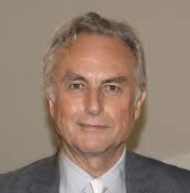
1 month 1 week ago
The second requirement of a virus-friendly environment - that it should obey a program of coded instructions - is again only quantitatively less true for brains than for cells or computers. We sometimes obey orders from one another, but also we sometimes don't. Nevertheless, it is a telling fact that, the world over, the vast majority of children follow the religion of their parents rather than any of the other available religions. Instructions to genuflect, to bow towards Mecca, to nod one's head rhythmically towards the wall, to shake like a maniac, to "speak in tongues" - the list of such arbitrary and pointless motor patterns offered by religion alone is extensive - are obeyed, if not slavishly, at least with some reasonably high statistical probability.
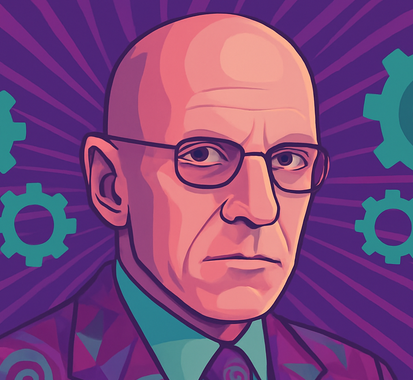
3 months 6 days ago
I believe that political power also exercises itself through the mediation of a certain number of institutions that seem to have nothing in common with political power, that have the appearance of being independent, but are not.
▼
Source
source
Debate with Noam Chomsky, École Supérieure de Technologie à Eindhoven, November 1971

3 months 1 week ago
To plead the organic causation of a religious state of mind, then, in refutation of its claim to possess superior spiritual value, is quite illogical and arbitrary, unless one have already worked out in advance some psycho-physical theory connecting spiritual values in general with determinate sorts of physiological change. Otherwise none of our thoughts and feelings, not even our scientific doctrines, not even our dis-beliefs, could retain any value as revelations of the truth, for every one of them without exception flows from the state of their possessor's body at the time.
▼
Source
source
Lecture I, "Religion and Neurology"

1 month 1 week ago
The new media are not bridges between man and nature: they are nature.
▼
Source
source
(p. 14)
4 months 1 week ago
What is asked of a man that he may be able to pray for his enemies? To pray for one's enemies is the hardest thing of all. That is why it exasperates us so much in our present day situation.
1 month 3 weeks ago
We all observe that the reality of sexual intercourse is far from perfect; yet this does not convince us that sex is a greatly overrated occupation. Every time a man glimpses a pretty girl pulling up her stocking, he catches a glimpse of what might be called the "primal sexual vision." It is unfortunate that there seems to be a certain disparity between this primal vision and most ordinary sexual experience. But it dances in front of us like a will-o'-the-wisp, luring us into tormented effort. It can lead novelists to write novels, poets to write poems, and musicians to write symphonies.
▼
Source
source
p. 39
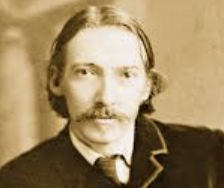
1 month 1 week ago
It seems as if marriage were the royal road through life, and realised, on the instant, what we have all dreamed on summer Sundays when the bells ring, or at night when we cannot sleep for the desire of living. They think it will sober and change them. Like those who join a brotherhood, they fancy it needs but an act to be out of the coil and clamour for ever. But this is a wile of the devil's. To the end, spring winds will sow disquietude, passing faces leave a regret behind them, and the whole world keep calling and calling in their ears. For marriage is like life in this - that it is a field of battle, and not a bed of roses.
▼
Source
source
Virginibus Puerisque, Ch. 1.

1 month 1 week ago
When a person inflates his own importance, he does not see his own sins; and his sins get bigger right along with him.
▼
Source
source
p. 108
3 months 3 weeks ago
We make a ladder of our vices, if we trample those same vices underfoot.
▼
Source
source
3
3 months 1 week ago
If pains be to be taken to give him a manly air and assurance betimes, it is chiefly as a fence to his virtue when he goes into the world under his own conduct.
▼
Source
source
Sec. 70

2 weeks 4 days ago
Knowledge grows, but human beings remain much the same.Belief in progress is a relic of the Christian view of history as a universal narrative, and an intellectually rigorous atheism would start by questioning it.

3 months 1 week ago
I have seen manners that make a similar impression with personal beauty, that give the like exhilaration and refine us like that; and in memorable experiences they are suddenly better than beauty, and make that superfluous and ugly. But they must be marked by fine perception, the acquaintance with real beauty. They must always show control; you shall not be facile, apologetic, or leaky, but king over your word; and every gesture and action shall indicate power at rest. They must be inspired by the good heart. There is no beautifier of complexion, or form, or behavior, like the wish to scatter joy, and not pain, around us.
▼
Source
source
p. 167
1 month 3 weeks ago
It is almost everywhere the case that soon after it is begotten the greater part of human wisdom is laid to rest in repositories.
▼
Source
source
K 37

3 months 4 weeks ago
The order of authority derives from God, as the Apostle says [in Romans 13:1-7]. For this reason, the duty of obedience is, for the Christian, a consequence of this derivation of authority from God, and ceases when that ceases. But, as we have already said, authority may fail to derive from God for two reasons: either because of the way in which authority has been obtained, or in consequence of the use which is made of it. There are two ways in which the first may occur. Either because of a defect in the person, if he is unworthy; or because of some defect in the way itself by which power was acquired, if, for example, through violence, or simony or some other illegal method.
▼
Source
source
in Aquinas: Selected Political Writings (Basil Blackwell: 1974), p. 183

2 months 2 weeks ago
Divinity reveals herself in all things... everything has Divinity latent within itself. For she enfolds and imparts herself even unto the smallest beings, and from the smallest beings, according to their capacity. Without her presence nothing would have being, because she is the essence of the existence of the first unto the last being.
▼
Source
source
As translated by Arthur Imerti

3 months 1 week ago
"Then those people are right who say that Heaven and Hell are only states of mind?" "Hush," he said sternly. "Do not blaspheme. Hell is a state of mind - ye never said a truer word. And every state of mind, left to itself, every shutting up of the creature within the dungeon of its own mind - is, in the end, Hell. But Heaven is not a state of mind. Heaven is reality itself. All that is fully real is Heavenly."
▼
Source
source
Ch. 9
3 months 1 week ago
Can anybody remember when the times were not hard and money not scarce?
▼
Source
source
Works and Days
3 months 1 week ago
When you live alone you no longer know what it is to tell a story: the plausible disappears at the same time as the friends. You let events flow by too: you suddenly see people appear who speak and then go away; you plunge into stories of which you can't make head or tail: you'd make a terrible witness.
▼
Source
source
Diary entry of Tuesday, 30 January
1 month 3 weeks ago
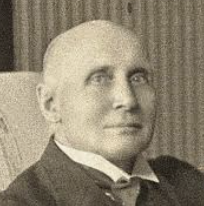
A philosopher of imposing stature doesn't think in a vacuum. Even his most abstract ideas are, to some extent, conditioned by what is or is not known in the time when he lives.
▼
Source
source
Ch. 29, June 10, 1943.

3 months 2 weeks ago
Our island is this earth; and the most striking object we behold is the sun. As soon as we pass beyond our immediate surroundings, one or both of these must meet our eye. Thus the philosophy of most savage races is mainly directed to imaginary divisions of the earth or to the divinity of the sun.
1 month 2 weeks ago
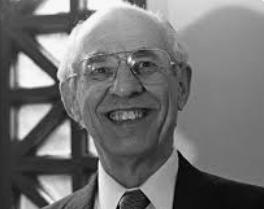
Analytic philosophers - both in the 'constructivist' camp and in the camp that studies 'the ordinary use of words' - are disturbingly unanimous in regarding 2-valued logic as having a privileged position: privileged, not just in the sense of corresponding to the way we do speak, but in the sense of having no serious rival for logical reasons. If the foregoing analysis is correct, this is a prejudice of the same kind as the famous prejudice in favor of a privileged status for Euclidean geometry (a prejudice that survives in the tendency to cite 'space has three dimensions' as some kind of 'necessary' truth). One can go over from a 2-valued to a 3-valued logic without totally changing the meaning of 'true' and 'false'; and not just in silly ways, like the ones usually cited (e.g. equating truth with high probability, falsity with low probability, and middlehood with 'in between' probability).
▼
Source
source
"Three-valued logic"

3 months 2 weeks ago
That a joint stock company should be able to carry on successfully any branch of foreign trade, when private adventurers can come into any sort of open and fair competition with them, seems contrary to all experience.
▼
Source
source
Chapter I, Part III, Article I, p. 810.
CivilSimian.com created by AxiomaticPanic, CivilSimian, Kalokagathia