


2 months 3 weeks ago
The genius of democracies is seen not only in the great number of new words introduced but even more in the new ideas they express.
▼
Source
source
Book One, Chapter XVI.
2 months 2 weeks ago
People talk, indeed, of a "primitive mentality", as, for example, to-day that of the inferior races, and in days gone by that of humanity in general, at whose door the responsibility for superstition should be laid.
▼
Source
source
Chapter II : Static Religion

2 months 2 weeks ago
Woe unto thee, Chorazin! woe unto thee, Bethsaida! for if the mighty works, which were done in you, had been done in Tyre and Sidon, they would have repented long ago in sackcloth and ashes. But I say unto you, It shall be more tolerable for Tyre and Sidon at the day of judgment, than for you. And thou, Capernaum, which art exalted unto heaven, shalt be brought down to hell: for if the mighty works, which have been done in thee, had been done in Sodom, it would have remained until this day. But I say unto you, That it shall be more tolerable for the land of Sodom in the day of judgment, than for thee.
▼
Source
source
11:21-24 (KJV)

1 month 2 weeks ago
Any loss of identity prompts people to seek reassurance and rediscovery of themselves by testing, and even by violence. Today, the electric revolution, the wired planet, and the information environment involve everybody in everybody to the point of individual extinction.
▼
Source
source
Letter to Clare Westcott, November 26 1975. Letters of Marshall McLuhan, p. 514

3 months 3 weeks ago
Experience teaches only the teachable...
▼
Source
source
Tragedy and the Whole Truth

3 months 2 weeks ago
And then one babbles - 'if only I could bear it, or the worst of it, or any of it, instead of her.' But one can't tell how serious that bid is, for nothing is staked on it. If it suddenly became a real possibility, then, for the first time, we should discover how seriously we had meant it. But is it ever allowed? It was allowed to One, we are told, and I find I can now believe again, that He has done vicariously whatever can be done. He replies to our babble, 'you cannot and dare not. I could and dared.'


2 weeks ago
We learn history not in order to know how to behave or how to succeed, but to know who we are.
▼
Source
source
The Idolatry of Politics, U.S. Jefferson Lecture speech
2 months 4 days ago
My theory was that we are all fundamentally 'multiple personalities', beginning with the baby and the child, and slowly developing into more complex selves. If, for some reason, we abruptly cease to develop -- through some trauma that undermines self-confidence -- all those potential personalities are stunted and repressed. And some accident or violent shock may give one of them the opportunity to 'take over'. This suggests, of course, that in some mysterious sense, our 'future' personalities are already there, in embryo, so to speak, and that they also develop as we mature. We move from personality to personality, as we might climb a ladder. The Beethovens and Leonardos got further up the ladder than most of us; yet even they failed to reach the top, as we can see if we study their lives.
▼
Source
source
pp. 228- 229

3 months 3 weeks ago
Nothing is so much to be feared as fear. Atheism may comparatively be popular with God himself.
▼
Source
source
September 7, 1851

4 months 2 weeks ago
Without the interplay of human against human, the chief interest in life is gone; most of the intellectual values are gone; most of the reason for living is gone.

4 months 1 week ago
Knowledge is the conformity of the object and the intellect.

2 months 6 days ago
A precise language awaits a completed metaphysics.

2 months 2 weeks ago
Functional communication is only the outer layer of the one- dimensional universe in which man is trained to target-to translate the negative into the positive so that he can continue to function, reduced but fit and reasonably well. The institutions of free speech and freedom of thought do not hamper the mental coordination with the established reality. What is taking place is a sweeping redefinition of thought itself, of its function and content. The coordination of the individual with his society reaches into those layers of the mind where the very concepts are elaborated which are designed to comprehend the established reality. These concepts are taken from the intellectual tradition and translated into operational terms-a translation which has the effect of reducing the tension between thought and reality by weakening the negative power of thought.
▼
Source
source
p. 104

1 week 5 days ago
Philosophy complains that Custom has hoodwinked us, from the first; that we do everything by Custom, even Believe by it; that our very Axioms, let us boast of Free-thinking as we may, are oftenest simply such Beliefs as we have never heard questioned. Nay, what is Philosophy throughout but a continual battle against Custom; an ever-renewed effort to transcend the sphere of blind Custom, and so become Transcendental?
▼
Source
source
Bk. III, ch. 8.

3 months 4 weeks ago
One may be humble out of pride.
▼
Source
source
Book II, Ch. 17. Of Presumption
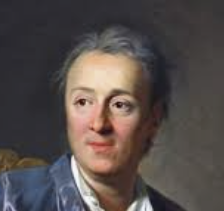
2 months 3 weeks ago
The world is the house of the strong. I shall not know until the end what I have lost or won in this place, in this vast gambling den where I have spent more than sixty years, dicebox in hand, shaking the dice.
▼
Source
source
Conclusion
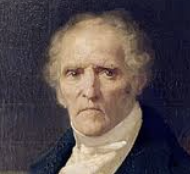
2 weeks 3 days ago
There is no idea more novel, more surprising, than that of associating three hundred families of different degrees of fortune, knowledge and capacity.
▼
Source
source
The Theory of Social Organization. Harmonian Man: Selected Writings of Charles Fourier, p. 5.

2 months 2 weeks ago
The obsession with suicide is characteristic of the man who can neither live nor die, and whose attention never swerves from this double impossibility.
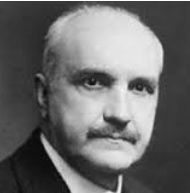
2 months 2 weeks ago
When men and women agree, it is only in their conclusions; their reasons are always different.
▼
Source
source
Ch. VI: Free Society

3 months 3 weeks ago
Need and struggle are what excite and inspire us; our hour of triumph is what brings the void. Not the Jews of the captivity, but those of the days of Solomon's glory are those from whom the pessimistic utterances in our Bible come.
▼
Source
source
"Is Life Worth Living?"

1 month 3 weeks ago
Art is a human activity consisting in this, that one consciously, by means of certain external symbols, conveys to others the feelings one has experienced, whereby people so infected by these feelings, also experience them.
1 week 5 days ago
We are to remember what an umpire Nature is; what a greatness, composure of depth and tolerance there is in her. You take wheat to cast into the Earth's bosom; your wheat may be mixed with chaff, chopped straw, barn-sweepings, dust and all imaginable rubbish; no matter: you cast it into the kind just Earth; she grows the wheat, - the whole rubbish she silently absorbs, shrouds it in, says nothing of the rubbish. The yellow wheat is growing there; the good Earth is silent about all the rest, - has silently turned all the rest to some benefit too, and makes no complaint about it! So everywhere in Nature! She is true and not a lie; and yet so great, and just, and motherly in her truth. She requires of a thing only that it be genuine of heart; she will protect it if so; will not, if not so. There is a soul of truth in all the things she ever gave harbor to. Alas, is not this the history of all highest Truth that comes or ever came into the world?
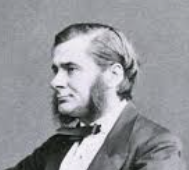
1 month 1 week ago
I am too much of a sceptic to deny the possibility of anything - especially as I am now so much occupied with theology - but I don't see my way to your conclusion.
▼
Source
source
Letter to Herbert Spencer (22 March 1886); this is often quoted with a variant spelling as: I am too much of a skeptic to deny the possibility of anything.

3 months 1 week ago
We ought to regard the interests of the state as of far greater moment than all else, in order that they may be administered well; and we ought not to engage in eager rivalry in despite of equity, nor arrogate to ourselves any power contrary to the common welfare. For a state well administered is our greatest safeguard. In this all is summed up: When the state is in a healthy condition all things prosper; when it is corrupt, all things go to ruin.
2 months 2 weeks ago
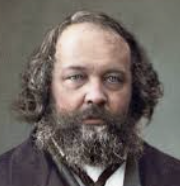
The people should never be deceived, under any pretext or for any purpose. It would not only be criminal but detrimental to the revolutionary cause, for deception of any kind, by its very nature, is shortsighted, petty, narrow, always sewn with rotten threads, so that it inevitably tears and is exposed.
▼
Source
source
"Appendix A"
1 week ago
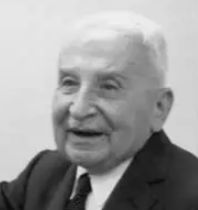
The proof of a theory is in its reasoning, not in its sponsorship.
4 months 2 weeks ago
Well, then, arrest him. You can accuse him of something or other afterward.

3 months 3 weeks ago
The state is primarily an organization for killing foreigners.
▼
Source
source
Bertrand Russell Speaks His Mind (1960), p. 83
1 week ago
Socialism is the watchword and the catchword of our day. The socialist idea dominates the modem spirit. The masses approve of it. It expresses the thoughts and feelings of all; it has set its seal upon our time. When history comes to tell our story it will write above the chapter "The Epoch of Socialism." As yet, it is true, Socialism has not created a society which can be said to represent its ideal. But for more than a generation the policies of civilized nations have been directed towards nothing less than a gradual realization of Socialism.
▼
Source
source
Introduction : The Success of Socialist Ideas

2 months 1 week ago
The Great Beast is the only object of idolatry, the only ersatz of God, the only imitation of something which is infinitely far from me and which is I myself.
▼
Source
source
p. 121; footnote in Gravity and Grace
2 months 2 weeks ago
The obsession with suicide is characteristic of the man who can neither live nor die, and whose attention never swerves from this double impossibility.
4 months ago
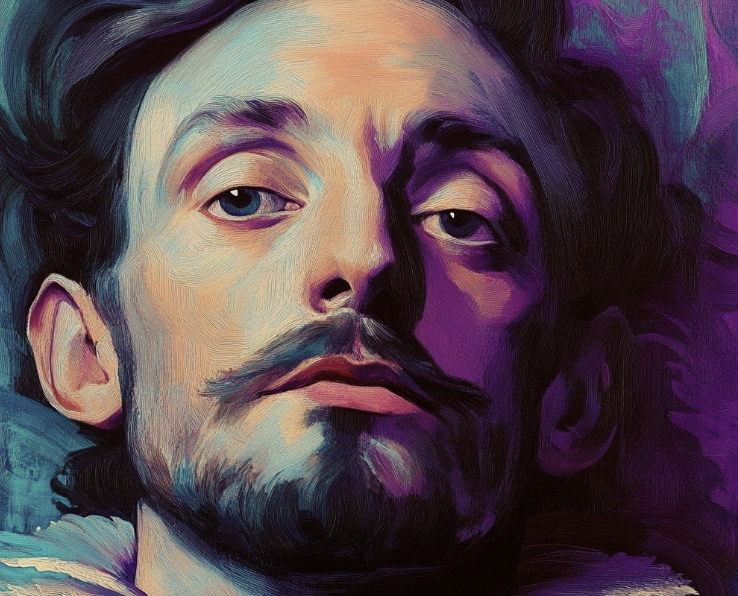
Who then to frail mortality shall trust But limns the water, or but writes in dust.
Just now
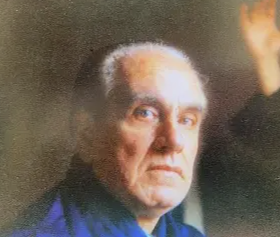
It is a cliché that the modern scientific vision has desacralized the world, and the world desacralized by scientific knowledge has become one of the existential elements that make up modern man, all the more so to the degree that he is "civilized." Ever since he has been subject to compulsory education, his mind has been stuffed with "positive" scientific notions; he cannot avoid seeing in a soulless light everything that surrounds him, and therefore acts destructively. What, for example, could the symbol of the sunset of a dynasty, like the Japanese, mean to him when he knows scientifically what the sun is: merely a star, at which one can even fire missiles.
▼
Source
source
p. 138

2 months 3 weeks ago
It seemed clear to me that life and the world somehow depended upon me now. I may almost say that the world now seemed created for me alone: if I shot myself the world would cease to be at least for me. I say nothing of its being likely that nothing will exist for anyone when I am gone, and that as soon as my consciousness is extinguished the whole world will vanish too and become void like a phantom, as a mere appurtenance of my consciousness, for possibly all this world and all these people are only me myself.

2 months 4 days ago
The eros-driven soul produces beautiful things, and, above all, beautiful actions, which have a universal value.

2 months 3 weeks ago
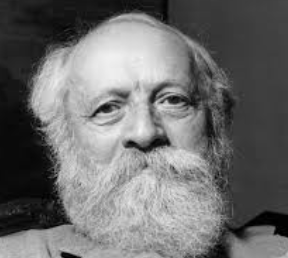
If there is to be any philosophy at all, this contradiction must be resolved - and the solution of this problem, or answer to the question: how can we think both of Presentations as conforming to objects, and objects as conforming to presentations? is, not the first, but the highest task of transcendental philosophy.
2 months 1 week ago
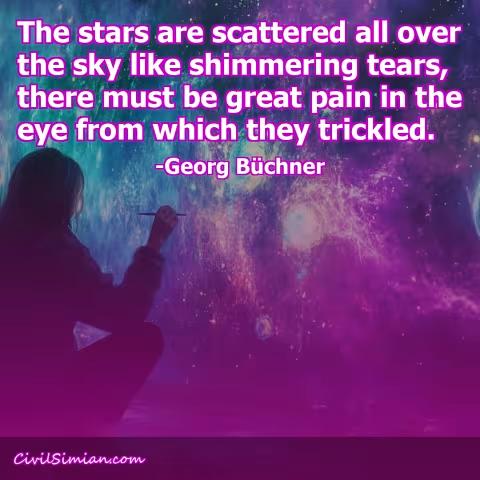
When we rise out of [the night] into the new life and there begin to receive the signs, what can we know of that which - of him who gives them to us? Only what we experience from time to time from the signs themselves. If we name the speaker of this speech God, then it is always the God of a moment, a moment God.
▼
Source
source
Between Man and Man (1965), p. 15

3 months 3 weeks ago
The world neither ever saw, nor ever will see, a perfectly fair lottery.
▼
Source
source
Chapter X, Part I.
3 months 3 weeks ago
We have been given free will, in order that we may will our self-will out of existence and so come to live continuously in a 'state of grace.' All our actions must be directed, in the last analysis, to making ourselves passive in relation to the activity and the being of divine reality. We are, as it were, aeolian harps, endowed with the power either to expose themselves to the wind of the Spirit or to shut themselves away from it.
2 months 2 weeks ago
When we have no further desire to show ourselves, we take refuge in music, the Providence of the abulic.
2 months 3 weeks ago
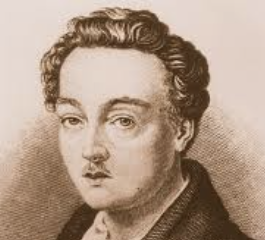
Germany is now a field of cadavers, soon she will be a paradise.

2 weeks 2 days ago
For both the pragmatic... and... moral reasons... liberalism became the dominant doctrine of the 20th century, and should... continue to be defended....
▼
Source
source
12:32
2 months 4 days ago
When power is separated from any communicative context, it becomes naked violence.
3 months 4 weeks ago
There is nothing more notable in Socrates than that he found time, when he was an old man, to learn music and dancing, and thought it time well spent.
▼
Source
source
Book III, Ch. 13
2 months 4 days ago
Twenty-first-century society is no longer a disciplinary society, but rather an achievement society.
2 months 2 weeks ago
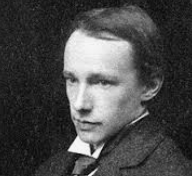
By far the most valuable things, which we know or can imagine, are certain states of consciousness, which may roughly be described as the pleasures of human intercourse and the enjoyment of beautiful objects. No one, probably, who has asked himself the question, has ever doubted that personal affection and the appreciation of what is beautiful in Art or Nature, are good in themselves; nor, if we consider strictly what things are worth having purely for their own sakes, does it appear probable that any one will think that anything else has nearly so much value as the things which are included under these two heads.
▼
Source
source
Principia Ethica (1903; revised edition, Cambridge University Press, 1993).
CivilSimian.com created by AxiomaticPanic, CivilSimian, Kalokagathia