

1 month 3 weeks ago
Man is always partial and is quite right to be. Even impartiality is partial.
▼
Source
source
F 78

3 months 1 week ago
In early times, the great majority of the male sex were slaves, as well as the whole of the female. And many ages elapsed, some of them ages of high cultivation, before any thinker was bold enough to question the rightfulness, and the absolute social necessity, either of the one slavery or of the other.
▼
Source
source
Ch. 1

2 days ago
But greatly his most important culture he had gathered - and this, too, by his own endeavors - from the better part of the district, the religious men; to whom, as to the most excellent, his own nature gradually attached and attracted him. He was religious with the consent of his whole faculties. Without religion he would have been nothing.

3 months 6 days ago
But a punishment like forced labour or even imprisonment - mere loss of liberty - has never functioned without a certain additional element of punishment that certainly concerns the body itself: rationing of food, sexual deprivation, corporal punishment, solitary confinement ... There remains, therefore, a trace of 'torture' in the modern mechanisms of criminal justice - a trace that has not been entirely overcome, but which is enveloped, increasingly, by the non-corporal nature of the penal system
3 months 6 days ago
Marxism exists in nineteenth-century thought as a fish exists in water; that is, it ceases to breathe anywhere else.
▼
Source
source
As quoted by David Macey, The lives of Michel Foucault (1993) p. 177. Citing 'Les Intellectuels et le Pouvoir', Le'Arc 49, 1972, pp. 3-10.

3 months 1 week ago
It is too early to love. We will buy the right to do so by shedding blood.
▼
Source
source
Act 1

4 months 1 day ago
Sincerity is the way of Heaven. The attainment of sincerity is the way of men. He who possesses sincerity is he who, without an effort, hits what is right, and apprehends, without the exercise of thought — he is the sage who naturally and easily embodies the right way. He who attains to sincerity is he who chooses what is good, and firmly holds it fast. To this attainment there are requisite the extensive study of what is good, accurate inquiry about it, careful reflection on it, the clear discrimination of it, and the earnest practice of it.

3 months 1 week ago
I'm afraid of losing my obscurity. Genuineness only thrives in the dark. Like celery.
▼
Source
source
Those Barren Leaves, 1925
1 month 3 weeks ago
You cannot think without abstractions; accordingly, it is of the utmost importance to be vigilant in critically revising your modes of abstraction. It is here that philosophy finds its niche as essential to the healthy progress of society. It is the critic of abstractions. A civilisation which cannot burst through its current abstractions is doomed to sterility.
▼
Source
source
Ch. 4: "The Eighteenth Century", pp. 82-83

3 months 1 week ago
What point of morals, of manners, of economy, of philosophy, of religion, of taste, of the conduct of life, has he not settled? What mystery has he not signified his knowledge of? What office, or function, or district of man's work, has he not remembered? What king has he not taught state, as Talma taught Napoleon? What maiden has not found him finer than her delicacy? What lover has he not outloved? What sage has he not outseen? What gentleman has he not instructed in the rudeness of his behavior?
▼
Source
source
Shakespeare; or, The Poet

3 months 2 weeks ago
All the world knows me in my book, and my book in me.
▼
Source
source
Book III, Ch. 5. Upon some Verses of Virgil
2 months 1 week ago
For his the artist's life is, of necessity, full of conflicts, since two forces fight in him: the ordinary man with his justified claim for happiness, contentment, and guarantees for living on the one hand, and the ruthless creative passion on the other, which under certain conditions crushes all personal desires into the dust.
3 months 1 day ago
The man who is tenacious of purpose in a rightful cause is not shaken from his firm resolve by the frenzy of his fellow citizens clamoring for what is wrong, or by the tyrant's threatening countenance.
▼
Source
source
Book III, ode iii, line 1
2 months 2 days ago
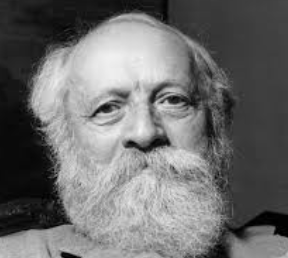
You do not attain to knowledge by remaining on the shore and watching the foaming waves, you must make the venture and cast yourself in, you must swim, alert and with all your force, even if a moment comes when you think you are losing consciousness; in this way, and in no other, do you reach anthropological insight.
▼
Source
source
p. 148
1 month 3 weeks ago
Those who have racked their brains to discover new proofs have perhaps been induced to do so by a compulsion they could not quite explain to themselves. Instead of giving us their new proofs they should have explained to us the motivation that constrained them to search for them.
▼
Source
source
L24
2 days ago
Alas, the Hero from of old has had to cramp himself into strange shapes: the world knows not well at any time what to do with him, so foreign is his aspect in the world!

3 months 1 week ago
In general, the art of government consists in taking as much money as possible from one party of the citizens to give to the other.
▼
Source
source
"Money", 1770
3 months 1 week ago
I remember the very place in Hyde Park where, in my fourteenth year, on the eve of leaving my father's house for a long absence, he told me that I should find, as I got acquainted with new people, that I had been taught many things which youths of my age did not commonly know; and that many persons would be disposed to talk to me of this, and to compliment me upon it. What other things he said on this topic I remember very imperfectly; but he wound up by saying, that whatever I knew more than others, could not be ascribed to any merit in me, but to the very unusual advantage which had fallen to my lot.
▼
Source
source
(p. 34)
2 months 1 week ago
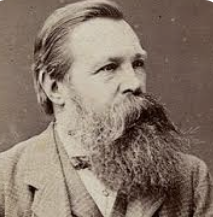
The irony of world history turns everything upside down. We, the "revolutionaries," the "rebels"-we are thriving far better on legal methods than on illegal methods and revolt. The parties of order, as they call themselves, are perishing under the legal conditions created by themselves. They cry despairingly with Odilon Barrot: la légalité notes tue, legality is the death of us; whereas we, under this legality, get firm muscles and rosy cheeks and look like eternal life.
▼
Source
source
Introduction (1895) to Marx's The Class Struggles in France (1848-50), p. 27
2 months 1 week ago
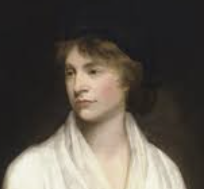
You know I am not born to tread in the beaten track - the peculiar bent of my nature pushes me on.
▼
Source
source
Letter to Everina Wollstonecraft
2 months 2 days ago
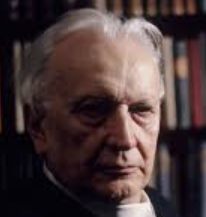
... Nietzsche's ideas and plans: for example, the idea of giving up the whole wretched academic world to form a secular monastic community.

3 months 1 week ago
That virtue we appreciate is as much ours as another's. We see so much only as we possess.
▼
Source
source
June 22, 1839
4 months 1 week ago
It's better to bet on this life than on the next.

1 month 4 weeks ago
The immeasurable beauty of life is a very fine thing to write about, and there are, indeed, some who resign themselves to accept it and accept it as it is, and even some who would persuade us that there is no problem in the "trap." But it has been said by Calderón that "to seek to persuade a man that the misfortunes which he suffers are not misfortunes, does not console him for them, but it is another misfortune in addition." And furthermore, "only the heart can speak to the heart," as Fray Diego de Estella said.
▼
Source
source
(Vanidad del Mundo, cap. xxi.)
2 weeks 4 days ago
The idea of a law of progress, or of an all but irresistible tendency to general improvement, is then merely a superstition, one of the tents of the modernist pseudo-religion of humanism. Even if such a law or tendency existed and were demonstrable, the liberal faith in progress would for Santayana be pernicious. For it leads to a corrupt habit of mind in which things are valued, not for their present excellence or perfection, but instrumentally, as leading to something better; and it insinuates into thought and feeling a sort of historical theodicy, in which past evil is justified as a means to present or future good. The idea of progress embodies a kind of time-worship (to adopt an expression used by Wyndham Lewis) in which the particularities of our world are seen and valued, not in themselves, but for what they might perhaps become, thereby leaving us destitute of the sense of the present and, at the same time, of the perspective of eternity.
▼
Source
source
'Santayana's Alternative' (p.67-8)
2 weeks 6 days ago
I predict we will abolish suffering throughout the living world. Our descendants will be animated by gradients of genetically pre-programmed well-being that are orders of magnitude richer than today's peak experiences.
▼
Source
source
Quoted in Ethics Matters (2012) by Peter and Charlotte Vardy, p. 114 ISBN 978-0334043911

3 months 3 weeks ago
The Word takes to Himself one man, for He takes unity. He does not take schisms to Himself, nor does He take heresies. So it is one man who is taken, and his Head is Christ. This is that "blessed man who hath not walked in the council of the ungodly" (Ps. 1:1); this is he that is assumed. He is not outside of us. Let us be in Him, and we shall be assumed; let us be in Him, and we shall be chosen. Therefore this one man that is taken to become the temple of God, is at once many and one.
▼
Source
source
p.430
2 months 1 week ago
The art of writing books is not yet invented. But it is at the point of being invented. Fragments of this nature are literary seeds. There may be many an infertile grain among them: nevertheless, if only some come up!
▼
Source
source
Fragment No. 114

3 months 1 day ago
Now his principal doctrines were these. That atoms and the vacuum were the beginning of the universe; and that everything else existed only in opinion. (trans. Yonge 1853) The first principles of the universe are atoms and empty space; everything else is merely thought to exist.
▼
Source
source
(trans. by Robert Drew Hicks 1925) Often paraphrased as "Nothing exists except atoms and empty space; everything else is opinion."

2 months 2 weeks ago
We are constantly railing against the passions; we ascribe to them all of man's afflictions, and we forget that they are also the source of all his pleasures ... But what provokes me is that only their adverse side is considered ... and yet only passions, and great passions, can raise the soul to great things. Without them there is no sublimity, either in morals or in creativity. Art returns to infancy, and virtue becomes small-minded.
▼
Source
source
As translated in Diderot (1977) by Otis Fellows, p. 39
4 months 1 week ago
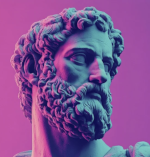
Since the science of nature is conversant with magnitudes, motion, and time, each of which must necessarily be either infinite or finite...[we] should speculate the infinite, and consider whether it is or not; and if it is what it is. ...[A]ll those who appear to have touched on a philosophy of this kind... consider it as a certain principle of beings. Some, indeed, as the Pythagoreans and Plato, consider it, per se, not as being an accident to any thing else, but as having an essential subsistence... the Pythagoreans... consider the infinite as subsisting in sensibles; for they do not make number to be separate; and they assert that what is beyond the heavens is infinite; but Plato says that beyond the heavens there is not any body, nor ideas, because these are no where: he affirms, however, that the infinite is both in sensibles, and in ideas. ...Plato establishes two infinities, viz. the great and the small.

1 month 1 week ago
Wealth brings a heavy purse; poverty, a light spirit.
▼
Source
source
p. 88

1 month 2 weeks ago
There's no objective morality, but that's not the real point. It's not the point that morality has to somehow be a stone, or something that can be touched.
The options that are available to choose are determined to a point, and this is the objective aspect of morality, ethics, goodness, fairness, justice.
The subjective aspect can still remain subjective, but that doesn't mean goodness is relative.....at all. The measure of a man is a man.
3 days ago
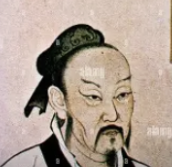
The superior man has three things in which he delights, and to be ruler over the kingdom is not one of them. That his father and mother are both alive, and that the condition of his brothers affords no cause for anxiety;-this is one delight. That, when looking up, he has no occasion for shame before Heaven, and, below, he has no occasion to blush before men;-this is a second delight. That he can get from the whole kingdom the most talented individuals, and teach and nourish them;-this is the third delight.
▼
Source
source
7A:20, as translated by James Legge in The Chinese Classics, Vol. II (1861), p. 335

1 month 3 weeks ago
The eulogies of my intelligence are positively intended to evade the question "Is what she says true?"
▼
Source
source
Letter to her parents (1943), as quoted in the Introduction by Siân Miles p. 2
1 day ago
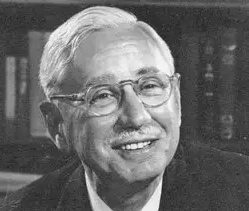
Rooted in freedom, bonded in the fellowship of danger, sharing everywhere a common human blood, we declare again that all men are brothers, and that mutual tolerance is the price of liberty.

2 months 1 week ago
All my life, I have lived with the feeling that I have been kept from my true place. If the expression "metaphysical exile" had no meaning, my existence alone would afford it one.
3 months 1 day ago
Struggling to be brief I become obscure.
▼
Source
source
Line 25

4 months 1 week ago
It is all too easy to forget that there are emotional motivations in history, as well as economic ones.

3 months 1 week ago
... it may be hoped that the white population of the world will soon cease to increase. The Asiatic races will be longer, and the negroes still longer, before their birth rate falls sufficiently to make their numbers stable without help of war and pestilence. But it is to be hoped that the religious prejudices which have hitherto hampered the spread of birth control will die out, and that ... the whole world will learn not to be unduly prolific. Until that happens, the benefits aimed at by socialism can only be partially realized, and the less prolific races will have to defend themselves against the more prolific by methods which are disgusting even if they are necessary.
1 month 3 weeks ago
The aim of science is to seek the simplest explanations of complex facts. We are apt to fall into the error of thinking that the facts are simple because simplicity is the goal of our quest. The guiding motto in the life of every natural philosopher should be, "Seek simplicity and distrust it."
▼
Source
source
The Concept of Nature (1919), Chapter VII, p.143.
3 months 1 day ago
The friendship of one wise man is better than the friendship of a host of fools.
5 days ago
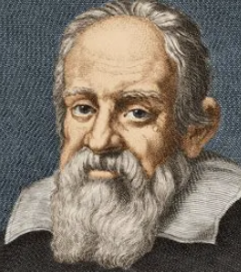
It has been observed that missiles and projectiles describe a curved path of some sort; however no one has pointed out the fact that this path is a parabola. But this and other facts, not few in number or less worth knowing, I have succeeded in proving; and what I consider more important, there have been opened up to this vast and most excellent science, of which my work is merely the beginning, ways and means by which other minds more acute than mine will explore its remote corners.
▼
Source
source
Author, Third Day. Change of Position
3 weeks 3 days ago
One can never pay in gratitude; one can only pay "in kind" somewhere else in life.
▼
Source
source
North to the Orient (1935) Ch. 19
1 month 3 weeks ago
There remains the final reflection, how shallow, puny, and imperfect are efforts to sound the depths in the nature of things. In philosophical discussion, the merest hint of dogmatic certainty as to finality of statement is an exhibition of folly.
▼
Source
source
Preface, p. 16 (Corrected Edition)
1 month 3 weeks ago
A book which, above all others in the world, should be forbidden, is a catalogue of forbidden books.
▼
Source
source
As quoted in A Dictionary of Scientific Quotations (1991) edited by Alan Lindsay Mackay, p. 153
2 months 3 days ago
The utmost possible regarding an individual is a statement as to some order of probability about the future. Heisenberg's principle has been seized upon as a basis for wild statements to the effect that the doctrine of arbitrary free will and totally uncaused activity are now scientifically substantiated. Its actual force and significance is generalization of the idea that the individual is a temporal career whose future cannot logically be deduced from its past.
3 months 1 week ago
Since the state must necessarily provide subsistence for the criminal poor while undergoing punishment, not to do the same for the poor who have not offended is to give a premium on crime.
▼
Source
source
Book V, Chapter XI, §13
3 months 1 week ago
The necessity of speaking, the predicament of having nothing to say, and the desire for tact are three things that can turn the greatest man into a laughingstock.
1 month 3 weeks ago
The full expression of personality depends upon its being inflated by social prestige; it is a social privilege.
▼
Source
source
p. 64
CivilSimian.com created by AxiomaticPanic, CivilSimian, Kalokagathia