

1 day ago
Sorel the Dreyfusard eventually developed into a bitter anti-semite, calling upon Europe to defend itself against the Jewish peril in the same way as America fought the Yellow peril; he blamed the Chekist terror on the Jewish members of the Bolshevik party.
▼
Source
source
Jacob Talmon, "The Myth of the Nation and the Vision of Revolution: The Origins of Ideological Polarization in the 20th Century ", University of California Press, 1981, p. 474

3 months 2 weeks ago
You can't get a cup of tea large enough or a book long enough to suit me.
▼
Source
source
As quoted in Of This and Other Worlds (1982) by Walter Hooper, Preface, p. 9

4 months 3 weeks ago
The liar is a person who uses the valid designations, the words, in order to make something which is unreal appear to be real. He says, for example, "I am rich," when the proper designation for his condition would be "poor." He misuses fixed conventions by means of arbitrary substitutions or even reversals of names. If he does this in a selfish and moreover harmful manner, society will cease to trust him and will thereby exclude him. What men avoid by excluding the liar is not so much being defrauded as it is being harmed by means of fraud. Thus, even at this stage, what they hate is basically not deception itself, but rather the unpleasant, hated consequences of certain sorts of deception. It is in a similarly restricted sense that man now wants nothing but truth: he desires the pleasant, life-preserving consequences of truth. He is indifferent toward pure knowledge which has no consequences; toward those truths which are possibly harmful and destructive he is even hostilely inclined.
3 months 3 weeks ago
Character means that the person derives his rules of conduct from himself and from the dignity of humanity. Character is the common ruling principle in man in the use of his talents and attributes. Thus it is the nature of his will, and is good or bad. A man who acts without settled principles, with no uniformity, has no character. A man may have a good heart and yet no character, because he is dependent upon impulses and does not act according to maxims. Firmness and unity of principle are essential to character.
▼
Source
source
Part III : Selection on Education from Kant's other Writings, Ch. I Pedagogical Fragments, # 14

4 months ago
The most disadvantageous peace is better than the most just war.
▼
Source
source
Adagia, 1508
3 months 1 week ago
I have enough to eat till my hunger is stayed, to drink till my thirst is sated; to clothe myself withal; and out of doors not Callias there, with all his riches, is more safe than I from shivering; and when I find myself indoors, what warmer shirting do I need than my bare walls? what ampler greatcoat than the tiles above my head?
▼
Source
source
iv. 34

2 months 1 week ago
The needs of the soul can for the most part be listed in pairs of opposites which balance and complete one another. The human soul has need of equality and of hierarchy. Equality is the public recognition, effectively expressed in institutions and manners, of the principle that an equal degree of attention is due to the needs of all human beings. Hierarchy is the scale of responsibilities. Since attention is inclined to direct itself upwards and remain fixed, special provisions are necessary to ensure the effective compatibility of equality and hierarchy.

3 months 3 weeks ago
The same good sense, that directs men in the ordinary occurrences of life, is not hearkened to in religious matters, which are supposed to be placed altogether above the cognizance of human reason.
2 months ago
The principle of bounded rationality is the capacity of the human mind for formulating and solving complex problems is very small compared with the size of the problems whose solution is required for objectively rational behavior in the real world - or even for a reasonable approximation to such objective rationality.
▼
Source
source
p. 198.

3 months 3 weeks ago
Single-mindedness is all very well in cows or baboons; in an animal claiming to belong to the same species as Shakespeare it is simply disgraceful.
▼
Source
source
Do What You Will, 1929

3 months 3 weeks ago
Freedom is only necessity understood.
▼
Source
source
The Dilemma of Determinism, 1884

4 months 1 week ago
Continence is a branch of temperance, which prevents the diseases, infamy, remorse, and punishment, to which those are exposed, who indulge themselves in unlawful amours.
1 month 1 week ago
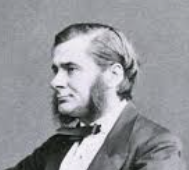
Identical in the physical processes by which he originates-identical in the early stages of his formation-identical in the mode of his nutrition before and after birth, with the animals which lie immediately below him in the scale-Man, if his adult and perfect structure be compared with theirs, exhibits, as might be expected, a marvellous likeness of organization. He resembles them as they resemble one another-he differs from them as they differ from one another.-And, though these differences and resemblances cannot be weighed and measured, their value may be readily estimated; the scale or standard of judgment, touching that value, being afforded and expressed by the system of classification of animals now current among zoologists.
▼
Source
source
Ch.2, p. 83

3 months 3 weeks ago
A dog cannot relate his autobiography; however eloquently he may bark, he cannot tell you that his parents were honest but poor.
▼
Source
source
Human Knowledge: Its Scope and Limits (1948), part II, chapter 1, p. 74
3 months 2 weeks ago
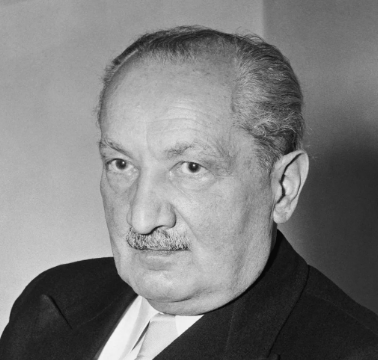
"For many, abstract thinking is toil; for me, on good days, it is feast and frenzy." (XIV, 24) Abstract thinking a feast? The highest form of human existence? ... "The feast implies: pride, exuberance, frivolity; mockery of all earnestness and respectability; a divine affirmation of oneself, out of animal plenitude and perfection-all obviously states to which the Christian may not honestly say Yes. The feast is paganism par excellence." (WM, 916). For that reason, we might add that thinking never takes place in Christianity. That is to say, there is no Christian philosophy. There is no true philosophy that could be determined anywhere else than from within itself.
▼
Source
source
p. 5
3 months 1 week ago
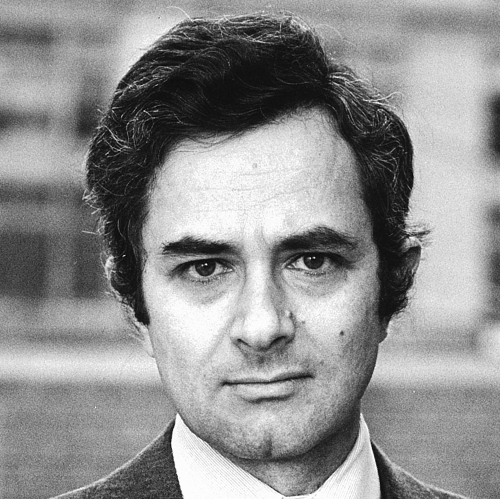
The essence of the belief that bats have experience is that there is something that it is like to be a bat. Now we know that most bats (the microchiroptera, to be precise) perceive the external world primarily by sonar, or echolocation. ... But bat sonar, though clearly a form of perception, is not similar in its operation to any sense that we possess, and there is no reason to suppose that it is subjectively like anything we can experience or imagine. This appears to create difficulties for the notion of what it is like to be a bat.
▼
Source
source
p. 168.

2 months 2 weeks ago
The free will, the actual motor of reason in society, necessarily creates wrong. The individual must clash with the social order that claims to represent his own will in its objective form. But the wrong and the 'avenging justice' that remedies it not only expresses a 'higher logical necessity,' but also prepare the transition to a higher social form of freedom, the transition from abstract right to morality. For, in committing a wrong, and in accepting punishment for his deed, the individual becomes conscious of the 'infinite subjectivity' of his freedom. He learns that he is free only as a private person.
▼
Source
source
P. 198

2 months 4 weeks ago
There is the world for you. Beauty, true beauty, is intangible. It is in the eye of the beholder. Something that we can lose at any moment, and the more you examine it, the more illusive it becomes. True happiness is virtue, and virtue is predicated on knowledge and righteous conduct.
▼
Source
source
The Alchemy of Happiness

3 months 3 weeks ago
I think no virtue goes with size; The reason of all cowardice Is, that men are overgrown, And, to be valiant, must come down To the titmouse dimension.
▼
Source
source
The Titmouse, st. 5
3 months 3 weeks ago
The poet is, etymologically, the maker. Like all makers, he requires a stock of raw materials - in his case, experience. Now experience is not a matter of having actually swum the Hellespont, or danced with the dervishes, or slept in a doss-house. It is a matter of sensibility and intuition, of seeing and hearing the significant things, of paying attention at the right moments, of understanding and co-ordinating. Experience is not what happens to a man; it is what a man does with what happens to him. It is a gift for dealing with the accidents of existence, not the accidents themselves. By a happy dispensation of nature, the poet generally possesses the gift of experience in conjunction with that of expression. What he says so well is therefore intrinsically of value.
▼
Source
source
p. 5
3 months 2 weeks ago
You can put this another way by saying that while in other sciences the instruments you use are things external to yourself (things like microscopes and telescopes), the instrument through which you see God is your whole self. And if a man's self is not kept clean and bright, his glimpse of God will be blurred-like the Moon seen through a dirty telescope. That is why horrible nations have horrible religions: they have been looking at God through a dirty lens.
▼
Source
source
Book IV, Chapter 2, "The Three-personal God"
1 month 1 week ago
M. Comte's philosophy, in practice, might be compendiously described as Catholicism minus Christianity.
▼
Source
source
On the Physical Basis of Life
2 days ago
If only there were evil people somewhere insidiously committing evil deeds, and it were necessary only to separate them from the rest of us and destroy them. But the line dividing good and evil cuts through the heart of every human being. And who is willing to destroy a piece of his own heart?
▼
Source
source
The Gulag Archipelago
3 months 3 weeks ago
Owing to the identification of religion with virtue, together with the fact that the most religious men are not the most intelligent, a religious education gives courage to the stupid to resist the authority of educated men, as has happened, for example, where the teaching of evolution has been made illegal. So far as I can remember, there is not one word in the Gospels in praise of intelligence; and in this respect ministers of religion follow gospel authority more closely than in some others.
▼
Source
source
p. 110

2 months 1 week ago
And yet this might not necessarily involve the conversion of the Trinity into a Quaternity. If... in Greek, spirit, instead of being neuter had been feminine, who can say that the Virgin Mary might not already have become an incarnation or humanization of the Holy Spirit? ...And thus a dogmatic evolution would have been effected parallel to that of the divinization of Jesus, the Son, and his identification with the Word.

2 months 4 days ago
Sexual activity is driven by the same aims and motives as reading poetry or listening to music: to escape the limitations imposed by the need for particularity in the consciousness.
▼
Source
source
p. 75

3 months 3 weeks ago
Lead, follow, or get out of the way.
▼
Source
source
George S. Patton: "Lead me, follow me, or get out of my way", as quoted in Pocket Patriot: Quotes from American Heroes (2005) edited by Kelly Nickell, p. 157

3 months 2 weeks ago
Never stay up on the barren heights of cleverness, but come down into the green valleys of silliness.
▼
Source
source
p. 76e

2 months 3 weeks ago
There was a time when religion was kept secret from popular belief within the mystery cults like a holy fire, sharing a common sanctuary with philosophy. The legends of antiquity name the earliest philosophers as the originators of these mystery cults, from which the most enlightened among the later philosophers, notably Plato, liked to educe their divine teachings. At that time philosophers still had the courage and the right to discuss the singly great themes, the only ones worthy of philosophizing and rising above common knowledge.
▼
Source
source
P. 7

3 months 2 weeks ago
Fascism is not defined by the number of its victims, but by the way it kills them.
▼
Source
source
On the Execution of Julius and Ethel Rosenberg, Libération
3 months 3 weeks ago
There must be something solemn, serious, and tender about any attitude which we denominate religious. If glad, it must not grin or snicker; if sad, it must not scream or curse. It is precisely as being solemn experiences that I wish to interest you in religious experiences. ... The divine shall mean for us only such a primal reality as the individual feels impelled to respond to solemnly and gravely, and neither by a curse nor a jest.
▼
Source
source
Lecture II, "Circumscription of the Topic"

3 months 3 weeks ago
It is the character of the British people, or at least of the higher and middle classes who pass muster for the British people, that to induce them to approve of any change, it is necessary that they should look upon it as a middle course: they think every proposal extreme and violent unless they hear of some other proposal going still farther, upon which their antipathy to extreme views may discharge itself. So it proved in the present instance; my proposal was condemned, but any scheme for Irish Land reform, short of mine, came to be thought moderate by comparison.
▼
Source
source
(pp. 294-295)


2 months 2 weeks ago
Truths begin by a conflict with the police - and end by calling them in.
4 months 1 week ago
A scholar who loves comfort is not worthy of the name.
2 months 2 weeks ago
Society: an inferno of saviors!
3 months 3 weeks ago
Another thing wherein they shew their love of dominion, is, their desire to have things to be theirs: They would have propriety and possession, pleasing themselves with the power which that seems to give, and the right that they thereby have, to dispose of them as they please. He that has not observ's these two humours working very betimes in children, has taken little notice of their actions: And he who thinks that these two roots of almost all the injustice and contention that so disturb human life, are not early to be weeded out, and contrary habits introduc'd, neglects the proper season to lay the foundations of a good and worthy man.
▼
Source
source
Sec. 105
2 months 2 weeks ago
Try to be free: you will die of hunger.
1 month 1 week ago
His imagination resembled the wings of an ostrich. It enabled him to run, though not to soar.
▼
Source
source
p. 223
3 months 3 weeks ago
There is a freemasonry among the dull by which they recognize and are sociable with the dull, as surely as a correspondent tact in men of genius.
▼
Source
source
1827
2 months 3 weeks ago
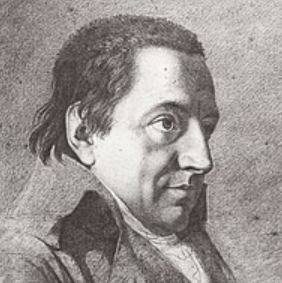
Each individual imagines that he can exist, live, think, and act for himself, and believes that he himself is the thinking principle of his thoughts; whereas in truth he is but a single ray of the ONE universal and necessary Thought.
▼
Source
source
p. 21

4 months 1 week ago
For when every judgement is the act of hym that judgeth, it behoveth that every man performe hys worke and purpose, not by any forayne or straunge power or facultie, but by his owne proper power, and strength.
2 months 1 week ago
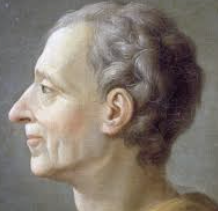
In France there are three kinds of professions: the church, the sword, and the long robe. Each hath a sovereign contempt for the other two. For example, a man who ought to be despised only for being a fool is often so because he is a lawyer.
▼
Source
source
No. 44 (Usbek writing to Rhedi)
3 months 3 weeks ago
When one admits that nothing is certain one must, I think, also admit that some things are much more nearly certain than others. It is much more nearly certain that we are assembled here tonight than it is that this or that political party is in the right. Certainly there are degrees of certainty, and one should be very careful to emphasize that fact, because otherwise one is landed in an utter skepticism, and complete skepticism would, of course, be totally barren and completely useless.
▼
Source
source
"Skepticism"

2 months 4 days ago
In the end, I am moved by causes and ideas that I can actually choose to support because they conform to values and principles that I believe in.
▼
Source
source
p. 88
2 months 3 weeks ago
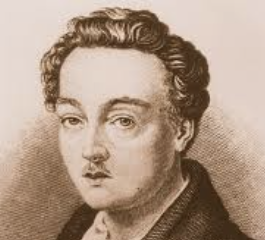
The weapon of the Republic is terror, and virtue is its strength.
▼
Source
source
Act I.
2 months 1 week ago
From whatever side the matter is regarded, it is always found that reason confronts our longing for personal immortality and contradicts it. And the truth is, in all strictness, that reason is the enemy of life.
3 months 2 weeks ago
This inner revolution is realistic because it maintains itself deliberately within the framework of existing institutions; the oppressed reckon with the real situation.
▼
Source
source
p. 66
2 months 2 weeks ago
So that every Crime is a sinne; but not every sinne a Crime.
▼
Source
source
The Second Part, Chapter 27, p. 151
1 month ago
Nietzsche would say my friends lacked ears.
▼
Source
source
Chapter 8, Performative Reflexivity, p. 133
CivilSimian.com created by AxiomaticPanic, CivilSimian, Kalokagathia