

1 month 3 weeks ago
Particularly in the case of all professional of press-images which testify of the real events. In making reality, even the most violent, emerge to the visible, it makes the real substance disappear. It is like the Myth of Eurydice : when Orpheus turns around to look at her, she vanishes and returns to hell. That is why, the more exponential the marketing of images is growing the more fantastically grows the indifference towards the real world. Finally, the real world becomes a useless function, a collection of phantom shapes and ghost events. We are not far from the silhouettes on the walls of the cave of Plato.

2 months 1 week ago
Use harms and even destroys beauty. The noblest function of an object is to be contemplated.
▼
Source
source
Niebla [Mist]

3 months 3 days ago
In anger we should refrain both from speech and action.
▼
Source
source
As quoted in Lives and Opinions of Eminent Philosophers, "Pythagoras", Sect. 23-24, as translated in Dictionary of Quotations (1906) by Thomas Benfield Harbottle, p. 370
3 months 1 week ago
Dionysius the Elder, being asked whether he was at leisure, he replied, "God forbid that it should ever befall me!"
▼
Source
source
32 Dionysius
1 month ago
I predict we will abolish suffering throughout the living world. Our descendants will be animated by gradients of genetically pre-programmed well-being that are orders of magnitude richer than today's peak experiences.
▼
Source
source
Quoted in Ethics Matters (2012) by Peter and Charlotte Vardy, p. 114 ISBN 978-0334043911
2 months 3 weeks ago
Countless attempts have been made to no avail to construct a continuity from the supreme principle of the intellectual world to the finite world. The oldest and most frequent of these attempts is well known: the principle of emanation, according to which the outflowings from the godhead, in gradual increments and detachment from the ordinary source, losing their divine perfection until, in the end, they pass into the opposite (matter, privation), just as light is finally confined by darkness.
▼
Source
source
P. 24

2 months 4 days ago
Once again, I experienced that overwhelming joy in the universe that I had felt in London outside the V and A. But this time, my consciousness of the world seemed larger, more complex. It was the mystic's sensation of oneness, of everything blending into everything else. Everything I looked at reminded me of something else, which also became present to my consciousness, as if I were simultaneously seeing a million worlds and smelling a million scents and hearing a million sounds-- not mixed up, but each separate and clear. I was overwhelmed with a sense of my smallness in the face of this vast, beautiful, objective universe, this universe whose chief miracle is that it exists, as well as myself. It is no dream, but a great garden in which life is trying to obtain a foothold. I experienced a desire to burst into tears of gratitude; then I controlled it, and the feeling subsided into a calm sense of immense, infinite beauty.
▼
Source
source
pp. 237-238

2 months 3 weeks ago
Magnanimity in politics is not seldom the truest wisdom; and a great empire and little minds go ill together.
3 months 3 weeks ago
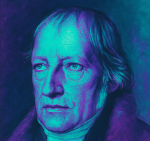
The owl of Minerva first begins her flight with the onset of dusk.
1 month 2 weeks ago
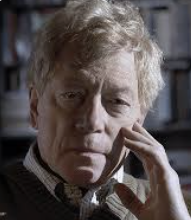
Of course, there are those - Sandel, Walzer and Dworkin, for example - who propose "communitarian" ways of thinking, as a further move in the direction which a sophisticated liberalism requires. But none of them is prepared to accept the real price of community: which is sanctity, intolerance, exclusion, and a sense that life's meaning depends upon obedience, and also on vigilance against the enemy.
▼
Source
source
'In Defence of the Nation', The Philosopher on Dover Beach (1990), p. 310
4 months 3 weeks ago
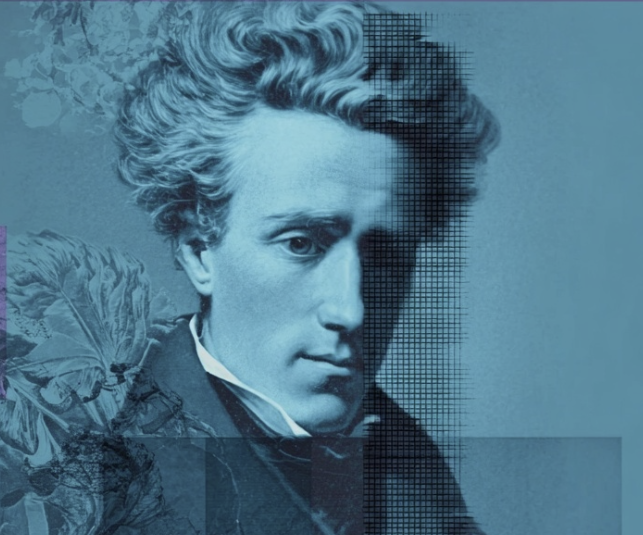
I have just now come from a party where I was its life and soul; witticisms streamed from my lips, everyone laughed and admired me, but I went away - yes, the dash should be as long as the radius of the earth's orbit ----------- and wanted to shoot myself.

1 week 3 days ago
There should be 2 systems. One for needs and one for wants. We shouldn't have to compete for needs, and we shouldn't expect the things we want. An ideal system would definitely be a seriously regulated capitalism with an uncompromised safety net that we focus on with automation and AI. But, those with just want those without to die. In the end, they will lose.

3 months 2 weeks ago
To love at all is to be vulnerable. Love anything, and your heart will certainly be wrung and possibly be broken. If you want to make sure of keeping it intact, you must give your heart to no one, not even to an animal. Wrap it carefully round with hobbies and little luxuries; avoid all entanglements; lock it up safe in the casket or coffin of your selfishness. But in that casket - safe, dark, motionless, airless - it will change. It will not be broken; it will become unbreakable, impenetrable, irredeemable. The alternative to tragedy, or at least to the risk of tragedy, is damnation. The only place outside of Heaven where you can be perfectly safe from all the dangers and perturbations of love is Hell.

2 months 2 weeks ago
Verily I say unto thee, That this night, before the cock crow, thou shalt deny me thrice.
▼
Source
source
26:34 (KJV) Said to Peter.

4 months 1 week ago
Down in adoration falling,Lo! the sacred Host we hail;Lo! o'er ancient forms departing,Newer rites of grace prevail;Faith for all defects supplying,Where the feeble senses fail.
▼
Source
source
Pange, Lingua, stanza 5 (Tantum Ergo)
3 months 3 weeks ago
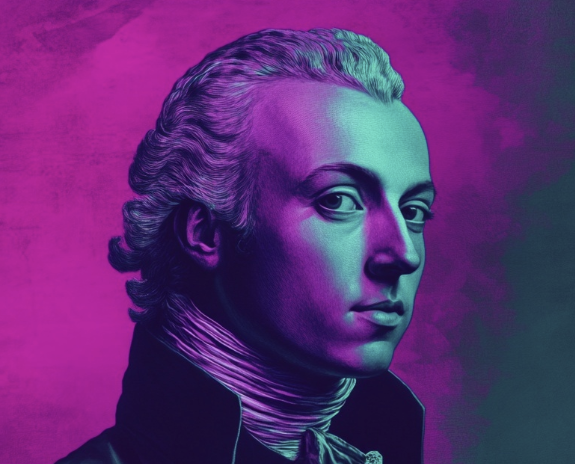
A person who already displays ... cruelty to animals is also no less hardened towards men. We can already know the human heart, even in regard to animals.
▼
Source
source
Part II, p. 212

3 months 2 weeks ago
I was not the one to invent lies: they were created in a society divided by class and each of us inherited lies when we were born. It is not by refusing to lie that we will abolish lies: it is by eradicating class by any means necessary.
▼
Source
source
Act 5, sc. 3
4 months 3 weeks ago
I have needed God every day to defend myself against the abundance of thoughts.

3 months 4 weeks ago
Tis a good word and a profitable desire, but withal absurd; for to make the handle bigger than the hand, the cubic longer than the arm, and to hope to stride further than our legs can reach, is both impossible and monstrous; or that man should rise above himself and humanity; for he cannot see but with his eyes, nor seize but with his hold. He shall be exalted, if God will lend him an extraordinary hand; he shall exalt himself, by abandoning and renouncing his own proper means, and by suffering himself to be raised and elevated by means purely celestial. It belongs to our Christian faith, and not to the stoical virtue, to pretend to that divine and miraculous metamorphosis.
▼
Source
source
Ch. 12

2 months 2 weeks ago
Were we to undertake an exhaustive self-scrutiny, disgust would paralyze us, we would be doomed to a thankless existence.

1 month 1 week ago
The picture of modern philosophy as centered in epistemology and driven by the desire to ground our representations is so tenacious that some philosophers are prepared to bite the bullet and declare the effort simply wasted. Rorty, for example, finds it easier to reject modern philosophy altogether than to reject the standard accounts of its history. His narrative is more polemical than most, but it's a polemical version of the story told in most philosophy departments in the second half of the twentieth century. The story is one of tortuously decreasing interest. Philosophy, like some people, was prepared to accept boredom in exchange for certainty as it grew to middle age.

3 months 3 weeks ago
Men are what their mothers made them.
▼
Source
source
Fate
3 months 3 weeks ago
The louder he talked of his honor, the faster we counted our spoons.
▼
Source
source
Worship
4 months 2 weeks ago
Inspect every piece of pseudoscience and you will find a security blanket, a thumb to suck, a skirt to hold. What does the scientist have to offer in exchange? Uncertainty! Insecurity!

2 months 3 weeks ago
He who carries self-regard far enough to keep himself in good health and high spirits, in the first place thereby becomes an immediate source of happiness to those around, and in the second place maintains the ability to increase their happiness by altruistic actions. But one whose bodily vigour and mental health are undermined by self-sacrifice carried too far, in the first place becomes to those around a cause of depression, and in the second place renders himself incapable, or less capable, of actively furthering their welfare. In estimating conduct we must remember that there are those who by their joyousness beget joy in others, and that there are those who by their melancholy cast a gloom on every circle they enter.
▼
Source
source
Ethics (New York:1915), § 72, pp. 193-194
3 months 2 weeks ago
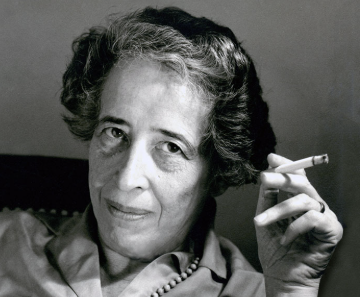
The trouble with Eichmann was precisely that so many were like him, and that the many were neither perverted nor sadistic, that they were, and still are, terribly and terrifyingly normal. From the viewpoint of our legal institutions and of our moral standards of judgment, this normality was much more terrifying than all the atrocities put together, for it implied - as had been said at Nuremberg over and over again by the defendants and their counsels - that this new type of criminal, who is in actual fact hostis generis humani, commits his crimes under circumstances that make it well-nigh impossible for him to know or to feel that he is doing wrong.
▼
Source
source
Epilogue

3 months 3 weeks ago
Let's not be dazzled by the sententious glitter with which error and lying often cover themselves. Society is not created by the crowd, and bodies come together in vain when hearts reject each other. The truly sociable man is more difficult in his relationships than others; those which consist only in false appearances cannot suit him. He prefers to live far from wicked men without thinking about them, than to see them and hate them. He prefers to flee his enemy rather than seek him out to harm him. A person who knows no other society than that of the heart will not seek his society in your circles. That is How J.J. must have thought and behaved before the conspiracy of which he is the object.
▼
Source
source
Second Dialogue; translated by Judith R. Bush, Christopher Kelly, Roger D. Masters

1 week 5 days ago
No man lives without jostling and being jostled; in all ways he has to elbow himself through the world, giving and receiving offense.

3 months 3 weeks ago
First Shakespeare sonnets seem meaningless; first Bach fugues, a bore; first differential equations, sheer torture. But training changes the nature of our spiritual experiences. In due course, contact with an obscurely beautiful poem, an elaborate piece of counterpoint or of mathematical reasoning, causes us to feel direct intuitions of beauty and significance. It is the same in the moral world.
▼
Source
source
Ch. 14, p. 333 [2012 reprint]

1 month 2 weeks ago
There are no passengers on Spaceship Earth. We are all crew.
▼
Source
source
Statement in 1965, in reference to Operating Manual for Spaceship Earth (1963) by Buckminster Fuller
1 month 2 weeks ago
If your parent is just, revere him; if not, bear with him.
▼
Source
source
Maxim 27
2 months 2 weeks ago
Were the ends of a person already explicit, there would be no room for development, for growth, for life; and consequently there would be no personality. The mere carrying out of predetermined purposes is mechanical. This remark has an application to the philosophy of religion. It is that genuine evolutionary philosophy, that is, one that makes the principle of growth a primordial element of the universe, is so far from being antagonistic to the idea of a personal creator, that it is really inseparable from that idea; while a necessitarian religion is in an altogether false position and is destined to become disintegrated. But a pseudo-evolutionism which enthrones mechanical law above the principle of growth is at once scientifically unsatisfactory, as giving no possible hint of how the universe has come about, and hostile to all hopes of personal relations to God.

3 months 1 week ago
Of practical wisdom these are the three fruits: to deliberate well, to speak to the point, to do what is right.
3 months 3 weeks ago
In skating over thin ice our safety is our speed.
▼
Source
source
Prudence
4 months 2 weeks ago
An optimistic view of the future would indicate that before long, the clear necessity of expanding humanity's horizons would cause ... space settlements to be built. The construction would also serve as a great project that not only would be clearly of great benefit, but might induce human cooperation in something large enough to fire the heart and mind, and make people forget the petty quarrels that have engaged them for thousands of years in wars over insignificant scraps of earthly territory.
2 months 3 weeks ago
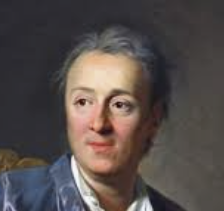
Genius is present in every age, but the men carrying it within them remain benumbed unless extraordinary events occur to heat up and melt the mass so that it flows forth.
1 month 2 weeks ago
At the speed of light there is no sequence; everything happens at the same instant.
2 months 3 weeks ago
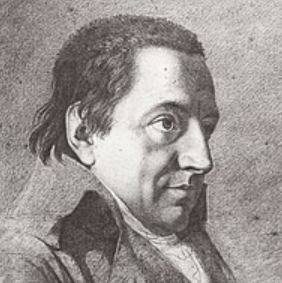
The fundamental maxim of those who stand at the head of this Age, and therefore the principle of the Age, is this,-to accept nothing as really existing or obligatory, but that which they can understand and clearly comprehend. With regard to this fundamental principle, as we have now declared and adopted it without farther definition or limitation, this third Age is precisely similar to that which is to follow it, the fourth, or age of Reason as Science,-and by virtue of this similarity prepares the way for it. Before the tribunal of Science, too, nothing is accepted but the Conceivable. Only in the application of the principle there is this difference between the two Ages,-that the third, which we shall shortly name that of Empty Freedom, makes its fixed and previously acquired conceptions the measure of existence; while the fourth-that of Science-on the contrary, makes existence the measure, not of its acquired, but of its desiderated beliefs.
▼
Source
source
p. 19
2 months 2 weeks ago
Let a man once overcome his selfish terror at his own finitude, and his finitude is, in one sense, overcome.
2 months 3 weeks ago
On its pass through finitude, the being-for-itself of the counter-image expresses itself most potently as ""I-ness", as self-identical individuality. Just as a planet in its orbit no sooner reaches its farthest distance from the center than it returns to its closest proximity, so the point of the farthest distance from God, the I-ness, is also the moment of its return to the Absolute, of the re-absorption into the ideal.
▼
Source
source
P. 30
4 months 2 weeks ago
Someone once asked me, "If you had your choice, Dr. Asimov, would it be women or writing?" My answer was, "Well, I can write for twelve hours at a time without getting tired."

3 months 3 weeks ago
And as every present state of a simple substance is naturally a consequence of its preceding state, so its present is pregnant with its future.
▼
Source
source
La monadologie (22).
2 months 3 weeks ago
The power of discretionary disqualification by one law of Parliament, and the necessity of paying every debt of the Civil List by another law of Parliament, if suffered to pass unnoticed, must establish such a fund of rewards and terrors as will make Parliament the best appendage and support of arbitrary power that ever was invented by the wit of man. This is felt. The quarrel is begun between the Representatives and the People. The Court Faction have at length committed them. In such a strait the wisest may well be perplexed, and the boldest staggered. The circumstances are in a great measure new. We have hardly any land-marks from the wisdom of our ancestors, to guide us. At best we can only follow the spirit of their proceeding in other cases.
▼
Source
source
Volume i, p. 516
2 months 3 weeks ago
Well, which is the most rational theory about these ten millions of species? Is it most likely that there have been ten millions of special creations? or is it most likely that, by continual modifications due to change of circumstances, ten millions of varieties have been produced, as varieties are being produced still?
3 months 3 weeks ago
In actions of enthusiasm, this drawback appears: but in those lower activities, which have no higher aim than to make us more comfortable and more cowardly, in actions of cunning, actions that steal and lie, actions that divorce the speculative from the practical faculty, and put a ban on reason and sentiment, there is nothing else but drawback and negation.
▼
Source
source
Goethe; or, The Writer
3 months 3 weeks ago
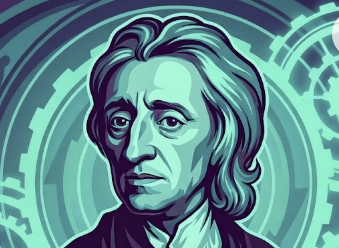
Virtue is harder to be got than knowledge of the world; and, if lost in a young man, is seldom recovered.
▼
Source
source
Sec. 70
3 months 1 week ago
Kripke tries to sober us up by denying that meaning determines reference. Rather, we name things by confronting them and baptising them, not by creating them out of a list of qualities. Names are not, pace Russell, shorthand for such lists. They are not abbreviations for descriptions, but (in Kripke's coinage) 'rigid designators' - that is, they would name the same things in any possible world, including worlds in which their bearers did not have the properties we, in this world, use to identify them.
▼
Source
source
Kripke versus Kant. Lrb.com, september 1980.
3 months 3 weeks ago
Who is going to educate the human race in the principles and practice of conservation?
▼
Source
source
Chapter 12 (p. 112)
3 months 3 weeks ago
Religion, which should most distinguish us from the beasts, and ought most particularly elevate us, as rational creatures, above brutes, is that wherein men often appear most irrational, and more senseless than beasts.
▼
Source
source
Book IV, Ch. 18
2 months 3 weeks ago
The most obvious division of society is into rich and poor; and it is no less obvious, that the number of the former bear a great disproportion to those of the latter. The whole business of the poor is to administer to the idleness, folly, and luxury of the rich; and that of the rich, in return, is to find the best methods of confirming the slavery and increasing the burdens of the poor. In a state of nature, it is an invariable law, that a man's acquisitions are in proportion to his labours. In a state of artificial society, it is a law as constant and as invariable, that those who labour most enjoy the fewest things; and that those who labour not at all have the greatest number of enjoyments. A constitution of things this, strange and ridiculous beyond expression! We scarce believe a thing when we are told it, which we actually see before our eyes every day without being in the least surprised.
CivilSimian.com created by AxiomaticPanic, CivilSimian, Kalokagathia