


2 months 3 weeks ago
The best definition of man is: a being that goes on two legs and is ungrateful.
▼
Source
source
Part 1, Chapter 8 (tr. David Magarshack, 1950) The best definition of man is: a biped, ungrateful.

3 months 3 weeks ago
Of all tyrannies a tyranny sincerely exercised for the good of its victims may be the most oppressive. It may be better to live under robber barons than under omnipotent moral busybodies. The robber baron's cruelty may sometimes sleep, his cupidity may at some point be satiated; but those who torment us for our own good will torment us without end for they do so with the approval of their own conscience. They may be more likely to go to Heaven yet at the same time likelier to make a Hell of earth. This very kindness stings with intolerable insult. To be "cured" against one's will and cured of states which we may not regard as disease is to be put on a level of those who have not yet reached the age of reason or those who never will; to be classed with infants, imbeciles, and domestic animals.
▼
Source
source
"The Humanitarian Theory of Punishment" (1949), p. 292 Similar statements were included in "A Reply to Professor Haldane" (1946) (see above), published posthumously.
4 months 3 weeks ago
When people are friends, they have no need of justice, but when they are just, they need friendship in addition.

3 months 3 weeks ago
The native and untaught suggestions of inquisitive children do often offer things, that may set a considering man's thoughts on work. And I think there is frequently more to be learn'd from the unexpected questions of a child than the discourses of men, who talk in a road, according to the notions they have borrowed, and the prejudices of their education.
▼
Source
source
Sec. 121
1 month 3 weeks ago
"If he is this good at acting crazy, it's because he is." Nor is military psychology mistaken in this regard: in this sense, all crazy people simulate, and this lack of distinction is the worst kind of subversion. It is against this lack of distinction that classical reason armed itself in all its categories. But it is what today again outflanks them, submerging the principle of truth.
▼
Source
source
"The Precession of Simulacra," p. 4

4 months 6 days ago
A thing therefore never returns to nothing.
▼
Source
source
Book I, line 248 (tr. Munro)

3 months 3 weeks ago
The sense of justice and injustice is not deriv'd from nature, but arises artificially... from education, and human conventions.
▼
Source
source
Part 2, 1.17
2 months 2 weeks ago
It is astounding that man, the instigator, inventor and vehicle of all these developments, the originator of all judgements and decisions and the planner of the future, must make himself such a quantité negligeable.
▼
Source
source
p 45
3 months 1 week ago
Complaints about the social irresponsibility of the intellectual typically concern the intellectual's tendency to marginalize herself, to move out from one community by interior identification of herself with some other community-for example, another country or historical period. ... It is not clear that those who thus marginalize themselves can be criticized for social irresponsibility. One cannot be irresponsible toward a community of which one does not think of oneself as a member. Otherwise runaway slaves and tunnelers under the Berlin Wall would be irresponsible.
▼
Source
source
"Postmodernist bourgeois liberalism," Objectivity, Relativism and Truth (Cambridge: 1991), p. 197
2 weeks 2 days ago
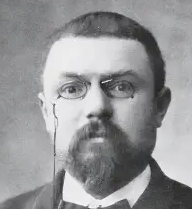
It is because simplicity and vastness are both beautiful that we seek by preference simple facts and vast facts; that we take delight, now in following the giant courses of the stars, now in scrutinizing the microscope that prodigious smallness which is also a vastness, and now in seeking in geological ages the traces of a past that attracts us because of its remoteness.
▼
Source
source
Part I. Ch. 1 : The Selection of Facts, p. 23

1 month 3 weeks ago
The Churches as Churches have always been and cannot fail to be institutions not only alien to, but directly hostile towards, Christ's teaching.
▼
Source
source
Chapter III, Christianity Misunderstood by Believers

2 months 3 weeks ago
The power of perpetuating our property in our families is one of the most valuable and interesting circumstances belonging to it, and that which tends most to the perpetuation of society itself. It makes our weakness subservient to our virtue; it grafts benevolence even upon avarice. The possession of family wealth and of the distinction which attends hereditary possessions (as most concerned in it,) are the natural securities for this transmission.

3 months 3 weeks ago
I have always thought respectable people scoundrels, and I look anxiously at my face every morning for signs of my becoming a scoundrel.
▼
Source
source
Quoted in Alan Wood Bertrand Russell: The Passionate Skeptic: A Biography, Vol. 2 (1958), p. 233

2 months 3 weeks ago
Those who cavalierly reject the Theory of Evolution, as not adequately supported by facts, seem quite to forget that their own theory is supported by no facts at all. Like the majority of men who are born to a given belief, they demand the most rigorous proof of any adverse belief, but assume that their own needs none.

3 months 3 weeks ago
In actions of enthusiasm, this drawback appears: but in those lower activities, which have no higher aim than to make us more comfortable and more cowardly, in actions of cunning, actions that steal and lie, actions that divorce the speculative from the practical faculty, and put a ban on reason and sentiment, there is nothing else but drawback and negation.
▼
Source
source
Goethe; or, The Writer

4 months 1 week ago
It is not by change of place that we can come nearer to Him who is in every place, but by the cultivation of pure desires and virtuous habits.
▼
Source
source
p. 433

4 months 1 week ago
The perfection of the effect demonstrates the perfection of the cause, for a greater power brings about a more perfect effect. But God is the most perfect agent. Therefore, things created by Him obtain perfection from Him. So, to detract from the perfection of creatures is to detract from the perfection of divine power.
▼
Source
source
III, 69, 15

3 months 3 weeks ago
In these frequent talks about the books I read, he used, as opportunity offered, to give me explanations and ideas respecting civilization, government, morality, mental cultivation, which he required me afterwards to restate to him in my own words. He also made me read, and give him a verbal account of, many books which would not have interested me sufficiently to induce me to read them of myself: among others, Millar's Historical View of the English Government, a book of great merit for its time, and which he highly valued; Mosheim's Ecclesiastical History, McCrie's Life of John Knox, and even Sewel's and Rutty's Histories of the Quakers. He was fond of putting into my hands books which exhibited men of energy and resource in unusual circumstances, struggling against difficulties and overcoming them: of such works I remember Beaver's African Memoranda, and Collins's account of the first settlement of New South Wales.
▼
Source
source
(p. 8)

2 months 2 weeks ago
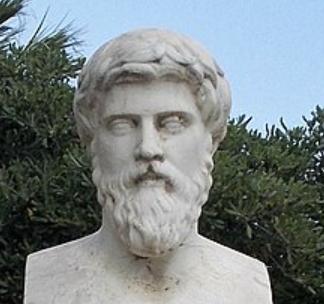
Our place is somewhere between being and nonbeing - between two fictions.
3 months 1 week ago
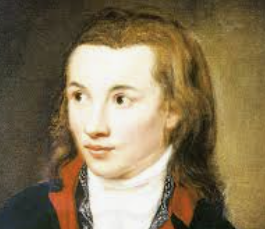
When Philip had news brought him of divers and eminent successes in one day, "O Fortune!" said he, "for all these so great kindnesses do me some small mischief."
▼
Source
source
34 Philip
2 months 2 weeks ago
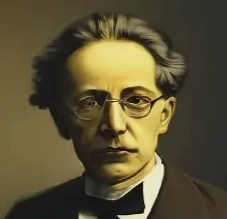
Man is the higher Sense of our Planet; the star which connects it with the upper world; the eye which it turns towards Heaven.
1 week ago
An appeal to men's self-sacrificing disposition and self-renouncing love ought at least to have lost its seductive plausibility when, after an activity of thousands of years, it has left nothing behind but the - misery of today. Why then still fruitlessly expect self-sacrifice to bring us better times? Why not rather hope for them from usurpation? Salvation comes no longer from the giver, the bestower, the loving one, but from the taker, the appropriator (usurper), the owner. Communism, and, consciously, egoism-reviling humanism, still count on love.
▼
Source
source
Cambridge 1995, p. 274

2 months 2 weeks ago
Then he said to them, "Watch out! Be on your guard against all kinds of greed; a man's life does not consist in the abundance of his possessions." And he told them this parable: "The ground of a certain rich man produced a good crop. He thought to himself, 'What shall I do? I have no place to store my crops.' "Then he said, 'This is what I'll do. I will tear down my barns and build bigger ones, and there I will store all my grain and my goods. And I'll say to myself, "You have plenty of good things laid up for many years. Take life easy; eat, drink and be merry." ' "But God said to him, 'You fool! This very night your life will be demanded from you. Then who will get what you have prepared for yourself?' "This is how it will be with anyone who stores up things for himself but is not rich toward God."
▼
Source
source
12:15-21 (NIV)

1 month 2 weeks ago
The message of radio is one of violent, unified implosion and resonance.
▼
Source
source
(p. 263)
3 months 3 weeks ago
The more you obey your conscience, the more your conscience will demand of you.
▼
Source
source
Book IV, Chapter 8, "Is Christianity Hard or Easy?"

2 months 3 weeks ago
In the United States, the majority undertakes to supply a multitude of ready-made opinions for the use of individuals, who are thus relieved from the necessity of forming opinions of their own.
▼
Source
source
Book One, Chapter II.

4 months 3 weeks ago
Let us suppose that a man believes in eternal life on Christ's word. In that case he believes without any fuss about being profound and searching and philosophical and racking his brains.

2 months 1 week ago
Just as eunuchs will never know aesthetics as applied to the selection of beautiful women, so neither will pure rationalists ever know ethics, nor will they ever succeed in defining happiness, for happiness is a thing that is lived and felt, not a thing that is reasoned or defined.

4 months 1 day ago
Nay, number (itself) in armies, importeth not much, where the people is of weak courage; for (as Virgil saith) it never troubles the wolf how many the sheep be.
▼
Source
source
Essays or Counsels Civil and Moral (1597), XXIX: "Of the True Greatness of Kingdoms and Estates."

1 week ago
Socrates is reported to have replied, when a certain person complained of having received no benefit from his travels: "It serves you right! You travelled in your own company!"

3 months 3 weeks ago
Great minds are related to the brief span of time during which they live as great buildings are to a little square in which they stand: you cannot see them in all their magnitude because you are standing too close to them.
▼
Source
source
Vol. 2, Ch. 20, § 242
3 days ago
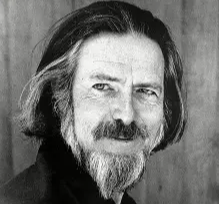
Zen does not confuse spirituality with thinking about God while one is peeling potatoes. Zen spirituality is just to peel the potatoes. Paraphrase of original text which reads "It does not confuse spirituality with thinking about God while one is peeling potatoes. Zen spirituality is just to peel the potatoes.
▼
Source
source
The Way of Zen, Pt. 2, Ch. 2

2 months 1 week ago
The collective is the object of all idolatry, this it is which chains us to the earth. In the case of avarice: gold is of the social order. In the case of ambition: power is of the social order. Science and art are full of the social element also. And love? Love is more or less of an exception: that is why we can go to God through love, not through avarice and ambition.
▼
Source
source
p. 121
2 months 2 weeks ago
I am the way and the truth and the life. No one comes to the Father except through me.
▼
Source
source
14:06
1 month 2 weeks ago
While people are engaged in creating a totally different world, they always form vivid images of the preceding world.
▼
Source
source
(p. 21)

2 months 6 days ago
The chief error in philosophy is overstatement.
▼
Source
source
Pt. I, ch. 1, sec. 1.
2 months 1 week ago
Apart from the fact there is no normal standard of health, nobody has proved that man is necessarily cheerful by nature. And further, man, by the very fact of being man, of possessing consciousness, is, in comparison with the ass or the crab, a diseased animal. Consciousness is a disease.

1 week 6 days ago
The highest ensign that men ever met and embraced under, the Cross itself, had no meaning save an accidental extrinsic one.
▼
Source
source
Bk. III, ch. 3.
1 week 4 days ago
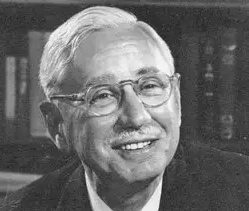
Great organizers, as much as inevitable slaves, tend to stoic moods: it is difficult to be either master or servant if one is sensitive.
2 months 2 weeks ago
This heaven will pass away, and the one above it will pass away. The dead are not alive, and the living will not die. In the days when you consumed what is dead, you made it what is alive. When you come to dwell in the light, what will you do? On the day when you were one you became two. But when you become two, what will you do?

2 months 5 days ago
Time begins to emit a scent when it gains duration; when it is given a narrative or deep tension; when it gains depth and breadth, even space.
2 months 3 weeks ago
That unwise body, the United Irishmen, have had the folly to represent those Evils as owing to this Country, when in truth its chief guilt is in its total neglect, its utter oblivion, its shameful indifference and its entire ignorance, of Ireland and of every thing that relates to it, and not in any oppressive disposition towards that unknown region.
▼
Source
source
Letter to Thomas Hussey (9 December 1796), quoted in R. B. McDowell (ed.)

4 months ago
For the history of the centuries that have passed since the birth of Christ nowhere reveals conditions like those of the present. There has never been such building and planting in the world. There has never been such gluttonous and varied eating and drinking as now. Wearing apparel has reached its limit in costliness. Who has ever heard of such commerce as now encircles the earth? There have arisen all kinds of art and sculpture, embroidery and engraving, the like of which has not been seen during the whole Christian era. In addition men are so delving into the mysteries of things that today a boy of twenty knows more than twenty doctors formerly knew.
▼
Source
source
Sermon for the Second Sunday in Advent, Luke 21:25-36 (1522), as translated in The Precious and Sacred Writings of Martin Luther (1905) edited by John Nicholas Lenker
3 months 3 weeks ago
Science seems to be at war with itself.... Naive realism leads to physics, and physics, if true, shows naive realism to be false. Therefore naive realism, if true, is false; therefore it is false.
▼
Source
source
An Inquiry into Meaning and Truth (1940), Introduction, p. 15
1 week 6 days ago
An intellectual dapperling of these times boasts chiefly of his irresistible perspicacity, his "dwelling in the daylight of truth," and so forth; which, on examination, turns out to be a dwelling in the rush-light of "closet logic," and a deep unconsciousness that there is any other light to dwell in or any other objects to survey with it.
1 week 6 days ago
Why not? What is to hinder this Samson from governing? There is in him what far transcends all apprenticeships; in the man himself there exists a model of governing, something to govern by! There exists in him a heart-abhorrence of whatever is incoherent, pusillanimous, unveracious,-that is to say, chaotic, _un_governed; of the Devil, not of God. A man of this kind cannot help governing! He has the living ideal of a governor in him; and the incessant necessity of struggling to unfold the same out of him.

3 months 3 weeks ago
The force of the word World, as commonly used, of itself falls in with us. For no one will attribute accidents to the World as parts, but as determinations, states; hence the so-called world of the ego, unrestrained by the single substance and its accidents, is not very appositely called a World, unless, perhaps, an imaginary one.

3 months 3 weeks ago
What chance has Vulcan against Roberts & Co., Jupiter against the lightning-rod and Hermes against the Credit Mobilier? All mythology overcomes and dominates and shapes the forces of nature in the imagination and by the imagination; it therefore vanishes with the advent of real mastery over them.
▼
Source
source
Introduction, p. 30.
3 months 3 weeks ago
Popery so threatens and so nearly surrounds us...every sober man would think it seasonable at this time that all dissenting Protestants should be brought to a good understanding and compliance one with another...I think all Protestants ought now by all ways to be stirred up against them [Catholics] as People that have declared themselves ready by blood, violence, and destruction to ruine our Religion and Government...[they] are nothing but either Enemys in our bowells or spies among us, whilst their General commanders whom they blindly obey declare warr, and an unalterable designe to destroy us.
▼
Source
source
Critical Notes Upon Edward Stillingfleet's Mischief and Unreasonableness of Separation' (c. May 1681), quoted in John Marshall, John Locke: Resistance, Religion and Responsibility (Cambridge University Press, 1994), p. 110
4 months 3 weeks ago
After these matters we ought perhaps next to discuss pleasure. For it is thought to be most intimately connected with our human nature, which is the reason why in educating the young we steer them by the rudders of pleasure and pain; it is thought, too, that to enjoy the things we ought and to hate the things we ought has the greatest bearing on virtue of character. For these things extend right through life, with a weight and power of their own in respect both to virtue and to the happy life, since men choose what is pleasant and avoid what is painful; and such things, it will be thought, we should least of all omit to discuss, especially since they admit of much dispute.
CivilSimian.com created by AxiomaticPanic, CivilSimian, Kalokagathia