


2 months 3 weeks ago
If we command our wealth, we shall be rich and free; if our wealth commands us, we are poor indeed.
▼
Source
source
No. 1
1 month 3 days ago
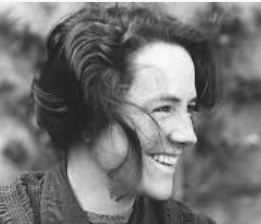
I have been overcome by the beauty and richness of our life together, those early mornings setting out, those evenings gleaming with rivers and lakes below us, still holding the last light. ... Those fields of daisies we landed on, and dusty fields and desert stretches. Memories of many skies and earths beneath us - many days, many nights of stars.
2 months 6 days ago
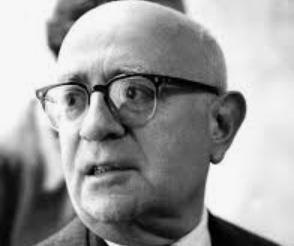
Fear and destructiveness are the major emotional sources of fascism, eros belongs mainly to democracy.
▼
Source
source
The Authoritarian Personality (1950), p. 976, co-written with Else Frenkel-Brunswik, Daniel Levinson, and Nevitt Sanford


4 months 1 week ago
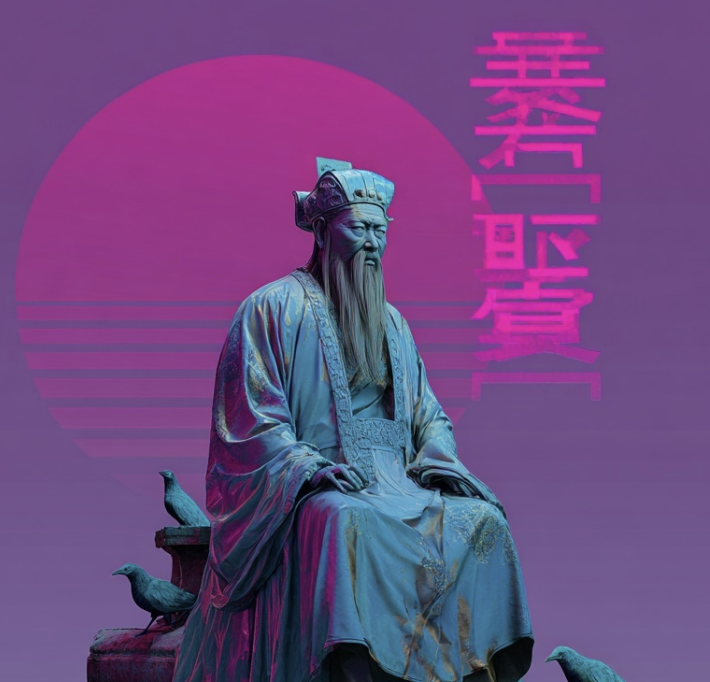
The superior man honors his virtuous nature, and maintains constant inquiry and study, seeking to carry it out to its breadth and greatness, so as to omit none of the more exquisite and minute points which it embraces, and to raise it to its greatest height and brilliancy, so as to pursue the course of the Mean. He cherishes his old knowledge, and is continually acquiring new. He exerts an honest, generous earnestness, in the esteem and practice of all propriety. Thus, when occupying a high situation he is not proud, and in a low situation he is not insubordinate. When the kingdom is well governed, he is sure by his words to rise; and when it is ill governed, he is sure by his silence to command forbearance to himself.

2 months 3 weeks ago
So long as man remains free he strives for nothing so incessantly and so painfully as to find some one to worship.
2 weeks ago
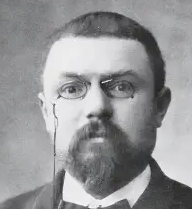
It is because simplicity and vastness are both beautiful that we seek by preference simple facts and vast facts; that we take delight, now in following the giant courses of the stars, now in scrutinizing the microscope that prodigious smallness which is also a vastness, and now in seeking in geological ages the traces of a past that attracts us because of its remoteness.
▼
Source
source
Part I. Ch. 1 : The Selection of Facts, p. 23
1 month 2 weeks ago
Science has adapted itself entirely to the wealthy classes and accordingly has set itself to heal those who can afford everything, and it prescribes the same methods for those who have nothing to spare.
3 months 3 weeks ago
Preference of vice to virtue, a manifest wrong judgment.
▼
Source
source
Book II, Ch. 21, sec. 70
2 months 2 weeks ago
I have taken pains to make my distinction of icons, indices, and tokens clear, in order to enunciate this proposition: in a perfect system of logical notation signs of these several kinds must all be employed. Without tokens there would be no generality in the statements, for they are the only general signs; and generality is essential to reasoning. ... But tokens alone do not state what is the subject of discourse ; and this can, in fact, not be described in general terms ; it can only be indicated. The actual world cannot be distinguished from a world of imagination by any description. Hence the need of pronoun and indices, and the more complicated the subject the greater the need of them.
2 months 2 weeks ago
When animus and anima meet, the animus draws his sword of power and the anima ejects her poison of illusion and seduction. The outcome need not always be negative, since the two are equally likely to fall in love (a special instance of love at first sight).
▼
Source
source
Aion (1951). CW 9, Part II: P.338.30
2 months 3 weeks ago
My poor opinion is, that the closest connexion between Great Britain and Ireland, is essential to the well being, I had almost said, to the very being, of the two Kingdoms. ... I think indeed that Great Britain would be ruined by the separation of Ireland; but, as there are degrees even in ruin, it would fall the most heavily on Ireland. By such a separation Ireland would be the most completely undone Country in the world; the most wretched, the most distracted and, in the end, the most desolate part of the habitable Globe.
▼
Source
source
Letter to an unknown correspondent (February 1797), quoted in R. B. McDowell (ed.)
2 months 5 days ago
Art is the imposing of a pattern on experience, and our aesthetic enjoyment in recognition of the pattern.
▼
Source
source
Ch. 29, June 10, 1943.
3 months 4 weeks ago
The most manifest sign of wisdom is a continual cheerfulness; her state is like that in the regions above the moon, always clear and serene.
▼
Source
source
Book I, Ch. 26
3 months 2 weeks ago
There can be no difference anywhere that doesn't make a difference elsewhere - no difference in abstract truth that doesn't express itself in a difference in concrete fact and in conduct consequent upon that fact, imposed on somebody, somehow, somewhere and somewhen.
▼
Source
source
Lecture II, What Pragmatism Means

1 month 2 weeks ago
The automated presidential surrogate is the superlative nobody.
▼
Source
source
(p. 157)
3 months 1 week ago
To one commending an orator for his skill in amplifying petty matters, Agesilaus said, "I do not think that shoemaker a good workman that makes a great shoe for a little foot."
▼
Source
source
Of Agesilaus the Great
2 months 1 week ago
The rise of new science in the seventeenth century laid hold upon general culture in the next century. The enlightenment... testified to the widespread belief that at last light had dawned, that dissipation of ignorance, superstition, and bigotry was at hand, and the triumph of reason was assured -- for reason was counterpart in man of the laws of nature which science was disclosing. The reign of law in the natural world was to be followed by the reign of law in human affairs.
1 day ago
Don't let your hearts grow numb. Stay alert. It is your soul which matters.
2 months 3 weeks ago
This is a work that cannot be completed except by a society of men of letters and skilled workmen, each working separately on his own part, but all bound together solely by their zeal for the best interests of the human race and a feeling of mutual good will.
▼
Source
source
Article on Encyclopedia, as translated in The Many Faces of Philosophy : Reflections from Plato to Arendt (2001), "Diderot", p. 237

1 week 4 days ago
The true University of these days is a Collection of Books.
1 month 4 weeks ago
We favor hypotheses for their simplicity and explanatory power, much as the architect of the world might have done in choosing which possibility to create.
▼
Source
source
Chapter 15, Inductive Logic, p. 142.
2 months 1 week ago
The realer religion is, so much the more it means its own overcoming. It wills to cease to be the special domain "Religion" and wills to become life. It is concerned in the end not with specific religious acts, but with redemption from all that is specific.
▼
Source
source
p. 34
1 week 4 days ago
It has ever been held the highest wisdom for a man not merely to submit to Necessity,-Necessity will make him submit,-but to know and believe well that the stern thing which Necessity had ordered was the wisest, the best, the thing wanted there. To cease his frantic pretension of scanning this great God's-World in his small fraction of a brain; to know that it had verily, though deep beyond his soundings, a Just Law, that the soul of it was Good;-that his part in it was to conform to the Law of the Whole, and in devout silence follow that; not questioning it, obeying it as unquestionable.

3 months 2 weeks ago
Brutes are merely brutal; men and women are capable of being devils and lunatics. They are no less capable of being fully human-even, occasionally, of being a bit more than fully human, of being saints, heroes and geniuses.
▼
Source
source
Introduction to You Are Not The Target by Laura Archera Huxley, 1963
2 months 3 weeks ago
I considerd a general War against Jacobins and Jacobinism, as the only possible chance of saving Europe, (and England as included in Europe) from a truly frightful revolution. ... It is my Protest against the delusion, by which some have been taught to look upon this Jacobin contest at home as an ordinary party squabble about place or Patronage; and to regard this Jacobin War abroad as a common War about Trade, or Territorial Boundaries, or about a political Balance of power among Rival or jealous States.
▼
Source
source
Letter to the Duke of Portland (29 September 1793), quoted in P. J. Marshall and John A. Woods (eds.)

2 months 1 week ago
When the whole is at stake, there is no crime except that of rejecting the whole, or not defending it. ... Those who identify themselves with the whole, who are installed as the leaders and defenders of the whole can make mistakes, but they cannot do wrong-they are not guilty. They may become guilty again when this identification no longer holds, when they are gone.
▼
Source
source
pp. 82-83
3 months 3 weeks ago
The light dove, cleaving the air in her free flight, and feeling its resistance, might imagine that its flight would be still easier in empty space.
▼
Source
source
B 8
1 month 4 weeks ago
In conclusion, then, no satisfactory interpretation of quantum mechanics exists today. The questions posed by the confrontation between the Copenhagen interpretation and the hidden variable theorists go to the very foundations of microphysics, but the answers given by hidden variable theorists and Copenhagenists are alike unsatisfactory. Human curiosity will not rest until those questions are answered, but whether they will be answered by conceptual innovations within the framework of the present theory or only within the framework of an as yet unforeseen theory is unknown. The first step toward answering them has been attempted here. It is the modest but essential step of becoming clear on the nature and magnitude of the difficulties.
▼
Source
source
A philosopher looks at quantum mechanics
3 months 2 weeks ago
Could the activity of thinking as such, the habit of examining whatever happens to come to pass or to attract attention, regardless of results and specific content, could this activity be among the conditions that make men abstain from evil-doing?
▼
Source
source
p. 5
1 week 4 days ago
Innumerable are the illusions and legerdemain-tricks of Custom: but of all these, perhaps the cleverest is her knack of persuading us that the Miraculous, by simple repetition, ceases to be Miraculous.
▼
Source
source
Bk. III, ch. 8.

3 months 3 weeks ago
Hear the verbal protestations of all men: Nothing so certain as their religious tenets. Examine their lives: You will scarcely think that they repose the smallest confidence in them. The greatest and truest zeal gives us no security against hypocrisy: The most open impiety is attended with a secret dread and compunction. No theological absurdities so glaring that they have not, sometimes, been embraced by men of the greatest and most cultivated understanding. No religious precepts so rigorous that they have not been adopted by the most voluptuous and most abandoned of men.
▼
Source
source
Part XV - General corollary
3 months 2 weeks ago
And, oddly enough, even at times when the current style permitted a treatment of the less epileptic aspects of religion, no fully adequate rendering of the contemplative life was ever achieved in the plasdc arts of Christendom. The peace that passes all understanding was often sung and spoken; it was hardly ever painted or carved. Thus, in the writings of St. Bernard, of Albertus Magnus, of Eckhart and Tauler and Ruysbroeck one may find passages that express very clearly the nature and significance of mystical contemplation. But the saints who figure in medieval painting and sculpture tell us next to nothing about this anticipation of the beatific vision. There are no equivalents of those Far Eastern Buddhas and Bodhisattvas who incarnate, in stone and paint, the experience of ultimate reality.
1 month 2 weeks ago
Bush and bin Laden are really on the same side: the side of faith and violence against the side of reason and discussion. Both have implacable faith that they are right and the other is evil. Each believes that when he dies he is going to heaven. Each believes that if he could kill the other, his path to paradise in the next world would be even swifter. The delusional "next world" is welcome to both of them. This world would be a much better place without either of them.
▼
Source
source
Gordy Slack, "The Atheist" Salon.com
2 months 5 days ago
Philosophy finds religion, and modifies it; and conversely religion is among the data of experience which philosophy must weave into its own scheme. Religion is an ultimate craving to infuse into the insistent particularity of emotion that non-temporal generality which primarily belongs to conceptual thought alone. In the higher organisms the differences of tempo between the mere emotions and the conceptual experiences produce a life-tedium, unless this supreme fusion has been effected. The two sides of the organism require a reconciliation in which emotional experiences illustrate a conceptual justification, and conceptual experiences find an emotional illustration.
▼
Source
source
Pt. I, ch. 1, sec. 6.

3 months 3 weeks ago
It is said that God is always on the side of the big battalions.
▼
Source
source
Letter to François-Louis-Henri Leriche (6 February 1770) Note: In his Notebooks (c.1735-c.1750)
4 months 3 days ago
The method of not erring is sought by all the world. The logicians profess to guide it, the geometricians alone attain it, and apart from science, and the imitations of it, there are no true demonstrations.
3 months 2 weeks ago
In everything well known something worthy of thought still lurks.
▼
Source
source
p. xxxix

3 months 2 days ago
Govern your tongue before all other things, following the gods.
▼
Source
source
Symbol 7

2 months 1 week ago
Ether is, in effect, a merely hypothetical entity, valuable only in so far as it explains that which by means of it we endeavor to explain - light, electricity, or universal gravitation - and only so far as these facts cannot be explained in any other way. In like manner the idea of God is also an hypothesis, valuable only in so far as it enables us to explain that which by means of it we endeavor to explain - the essence and existence of the Universe - and only so long as these cannot be explained in any other way. And since in reality we explain the Universe neither better nor worse with this idea than without it, the idea of God, the supreme petitio principii, is valueless.
2 months 1 week ago
In the most secret chamber of the spirit of him who believes himself convinced that death puts an end to his personal consciousness, his memory, for ever, and all unknown to him perhaps, there lurks a shadow, a vague shadow, a shadow of uncertainty, and while he says within himself, "Well, let us live this life that passes away, for there is no other!" the silence of this secret chamber speaks to him and murmurs, "Who knows!... " These voices are like the humming of a mosquito when the south-west wind roars through the trees in the wood; we cannot distinguish this faint humming, yet nevertheless, merged in the clamor of the storm, it reaches the ear.
2 months 2 weeks ago
The discussion of the sexual problem is only a somewhat crude prelude to a far deeper question, and that is the question of the psychological relationship between the sexes. In comparison with this the other pales into insignificance, and with it we enter the real domain of woman. Woman's psychology is founded on the principle of Eros, the great binder and loosener, whereas from ancient times the ruling principle ascribed to man is Logos.
▼
Source
source
P.254
1 month 2 weeks ago
Evolution is a fact. Beyond reasonable doubt, beyond serious doubt, beyond sane, informed, intelligent doubt, beyond doubt evolution is a fact. The evidence for evolution is at least as strong as the evidence for the Holocaust, even allowing for eye witnesses to the Holocaust. It is the plain truth that we are cousins of chimpanzees, somewhat more distant cousins of monkeys, more distant cousins still of aardvarks and manatees, yet more distant cousins of bananas and turnips... continue the list as long as desired.
▼
Source
source
The Greatest Show on Earth: The Evidence for Evolution (2009) (p. 8)

3 months 3 weeks ago
The violence and injustice of the rulers of mankind is an ancient evil, for which, I am afraid, the nature of human affairs can scarce admit a remedy.
▼
Source
source
Chapter III, Part II, p. 531.

3 months 2 weeks ago
It costs a beautiful person no exertion to paint her image on our eyes; yet how splendid is that benefit! It costs no more for a wise soul to convey his quality to other men.
▼
Source
source
Uses of Great Men

3 weeks 6 days ago
Might there not be a connection between the attempt to eradicate religion and the loss of freedom? It is unlikely that Mao, who launched his assault on the people and culture of Tibet with the slogan "Religion is poison," would have agreed that his atheist world-view had no bearing on his policies.

3 months 2 weeks ago
Savage - There is only one way fit for a man - Heroism, or Master-Morality, or Violence. All the other people in between are ploughing the sand.
▼
Source
source
Pilgrim's Regress 100

4 months 2 weeks ago
The important thing isn't the soundness or otherwise of the argument, but for it to make you think.
CivilSimian.com created by AxiomaticPanic, CivilSimian, Kalokagathia