


3 months 2 weeks ago
The worst of my actions or conditions seem not so ugly unto me as I find it both ugly and base not to dare to avouch for them.
2 months 4 days ago
The discovery that mass changes with velocity, a discovery made when minute bodies came under consideration, finally forced surrender of the notion that mass is a fixed and inalienable possession of ultimate elements or individuals, so that time is now considered to be their fourth dimension.

2 months 1 week ago
Fathers and teachers, I ponder, "What is hell?" I maintain that it is the suffering of being unable to love.
▼
Source
source
Book VI, Chapter 3 (trans. Constance Garnett)
1 month 1 week ago
To know what you prefer, instead of humbly saying Amen to what the world tells you you ought to prefer, is to have kept your soul alive.
▼
Source
source
An Inland Voyage (1878), Ch. III, "The Royal Sport Nautique".
3 months 2 weeks ago
Habit... makes the endurance of evil easy (which, under the name of patience, is falsely honored as a virtue), because sensations of the same type, when continued without alteration for a long time, draw our attention away from the senses so that we are scarcely conscious of them at all. On the other hand, habit also makes the consciousness and the remembrance of good that has been received more difficult, which then gradually leads to ingratitude (a real vice). [...] Acquired habit deprives good actions of their moral value because it undermines mental freedom and, moreover, it leads to thoughtless repetitions of the same acts (monotony), and thus becomes ridiculous.
▼
Source
source
Kant, Immanuel (1996), pages 34-35

3 months 1 week ago
The louder he talked of his honor, the faster we counted our spoons.
▼
Source
source
Worship
5 days ago
Rosa Luxemburg is an outstanding example of a type of mind that is often met with in the history of Marxism and appears to be specially attracted by the Marxist outlook. It is characterized by slavish submission to authority, together with a belief that in that submission the values of scientific thought can be preserved. No doctrine was so well suited as Marxism to satisfy both these attitudes, or to provide a mystification combining extreme dogmatism with the cult of "scientific" thinking, in which the disciple could find mental and spiritual peace. Marxism thus played the part of a religion for the intelligentsia, which did not prevent some of them, like Rosa Luxemburg herself, from trying to improve the deposit of faith by reverting to first principles, thus strengthening their own belief that they were independent of dogma.
▼
Source
source
(pp. 94-5)

3 months 1 week ago
But simultaneously with the development of capitalist production the credit system also develops. The money-capital which the capitalist cannot as yet employ in his own business is employed by others, who pay him interest for its use.
▼
Source
source
Vol. II, Ch. XVII, p. 325.
1 month 3 weeks ago
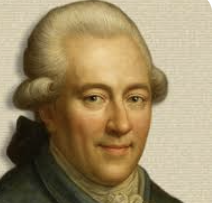
If we make a couple of discoveries here and there we need not believe things will go on like this for ever.... Just as we hit water when we dig in the earth, so we discover the incomprehensible sooner or later.
▼
Source
source
F 82
2 months 1 week ago
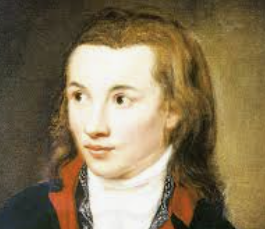
Friends, the soil is poor, we must sow seeds in plenty for us to garner even modest harvests.
▼
Source
source
Motto

2 months 1 week ago
The more one has suffered, the less one demands. To protest is a sign one has traversed no hell.
2 months 1 week ago
I find in myself as much evil as in anyone, but detesting action - mother of all vices - I am the cause of no one's suffering.
3 months 2 days ago
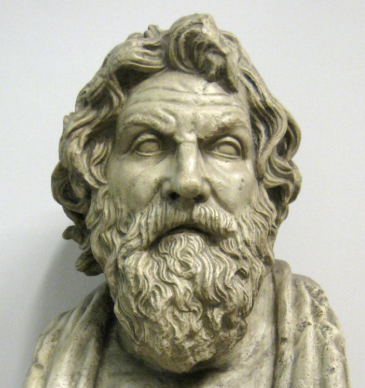
I have enough to eat till my hunger is stayed, to drink till my thirst is sated; to clothe myself withal; and out of doors not Callias there, with all his riches, is more safe than I from shivering; and when I find myself indoors, what warmer shirting do I need than my bare walls? what ampler greatcoat than the tiles above my head?
▼
Source
source
iv. 34

1 week ago
Finally, and... somewhat belatedly, there is the growing of a left that... has now been energized and is increasingly vocal... in certain quarters of the cultural community, in the arts and the universities, in Hollywood, in the media... where in some versions it also engages in a kind of illiberal... politics.
▼
Source
source
20:21

3 months 2 weeks ago
The establishment of any new manufacture, of any new branch of commerce, or any new practice in agriculture, is always a speculation, from which the projector promises himself extraordinary profits. These profits sometimes are very great, and sometimes, more frequently, perhaps, they are quite otherwise; but in general they bear no regular proportion to those of other older trades in the neighbourhood. If the project succeeds, they are commonly at first very high. When the trade or practice becomes thoroughly established and well known, the competition reduces them to the level of other trades.
▼
Source
source
Chapter X, Part I, p. 136 (tendency of the rate of profit to fall).
2 days ago
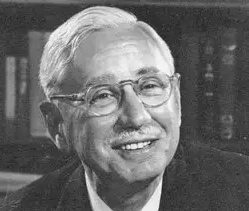
Human progress having reached a high level through respect for the liberty and dignity of men, it has become desirable to re-affirm these evident truths: That differences of race, color, and creed are natural, and that diverse groups, institutions, and ideas are stimulating factors in the development of man; That to promote harmony in diversity is a responsible task of religion and statesmanship; That since no individual can express the whole truth, it is essential to treat with understanding and good will those whose views differ from our own; That by the testimony of history intolerance is the door to violence, brutality and dictatorship; and That the realization of human interdependence and solidarity is the best guard of civilization.

1 month 3 weeks ago
It may seem to be a long way from Blake's innocent talk of love and copulation to De Sade's need to inflict pain. And yet both are the outcome of a sexual mysticism that strives to transcend the everyday world. Simone de Beauvoir said penetratingly of De Sade's work that 'he is trying to communicate an experience whose distinguishing characteristic is, nevertheless its will to remain incommunicable'. De Sade's perversion may have sprung from his dislike of his mother or of other women, but its basis is a kind of distorted religious emotion.
▼
Source
source
p. 90
3 months 2 days ago
The years as they pass plunder us of one thing after another.
▼
Source
source
Book II, epistle ii, line 55
3 months 1 week ago
The Communist Party has one objective: the creation of a socialist economy; and one means: the utilization of the class struggle.
▼
Source
source
Hugo, Act 5, sc. 3

3 months 1 week ago
If there is equality, it is in His love, not in us.
2 months 1 week ago
The conscious mind allows itself to be trained like a parrot, but the unconscious does not - which is why St. Augustine thanked God for not making him responsible for his dreams.
▼
Source
source
par. 51 p.46


1 month 4 weeks ago
He was arrested twice; he was taken in 1922 for a midnight interrogation with Dzerjinsky; Kamenev was also there. ... But Berdyaev did not humiliate himself, he did not beg, he firmly professed the moral and religious principles by virtue of which he did not adhere to the party in power; and not only did they judge that there was no point in putting him on trial, but he was freed. Now there is a man who had a "point of view"!
▼
Source
source
Richard Schain, in In Love with Eternity : Philosophical Essays and Fragments (2005), Ch. 7 : Nikolai Alexandrovich Berdyaev - A Champion of the Spirit, p. 47
1 month 3 weeks ago
Every human being is the natural guardian of his own importance.
▼
Source
source
Ch. 9: "Science and Philosophy", p. 195
2 months 5 days ago
To those who hold abstractly to Hegel's political philosophy, Hobhouse replies that the very fact of class society, the patent influence of class interests on the state, renders it impossible to designate the state as expressive of the real will of individuals as a whole. 'Wherever a community is governed by one class or one race, the remaining class or race is permanently in the position of having to take what it can get.'
▼
Source
source
P. 396

3 months 2 weeks ago
I say, then, that belief is nothing but a more vivid, lively, forcible, firm, steady conception of an object, than what the imagination alone is ever able to attain.
▼
Source
source
§ 4.9
4 weeks ago
Logical consequences are the scarecrows of fools and the beacons of wise men.
3 months 1 week ago
I can imagine no man who will look with more horror on the End than a conscientious revolutionary who has, in a sense sincerely, been justifying cruelties and injustices inflicted on millions of his contemporaries by the benefits which he hopes to confer on future generations: generations who, as one terrible moment now reveals to him, were never going to exist. Then he will see the massacres, the faked trials, the deportations, to be all ineffaceably real, an essential part, his part, in the drama that has just ended: while the future Utopia had never been anything but a fantasy.
1 month 2 weeks ago
In the performance of an illocutionary act in the literal utterance of a sentence, the speaker intends to produce a certain effect by means of getting the hearer to recognize his intention to produce that effect; and furthermore, if he is using the words literally, he intends this recognition to be achieved in virtue of the fact that the rules for using the expressions he utters associate the expression with the production of that effect.
▼
Source
source
P. 45.

3 months 2 weeks ago
Religion, which should most distinguish us from the beasts, and ought most particularly elevate us, as rational creatures, above brutes, is that wherein men often appear most irrational, and more senseless than beasts.
▼
Source
source
Book IV, Ch. 18
4 months 2 days ago
The superior man loves his soul; the inferior man loves his property.
2 months 1 week ago
They say in the grave there is peace, and peace and the grave are one and the same.
▼
Source
source
Act I.
2 months 2 weeks ago
Shakespeare's fault is not the greatest into which a poet may fall. It merely indicates a deficiency of taste.
1 month 1 week ago
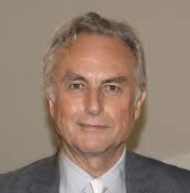
I don't believe you until you tell me, do you really believe, for example, if they say they are Catholic, "Do you really believe that when a priest blesses a wafer, it turns into the body of Christ? Are you seriously telling me you believe that? Are you seriously saying that wine turns into blood?" Mock them. Ridicule them. In public. Don't fall for the convention that we're all too polite to talk about religion. Religion is not off the table. Religion is not off limits. Religion makes specific claims about the universe which need to be substantiated and need to be challenged and, if necessary, need to be ridiculed with contempt.
▼
Source
source
Reason Rally, National Mall, Washington, DC, 2012-03-24 Richard Dawkins and his Foundation at the Reason Rally, YouTube, 7 April 2012

4 months 1 week ago
It is my own experience ... that commentators are far more ingenious at finding meaning than authors are at inserting it.
4 months 1 week ago
How will one part of the infinite be above, and another below? Or how will it have extremes or a middle? Further still, every sensible body is in place; but the species and differences of place are upward and downward, before and behind, to the right hand and to the left: and these things not only thus subsist with relation to us, and by position, but have a definite subsistence in the universe itself. But it is impossible that these things should be in the infinite: and... that there should be an infinite place. But every body is in place; and therefore it is also impossible that there should be an infinite body. ...Therefore ...there is not an infinite body in energy.

3 months 1 week ago
It is not altogether true that persuasion is one thing and force is another. Many forms of persuasion - even many of which everybody approves - are really a kind of force. Consider what we do to our children. We do not say to them: "Some people think the earth is round, and others think it is flat; when you grow up, you can, if you like, examine the evidence and form your own conclusion." Instead of this we say: "The earth is round." By the time our children are old enough to examine the evidence, our propaganda has closed their minds.
▼
Source
source
Ch. 17: The Ethics of Power
3 months 1 week ago
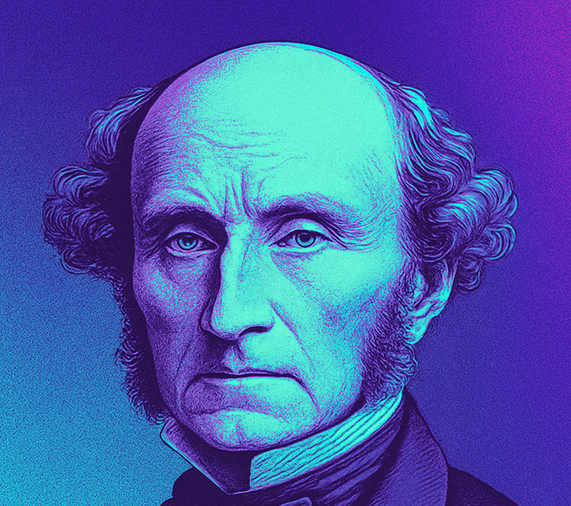
The writers by whom, more than by any others, a new mode of political thinking was brought home to me, were those of the St. Simonian school in France. In 1829 and 1830 I became acquainted with some of their writings. They were then only in the earlier stages of their speculations. They had not yet dressed out their philosophy as a religion, nor had they organized their scheme of Socialism. They were just beginning to question the principle of hereditary property. I was by no means prepared to go with them even this length; but I was greatly struck with the connected view which they for the first time presented to me, of the natural order of human progress; and especially with their division of all history into organic periods and critical periods.
▼
Source
source
(p. 163)
2 weeks 5 days ago
It is because human needs are contradictory that no human life can be perfect. That does not mean that human life is imperfect. It means that the idea of perfection has no meaning.
▼
Source
source
'Modus Vivendi' (p.29)

3 months 3 days ago
Thou shouldst not become presumptuous through great connections and race; for in the end thy trust is on thine own deeds.
▼
Source
source
(p. 60)

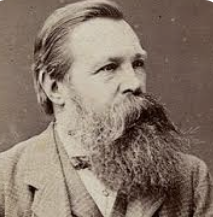
2 months 1 week ago
The irony of world history turns everything upside down. We, the "revolutionaries," the "rebels"-we are thriving far better on legal methods than on illegal methods and revolt. The parties of order, as they call themselves, are perishing under the legal conditions created by themselves. They cry despairingly with Odilon Barrot: la légalité notes tue, legality is the death of us; whereas we, under this legality, get firm muscles and rosy cheeks and look like eternal life.
▼
Source
source
Introduction (1895) to Marx's The Class Struggles in France (1848-50), p. 27
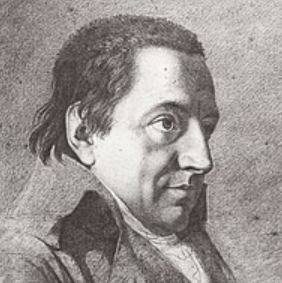
2 months 1 week ago
Thus then does the Doctrine of Knowledge, which in its substance is the realisation of the absolute Power of intelligising which has now been defined, end with the recognition of itself as a mere Schema in a Doctrine of Wisdom, although indeed a necessary and indispensable means to such a Doctrine: - a Schema, the sole aim of which is, with the knowledge thus acquired, - by which knowledge alone a Will, clear and intelligible to itself and reposing upon itself without wavering or perplexity, is possible, - to return wholly into Actual Life; - not into the Life of blind and irrational Instinct which we have laid bare in all its nothingness, but into the Divine Life which shall become visible to us.
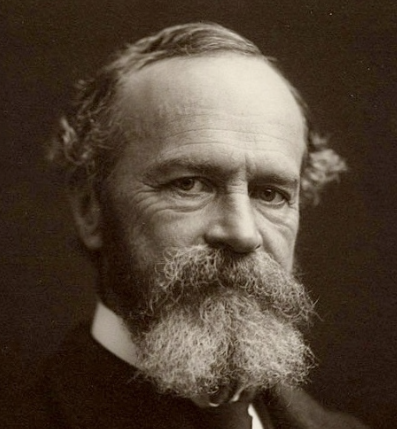
3 months 1 week ago
Act as if what you do makes a difference. It does.
▼
Source
source
Correspondence with Helen Keller, 1908, in The Correspondence of William James: April 1908-August 1910, Vol. 12

1 month 1 week ago
The professional tends to classify and to specialize, to accept uncritically the ground rules of the environment. The ground rules provided by the mass response of his colleagues serves as a pervasive environment of which he is contentedly unaware.
▼
Source
source
(p. 93)

2 months 3 weeks ago
None can be free who is a slave to, and ruled by, his passions.
▼
Source
source
As quoted in Florilegium, XVIII, 23, as translated in Dictionary of Quotations (1906) by Thomas Benfield Harbottle, p. 368

4 months 2 days ago
Continence is a branch of temperance, which prevents the diseases, infamy, remorse, and punishment, to which those are exposed, who indulge themselves in unlawful amours.
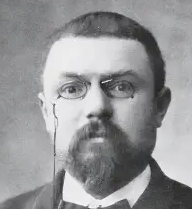
6 days ago
We see that experience plays an indispensable role in the genesis of geometry; but it would be an error thence to conclude that geometry is, even in part, an experimental science. If it were experimental it would be only approximative and provisional. And what rough approximation!...The object of geometry is the study of a particular 'group'; but the general group concept pre-exists... in our minds. It is imposed on us, not as form of our sense, but as form of our understanding. Only, from among all the possible groups, that must be chosen... will be... the standard to which we shall refer natural phenomena.Experience guides us in this choice without forcing it upon us; it tells us not which is the truest geometry, but which is the most convenient.Notice that I have been able to describe the fantastic worlds... imagined without ceasing to employ the language of ordinary geometry.
▼
Source
source
Ch. IV: Space and Geometry, Conclusions (1905) Tr. George Bruce Halstead
1 month 4 weeks ago
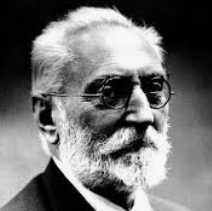
If a philosopher is not a man, he is anything but a philosopher; he is above all a pedant, and a pedant is a caricature of a man. The cultivation of any branch of science - of chemistry, of physics, of geometry, of philology - may be a work of differentiated specialization, and even so, only within very narrow limits and restrictions; but philosophy, like poetry, is a work of integration and synthesis, or else it is merely pseudo-philosophical erudition.
CivilSimian.com created by AxiomaticPanic, CivilSimian, Kalokagathia