

1 month 4 weeks ago
If reason is both transcendent and immanent, then philosophy, as culture-bound reflection and argument about eternal questions, is both in time and eternity. We don't have an Archimedean point; we always speak the language of a time and place; but the rightness and wrongness of what we say is not just for a time and a place.
▼
Source
source
Why reason can't be naturalized
1 week ago
Just as the schoolmen philosophized only inside the belief of the church, ... without ever throwing a doubt upon this belief; as authors fill whole folios on the State without calling in question the fixed idea of the State itself; as our newspapers are crammed with politics because they are conjured into the fancy that man was created to be a zoon politicon,-so also subjects vegetate in subjection, virtuous people in virtue, liberals in humanity, etc., without ever putting to these fixed ideas of theirs the searching knife of criticism. Undislodgeable, like a madman's delusion, those thoughts stand on a firm footing, and he who doubts them-lays hands on the sacred!
▼
Source
source
Cambridge 1995, p. 44
3 months 1 week ago
The encouragement of light-mindedness about traditional philosophical topics serves the same purposes as does the encouragement of light-mindedness about traditional theological topics. Like the rise of large market economies, the increase in literacy, the proliferation of artistic genres, and the insouciant pluralism of contemporary culture, such philosophical superficiality and light-mindedness helps along the disenchantment of the world. It helps make the world's inhabitants more pragmatic, more tolerant, more liberal, more receptive to the appeal of instrumental rationality.
1 month 2 weeks ago
To train and educate the rising generation will at all times be the first object of society, to which every other will be subordinate.

3 months 4 weeks ago
Kings and philosophers shit, and so do ladies.
▼
Source
source
Ch. 42, English translation from Hartle, Ann (2003), Michel de Montaigne: Accidental Philosopher, Cambridge University Press.
1 week ago
Now, on the contrary, when every one is to cultivate himself into man, condemning a man to machine-like labor amounts to the same thing as slavery. If a factory-worker must tire himself to death twelve hours and more, he is cut off from becoming man. Every labor is to have the intent that the man be satisfied. His labor is nothing taken by itself, has no object in itself, is nothing complete in itself; he labors only into another's hands, and is used (exploited) by this other.
▼
Source
source
Cambridge 1995, p. 108
2 days ago
Psychotherapists ... are dealing with people whose distress arises from what may be termed maya, to use the Hindu-Buddhist word whose exact meaning is not merely 'illusion' but the entire world-conception of a culture, considered as illusion in the strict etymological sense of a play (Latin, ludere). The aim of a way of liberation is not the destruction of maya but seeing it for what it is, or seeing through it. Play is not to be taken seriously, or, in other words, ideas of the world and of oneself which are social conventions and institutions are not to be confused with reality.
▼
Source
source
p. 9
4 months 3 weeks ago
Music directly represents the passion of the soul. If one listens to the wrong kind of music, he will become the wrong kind of person.

1 week 5 days ago
There is no heroic poem in the world but is at bottom a biography, the life of a man; also, it may be said, there is no life of a man, faithfully recorded, but is a heroic poem of its sort, rhymed or unrhymed.

3 months 2 weeks ago
Generally speaking there is no irreducible taste or inclination. They all represent a certain appropriative choice of being. It is up to existential psychoanalysis to compare and classify them. Ontology abandons us here; it has merely enabled us to determine the ultimate ends of human reality, its fundamental possibilities, and the value which haunts it.
1 month ago
In the long run, there is nothing to stop intelligent agents from identifying the molecular signature of experience below hedonic zero and eliminating it altogether - even in insects. Nociception is vital; pain is optional. I tentatively predict that the world's last unpleasant experience in our forward light-cone will be a precisely datable event - perhaps some micro-pain in an obscure marine invertebrate a few centuries hence.
▼
Source
source
The Radical Plan to Phase out Earth's Predatory Species, io9, 30 Jul. 2014

1 month 3 weeks ago
There's no objective morality, but that's not the real point. It's not the point that morality has to somehow be a stone, or something that can be touched.
The options that are available to choose are determined to a point, and this is the objective aspect of morality, ethics, goodness, fairness, justice.
The subjective aspect can still remain subjective, but that doesn't mean goodness is relative.....at all. The measure of a man is a man.

2 months 3 weeks ago
The Americans combine the notions of Christianity and of liberty so intimately in their minds, that it is impossible to make them conceive the one without the other; and with them this conviction does not spring from that barren traditionary faith which seems to vegetate in the soul rather than to live.
▼
Source
source
Chapter XVII.

3 months 3 weeks ago
We do not live for idle amusement. I would not run round a corner to see the world blow up.
▼
Source
source
p. 491

3 months 3 weeks ago
The good life, as I conceive it, is a happy life. I do not mean that if you are good you will be happy; I mean that if you are happy you will be good.
▼
Source
source
Part I: Man and Nature, Ch. 1: Current Perplexities, p. 10
4 months 1 week ago
To wisdom belongs the intellectual apprehension of things eternal; to knowledge, the rational apprehension of things temporal.
▼
Source
source
As quoted in The Anchor Book of Latin Quotations: with English translations (1990) by Norbert Guterman, p. 375

1 month 2 weeks ago
Unlike previous environmental changes, the electric media constitutes a total and near-instanteous transformation of culture, values and attitudes.
2 months 2 weeks ago
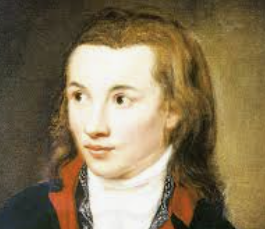
The division of Philosopher and Poet is only apparent, and to the disadvantage of both. It is a sign of disease, and of a sickly constitution.

4 months 6 days ago
To avoid falling into the toils of love is not so hard as, after you are caught, to get out of the nets you are in and to break through the strong meshes of Venus.
▼
Source
source
Book IV, lines 1146-1148 (tr. Munro)
4 months 6 days ago
The first and most necessary topic in philosophy is that of the use of moral theorems, such as, "We ought not to lie;" the second is that of demonstrations, such as, "What is the origin of our obligation not to lie;" the third gives strength and articulation to the other two, such as, "What is the origin of this is a demonstration." For what is demonstration? What is consequence? What contradiction? What truth? What falsehood? The third topic, then, is necessary on the account of the second, and the second on the account of the first. But the most necessary, and that whereon we ought to rest, is the first. But we act just on the contrary. For we spend all our time on the third topic, and employ all our diligence about that, and entirely neglect the first.
▼
Source
source
(51).
1 week 5 days ago
I cannot call this Shakspeare a "Sceptic," as some do; his indifference to the creeds and theological quarrels of his time misleading them. No: neither unpatriotic, though he says little about his Patriotism; nor sceptic, though he says little about his Faith. Such "indifference" was the fruit of his greatness withal: his whole heart was in his own grand sphere of worship (we may call it such); these other controversies, vitally important to other men, were not vital to him.

3 months 3 weeks ago
History is a bath of blood.
2 days ago
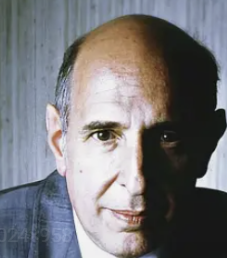
To recognize that some of the things our culture believes are not true imposes on us the duty of finding out which are true and which are not.
▼
Source
source
"Western Civ," p. 22.
2 months 3 weeks ago
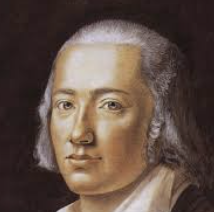
What is the wisdom of a book compared with the wisdom of an angel?

3 months 3 weeks ago
A free man thinks of death least of all things; and his wisdom is a meditation not of death but of life.
▼
Source
source
Part IV, Prop. LXVII
4 months 1 week ago
The first duty of a man is the seeking after and the investigation of truth.
▼
Source
source
As quoted in A Crowd of One: The Future of Individual Identity (2007) by John Clippinger, p. 130 Compare: "The distinguishing property of man is to search for and to follow after truth." – De Officiis, Book I, 13
2 months 3 weeks ago
The strides of humanity are slow, they can only be counted in centuries.
▼
Source
source
Act II.
4 months 3 weeks ago
But it is better perhaps to examine next the universal good, and to enquire in what sense the expression is used. Though such an investigation is likely to be difficult, because the persons who have introduced these ideas are our friends. Yet it will perhaps appear the best, and indeed the right course, at least for the preservation of truth, to do away with private feelings, especially as we are philosophers; for since both are dear to us, we are bound to prefer the truth.
1 month 2 weeks ago
Unfortunately, instead of working out that they have probably misunderstood evolution, creationists conclude, instead, that evolution must be false.
▼
Source
source
Heat the Hornet, a review of Jerry Coyne's book Why Evolution is True

2 months 2 weeks ago
Blessed is the lion which becomes man when consumed by man; and cursed is the man whom the lion consumes, and the lion becomes man. (7) This saying has been interpreted by some as referring to such anger as consumes a man…(rather than is consumed by him, through his reason and love), 'til that man is the lion of Anger. Other more mystical interpretations might also be found or devised that have merit.
1 month 4 weeks ago
Truth and falsity are the most fundamental terms of rational criticism, and any adequate philosophy must give some account of these, or failing that, show that they can be dispensed with.
▼
Source
source
"Introduction: Philosophy of language and the rest of philosophy"
2 months 1 week ago
Rohde became more and more firmly bound to the bourgeois world, its institutions and accepted opinions. ... The contrast between the two natures makes Rohde and Nietzsche exemplary representatives of two distinctive worlds. In their youth they both live in the realm of boundless possibilities and feel an affinity through the exuberance of their noble aspirations. Subsequently they go in opposite directions. Nietzsche remains young, leaving concrete reality as his task assumes existential import. Rohde grows old, bourgeois, stable, and skeptical. Hence courage is a fundamental trait in Nietzsche, plaintive self-irony in Rohde. ... Rohde retained the interests but not the attitudes of his youth; he looked to the world of the Greeks for the object of his contemplation rather than the norm of obligation.
▼
Source
source
pp. 61-62
3 months 1 week ago
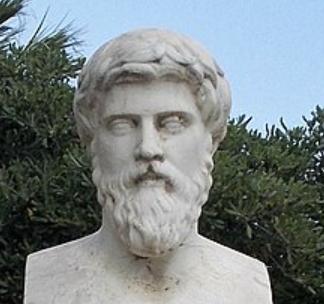
Once when Phocion had delivered an opinion which pleased the people,... he turned to his friend and said, "Have I not unawares spoken some mischievous thing or other?"
▼
Source
source
55 Phocion

3 months 2 weeks ago
They [Christians] believe that the living, dynamic activity of love has been going on in God forever and has created everything else. And that, by the way, is perhaps the most important difference between Christianity and all other religions: that in Christianity God is not an impersonal thing nor a static thing-not even just one person-but a dynamic pulsating activity, a life, a kind of drama, almost, if you will not think me irreverent, a kind of dance ... (The) pattern of this three-personal life is ... the great fountain of energy and beauty spurting up at the very center of reality.
▼
Source
source
Book IV, Chapter 4, "Good Infection"

2 months 1 week ago
In the root of the word "faith" itself... there is implicit the idea of confidence, of surrender to the will of another, to a person. Confidence is placed only in persons. We trust in Providence, which we perceive as something personal and conscious, not in Fate, which is something impersonal. And thus it is in the person who tells us the truth, in the person that gives us hope, that we believe, not directly or immediately in truth itself or in hope itself.

3 months 3 weeks ago
Religious suffering is, at one and the same time, the expression of real suffering and a protest against real suffering. Religion is the sigh of the oppressed creature, the heart of a heartless world, and the soul of soulless conditions. It is the opium of the people.The abolition of religion as the illusory happiness of the people is the demand for their real happiness. To call on them to give up their illusions about their condition is to call on them to give up a condition that requires illusions. The criticism of religion is, therefore, in embryo, the criticism of that vale of tears of which religion is the halo.Criticism has plucked the imaginary flowers on the chain not in order that man shall continue to bear that chain without fantasy or consolation, but so that he shall throw off the chain and pluck the living flower.
3 months 3 weeks ago
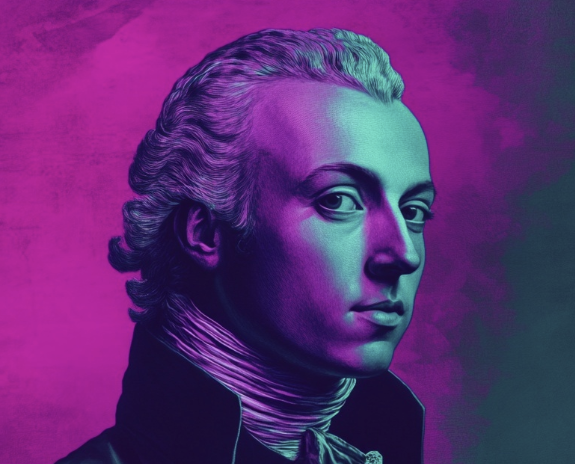
All human knowledge begins with intuitions, proceeds from thence to concepts, and ends with ideas.
▼
Source
source
B 730; Variant translation: All our knowledge begins with the senses, proceeds then to the understanding, and ends with reason. There is nothing higher than reason.
2 months 1 week ago
Don Quixote made himself ridiculous; but did he know the most tragic ridicule of all, the inward ridicule, the ridiculousness of a man's self to himself, in the eyes of his own soul? Imagine Don Quixote's battlefield to be his own soul; imagine him to be fighting in his soul to save the Middle Ages from the Renaissance, to preserve the treasure of his infancy; imagine him an inward Don Quixote, with a Sancho at his side, inward and heroic too - and tell me if you find anything comic in the tragedy.
2 months 1 week ago
The Catholic solution of our problem, of our unique vital problem, the problem of the immortality and eternal salvation of the soul, satisfies the will, and therefore satisfies life; but the attempt to rationalize it by means of a dogmatic theology fails to satisfy the reason. And reason has its exigencies as imperious as those of life. It is no use seeking to force ourselves to consider as super-rational what clearly appears to us to be contra-rational... Infallibility, a notion of Hellenic origin, is in its essence a rationalistic category.
2 months 4 days ago
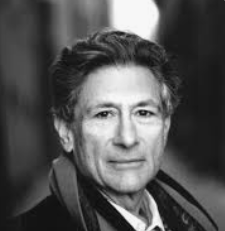
The intellectual's spirit as an amateur can enter and transform the merely professional routine most of us go through into something much more lively and radical; instead of doing what one is supposed to do one can ask why one does it, who benefits from it, how can it reconnect with a personal project and original thoughts.
▼
Source
source
p. 83
4 months 1 week ago
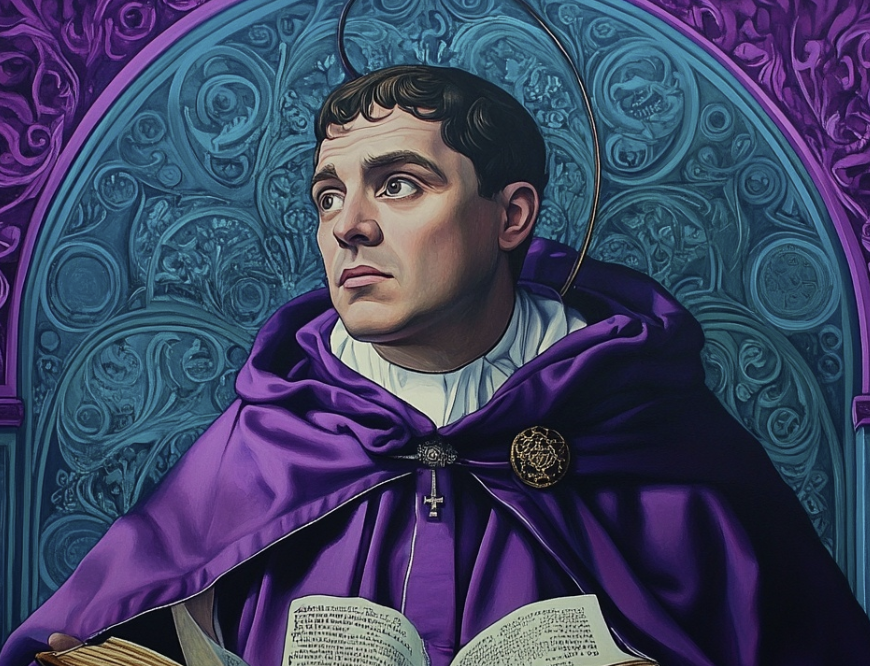
The highest perfection of human life consists in the mind of man being detached from care, for the sake of God.
▼
Source
source
III, 130, 3

4 months 2 weeks ago
There is no mystery in humans creation. Will performs this miracle. But at least there is no true creation without a secret.
2 months 1 week ago
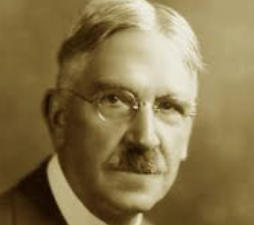
Genuine time, if it exists as anything else except the measure of motions in space, is all one with the existence of individuals as individuals, with the creative, with the occurrence of unpredictable novelties. Everything that can be said contrary to this conclusion is but a reminder that an individual may lose his individuality, for individuals become imprisoned in routine and fall to the level of mechanisms. Genuine time then ceases to be an integral element of their being. Our behavior becomes predictable, because it is but an external rearrangement of what went before.
1 week 5 days ago
It is a greatness not of mere body and gigantic bulk, but a rude greatness of soul. There is a sublime uncomplaining melancholy traceable in these old hearts. A great free glance into the very deeps of thought. They seem to have seen, these brave old Northmen, what Meditation has taught all men in all ages, That this world is after all but a show,-a phenomenon or appearance, no real thing. All deep souls see into that,-the Hindoo Mythologist, the German Philosopher,-the Shakspeare, the earnest Thinker, wherever he may be.
2 months 3 weeks ago
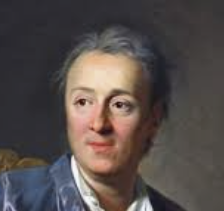
When one compares the talents one has with those of a Leibniz, one is tempted to throw away one's books and go die quietly in the dark of some forgotten corner.
▼
Source
source
Oeuvres complètes, vol. 7, p. 678
3 months 3 weeks ago
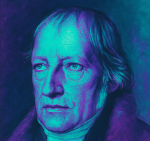
The first remark we have to make, and which - though already presented more than once - cannot be too often repeated when the occasion seems to call for it, - is that what we call principle, aim, destiny, or the nature and idea of Spirit, is something merely general and abstract. Principle - Plan of Existence - Law - is a hidden, undeveloped essence, which as such - however true in itself - is not completely real.
3 months 3 weeks ago
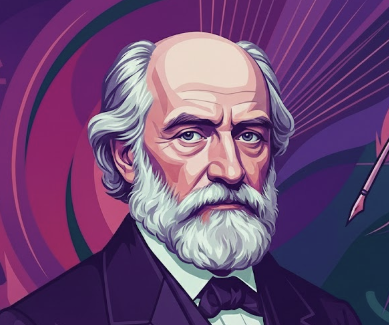
For what is modesty but hypocritical humility, by means of which, in a world swelling with vile envy, a man seeks to beg pardon for his excellences and merits from those who have none? For whoever attributes no merit to himself because he really has none is not modest, but merely honest.
▼
Source
source
Vol. I, Ch. III, The World As Representation: Second Aspect
3 months 3 weeks ago
The militarily-patriotic and the romantic-minded everywhere, and especially the professional military class, refuse to admit for a moment that war may be a transitory phenomenon in social evolution. The notion of a sheep's paradise like that revolts, they say, our higher imagination. Where then would be the steeps of life? If war had ever stopped, we should have to re-invent it, on this view, to redeem life from flat degeneration. Reflective apologists for war at the present day all take it religiously. It is a sort of sacrament. It's profits are to the vanquished as well as to the victor; and quite apart from any question of profit, it is an absolute good, we are told, for it is human nature at its highest dynamic.
1 week 5 days ago
The eye of the intellect "sees in all objects what it brought with it the means of seeing."
▼
Source
source
Varnhagen von Ense's Memoirs.

3 months 3 weeks ago
Our psychological experiences are all equally facts. There is nothing to choose between them. No psychological experience is "truer," so far as we are concerned, than any other. For even if one should correspond more closely to things in themselves as perceived by some hypothetical non-human being, it would be impossible for us to discover which it was. Science is no "truer" than common sense, or lunacy, or art, or religion. It permits us to organize our experience profitably; but tells us nothing about the real nature of the world to which our experiences are supposed to refer. From the internal reality, by which I mean the totality of psychological experiences, it actually separates us. Art, for example, deals with many more aspects of this internal reality than does science, which confines itself deliberately and by convention to the study of one very limited class of experiences - the experiences of sense.
▼
Source
source
"One and Many," p. 5-6
CivilSimian.com created by AxiomaticPanic, CivilSimian, Kalokagathia