

3 months 1 week ago
Unbelievers (so called) as well as of believers, there are many species, including almost every variety of moral type. But the best among them, as no one who has had opportunities of really knowing them will hesitate to affirm (believers rarely have that opportunity), are more genuinely religious, in the best sense of the word religion, than those who exclusively arrogate to themselves the title.
▼
Source
source
(pp. 45-46)

3 months 1 week ago
Courtship is the time for sowing those seeds which will grow up ten years into domestic hatred.
▼
Source
source
Letter XXVI

1 month 3 weeks ago
The key to understanding Crowley is the same as the key to understanding the Marquis de Sade. Both wasted an immense amount of energy screaming defiance at the authority they resented so much, and lacked the insight to see that they were shaking their fists at an abstraction.
▼
Source
source
p. 29

2 months 1 week ago
There is, however, a limit at which forbearance ceases to be a virtue.
▼
Source
source
Observations on a Late Publication on the Present State of the Nation (1769), volume i, p. 273
2 months ago
Tell me to what you pay attention and I will tell you who you are.
▼
Source
source
p. 94.
1 month 3 weeks ago
At root what is needed for scientific inquiry is just receptivity to data, skill in reasoning, and yearning for truth. Admittedly, ingenuity can help too.
▼
Source
source
S.4

1 month 3 weeks ago
If people were told: what makes carnal desire imperious in you is not its pure carnal element. It is the fact that you put into it the essential part of yourself-the need for Unity, the need for God - they wouldn't believe it. To them it seems obvious that the quality of imperious need belongs to the carnal desire as such. In the same way it seems obvious to the miser that the quality of desirability belongs to gold as such, and not to its exchange value.

2 weeks 2 days ago
If you want to understand the beliefs that are shaping global politics, read the Book of Revelation.
▼
Source
source
Review: Sacred Causes by Michael Burleigh
2 months ago
Although the formulations of science now offer the most advanced knowledge of nature, men continue to use obsolete forms of thought long discarded by scientific theory. In so far as these obsolete forms are superfluous for science, the fact that they persist violated the principle of the economy of thought, that characteristic trait of the bourgeois temper.
▼
Source
source
p. 133.
4 days ago
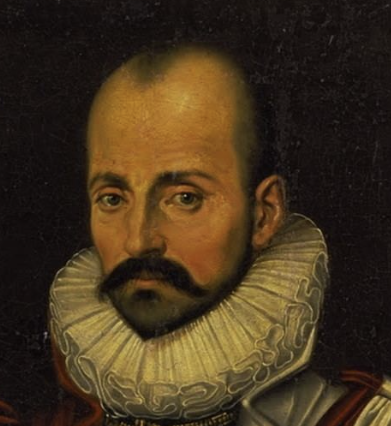
Friendship ... receives its real sustenance from an equality that, to proceed without a limp, must have its two limbs equal.
▼
Source
source
Part 3
2 weeks 5 days ago
If a king is energetic, his subjects will be equally energetic. If he is reckless, they will not only be reckless likewise, but also eat into his works. Besides, a reckless king will easily fall into the hands of his enemies. Hence the king shall ever be wakeful.
▼
Source
source
Book I : "Concerning Discipline" Chapter 19 "The Duties of a King"
4 months 1 week ago
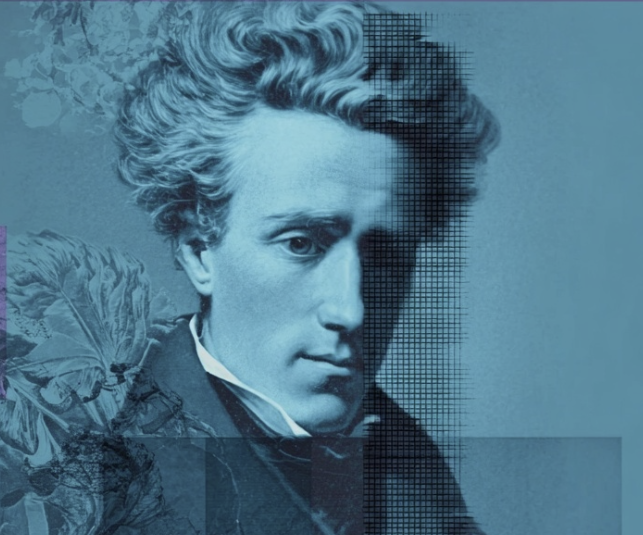
My hearers, this discourse has not wandered out into the world to look for conflict, it has not tried to get the better of anybody, it has not even tried to uphold anybody, as though there was battle without. It has spoken to you; not by way of explaining anything to you, but trying to speak secretly with you about your relationship to that secret wisdom mentioned in our text. Oh that nothing may upset you in respect to this, “neither life nor death nor things present nor things to come nor any other creature” (Romans 8:38) –not this discourse, which, though it may have profited you nothing, yet has striven for what after all is the first and the last, to help you have what the Scripture calls “faith in yourself before God.

3 months 1 week ago
For do our Theologians pretend to make a monopoly of the word, action, and may not the atheists likewise take possession of it, and affirm that plants, animals, men, &c. are nothing but particular actions of one simple universal substance, which exerts itself from a blind and absolute necessity?
▼
Source
source
Part 4, Section 5

1 month 2 weeks ago
A handful of soldiers is always better than a mouthful of arguments.
▼
Source
source
E 19

3 months 1 week ago
It is time to be old, To take in sail: - The god of bounds, Who sets to seas a shore, Came to me in his fatal rounds, And said: 'No more!
▼
Source
source
Terminus
3 weeks 4 days ago
The only good that I can see in the demonstration of the truth of "Spiritualism" is to furnish an additional argument against suicide. Better live a crossing-sweeper than die and be made to talk twaddle by a "medium" hired at a guinea a séance.
▼
Source
source
Review in the Daily News (17 October 1871), quoted in Life and Letters of Thomas Henry Huxley F.R.S (1900) edited by Leonard Huxley, Vol. 1, p. 452

3 months 1 week ago
Mathematics, rightly viewed, possesses not only truth, but supreme beauty - a beauty cold and austere, like that of sculpture, without appeal to any part of our weaker nature, without the gorgeous trappings of painting or music, yet sublimely pure, and capable of a stern perfection such as only the greatest art can show. The true spirit of delight, the exaltation, the sense of being more than Man, which is the touchstone of highest excellence, is to be found in mathematics as surely as in poetry. What is best in mathematics deserves not merely to be learnt as a task, but to be assimilated as a part of daily thought, and brought again and again before the mind with ever-renewed encouragement.

2 months 5 days ago
Life is too full of death for death to be able to add anything to it.
1 month 3 weeks ago
The narcissistic, the domineering, the possessive woman can succeed in being a "loving" mother as long as the child is small. Only the really loving woman, the woman who is happier in giving than in taking, who is firmly rooted in her own existence, can be a loving mother when the child is in the process of separation.
▼
Source
source
Ch. 2
1 month 3 weeks ago
A farewell does not dilute the presence of the past; it may make an even deeper presence.
2 months 3 weeks ago
Pyrrhus said, "If I should overcome the Romans in another fight, I were undone."
▼
Source
source
47 Pyrrhus
2 months 5 days ago
I don't need any support, advice, or compassion, because even if I am the most ruinous man, I still feel so powerful, so strong and fierce. For I am the only one that lives without hope.


2 months 5 days ago
Life is possible only by the deficiencies of our imagination and memory.

4 months 1 week ago
He could almost wish he were superstitious. He could then console himself with the thought that the casual meaningless meeting had really been directed by a knowing and purposeful Fate.
1 month 3 weeks ago
The most important misunderstanding seems to me to lie in a confusion between the human necessities which I consider part of human nature, and the human necessities as they appear as drives, needs, passions, etc., in any given historical period. This division is not very different from Marx's concept of "human nature in general", to be distinguished from "human nature as modified in each historical period". The same distinction exists in Marx when he distinguishes between "constant" or "fixed" drives and "relative" drives. The constant drives "exist under all circumstances and ... can be changed by social conditions only as far as form and direction are concerned". The relative drives "owe their origin only to a certain type of social organization".
3 months 1 week ago
God may forgive sins, he said, but awkwardness has no forgiveness in heaven or earth.
▼
Source
source
Society and Solitude
1 month 6 days ago
It is an article of passionate faith among "politically correct" biologists and anthropologists that brain size has no connection with intelligence; that intelligence has nothing to do with genes; and that genes are probably nasty fascist things anyway.
4 months 1 week ago
If it were so, as conceited sagacity, proud of not being deceived, thinks, that we should believe nothing that we cannot see with our physical eyes, then we first and foremost ought to give up believing in love. ... We can be deceived by believing what is untrue, but we certainly are also deceived by not believing what is true. ... Which deception is more dangerous?

1 month 1 week ago
The Anarchists are right in everything; in the negation of the existing order, and in the assertion that, without authority, there could not be worse violence than that of authority under existing conditions. They are mistaken only in thinking that Anarchy can be instituted by a revolution. "To establish Anarchy." "Anarchy will be instituted." But it will be instituted only by there being more and more people who do not require protection from governmental power, and by there being more and more people who will be ashamed of applying this power.
▼
Source
source
"On Anarchy", in Pamphlets : Translated from the Russian (1900) as translated by Aylmer Maude, p. 22
2 months 2 days ago
Such abstraction which refuses to accept the given universe of facts as the final context of validation, such "transcending" analysis of the facts in the light of their arrested and denied possibilities, pertains to the very structure of social theory.
▼
Source
source
p. xliii

2 months 6 days ago
For it all depends on how we look at things, and not on how they are in themselves. The least of things with a meaning is worth more in life than the greatest of things without it.
▼
Source
source
p. 67

3 months 1 week ago
If you want good laws, burn those you have and make new ones.
▼
Source
source
"Laws", 1765

3 months 1 week ago
Oh providence! Oh nature! Treasure of the poor, resource of the unfortunate. The person who feels, knows your holy laws and trusts them, the person whose heart is at peace and whose body does not suffer, thanks to you is not entirely prey to adversity.
▼
Source
source
Second Dialogue; translated by Judith R. Bush, Christopher Kelly, Roger D. Masters
2 months 1 week ago
Every state, like every theology, assumes man to be fundamentally bad and wicked.
▼
Source
source
As quoted in Michael Bakunin (1937), E.H. Carr, p. 453
1 month 3 weeks ago
Those who devote themselves to rituals must ignore themselves. Rituals produce a distance from the self, a self-transcendence.

Just now
For the Scepticism, as I said, is not intellectual only; it is moral also; a chronic atrophy and disease of the whole soul. A man lives by believing something; not by debating and arguing about many things.

3 months 2 weeks ago
It cannot be that axioms established by argumentation should avail for the discovery of new works, since the subtlety of nature is greater many times over than the subtlety of argument. But axioms duly and orderly formed from particulars easily discover the way to new particulars, and thus render sciences active.
▼
Source
source
Aphorism 24

1 month 3 weeks ago
The truth is sum, ergo cogito - I am, therefore I think, although not everything that is thinks. Is not consciousness of thinking above all consciousness of being? Is pure thought possible, without consciousness of self, without personality? Can there exist pure knowledge without feeling, without that species of materiality which feelings lends to it? Do we not perhaps feel thought, and do we not feel ourselves in the act of knowing and willing? Could not the man in the stove [Descartes] have said: "I feel, therefore I am"? or "I will, therefore I am"? And to feel oneself, is it not perhaps to feel oneself imperishable?

3 months 1 week ago
An increase in the productivity of labour means nothing more than that the same capital creates the same value with less labour, or that less labour creates the same product with more capital.
▼
Source
source
Notebook IV, The Chapter on Capital, p. 308.
1 month 3 weeks ago
All men are stuck in a kind of fog. They're surrounded by a wall of fog. They think this is perfectly normal, but it's not. It means that since they can't see much beyond their own little situation, they tend to vegetate. They need some immediate stimulus to keep them alert.
▼
Source
source
p. 20
2 months ago
The concept of guilt is found most powerfully developed even in the most primitive communal forms which we know: ... the man is guilty who violates one of the original laws which dominate the society and which are mostly derived from a divine founder; the boy who is accepted into the tribal community and learns its laws, which bind him thenceforth, learns to promise; this promise is often given under the sign of death, which is symbolically carried out on the boy, with a symbolical rebirth.
▼
Source
source
p. 178
3 months 1 week ago
From another side: is Achilles possible with powder and lead? Or the Iliad with the printing press, not to mention the printing machine? Do not the song and saga of the muse necessarily come to an end with the printer's bar, hence do not the necessary conditions of epic poetry vanish?
▼
Source
source
Introduction, p. 31.


1 month 1 week ago
All forms of violence are quests for identity. When you live on the frontier, you have no identity. You're a nobody.
3 months 1 week ago
At present we are on the outside of the world, the wrong side of the door. We discern the freshness and purity of the morning, but they do not make us fresh and pure. We cannot mingle with the splendours we see. But all the leaves of the New Testament are rustling with the rumour that it will not always be so. Some day, God willing, we shall get in.
3 months 1 week ago
Without being known too well, it [India] has existed for millennia in the imagination of the Europeans as a wonderland. Its fame, which it has always had with regard to its treasures, both its natural ones, and in particular, its wisdom, has lured men there.
▼
Source
source
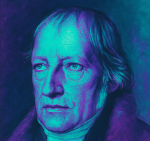
Friedrich Hegel .source: Contesting the Master Narrative, Jeffrey Cox and Shelton Stromquist Quoted from Gewali, Salil (2013).
3 months 1 week ago
Love in animals, has not for its only object animals of the same species, but extends itself farther, and comprehends almost every sensible and thinking being. A dog naturally loves a man above his own species, and very commonly meets with a return of affection.
▼
Source
source
Part 2, Section 12
2 months 5 days ago
I am enraptured by Hindu philosophy, whose essential endeavor is to surmount the self; and everything I do, everything I think is only myself and the selfs humiliations.
CivilSimian.com created by AxiomaticPanic, CivilSimian, Kalokagathia